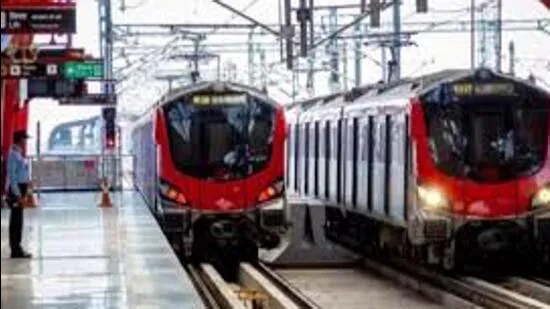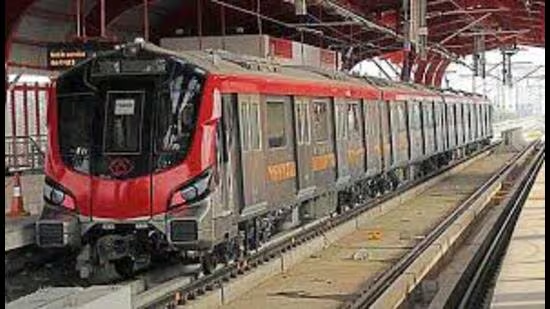
The next phase of Lucknow’s growth may follow the path of metro lines rather than city roads alone. A proposed 12-corridor network under the draft Comprehensive Mobility Plan (CMP)-2025 seeks to link fast-growing neighbourhoods, new housing clusters, business centres and neighbouring urban regions, creating a transport grid that could shape the city’s expansion till 2040-50. The proposal, currently under government consideration, presents a blueprint for a larger and more connected metropolitan Lucknow.Representational image (Sourced)The proposal was presented before the chief secretary by officials of the Uttar Pradesh Metro Rail Corporation (UPMRC) last week and is now awaiting a policy-level decision from the state government. Detailed Project Reports (DPRs) for individual routes will be prepared after approval, according to officials.If approved, the network could become the infrastructure backbone around which the next generation of Lucknow is built, UPMRC managing director Sushil Kumar said.“The draft CMP-2025 has proposed an ambitious 12-metro corridor network that stretches far beyond the city’s existing urban core, signalling a strategic shift in planning from solving today’s traffic challenges to preparing for tomorrow’s city,” Kumar said.Prepared by urban transport consultancy, UMTC, through the Lucknow Municipal Corporation (LMC), the draft proposes metro connectivity across residential clusters, educational institutions, healthcare facilities, industrial areas and satellite townships.The proposed routes include Rajajipuram-IIM (18 km), CCS Airport-Kalli Paschim (15.5 km), Indira Nagar-Anora Kala (9.66 km), Indira Nagar-CG City (11.5 km), CG City-SGPGI (9.8 km), Rajajipuram-Musabagh (5.98 km), Vasant Kunj-IIM (12 km), Munshipulia-Jankipuram (6.5 km), Anora Kala-Barabanki (14.43 km), Kalli Paschim-Mohanlalganj (7.2 km), Vasant Kunj-Kalli Paschim (34.8 km) and Anora Kala-Kalli Paschim (25 km).Of the proposed network, 149.87 km would be elevated and 20.5 km underground. The longest corridor would connect Vasant Kunj and Kalli Paschim, while a metro link between Lucknow and Barabanki has also been proposed.Officials said that the corridors identified in the CMP offer a glimpse into where planners expect Lucknow’s next wave of urbanisation to occur. Almost every proposed route passes through areas projected to witness substantial population growth and real estate development over the next 15 to 20 years.From CG City and Mohanlalganj in the south to Anora Kala and Barabanki in the east, and from Rajajipuram in the west to Jankipuram in the north, the proposed network covers areas expected to witness substantial residential and commercial growth over the next two decades.Kumar said several proposed corridors pass through areas where large-scale housing projects are already underway or planned.“Improved public transport access could accelerate investment in these areas while reducing dependence on private vehicles. State government approval is required before DPRs can be prepared and financial models worked out. Given the scale of the proposal, implementation is likely to occur in phases over several years,” he said.Officials said the routes would connect educational centres, healthcare institutions, employment hubs, residential townships and transport gateways into a unified mobility network.
Metro to link Barabanki, CG City as Lucknow’s 12-corridor plan awaits nod
The proposed routes include Rajajipuram-IIM (18 km), CCS Airport-Kalli Paschim (15.5 km), Indira Nagar-Anora Kala (9.66 km), Indira Nagar-CG City (11.5 km), CG City-SGPGI (9.8 km), Rajajipuram-Musabagh (5.98 km), Vasant Kunj-IIM (12 km), Munshipulia-Jankipuram (6.5 km), Anora Kala-Barabanki (14.43 km), Kalli Paschim-Mohanlalganj (7.2 km), Vasant Kunj-Kalli Paschim (34.8 km) and Anora Kala-Kalli Paschim (25 km).
469 words~2 min read