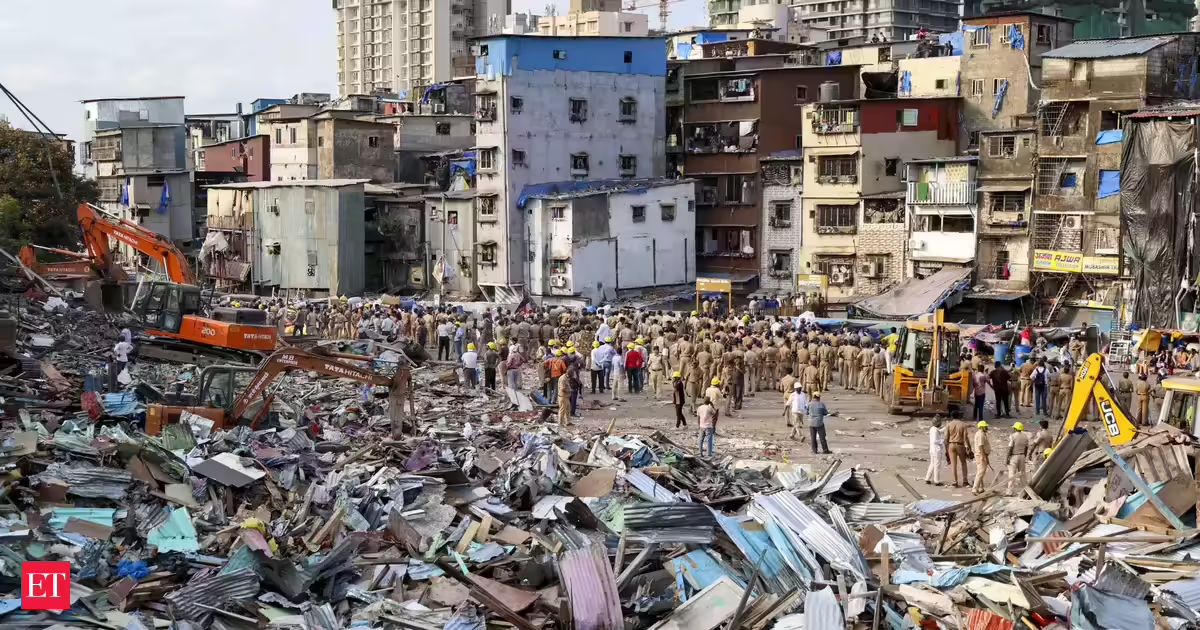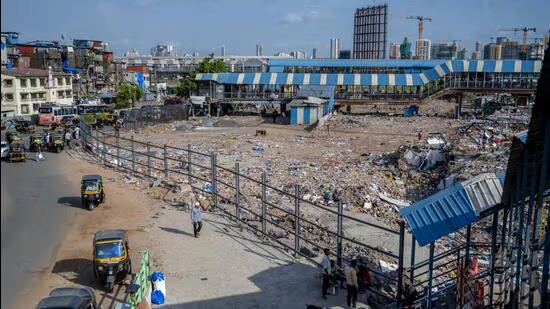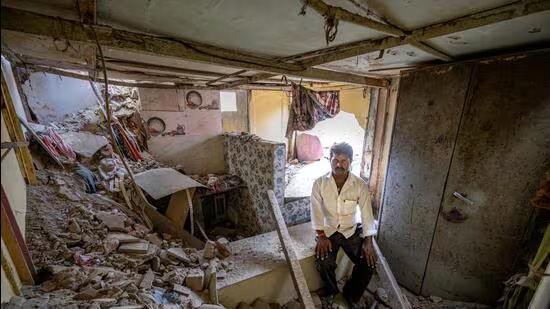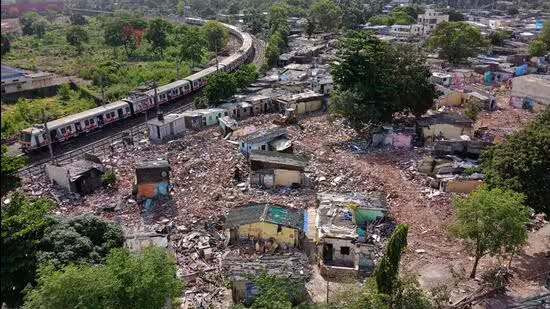
Mumbai: While the anti-encroachment drive at Garib Nagar in Bandra last month grabbed the headlines, it was one of several such operations undertaken by railway authorities across the Mumbai Metropolitan Region (MMR) in recent months to free up land for long-delayed infrastructure projects.Over the last weekend, the Mumbai Rail Vikas Corporation (MRVC) demolished around 350 of 786 illegal shanties in Thane’s Bhola Nagar, which were obstructing the alignment of the proposed Airoli-Kalwa Elevated Corridor. (Praful Gangurde/HT Photo)Since December last year, Central Railway (CR) and Western Railway (WR) have reclaimed nearly 15,000 square metres (3.5 acres) of encroached land—roughly the size of two football fields—across the Mumbai Metropolitan Region (MMR) that had been illegally occupied for decades. According to officials, more than 1,200 project-affected persons (PAPs) have been displaced as a result of these drives.Railway officials said recovering these large tracts of land in Bandra, Sion, Kurla, Airoli-Kalwa, Goregaon, and Malad is vital for expanding the suburban rail network and augmenting the capacity of rail terminuses.“For years, illegal encroachers occupied railway land, which prevented us from planned expansion of the rail network in Mumbai. We are now barricading the land as soon as we clear the debris to prevent re-encroachment,” said a railway official, requesting anonymity.Over the last weekend, the Mumbai Rail Vikas Corporation (MRVC) demolished around 350 of 786 illegal shanties in Thane’s Bhola Nagar, which were obstructing the alignment of the proposed Airoli-Kalwa Elevated Corridor. The ₹476-crore project aims to boost connectivity between Thane and Navi Mumbai.Sanctioned under the Mumbai Urban Transport Project (MUTP)-3 in 2016, the corridor has been delayed by resistance from residents who allegedly illegally occupied railway land. “We had been demanding the railways clear these encroachments for a long time. Over the last five years, I have written several letters and emails to the rail authorities,” said Siddhesh Desai, vice-president of the Mumbai Rail Pravasi Sangh, a representative body of suburban railway commuters.Currently, the project is about 45% complete. “The targeted completion date is 36 months after the entire land acquisition and rehabilitation process is wrapped up,” said another rail official.Once completed, hundreds of thousands of daily commuters travelling between Navi Mumbai, Thane, and Kalyan will be able to bypass heavily congested interchange hubs, slashing travel times and reducing overcrowding.Last month, WR cleared around 400 illegal encroachments at Garib Nagar in Bandra East, paving the way for seamless connectivity between the Bandra suburban railway station and Bandra Terminus. The reclaimed land will help accommodate new platforms and stabling lines for outstation trains.Earlier this year, the railways also cleared encroachments from 1,500 sq m of land between Goregaon and Malad. The demolition of 36 permanent structures cleared the path for extending the Harbour Line beyond Goregaon till Borivali.“This project will allow commuters to travel from CSMT to the western suburbs. After taking over the land, we will carry out laying of tracks, platforms and other ancillary works,” said a WR official.In December last year, CR authorities managed to clear a major chunk of illegal slums from its land to resurrect the long-pending fifth and sixth railway lines along the Kurla-Parel-CSMT section. At least 400 of 714 illegal huts between Kurla and Parel were cleared.Railway officials said the rehabilitation of 400 PAPs would speed up work on the two lines, which is being carried out in phases. The first phase covers the Kurla-Parel section, followed by the Parel-CSMT part. The ongoing construction of the Sion road overbridge is also part of this rail network augmentation, which will help segregate suburban and long-distance trains, officials said.
Railways reclaim 15,000 sq m of land for long-stalled projects
According to officials, more than 1,200 project-affected persons (PAPs) have been displaced as a result of these drives | Mumbai news
588 words~3 min read