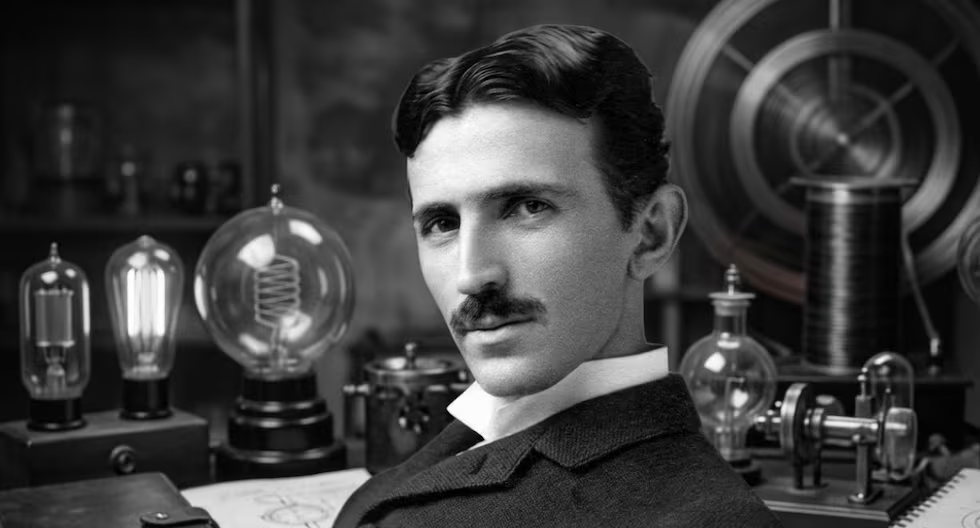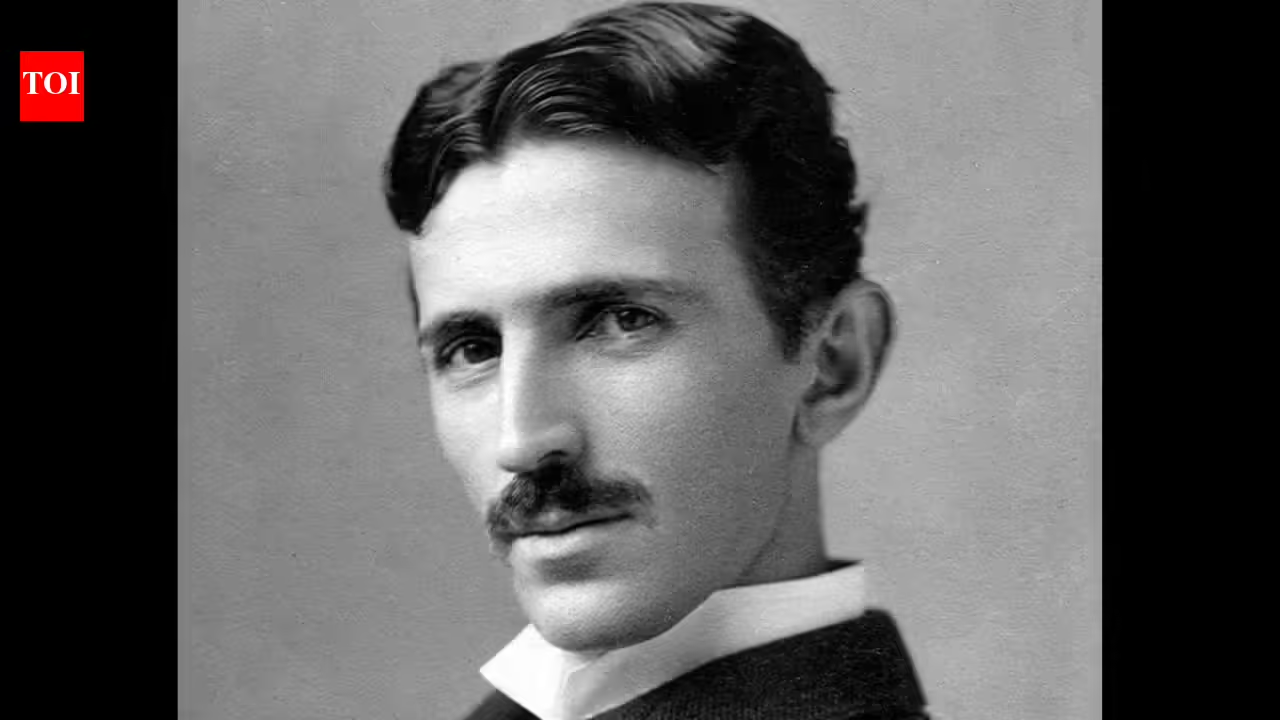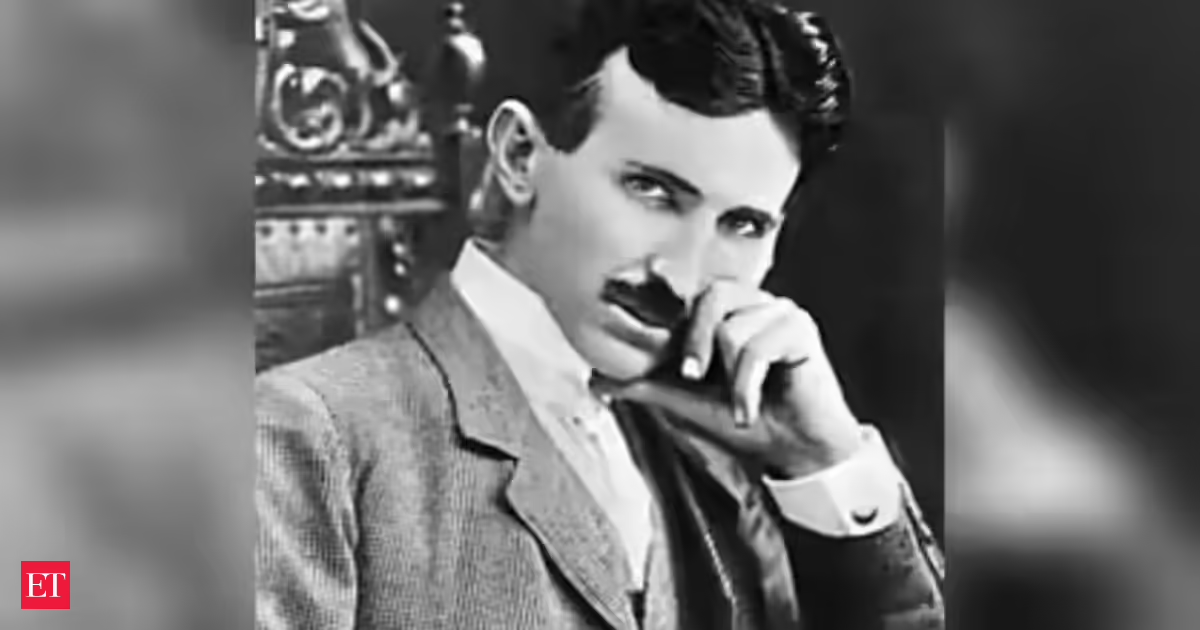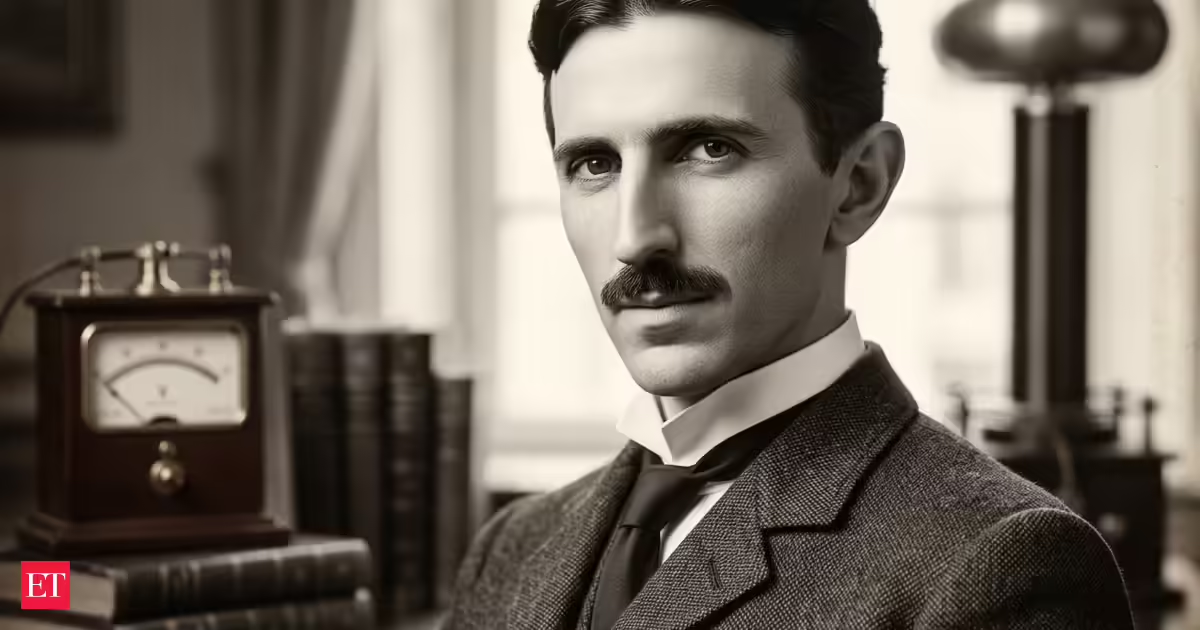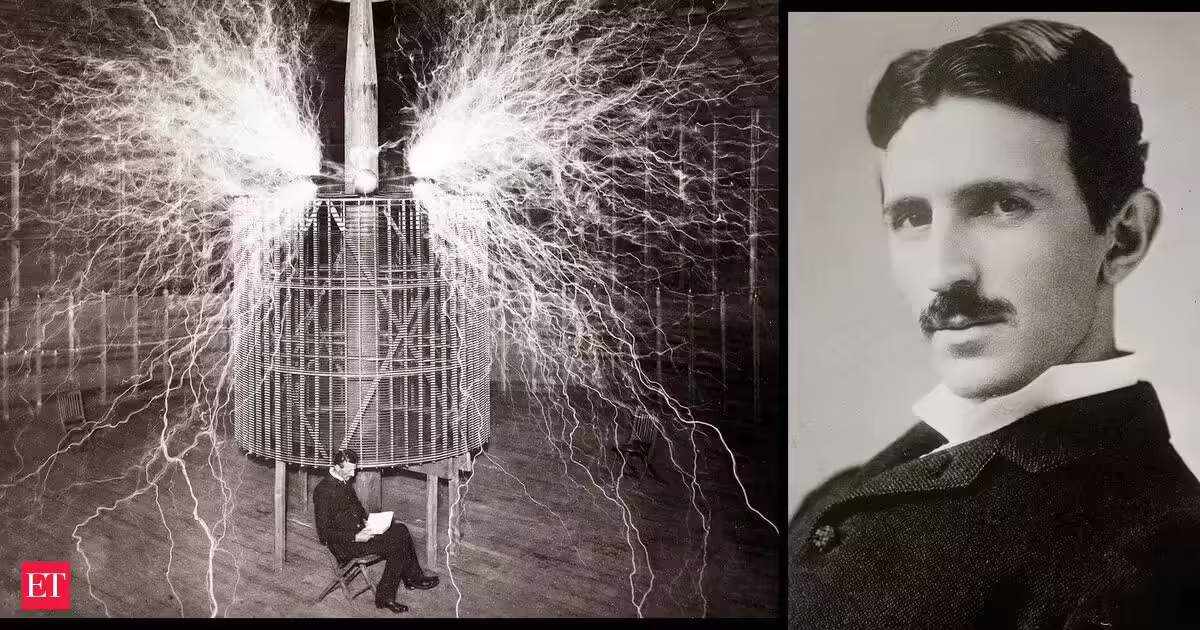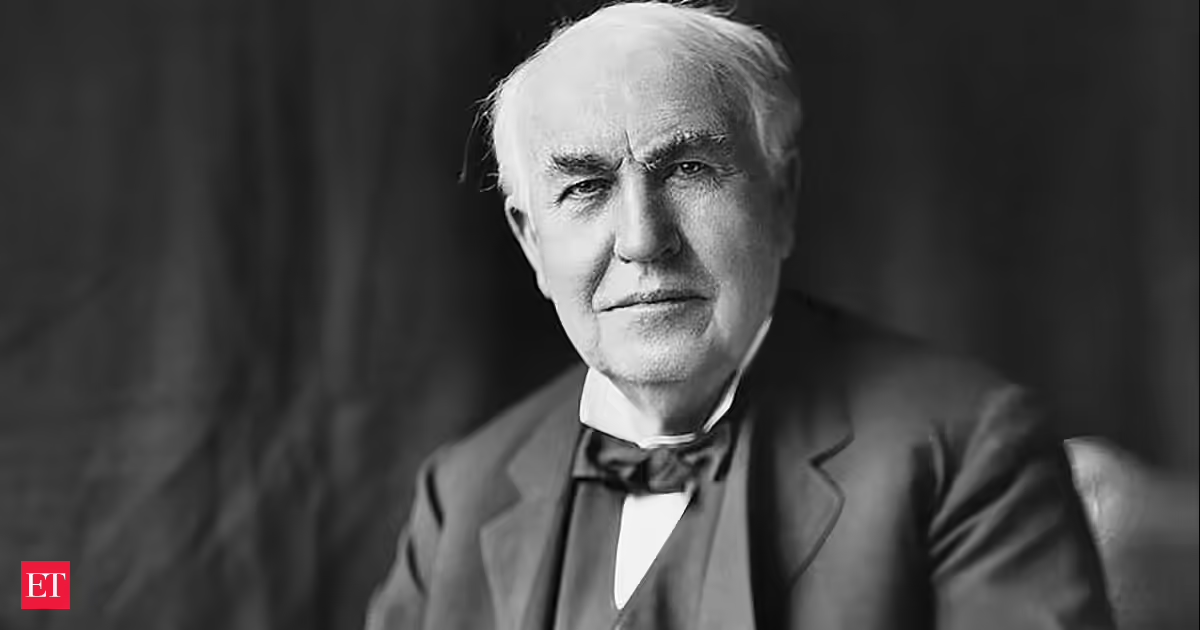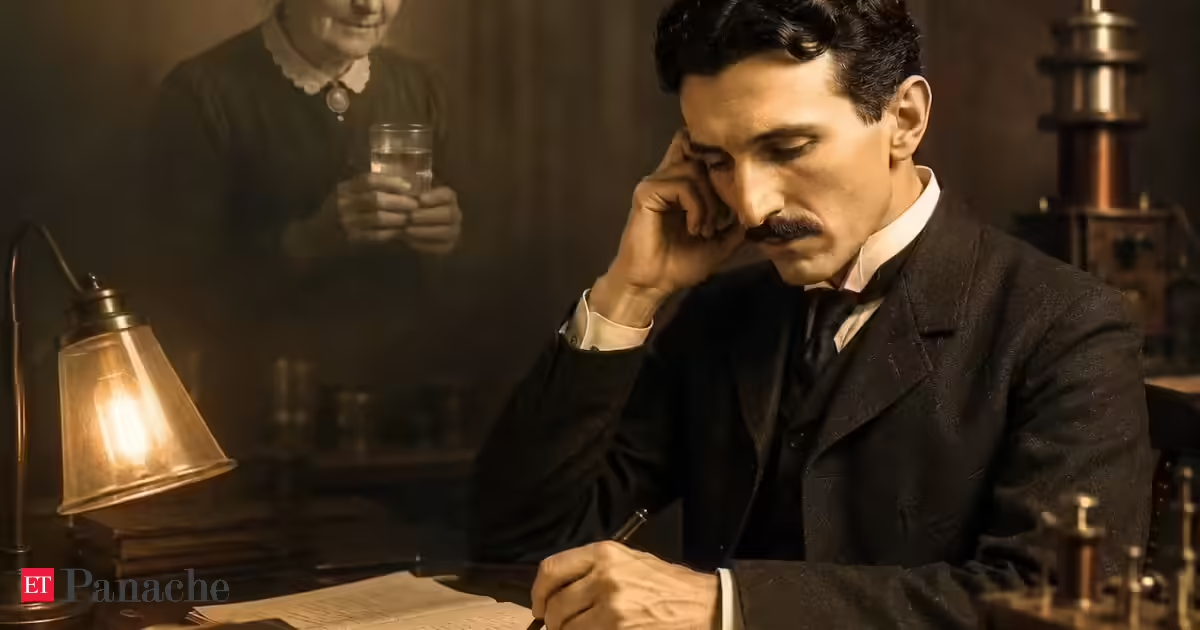
Many historical figures are remembered for their inventions, discoveries, or achievements. Yet sometimes it is a single sentence, filled with emotion, that keeps their memory alive across generations. One quote often linked to inventor and electrical engineer Nikola Tesla continues to circulate because it reveals a deeply personal side of a man usually associated with science and technology. The words speak not about machines or electricity, but about family, sacrifice, disappointment, and the cost of dedicating one's life to a larger cause."I wish I could be beside you now mother, to bring you the glass of water. All these years I have spent in the service of mankind brought me nothing but insults and humiliation"The quote is widely attributed to Tesla, although historians continue to debate its exact authenticity. Some accounts describe it as a message connected to his mother, while others present it as one of the final reflections associated with his later years. Regardless of its origin, the statement has resonated with readers because it captures a feeling many people understand, the pain of giving everything to a mission and still feeling unappreciated.At its heart, the quote expresses regret and longing. Tesla appears to look back not at his scientific achievements but at a simple act of care he wishes he could offer his mother. The contrast is striking. A man who helped transform the modern world speaks not of fame or inventions but of bringing a glass of water to someone he loved. It suggests that personal relationships can matter more than public success, especially when life nears its end.The second part of the quote carries a sense of disappointment. Tesla suggests that his years spent working for the benefit of humanity brought him "nothing but insults and humiliation." Whether these were his exact words or not, the sentiment reflects the struggles he faced throughout much of his life. Despite changing the course of electrical engineering, Tesla often battled financial problems, criticism, failed business ventures, and a lack of recognition during his lifetime.A Brilliant Mind Ahead of His TimeNikola Tesla is regarded as one of the most influential inventors in modern history. Born on July 10, 1856, in Smiljan, then part of the Austrian Empire and now located in Croatia, Tesla grew up in a Serbian family. His father, Milutin Tesla, was a Serbian Orthodox priest, while his mother, Georgina Djuka Tesla, was known for her creativity and ability to build practical household tools.From an early age, Tesla displayed extraordinary memory and intellectual ability. He developed a strong interest in science, engineering, and electricity. His education took him to the Austrian Polytechnic in Graz and later to studies in Prague, where he focused on engineering, mathematics, and physics.Before arriving in the United States, Tesla worked in several European cities, including Budapest, Paris, and Strasbourg. During this period, he gained valuable engineering experience and began developing ideas that would later transform electrical systems around the world.The Move to America and Clash With EdisonTesla moved to the United States in 1884 carrying little money but a strong belief in his ideas. He joined Thomas Edison's company and worked on electrical systems. However, the partnership did not last long.The two inventors held very different views on how electricity should be transmitted. Edison supported direct current (DC), while Tesla believed alternating current (AC) offered a more efficient solution for long-distance power transmission. Disagreements over compensation and technical approaches eventually led Tesla to leave Edison's company.That decision would become one of the defining moments of his career.How Tesla Changed the Modern WorldTesla's greatest contribution was the development of the alternating current power system. At a time when the future of electricity remained uncertain, he demonstrated that AC power could travel long distances efficiently and economically.Industrialist George Westinghouse recognized the value of Tesla's work and purchased several of his patents. Together, they helped establish AC as the standard system for electrical distribution.One of the most important demonstrations came during the 1893 World's Fair in Chicago, where AC technology powered the exhibition. The success helped convince businesses, governments, and the public that Tesla's system represented the future of electricity.Today, homes, offices, factories, and cities around the world continue to rely on principles Tesla helped develop more than a century ago.Beyond ElectricityTesla's achievements extended far beyond alternating current. Throughout his life, he secured more than 100 patents and explored ideas that often seemed decades ahead of their time.Among his most famous inventions was the Tesla coil, introduced in 1891. The device produced high-frequency electrical currents and later became important in radio and electronics research.In 1898, Tesla amazed audiences by demonstrating a remote-controlled boat, an invention that anticipated modern robotics and wireless control systems. He also conducted research involving radio waves, wireless communication, X-rays, and electromagnetic fields.Many historians credit Tesla's early experiments with laying important groundwork for future communication technologies.The Dream of Wireless CommunicationTesla's ambitions were often larger than the technology and funding available during his era. One of his most ambitious projects was Wardenclyffe Tower on Long Island, New York.Supported initially by financier J.P. Morgan, Tesla hoped the facility would become the center of a global wireless communication and power transmission network. He envisioned a future in which information and energy could travel around the world without wires.However, funding eventually disappeared and construction stopped. The project was never completed.The collapse of Wardenclyffe represented one of the greatest disappointments of Tesla's career. Many of his contemporaries viewed the failure as proof that his ideas were unrealistic. Today, some historians see the project differently, arguing that it reflected how far ahead of his time Tesla truly was.Financial Struggles and Later YearsDespite his inventions and patents, Tesla rarely enjoyed lasting financial security. He often invested his resources back into research and struggled to turn many of his ideas into profitable businesses.As the years passed, he became increasingly isolated. He continued to work and develop concepts, but many remained unfinished due to a lack of funding.Tesla spent much of his later life living in New York hotels. He died in January 1943 at the Hotel New Yorker. At the time of his death, he was facing financial difficulties, a situation that had followed him through much of his adult life.Ironically, recognition grew significantly after his passing. In the same year he died, the United States Supreme Court upheld Tesla's earlier radio patents in a decision related to long-running patent disputes involving Guglielmo Marconi.
Quote of the day by inventor Nikola Tesla: 'I wish I could be beside you now mother, to bring you the glass of water. All these years...' The genius scientist reflects on the true personal cost of being ambitious
Nikola Tesla's widely shared quote offers a glimpse into the emotional struggles often associated with the inventor's later years. While historians debate its authenticity, the quote reflects themes of sacrifice, regret, and lack of recognition. Explore the meaning behind the words and traces Tesla's remarkable journey, from developing the alternating current (AC) power system to pioneering innovations in radio, wireless communication, and electrical engineering that continue to shape the modern world.
1,064 words~5 min read