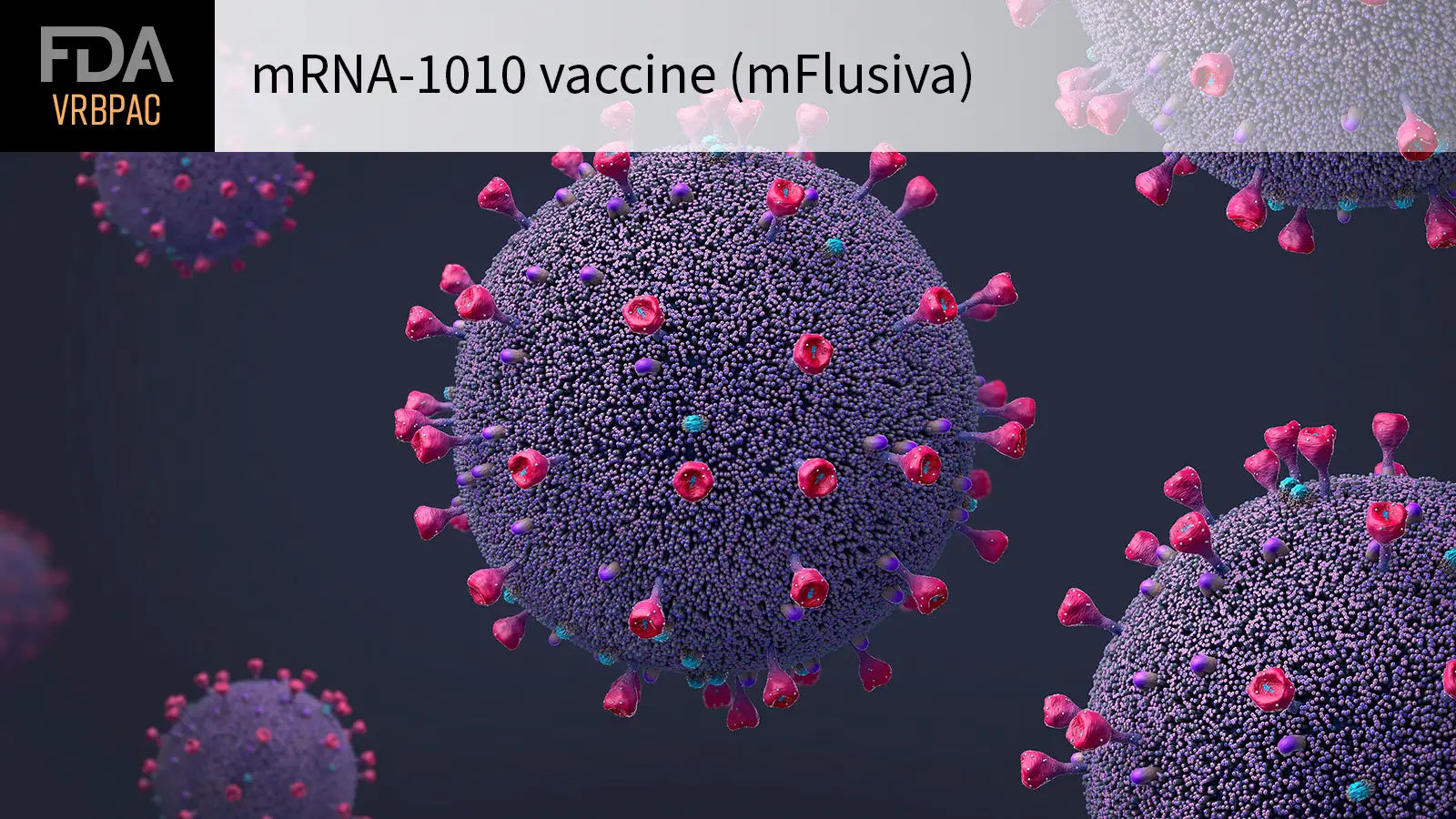
Ahead of an advisory committee meeting this week, FDA reviewers raised no serious efficacy or safety concerns about Moderna's mRNA flu vaccine candidate for adults 50 and older, which has the potential to become the first such product approved by the agency.
The trivalent influenza vaccine (mRNA-1010) is the one FDA controversially refused to consider earlier this year amid questions about the pivotal study's control arm.
In the Fluent randomized trial, the vaccine -- which targets influenza A/H1N1, A/H3N2, and B/Victoria -- outperformed standard flu shots among adults 50 and older, with a relative vaccine efficacy of 26.6%. Among Fluent's more than 19,000 adults 65 and older, the mRNA shot's relative vaccine efficacy was 27.4%.
In briefing documents released ahead of the Thursday meeting of the Vaccines and Related Biological Products Advisory Committee (VRBPAC), FDA reviewers questioned whether comparing the mRNA vaccine against standard-dose flu shots is adequate and clinically meaningful in adults 65 or older, given that high-dose, recombinant, or adjuvanted vaccines are recommended in that age group.
Other concerns raised included a higher rate of solicited adverse events with the mRNA vaccine (76% vs 47% with the standard flu shot), that efficacy was not established in immunocompromised or frail patients, whether a single season of efficacy data was enough to support an approval, and uncertainty of effectiveness against influenza B/Victoria due to a limited number of cases.