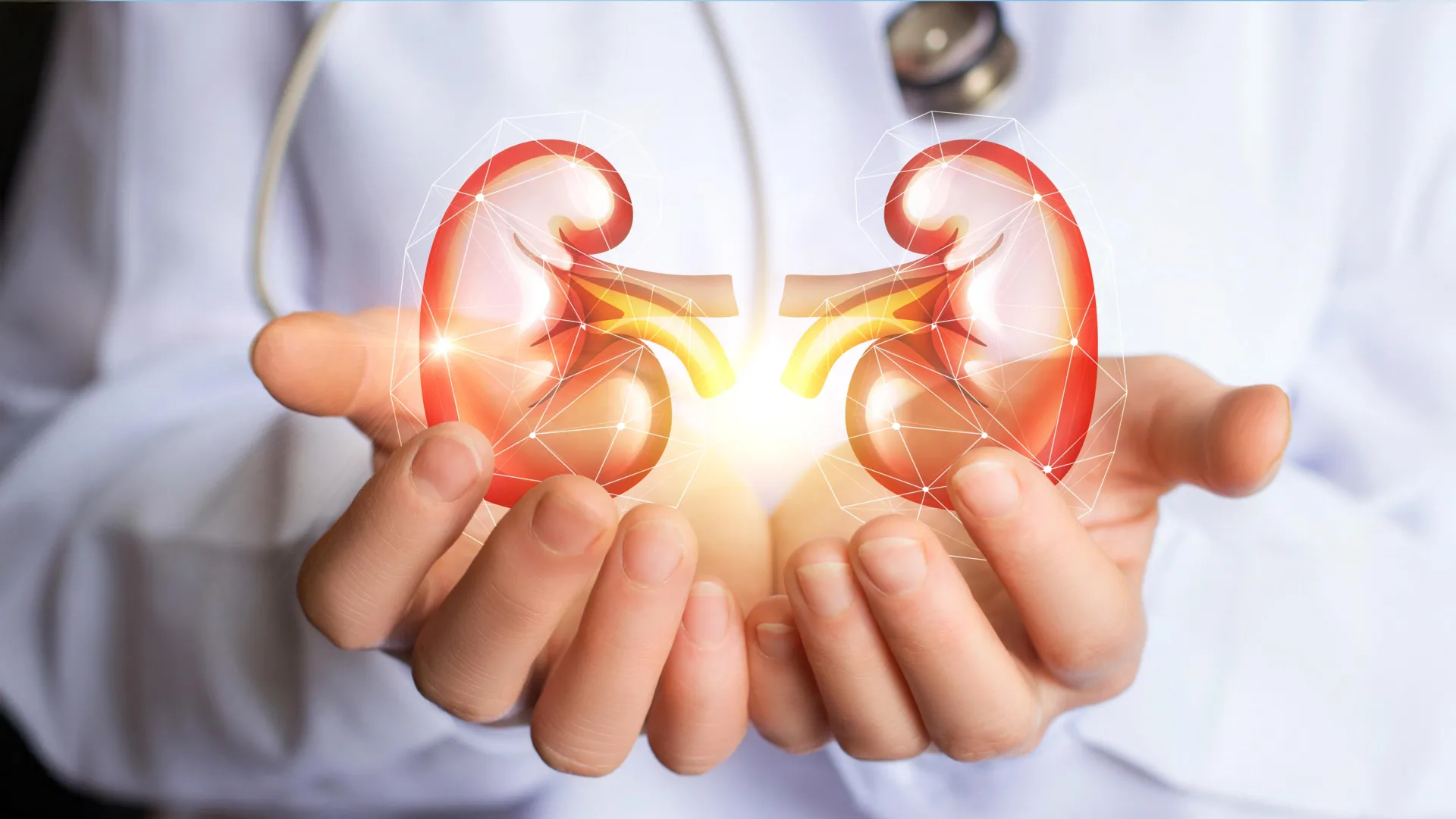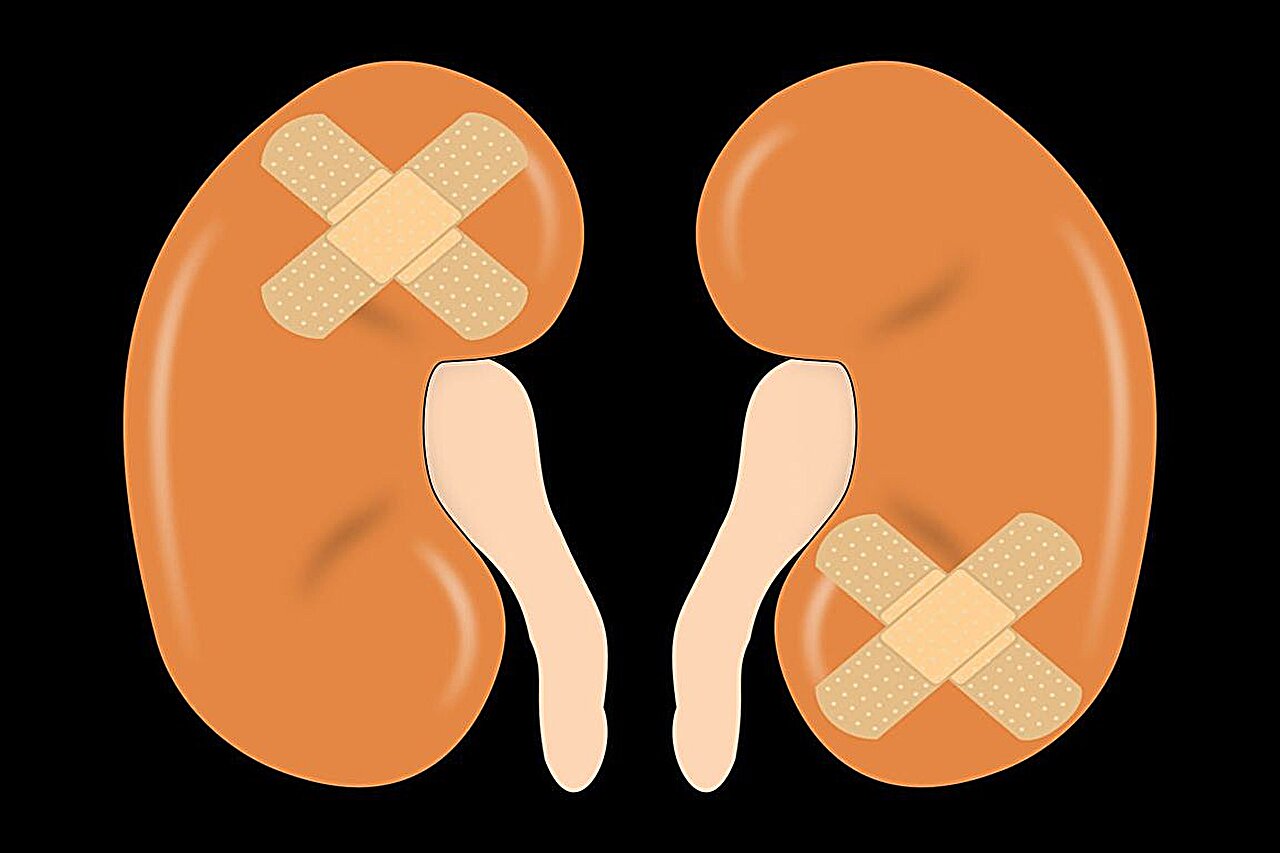
A drug developed at UCLA that helps heart tissue repair itself after a heart attack by blocking ENPP1 also helps kidney tissue repair and regenerate in mice. Credit: Clip art composite
A drug previously developed at UCLA to help heart tissue repair itself after a heart attack might also help kidney tissue repair and regenerate, researchers have found.
The drug, called AD-NP1, which was recently approved by the FDA for a Phase 1 clinical trial in humans, works in heart tissue by blocking a protein that disrupts healing and prevents internal organs from fully recovering. Researchers have now found that blocking this protein in kidney tissue speeds repair after kidney injury in mice.
The new finding, published in Cell Stem Cell, builds on many years of research in the laboratory of UCLA cardiovascular scientist Arjun Deb.
His group discovered that an injured kidney produces a protein called ENPP1 that initiates a metabolic chain of events, disrupting energy production and function of multiple cells in the injured region and impeding tissue repair. The researchers found that blocking ENPP1 enhanced kidney repair and reduced scar tissue formation, thereby improving kidney function. Deb's group previously determined that blocking ENPP1 in heart tissue improved healing.