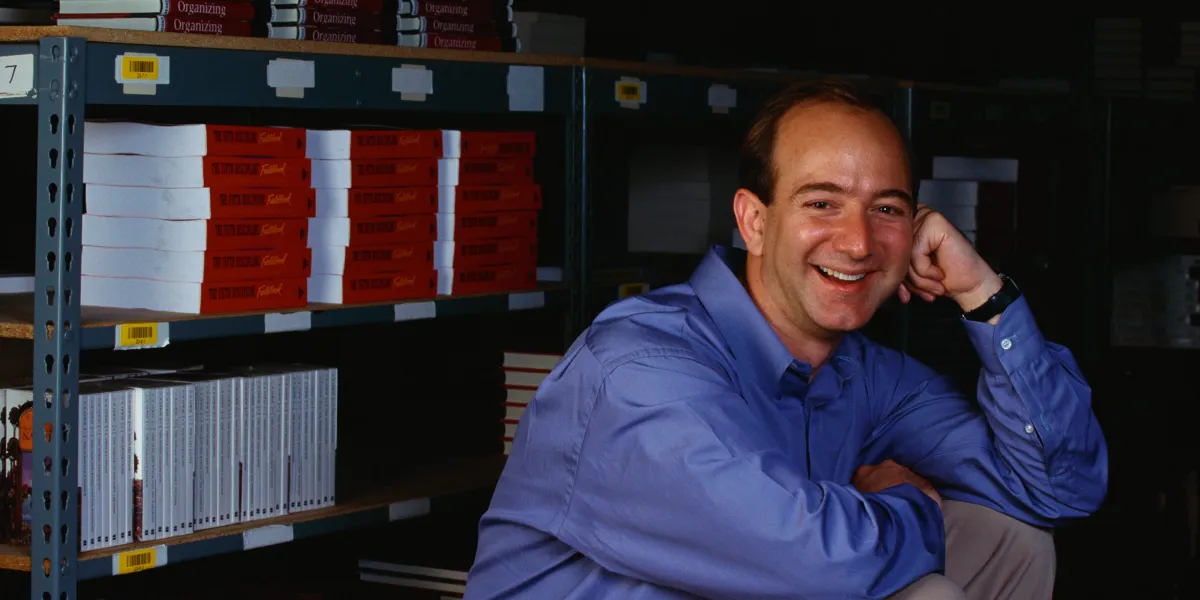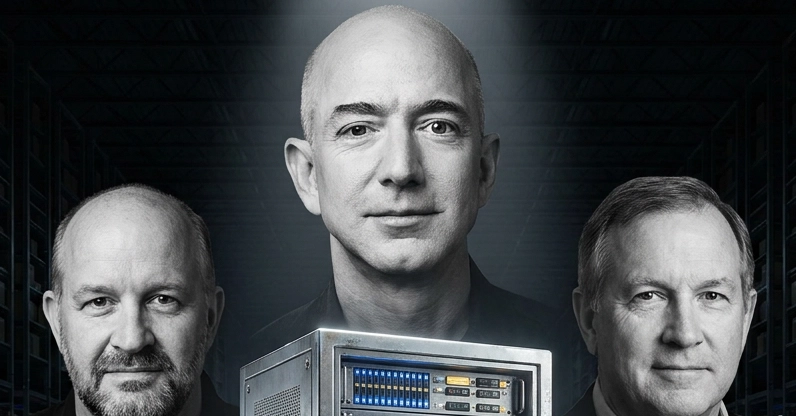
In the mid-1990s, the world viewed the burgeoning internet as a digital playground—a place for chat rooms, static web pages, and the occasional novelty. But inside a small, humming office in Seattle, Jeff Bezos was engaged in a much more violent struggle. He wasn't just building a bookstore; he was architecting a way to manage the infinite complexity of human demand.
To the casual observer, the growth of Amazon was a success story of marketing and vision. But to those in the trenches of its engineering war rooms, it was a desperate, high-stakes battle against the laws of mathematics, physics, and thermodynamics. Between 1996 and 1998, Bezos oversaw a transformation that would change the world: the transition from a fragile collection of digital files to a massive, distributed, and eventually autonomous engine of global commerce—and, in the quiet of his own mind, the conceptual leap toward the stars.
1996: The Death of the Flat File and the Birth of Relational Logic
In 1996, Amazon was a victim of its own success. The company’s product catalog was expanding at a rate that its primitive architecture could not sustain. At the time, the system relied on "flat files"—simple, linear text files stored on local drives. It was a method that worked for a small inventory of books, but as the number of Stock Keeping Units (SKUs) grew, the system began to choke.