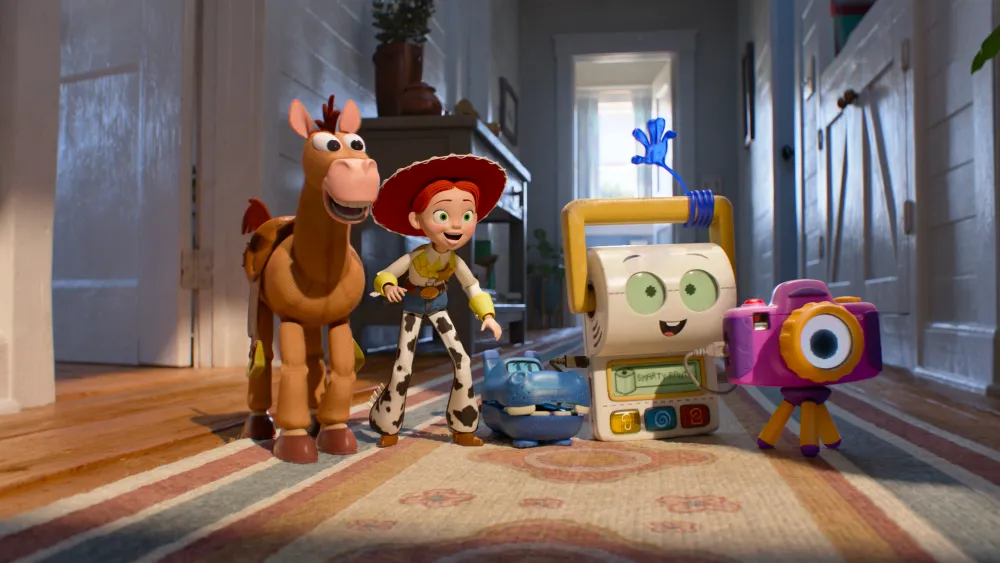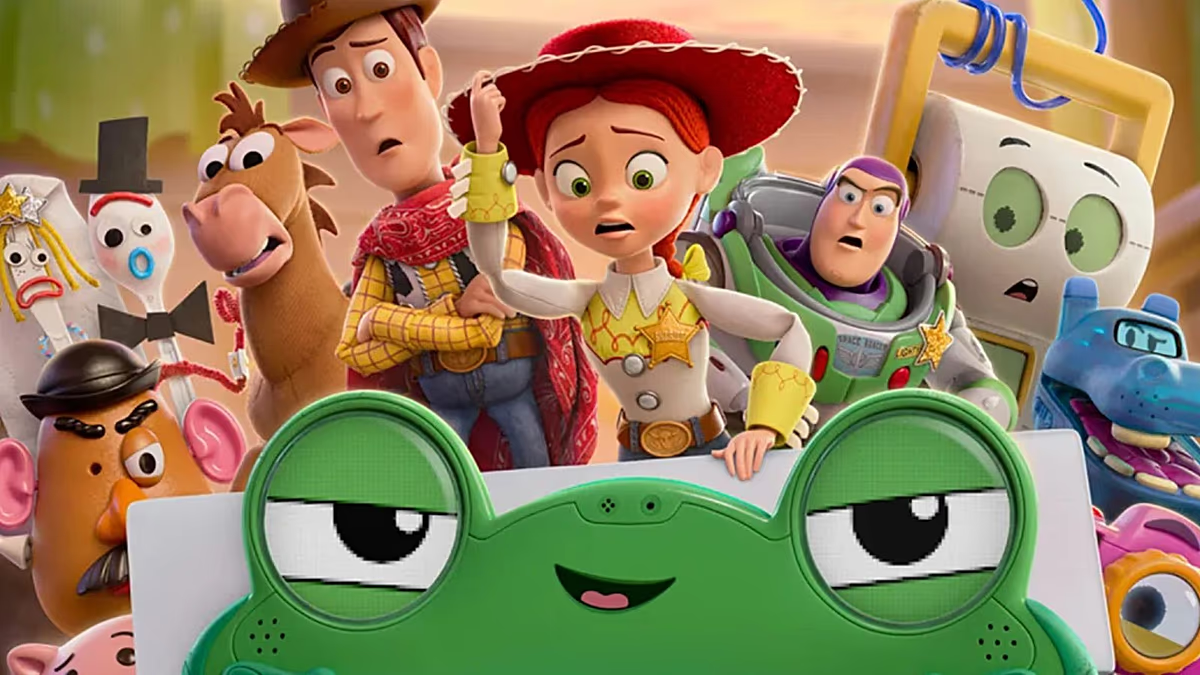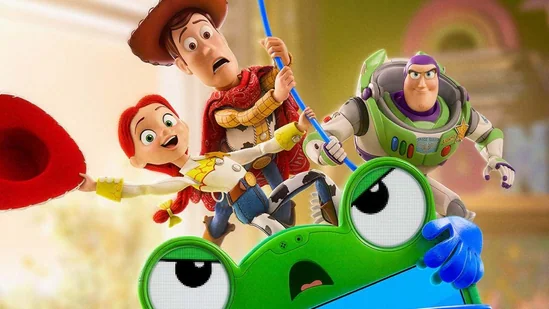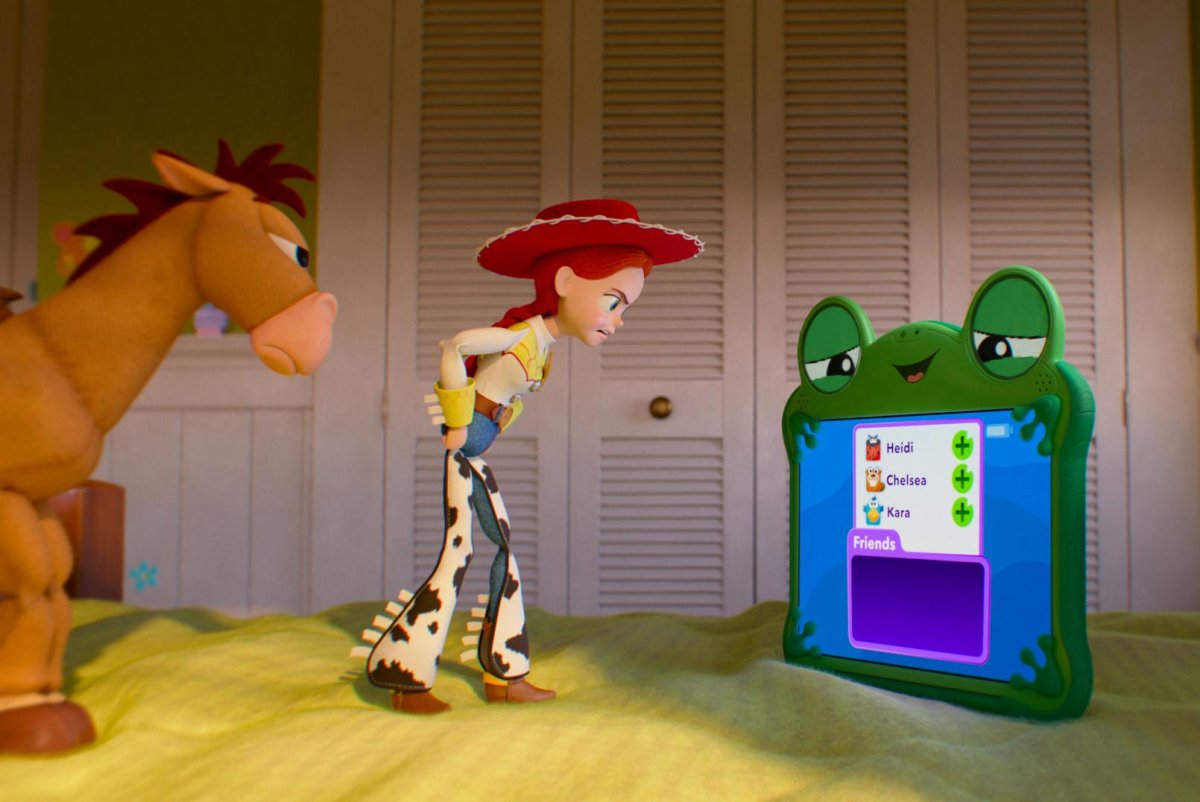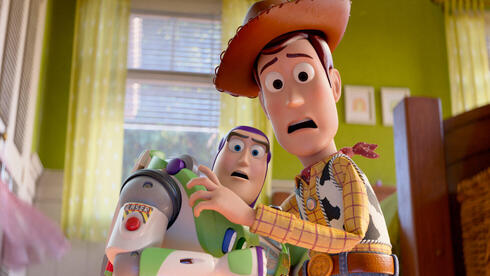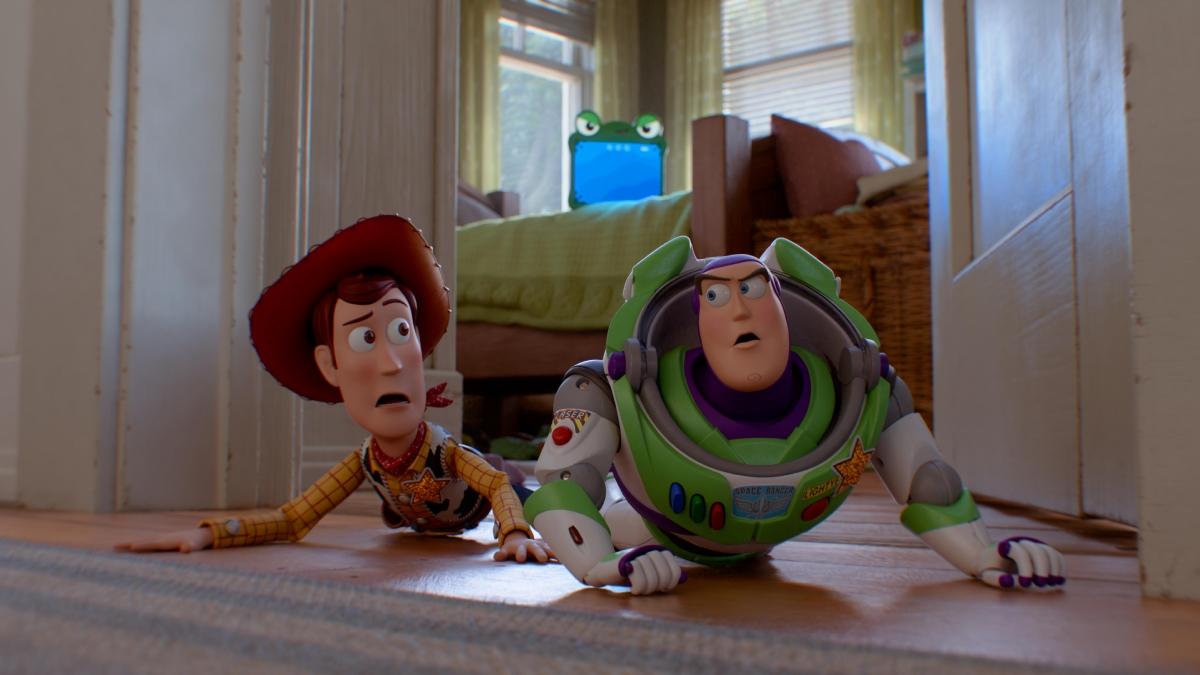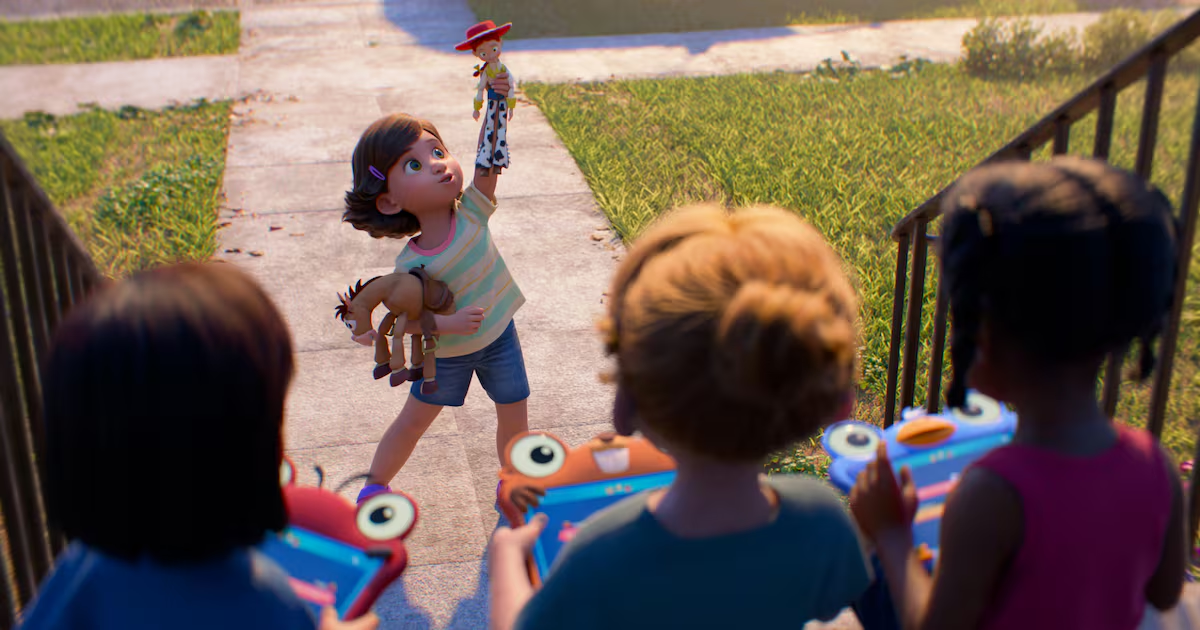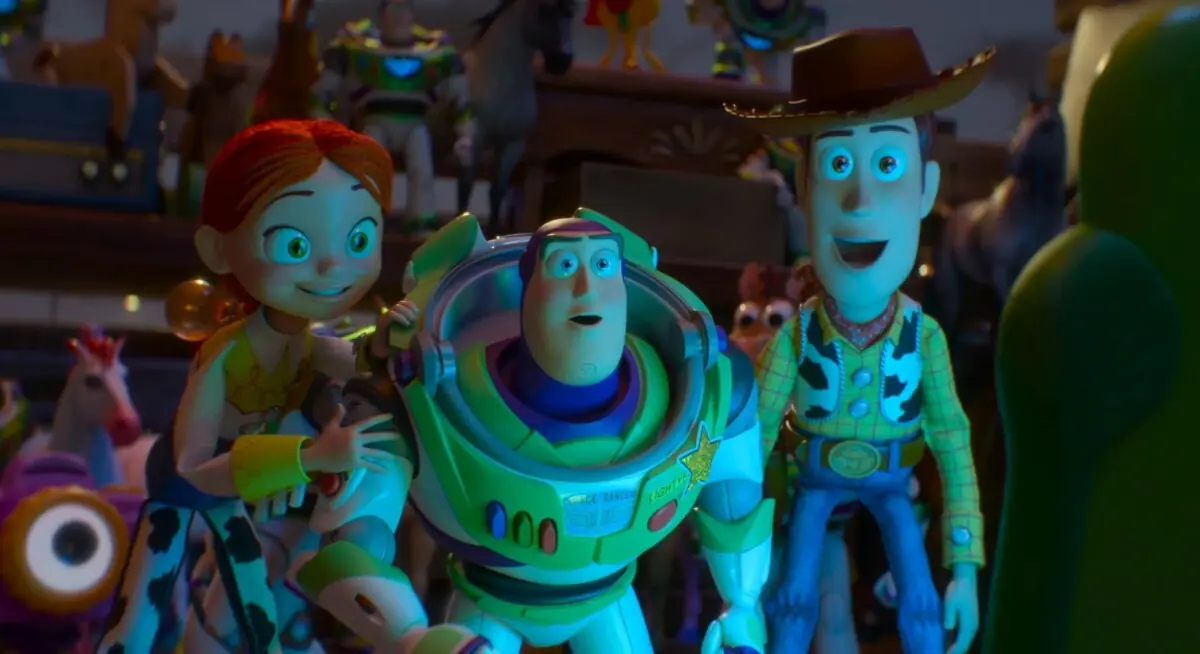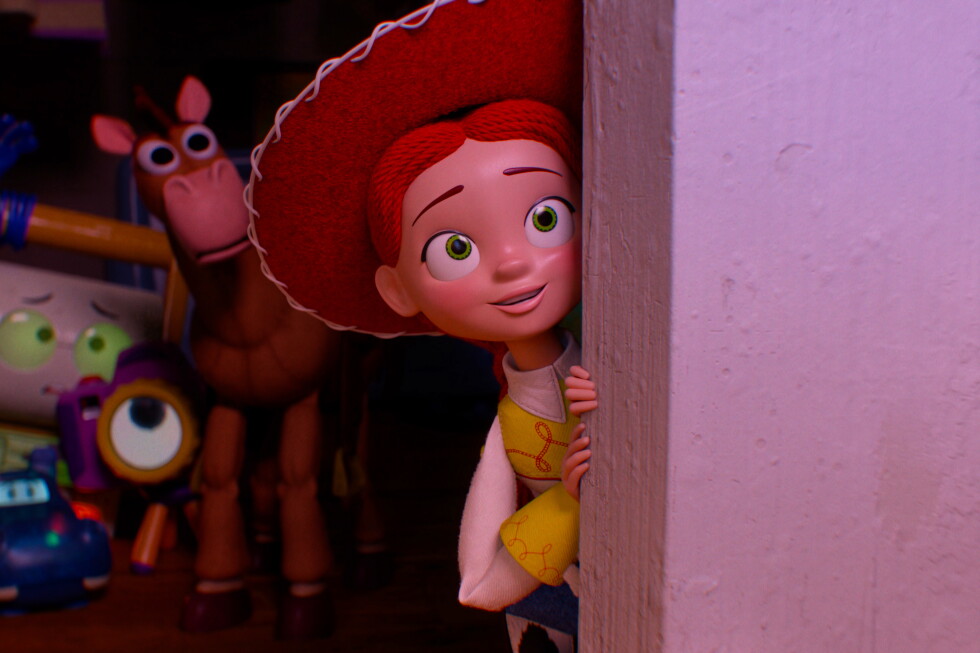
The “Toy Story” movies, like “Star Wars” and those games Michael Jordan played with the Washington Wizards, pose a problem of canon.The first three movies are a near-perfect trilogy: a series that spanned a childhood: from bedroom playtime to college, from enchantment to loss. The scope didn’t seem epic. The movies rarely strayed much further than the pizza joint down the road or Al’s Toy Barn. Yet those first three films, so attuned to the pangs of both childhood and parenthood, seemed to stretch to infinity and beyond. But, of course, narrative neatness is not an abiding principle in modern-day Hollywood franchise guardianship. Nine years after “Toy Story 3” — an ending as flawless as Jordan’s almost-goodbye jumper in 1998 — came “Toy Story 4.” It made a billion dollars, easy, and blew up the artful arc of “Toy Story.” The less said about “Lightyear” — for sure the Washington Wizards chapter of “Toy Story” — the better.
Yet as much as my bitter heart wanted to reject “Toy Story 4,” I had to grant that it was pretty good. There is only so much moral grandstanding I can do in the face of Tony Hale as a fork and Key and Peele as plushies.
4 MIN READ
And “Toy Story 4” also had a decent point. If the original trilogy suggested the story ends when the kid reaches adulthood, the fourth movie is about Woody, the empty nester. Tom Hanks’ cowboy and Annie Potts’ Bo Peep find out life goes on after Andy. They might as well have moved to Florida.