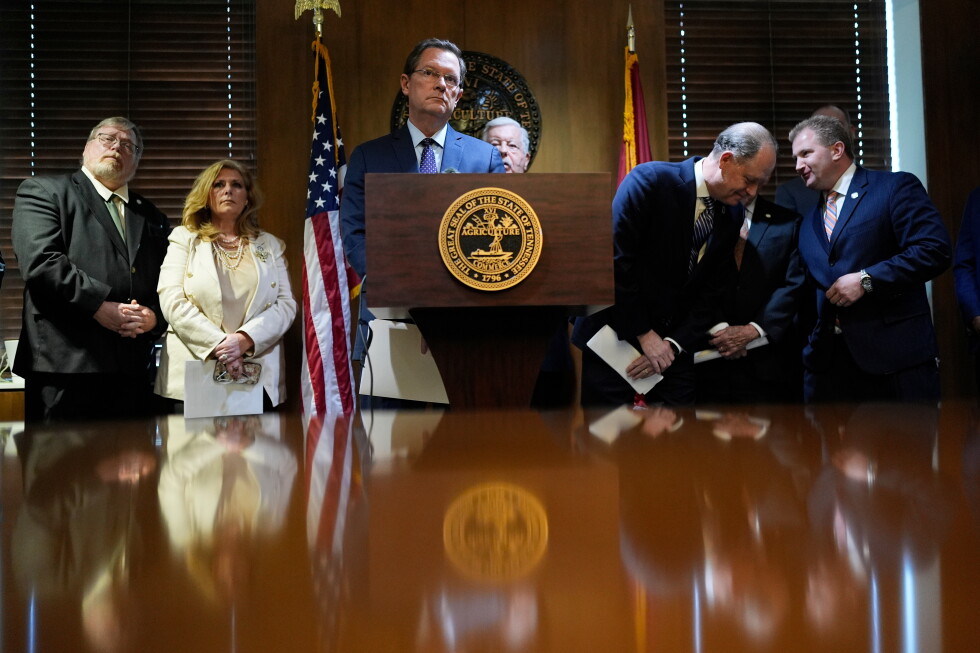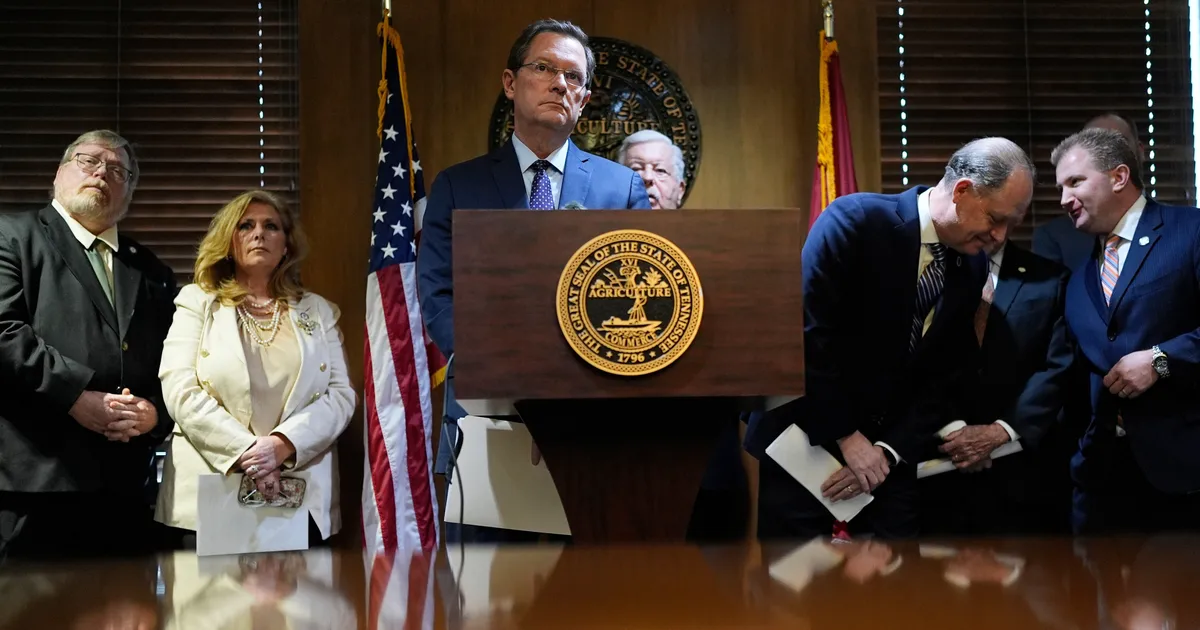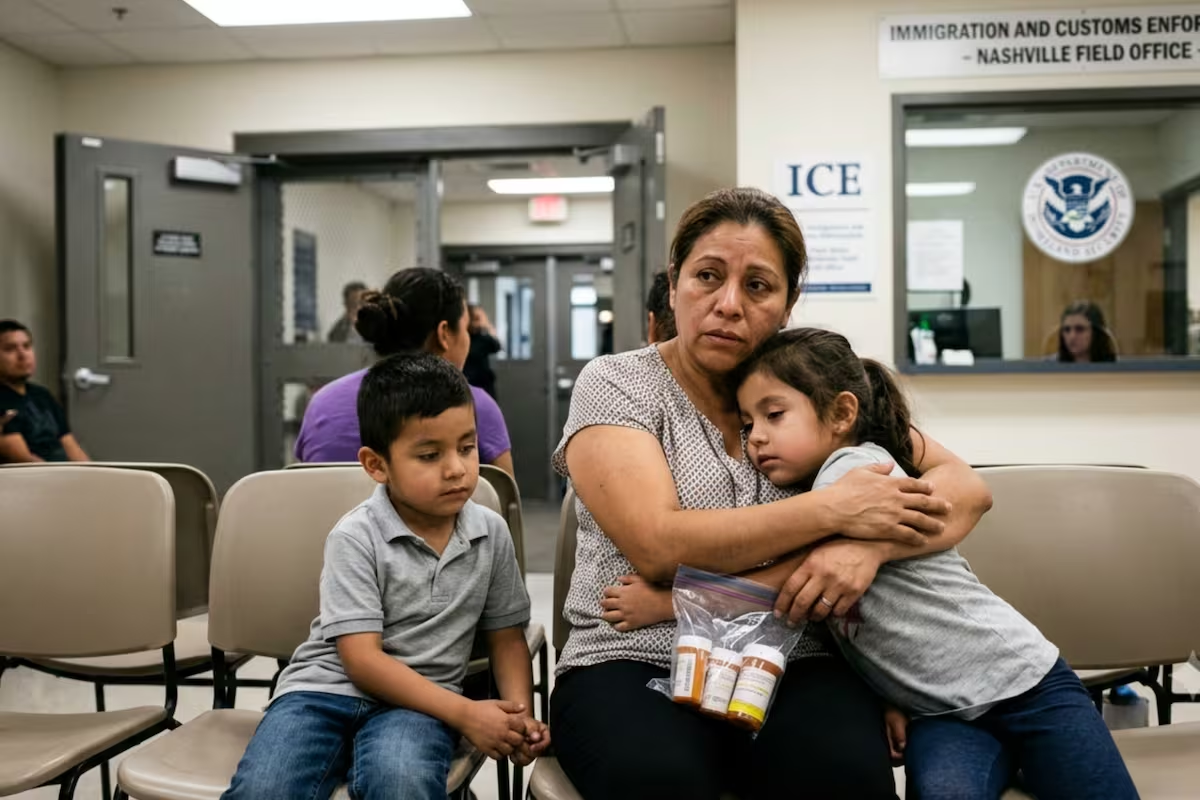
A new Tennessee law drafted with the White House requires state and local government agencies to report immigrants receiving any state-funded benefits to ICE. Even child cancer patients.Show Caption
A new Tennessee law drafted with Trump policy advisor Stephen Miller requires the state to report the immigration status of about 400 disabled and chronically ill children to ICE.The children get lifesaving care for conditions like cancer and cystic fibrosis through a last-resort program that receives both state and federal funding.Families were notified that if their children remain in the program, their information will be shared with federal law enforcement. At least 4 children have already withdrawn from the program.Immigration advocates and health officials warn this could cause children to lose access to critical medical care.About 400 disabled immigrant children who are receiving lifesaving state-paid medical care will have their immigration status reported to ICE at the end of this month, due to a new Tennessee law drafted with input from the White House. The Tennessee Department of Health Children’s Special Services program is a “payer of last resort” that ensures access to lifesaving medical care for very low-income children who are not eligible for TennCare. The program is open to people aged 21 and younger with disabilities and chronic illnesses like cystic fibrosis, cancer and spina bifida. To participate in the program, families of four must have an annual income of $66,000 or less.On June 1, the Tennessee Department of Health mailed notices to 400 families receiving care through CSS warning that officials will be required by a new law to report the patients’ immigration status if they remain on in the program past June 30."Due to the current immigration status of your child, [redacted], if the Children’s Special Services program keeps paying for healthcare after June 30, 2026, the Tennessee Department of Health will share your child’s information to the Tennessee Department of Safety,” wrote interim Health Commissioner John Dunn.Nashville's Metro Public Health Department Director Sanmi Areola told The Tennessean, part of the USA TODAY Network on June 11 that as many as 100 critically ill children up to age 17 could be impacted, including some with cancer and others reliant on ventilators."I am very worried," Areola said. "These are some of our most vulnerable children. I personally shudder to think about the consequences of this.”A new law passed by Tennessee Republicans this spring requires all government agencies to report people to the state’s Immigration and Customs Enforcement (ICE) liaison office if they are receiving government benefits but are unlawfully present in the U.S. President Donald Trump’s Deputy Chief of Staff Stephen Miller helped draft the legislation. The White House did not respond to a request for comment for this story.Tennessee lawmakers hailed the policy as a fiscal-responsibility measure to ensure taxpayer dollars are not used for people who don't deserve them."We have a $971 million problem with illegals getting some type of benefits in the state of Tennessee," bill sponsor Rep. Dennis Powers said during debate on the House floor. “We have people here from all over the world from Mexico, Guatemala, Honduras, whatever, and they need to come here legally."Republicans passed a package of immigration bills drafted with the White House, to require proof of immigration status for nearly every public benefit. Throughout debate on the package, Republican lawmakers cited a report on crimes committed by undocumented immigrants. The most common crime committed by undocumented people in Tennessee is DUI, according to the Tennessee District Attorneys General Conference's 2025 Immigration Report."They have broken the law as soon as they crossed our border. We live in a sovereign country with borders. As soon as they walk across that border, they are here illegally: they have broken Title 18 of the U.S. Code," Powers said. "We are not an extended-stay hotel for the rest of the world."Tennessee lawmakers say taxpayers expect priority for legal residentsChildren’s Special Services is federally funded through the Maternal and Child Health Services grant – the same grant that funds the WIC food assistance program for low income-mothers and children younger than 5 regardless of immigration status. There is no federal requirement that the grant funding be used for U.S. citizens only.Republican Tennessee House Assistant Majority Leader Mark Cochran said that taxpayers should take priority over people in the U.S. unlawfully.“Tennessee taxpayers expect and deserve to have their resources prioritized for legal residents and citizens first,” Cochran said.He indicated that emergency care will remain available for immigrant children because federal law requires lifesaving treatment be available regardless of immigration status, insurance or criminal history.“The new law does not deport children receiving lifesaving care or deny emergency medical care,” Cochran said. “It simply ensures Tennessee public benefits are reserved for those legally present in the U.S. and directs appropriate referrals to ICE, while fully upholding all federal mandates for emergency and lifesaving care.”Tennessee Gov. Bill Lee’s communications director, Elizabeth Johnson, said that the state is “required to administer the Children’s Special Services Program in accordance with applicable federal requirements and state law.”State House Speaker Cameron Sexton, Lt. Gov. Randy McNally and other senior Tennessee Republican leadership did not respond to questions.Immigrant rights advocates raise alarm The nonprofit Tennessee Justice Center sent a letter June 3 to state health department officials, asking them to reconsider the directive, saying: "If you do, you will no doubt save or prolong the lives of numerous chronically ill children."Brant Harrell, the center's legal director, enumerated ways he believed the directive involving the CSS program stems from a misinterpretation of state and federal laws. He also included emotional pleas to continue care for the children, saying, "interruption of their care can result in serious injury, suffering, and death."A center staff member "encountered a family whose severely disabled child is on a ventilator and who faced the denial of CSS benefits," Harrell said."We have received reports of durable medical equipment suppliers preparing to take oxygen tanks from other childrens' homes because they no longer qualified for CSS due to their citizenship status."Michele Johnson, the center's executive director, said many of the program's participants are children of undocumented immigrants and aren't insured or eligible for Medicaid or TennCare, so the CSS program is their only resource for care."Hundreds of children who have illnesses that are treatable will die because of where they were born," Johnson said.Other states that provide a match to federal dollars also offer the program for children with severe disabilities, including cerebral palsy, spina bifida, cystic fibrosis, sickle cell anemia, congenital cardiac conditions and seizure disorders."It's the state's decision, whether we're talking about the new law or how it's interpreted or how it's implemented," Areola said. "The consequences to the health of our residents, our children, are not expected to be good, and we've communicated that very clearly to the state."Areola said his office is working with local families whose immigration status may have changed to update their documentation, which could remove some from the list reported to the state."I will continue to do that," he said.For the families whose immigration status will be reported, "our goal has to be for these kids to have access to the care that they need and the medications that they need," Areola said. "We will just keep fighting and exploring all the options that we have, keep working with the state, with decision makers, our partners and providers."The Tennessee Justice Center sent a demand letter to the state health department threatening a civil lawsuit if the state follows through, arguing it could lead to sicker kids and deaths.Children with critical illnesses often are covered by either the Affordable Care Act or TennCare, but that coverage is often not available for immigrant families."The first wave that impacted participants in the CSS program were 18 to 21" years old, with six seriously ill young adults in Nashville losing care in May when they couldn't provide proof of citizenship, Areola said.His office was able to link those young adults to other services."That's a huge success story for us," Areola said. "But dealing with this larger number is a bigger challenge."Beth Warren covers health care and can be reached at bwarren@tennessean.com or on X at @BethWarrenCJ.Vivian Jones covers state politics and government for The Tennessean. Reach her at vjones@tennessean.com or on X at @vivian_e_jones.