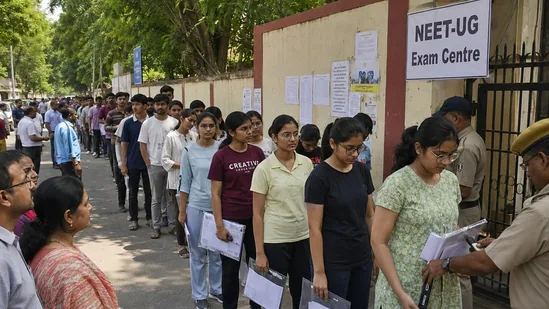
New Delhi: In the wake of the NEET-UG controversy, a Parliamentary panel has called for urgent reforms in the National Testing Agency (NTA) and the creation of a "foolproof" mechanism for conducting entrance examinations, while also raising concerns that the Common University Entrance Test (CUET) may not allow JNU to fulfil its statutory mandate of ensuring socio-economic and regional diversity.In its latest Action Taken Report, the Parliamentary Standing Committee on Education, chaired by Congress leader Digvijaya Singh, endorsed Education Minister Dharmendra Pradhan's 2024 observation that "a lot of improvement is needed in the NTA" and urged wider stakeholder consultations to restore confidence in high-stakes exams such as NEET, JEE and CUET.The panel asked the NTA to expedite implementation of the recommendations of the R. Radhakrishnan-led expert committee and evolve a robust protocol for the transparent and secure conduct of nationwide competitive examinations. The recommendations come against the backdrop of the NEET-UG row, over which the Committee held multiple deliberations with Education Ministry officials.Responding to the panel, the Higher Education Department said the NTA has conducted more than 250 examinations involving over 5.5 crore candidates since its inception in 2018.The Committee also recommended a nationwide database of blacklisted examination vendors. The Department replied that core functions such as question-paper setting and evaluation are not outsourced and that the NTA maintains records of penalised vendors while requiring blacklisting disclosures during procurement.On CUET, the panel welcomed the idea of a common admission platform but questioned whether a uniform MCQ-based examination was suitable across disciplines, particularly humanities and social sciences. It recommended a review of question-paper quality and examination design to ensure alignment with the National Education Policy (NEP) 2020.The Committee specifically flagged JNU, noting that its admission framework had historically been designed to meet the requirements of the JNU Act relating to socio-economic and regional diversity and representation."The CUET as the sole entrance examination has its merits, but it does not allow for universities like JNU, with their specific legislative mandates, to meet their specific needs," the panel notes.The Higher Education Department said the UGC and the NTA had been advised accordingly. Defending CUET, it said the examination had reduced the burden of multiple entrance tests through a single application window and a common calendar for admissions.
Panel pushes NTA reset, flags CUET limits for JNU
A parliamentary committee is urging immediate changes to the National Testing Agency, emphasizing the need for an infallible framework for critical entrance exams such as NEET and CUET. Concerns have been raised regarding CUET's potential impact on JNU's mission to foster diversity in terms of socio-economic and regional backgrounds.
374 words~2 min read