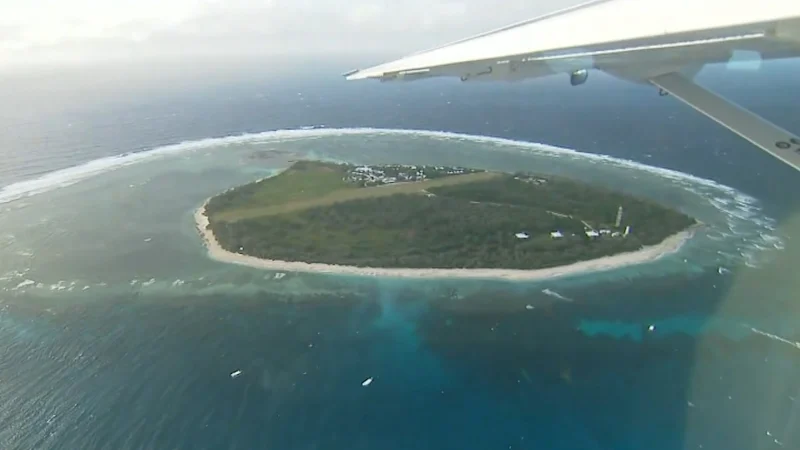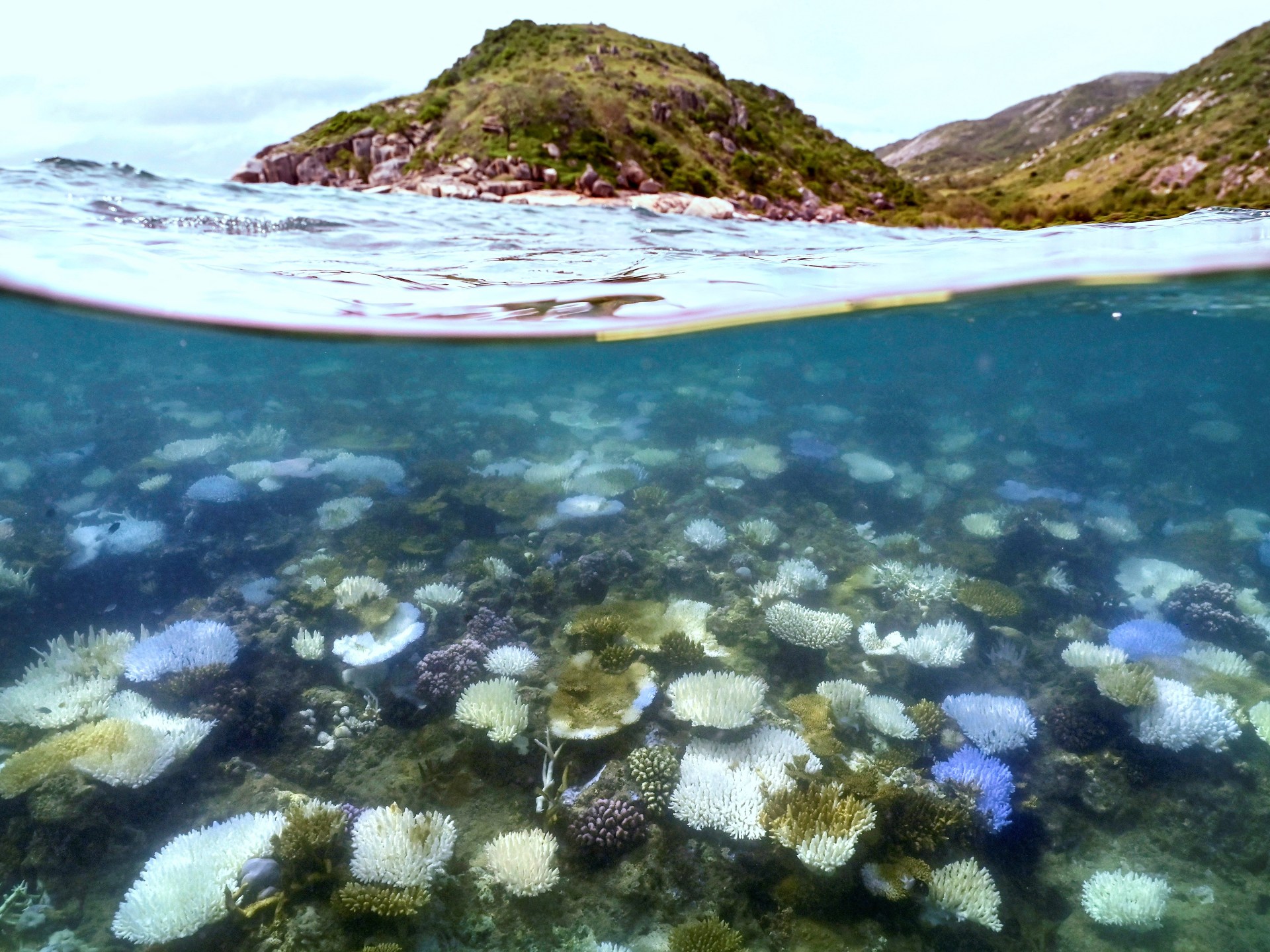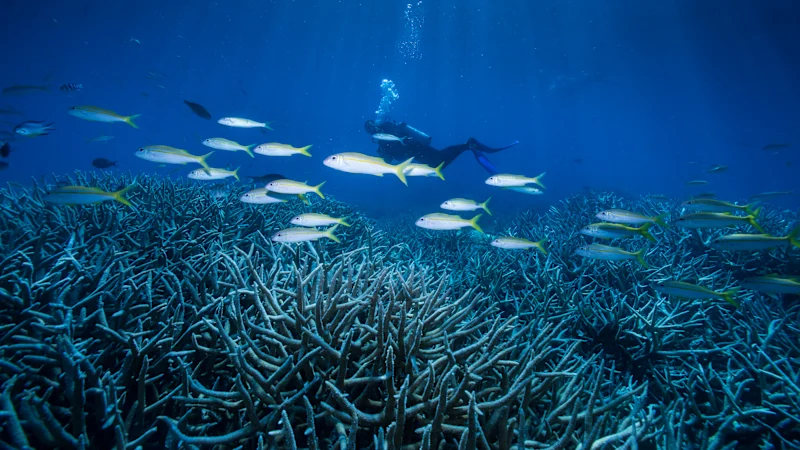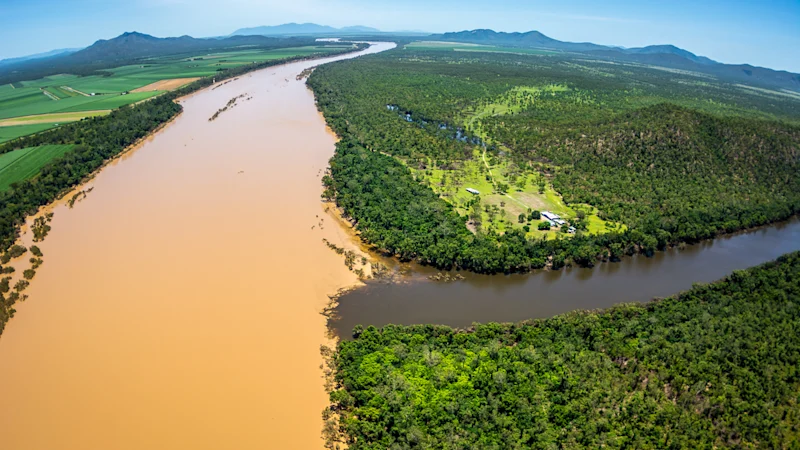
June 17, 2026 — 5:00amThe most important thing the government can do to save the Great Barrier Reef starts in a cow paddock, according to Lyndon Schneiders.Schneiders, who is the director of the Australian Climate and Biodiversity Foundation, said 40 per cent of all land clearing in Queensland occurs in catchments that feed into the reef.Land cleared for cattle grazing contributed more than half of the 4.9 million tonnes of sediment in the last reported year, Schneiders said.Sediment carried out by rainwater onto the Great Barrier Reef in 2019. Australian Climate and Biodiversity Foundation / MCurnock“When you remove vegetation, you’re removing the root structure, you’re often burning it, you’re often removing the native grass covers … then, because it’s Queensland, you know, the big rains come,” he said.That sediment then floats out over the reef from the Burdekin and Fitzroy rivers, choking seagrass and coral by starving them of light.In a report released today, A Muddy Mess: Land Clearing and the Great Barrier Reef, Schneiders, says 400,000 dump trucks worth of mud are pushed through rivers onto the reef every year, and he has called on the federal government to put its new(ish) environmental protection laws into action.Conservationists have long called for an end to land clearing in the reef’s catchment. Australian Climate and Biodiversity Foundation/ MCurnockThe report argues that the laws, passed last year, should be used to identify the worst areas for erosion, create no-go zones for land clearing, and go a step further.“They’ve given themselves the powers that they didn’t previously have to regulate clearing activities in these catchments, but [under] the system as it is right now, each individual landholder has to assess whether or not it’s going to be a problem and then make a referral,” Schneiders said.“Each one in isolation may or may not have a significant impact on water quality but together, they have an impact.”Since 2014, federal and state governments have pledged (and spent) more than $2 billion on the reef’s health, often with the added note that the tourism hotspot supports 77,000 jobs and contributes $90 billion annually to the economy. But the latest Reef Report Card still gives their efforts a “poor” rating for sediment reduction.The reef’s status as a World Heritage Site has been at risk due to water-quality issues and coral bleaching. Australian Climate and Biodiversity Foundation / Cam WhiteIn his report, Schneiders found 856,744 hectares of forest and woodland were cleared in the reef’s catchments between 2018 and 2023 – 84 per cent of it for grazing. However, it should be noted that that period was before the new laws came into effect.Since then, the federal Environment Department has provided advice to 270 landholders who have contacted it about land clearing.“We need to look at the combined impacts of all these clearing proposals and understand where the no-go zones are, turn that into a regulatory map that provides certainty for landholders [and] provides certainty for taxpayers,” Schneiders said.In the time between the completion of Schneiders’ report and its publication, the Queensland government committed a further $330 million to reef water quality, with the aim of meeting water-quality targets and cutting land-based pollution.The Lower Burdekin heavy with sediment. Australian Climate and Biodiversity Foundation / MCurnock“We’ve got to work with farmers, with councils, with property owners, with NRM [natural resource management] groups to ensure we’re doing everything to make sure what’s coming off those catchments gives the reef a fighting chance,” state Environment Minister Andrew Powell told Nine News after the announcement.“Money has never been the issue here,” Schneiders said, noting the $1.8 billion already pledged had done little to stop the flow of mud.Federal Environment Minister Murray Watt will travel to Busan, South Korea, to meet with the UNESCO World Heritage Committee, which will examine an Australian report into the health of the reef.The federal government wrote to the committee in February citing its law changes and defending the management of the reef.If the committee deems that response insufficient, the reef could be placed on a World Heritage in Danger list.Schneiders said establishing a regulatory map would be a concrete plan that would show UNESCO that Australia is serious about saving the reef.“[They could say] ‘we’ve got a real plan, and we can actually meet the water-quality targets’, because that’s the only thing that’s been really clear, right? Over 10 years, the governments are not meeting the targets they themselves set,” he said.An Albanese government spokesperson said their reforms had removed exemptions for land clearing within 50 metres of watercourses in the reef’s catchments, bringing agriculture in line with other industries.“Combined with existing water-quality programs, this reform will result in embedded water-quality improvements over the longer term by improving protection of riparian vegetation and reducing sediment run-off impacts,” the spokesperson said.The national Environmental Protection Agency will come into effect on July 1.Start the day with a summary of the day’s most important and interesting stories, analysis and insights. Sign up for our Morning Edition newsletter.More:Great Barrier ReefUnited NationsWaterMurray WattFrom our partners
How land clearing – and 400,000 dump trucks of mud – is choking the reef
A new report says $2 billion in government funding has failed to stop grazing sediment from starving coral of light. Its author wants action.
833 words~4 min read