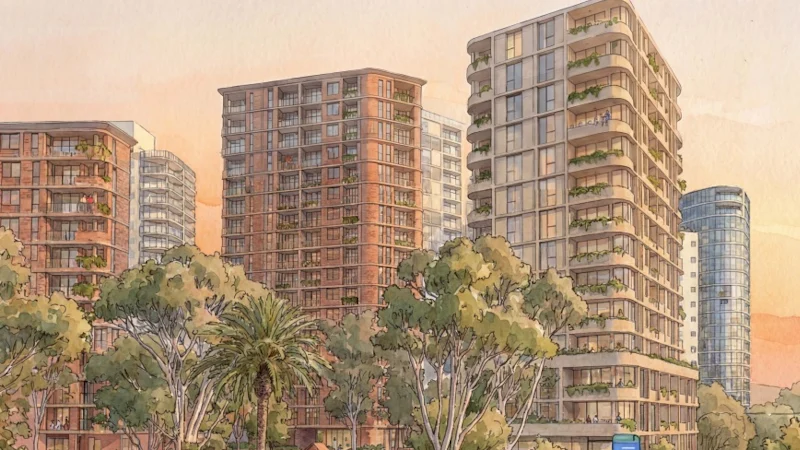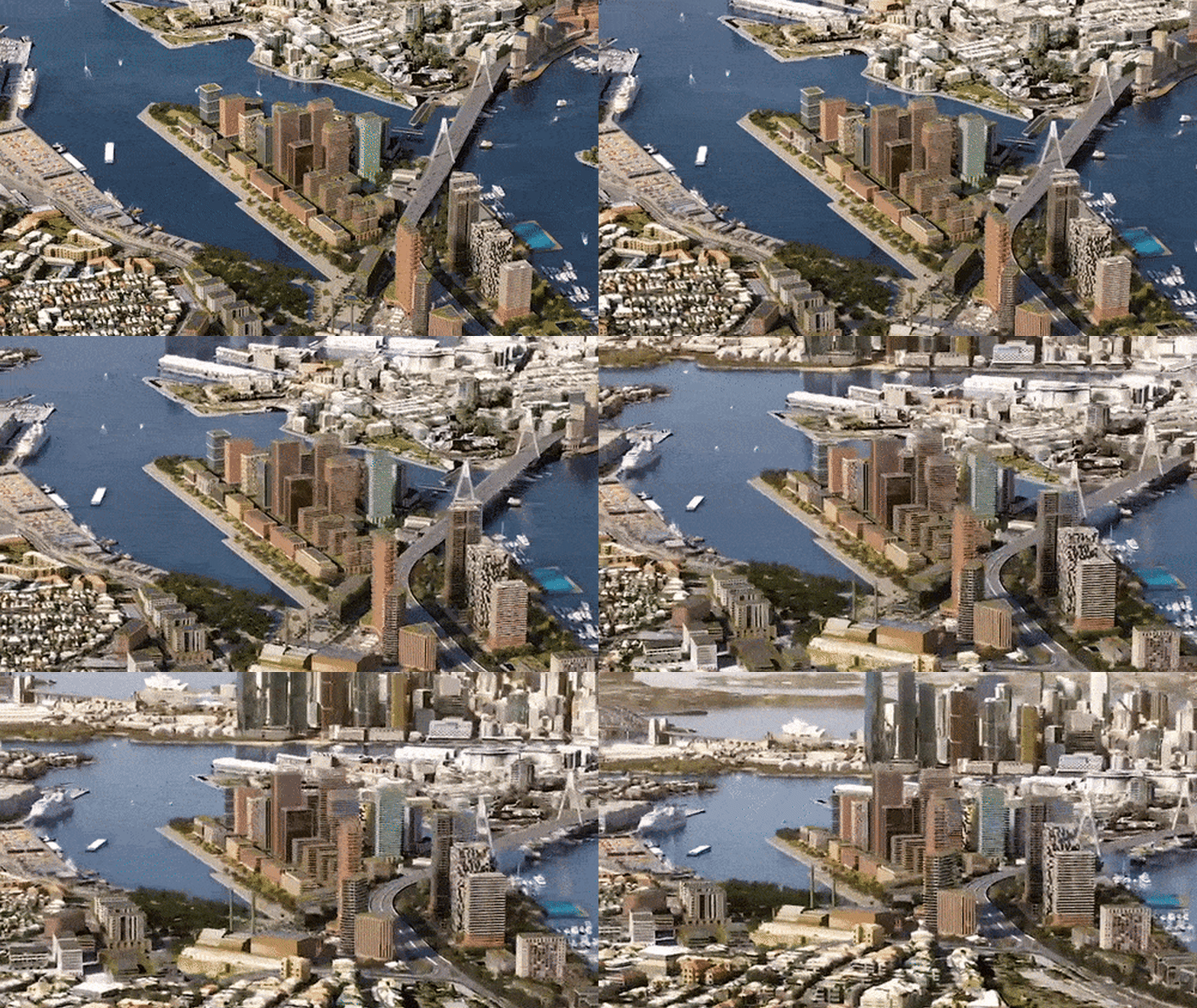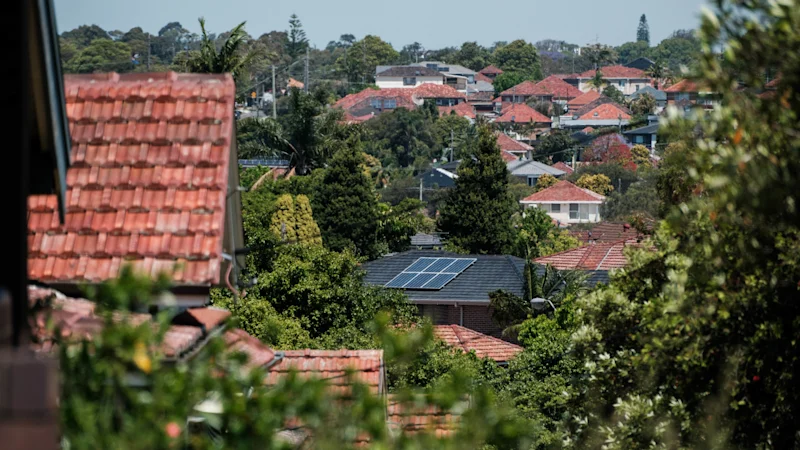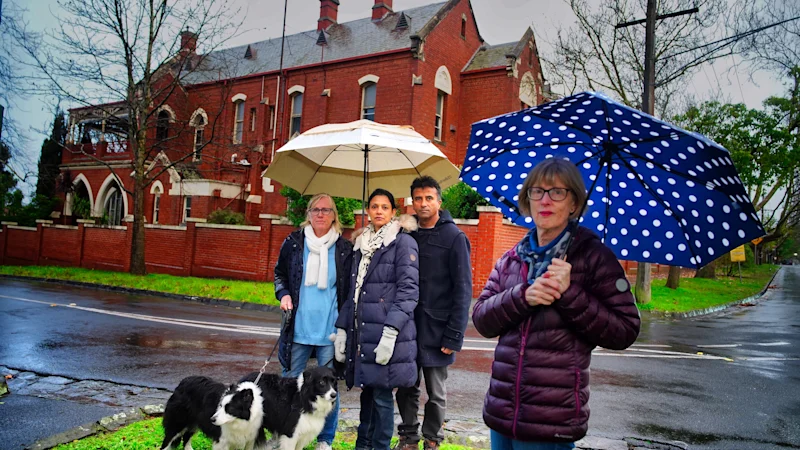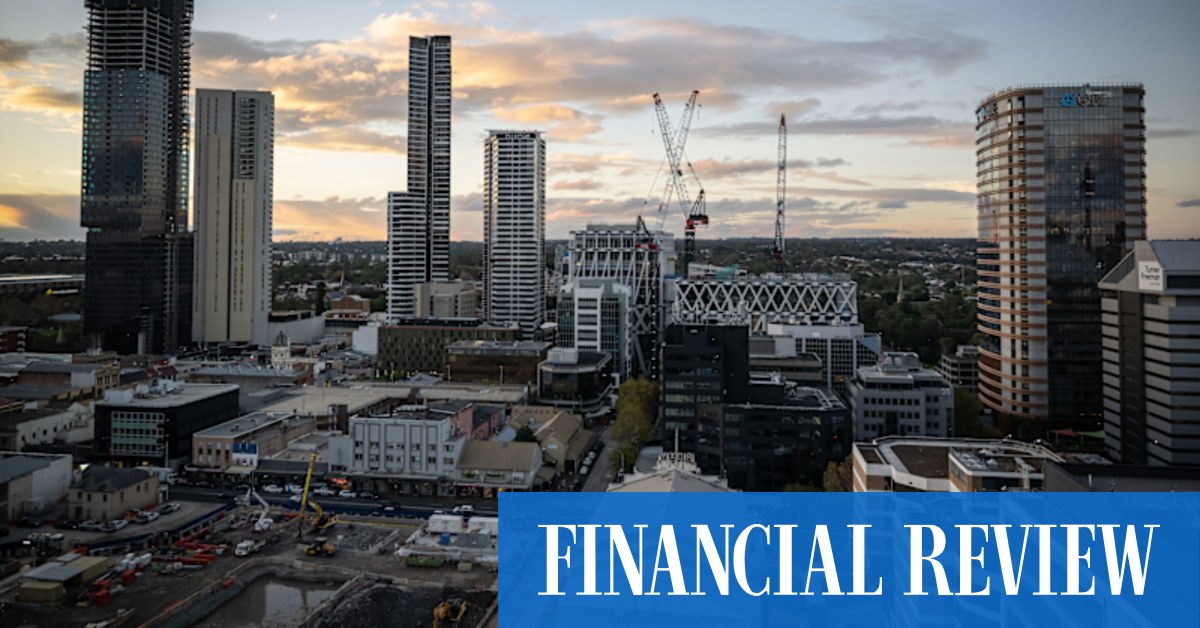
June 17, 2026 — 5:00amSydney’s inner west and middle-ring suburbs are facing the biggest wave of high-density housing development in decades as new figures reveal established communities are set to absorb thousands of apartments under the NSW government’s fast-tracked planning overhaul.An analysis of major residential projects declared by the Housing Delivery Authority (HDA) shows councils including Canada Bay, Burwood, Ryde, Parramatta, Lane Cove and North Sydney have become the focal point of a development surge aimed at tackling the state’s worsening housing shortage.An artist’s impression of the twin tower development, standing at 60 and 52 storeys tall, with 858 units at 15-21 Cottonwood Crescent, Macquarie Park.NSW Department of PlanningThe figures underscore a shift away from decades of expansion on Sydney’s outer fringes as developers increasingly use the HDA to target established suburbs where stronger apartment prices have made large-scale projects more viable in an environment of rising land values and prohibitive construction costs.Established in late 2024, the HDA was designed to accelerate housing construction by allowing projects valued at more than $60 million to bypass council approval pathways and instead be assessed as state-significant developments.A Herald analysis of HDA-declared projects compared with existing population levels shows Canada Bay is expected to experience the largest proportional increase in high-density housing of any local government area in NSW.The council region, stretching from Drummoyne to Rhodes, has 7129 dwellings proposed through HDA-declared developments. Relative to its population of 93,006 residents, that equates to almost 77 new homes for every 1000 people.Burwood ranks second, with 2791 proposed dwellings, or more than 63 homes per 1000 residents, despite the compact seven-square-kilometre council area already undergoing extensive apartment construction over the past decade.Willoughby, Ryde, Parramatta, Lane Cove, North Sydney and The Hills are also expected to absorb significant increases in residential density, with many developments concentrated around existing and future Sydney Metro stations.By contrast, western Sydney council areas that have traditionally accommodated much of the city’s population growth have recorded relatively little activity through the HDA pathway.Campbelltown has fewer than one proposed dwelling per 1000 residents, while Fairfield sits at 3.4 and Penrith at 3.5.An artist’s impression of a $2.2 billion Concord West residential and retail precinct.NSW Department of PlanningWestern Sydney University chief economist Professor Neil Perry said the geographic concentration of projects reflected the economic realities facing the development sector.“The HDA creates opportunities in areas where higher-density development is financially attractive, and that helps explain why so much activity is concentrated in middle-ring suburbs,” he said.“In some outer suburban locations, developers simply cannot achieve the same sale prices they can in middle-ring suburbs.”University of NSW City Futures Research Centre director Christopher Pettit said established suburbs also offered major infrastructure advantages.“In these areas, water, sewerage, transport and other essential services are already in place, and from a feasibility perspective, they are often more attractive than greenfield developments where significant infrastructure investment is still required,” he said.Since its creation, the HDA has declared projects containing a combined 124,000 proposed homes, including some of the largest residential developments ever planned in NSW, with individual projects involving up to 3000 apartments on single suburban sites.Planning Minister Paul Scully said the development activity reflected the government’s strategy of concentrating housing around public transport infrastructure, particularly along the Sydney Metro West corridor, where extensive rezoning changes have occurred around stations in Burwood, Canada Bay and the inner west.While planning experts broadly support increasing housing supply near public transport hubs, questions remain about whether the building boom will deliver meaningful improvements in affordability.Macquarie University housing and urban research professor Kristian Ruming said rezoning around metro stations had already driven sharp increases in land values across many middle-ring suburbs.“That means it is likely only a very small proportion of the well-located new housing stock will ultimately be affordable, because for developments to be financially viable, the new properties need to be expensive,” he said.The scale of the proposed developments is also generating resistance from residents concerned that infrastructure is lagging population growth.In Lane Cove, more than 600 residents have signed a parliamentary petition opposing a proposed 15-storey apartment building on Burns Bay Road, arguing the project exceeds local planning controls and would place further pressure on roads and services.A photo of the development site at 300 Burns Bay Road in Lane Cove.NSW Department of PlanningHundreds of objections have also been lodged against a proposal at Concord West involving the construction of 1336 apartments across eight towers standing up to 38 storeys high.The Hills Shire, already among the state’s fastest-growing council areas, is expected to receive more than 12,000 homes through HDA-declared projects, intensifying pressure on roads, schools and public services.Despite the resistance, Scully said the HDA formed part of broader planning reforms designed to boost housing supply, including the transport-oriented development policy and low- and mid-rise housing changes.“We know the industry continues to face challenges,” Scully said. “But there are encouraging signs these reforms are working.”For urban planners, success of the government’s housing strategy will be measured not by the number of apartments approved, but by whether infrastructure can be delivered in time to support a rapidly growing population.“Ideally, infrastructure should be provided before new housing arrives,” Ruming said. “Unfortunately, this is rarely the case.”The Morning Edition newsletter is our guide to the day’s most important and interesting stories, analysis and insights. Sign up here.From our partners
The Sydney suburbs bracing for population boom as reforms reshape housing map
Analysis reveals where thousands of new units under the state government’s flagship planning overhaul are going and how they will transform suburbs.
884 words~4 min read