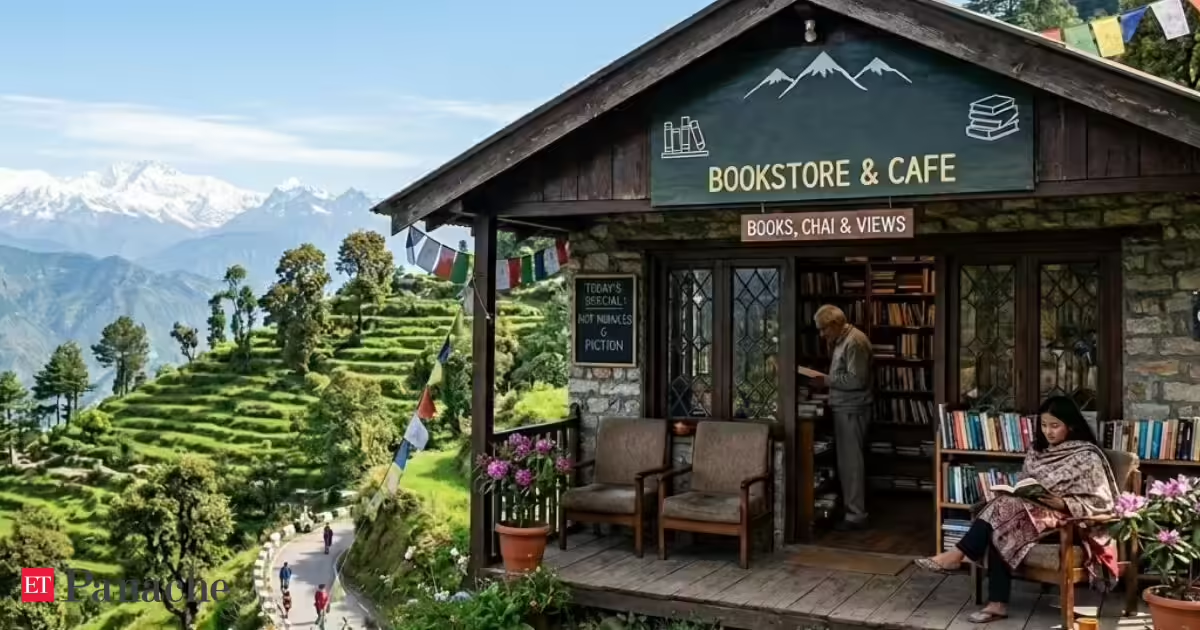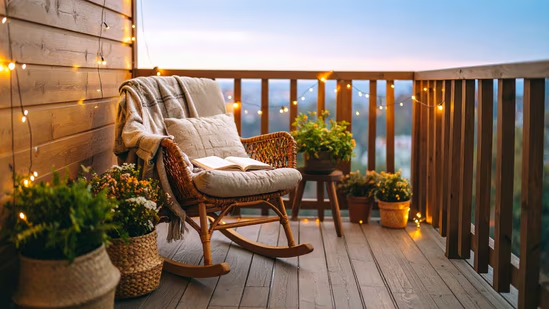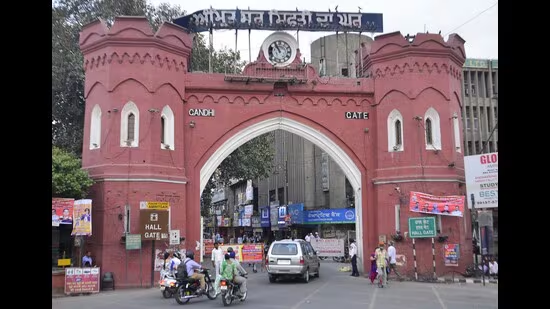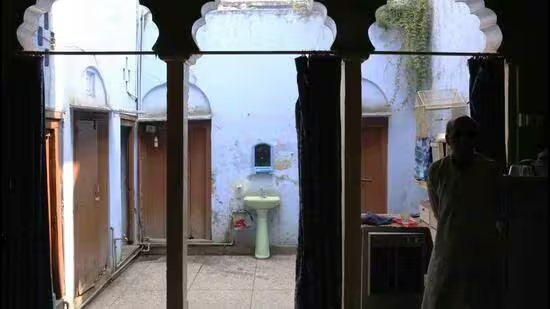
There was a time when evenings in small towns arrived gently. Shops did not shut; they softened into twilight. A bicycle leaned against a tea stall, a radio hummed an old Lata melody somewhere in the distance, and on verandahs old men sat not to discuss the stock market or elections, but to watch the day recede like a familiar guest reluctant to leave. Nothing spectacular happened, and yet life felt mysteriously complete. Now those evenings seem to survive only in memory.Somewhere between the ring of notifications and the cult of productivity, leisure itself has become guilt-ridden. (HT File)The verandahs are disappearing first. In their place rise tall gates, tinted windows, and houses designed less for living and more for exhibition. The old wooden chairs where grandparents once sat have been replaced by carefully arranged drawing rooms rarely meant for idle sitting. Silence has not vanished; it has merely changed character. Earlier it carried the comfort of companionship. Today it resembles isolation polished into modern architecture.The tragedy is subtle because it arrives attired as progress. Children who once knew the geography of their locality through walking now know it through Google Maps. Families sitting together often inhabit separate worlds lit by separate screens. Festivals continue, but increasingly as performances for cameras. Somewhere between the ring of notifications and the cult of productivity, leisure itself has become guilt-ridden. To sit idle on a verandah watching rain would now seem almost irresponsible. But perhaps civilisation is measured precisely by such moments.The old towns were never rich in the language economists prefer. They possessed no glittering skylines or dramatic infrastructure. Yet they understood an art we are rapidly forgetting – the art of lingering. A barber knew his customer’s family history. The postman was not an invisible service but part of the locality’s emotional fabric. Tea stalls functioned as miniature parliaments of conversation.Today efficiency has replaced intimacy. Food arrives faster, messages travel instantly, journeys shrink into hours. Yet something curious has happened to the human spirit: Despite being more connected than ever, people increasingly speak of loneliness. Cities grow vertically, while lives grow inward and solitary.We have mastered communication but misplaced conversation.The transformation is visible even in language. Words like availability, networking and output have crept into personal relationships, as though human beings too must justify themselves through utility. One rarely hears the old phrase, “Come, sit for a while.” Time itself has become transactional, and yet memory resists erasure.Sometimes, passing through an old mohalla, you still catch fragments of another India: A grandmother drying red chillies on a terrace, the scent of wet earth after the first rain, children improvising cricket stumps from bricks, a transistor crackling beside a paan shop. These are not merely picturesque details. They are reminders of a civilisation that once allowed life to breathe unhurriedly.Perhaps that is what modern India risks losing — not culture in its grand ceremonial sense, but culture as everyday tenderness. The danger lies in allowing speed to become the sole measure of value. A society permanently in haste eventually loses the ability to notice beauty. And once beauty disappears from ordinary life, restlessness enters quietly through every door.The answer is not to reject modernity but to humanise it. To preserve spaces where slowness is still possible. To keep alive the habit of evening conversations, of unplanned visits, of sitting without purpose beneath a fading sky. For human beings don’t survive on convenience alone; they survive on meaning, memory, and belonging.Otherwise, one day, we may discover that while our cities became smarter, our lives became strangely smaller. And the last verandah — that modest architecture of pause, conversation, and shared silence — will survive only as a photograph from a country that once knew how to wait. surikangra@gmail.comThe writer teaches English at MCM DAV College, Kangra
Spice of life | Vanishing verandah, architecture of pause
As modern India races toward smart cities and clinical efficiency, we are quietly misplacing the unhurried spaces that once allowed life to breathe
633 words~3 min read