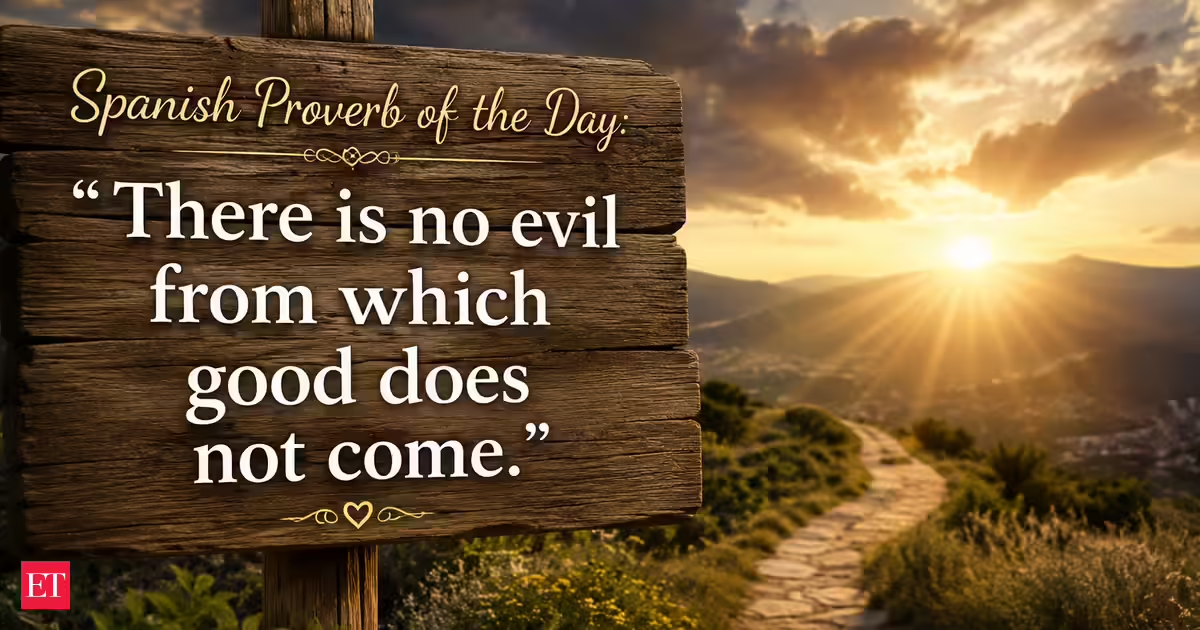
The Spanish proverb of the day, “No hay mal que por bien no venga,” carries a timeless message about hope, resilience, and unexpected transformation. The saying means “There is no evil from which good does not come,” often compared with the English phrase “Every cloud has a silver lining.” It reminds people that difficult moments can sometimes open doors that success alone never reveals.Life rarely follows a perfect plan. A failure, rejection, loss, or painful change may feel like the end of a journey, but history shows that many turning points begin with struggles. The wisdom behind this Spanish proverb of the day is not about ignoring pain. It is about learning how challenges can reshape decisions, strengthen character, and create new possibilities.Across generations, thinkers, leaders, and ordinary people have discovered that setbacks often carry hidden lessons. The world has seen inventions born from mistakes, careers rebuilt after failures, and dreams created after unexpected hardships.The Spanish proverb of the day teaches a powerful lesson about perspective. A situation itself may not change immediately, but the way a person responds can completely transform the outcome. Wisdom comes from seeing possibilities inside problems and finding strength where others see only obstacles.Spanish Proverb of the Day: What If Every Struggle Was a Teacher? Discover the Wisdom Waiting Behind Life’s Greatest ObstaclesThe Spanish proverb of the day reflects one of the oldest human truths: adversity can become a teacher. Many cultures have similar wisdom because every generation has experienced moments when unexpected difficulties later created valuable results. The idea behind “No hay mal que por bien no venga” is deeply connected with emotional intelligence and critical thinking.A person facing failure often sees only the immediate disappointment. However, time can reveal another side of the story. A rejected opportunity may push someone toward a better path. A mistake may expose weaknesses that need improvement. A painful ending may create space for a healthier beginning.History provides remarkable examples of this transformation. Walt Disney experienced financial struggles and professional setbacks before building one of the world’s most influential entertainment companies. His early failures did not define his entire journey. Instead, they became part of the lessons that shaped his creativity and persistence.Similarly, many scientific discoveries came from unexpected outcomes. Researchers often found breakthroughs while investigating problems or mistakes. These moments show that progress is not always created through perfect planning. Sometimes curiosity and patience turn difficulties into opportunities.How can this Spanish wisdom change the way we handle failure?The deeper meaning of “No hay mal que por bien no venga” is connected with resilience. Resilience is not simply the ability to survive difficult situations. It is the ability to adapt, learn, and rebuild after unexpected events.Many successful individuals have experienced moments when everything seemed uncertain. Their achievements often came not because they avoided failure, but because they learned from it. Every mistake became information. Every disappointment became a chance to rethink direction.Consider the journey of Thomas Edison. His experiments included countless unsuccessful attempts before creating inventions that changed modern life. His approach showed that failure could be part of discovery rather than the opposite of success.This Spanish proverb of the day encourages people to look beyond immediate emotions. When something goes wrong, the human mind naturally focuses on loss. However, reflection can reveal hidden benefits. A difficult experience can improve decision-making, build patience, or reveal personal strength.The proverb also connects with the idea of a growth mindset. People who believe abilities can develop through effort often recover faster from setbacks. They see challenges as opportunities to improve rather than proof of inability.The hidden wisdom behind “Every cloud has a silver lining”The Spanish proverb of the day shares a universal message found in many traditions around the world. The phrase “Every cloud has a silver lining” expresses the same belief that difficult times may contain unexpected hope. These sayings survive because human experiences continue to repeat across centuries.The strongest lesson from this wisdom is about perspective. Two people may experience the same challenge, but their interpretation can lead them toward completely different futures. One may see only loss, while another may discover a new direction.Many life-changing stories began with moments that seemed negative at first. People have changed careers after losing jobs, started businesses after failures, and discovered passions after unexpected life changes. These examples prove that circumstances are only one part of the story.This idea remains valuable in today’s fast-changing world. Technology, society, and personal lives continue to shift quickly. People who develop patience, adaptability, and reflection often find better ways to move forward.The greatest wisdom behind “No hay mal que por bien no venga” is that life is not measured only by what happens to us. It is also shaped by how we understand, respond, and grow from those moments. A setback can become a lesson. A failure can become preparation. A difficult chapter can become the beginning of a stronger story.Some English proverbs and sayings that carry a similar meaning: “Every cloud has a silver lining.” “When one door closes, another opens.” “It’s an ill wind that blows nobody good.” “Out of adversity comes opportunity.” “A blessing in disguise.” “The darkest hour is just before the dawn.” “Smooth seas do not make skilled sailors.” “What doesn’t kill you makes you stronger.” “Necessity is the mother of invention.” “Every setback is a setup for a comeback.”
Spanish proverb of the day: "There is no evil from which..." - Turn pain into purpose: Timeless wisdom and valuable life lessons hidden within every challenge you face and overcome
Spanish proverb of the day: It reminds us that difficult moments often carry unexpected value. Challenges teach perspective. Failure reveals opportunity. Hardship builds resilience. Life lessons emerge through experience. Personal growth begins when we stop resisting change and start discovering the wisdom hidden within every obstacle.
889 words~4 min read