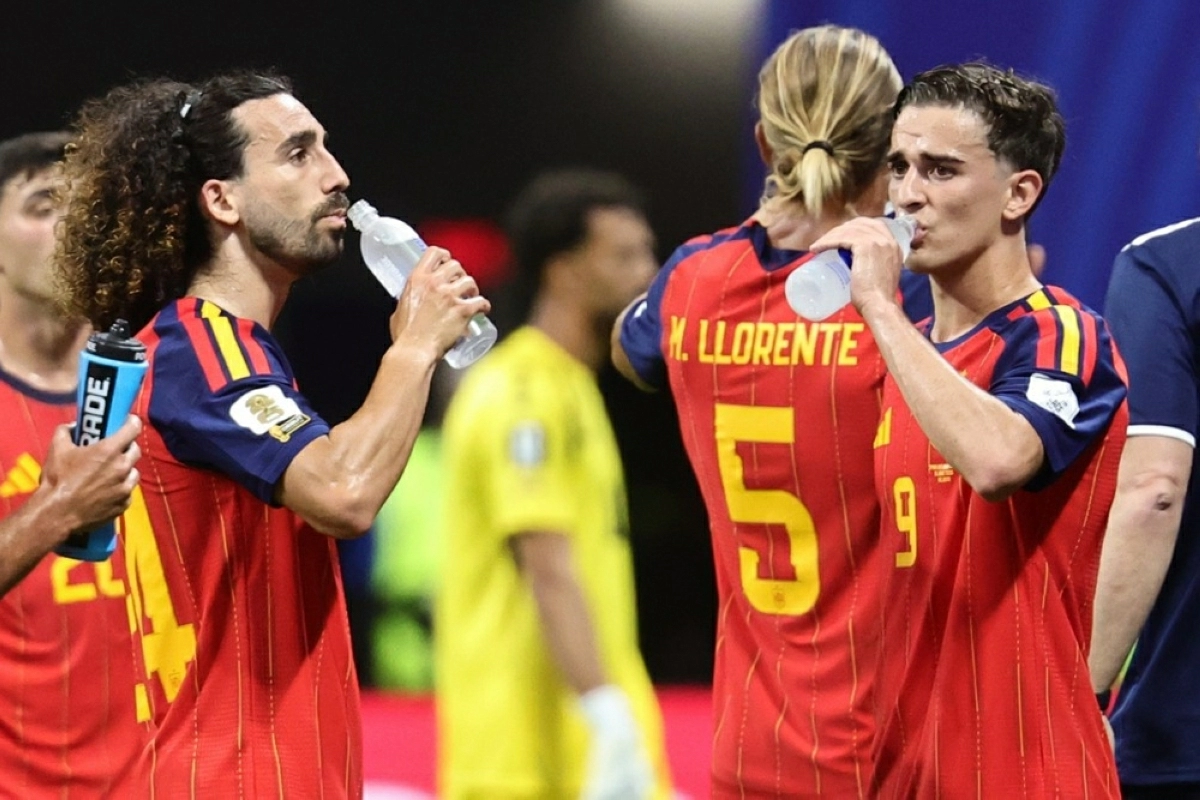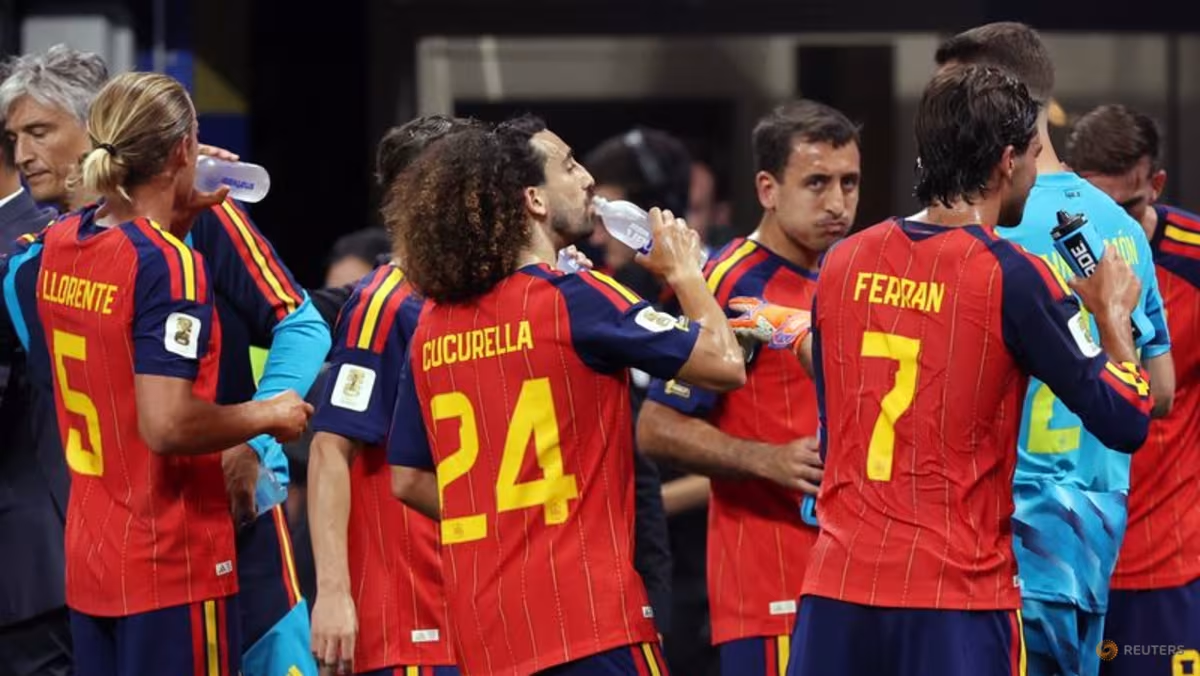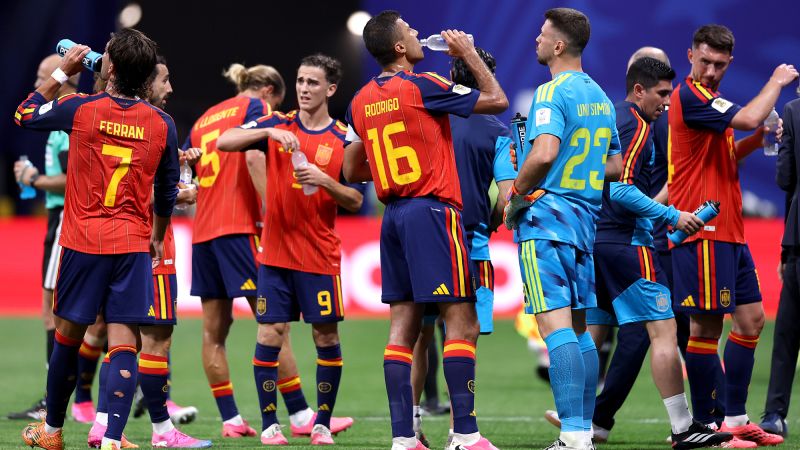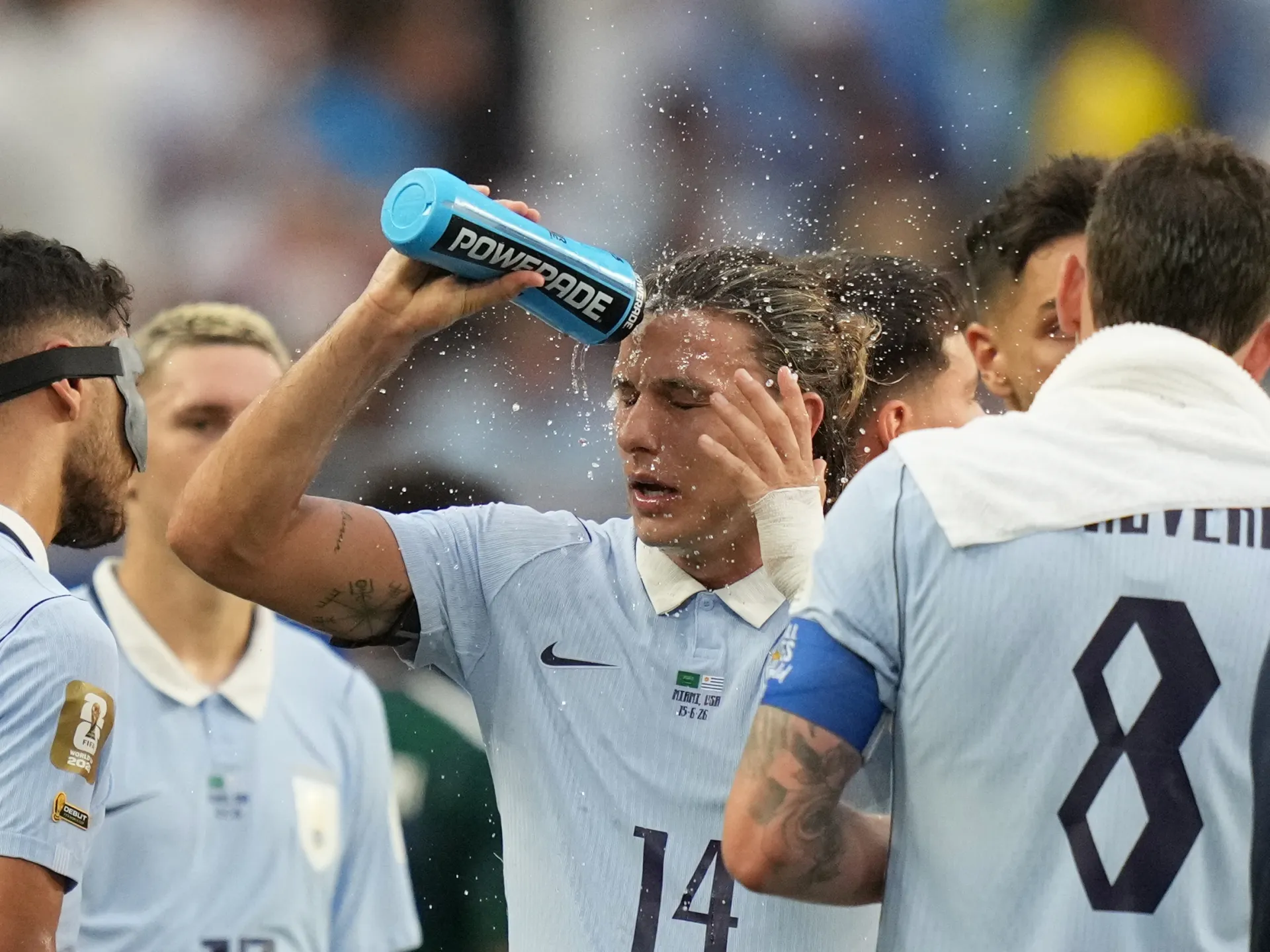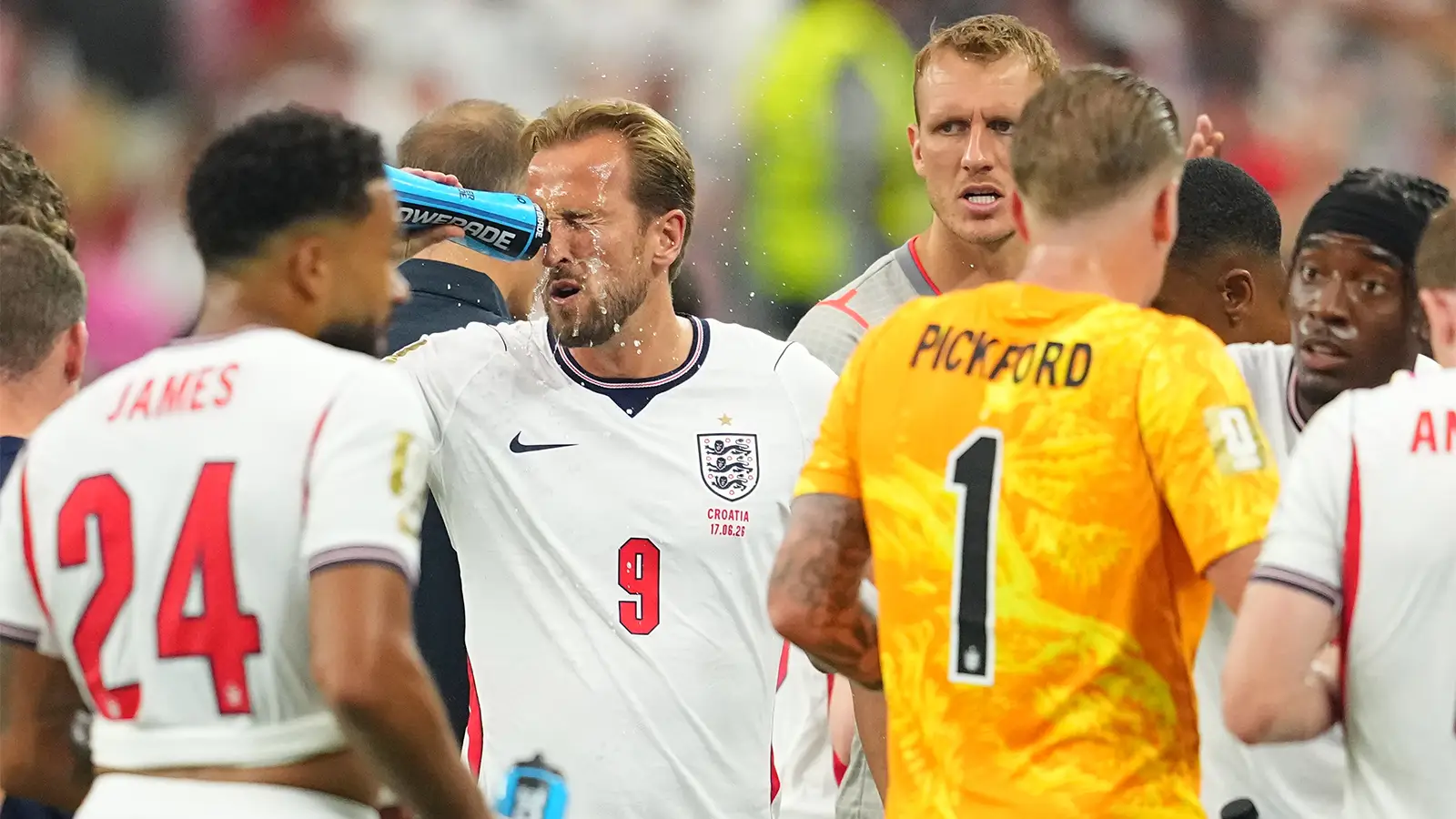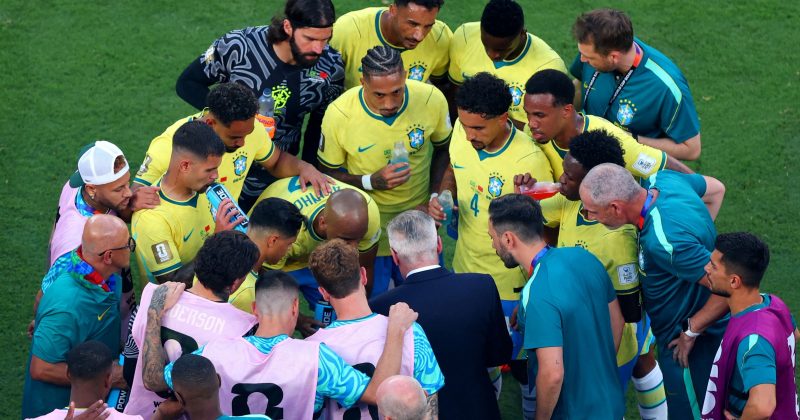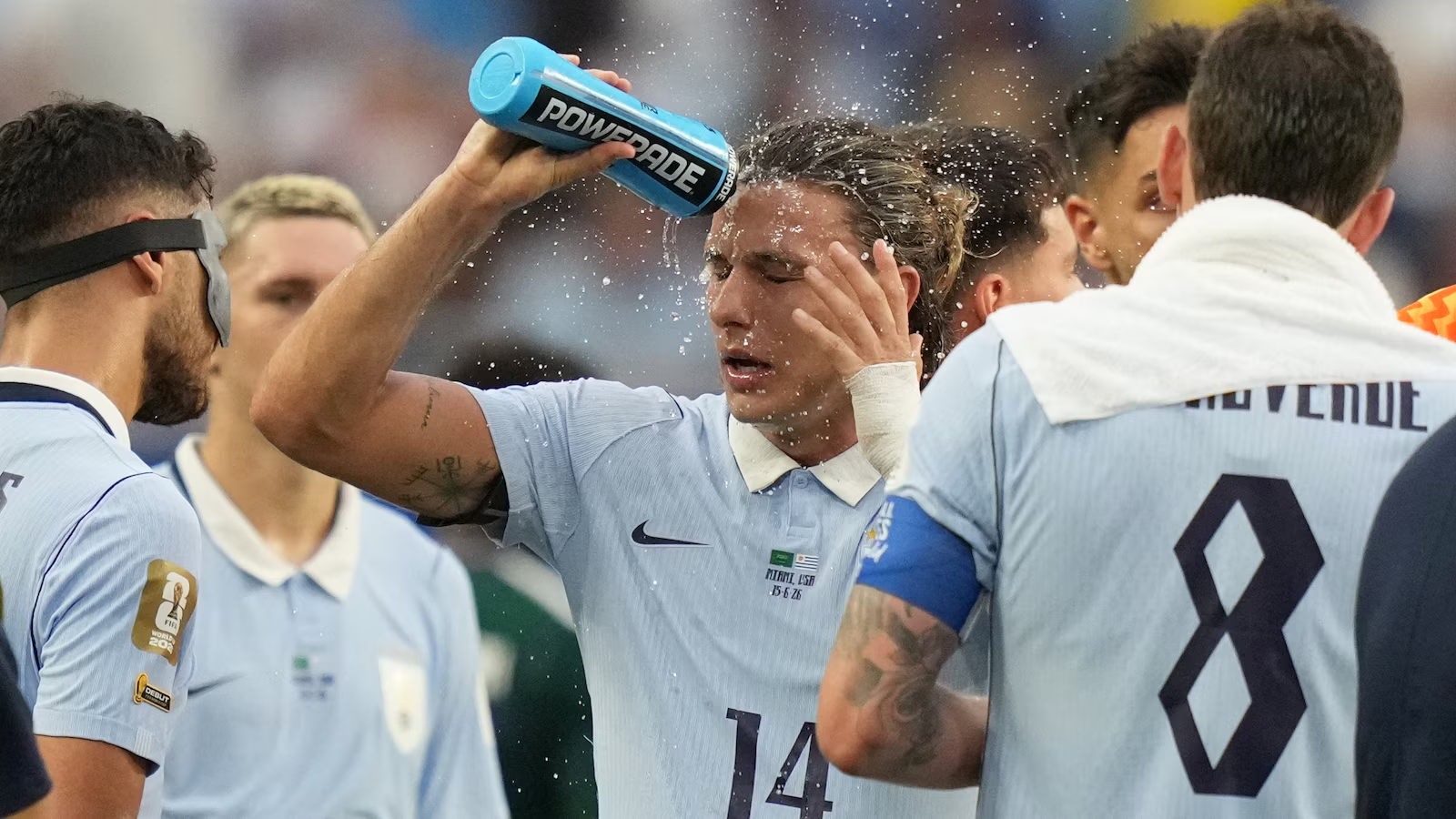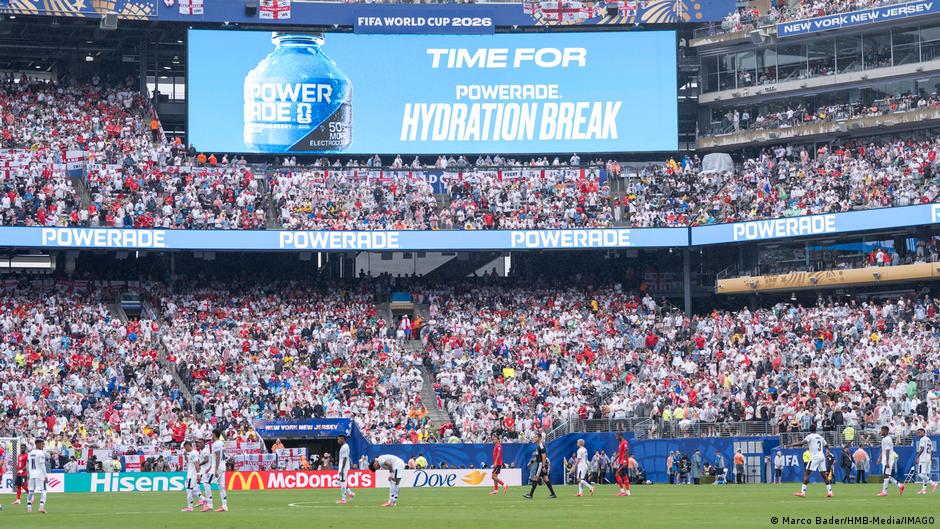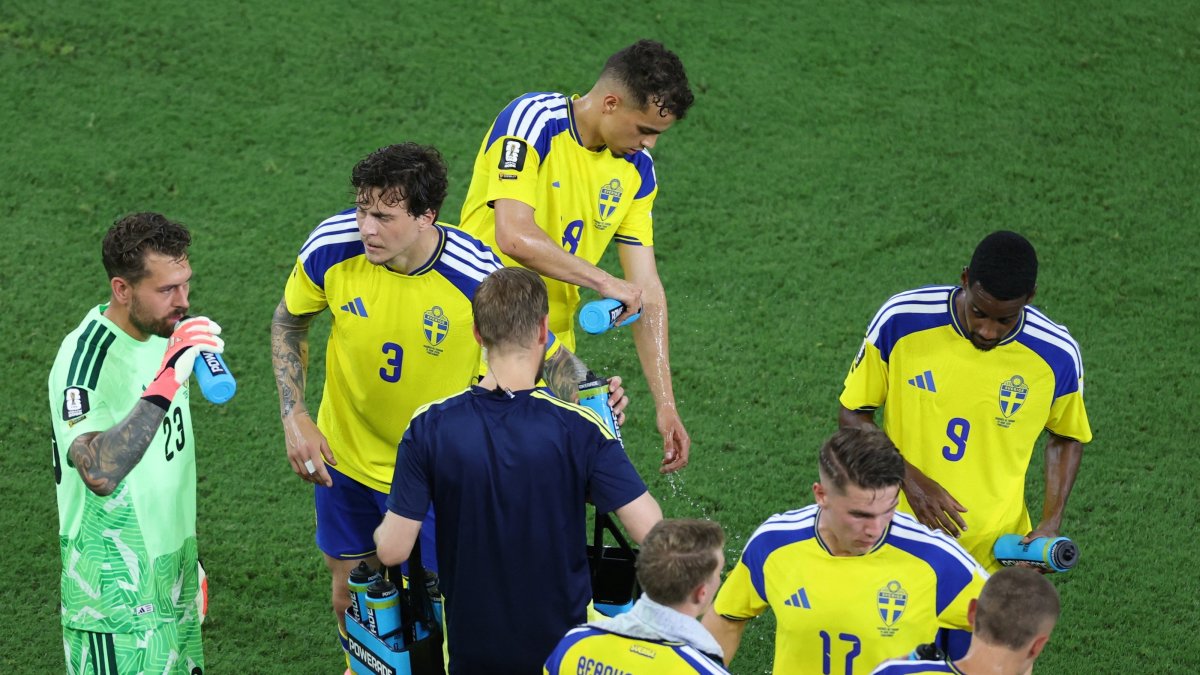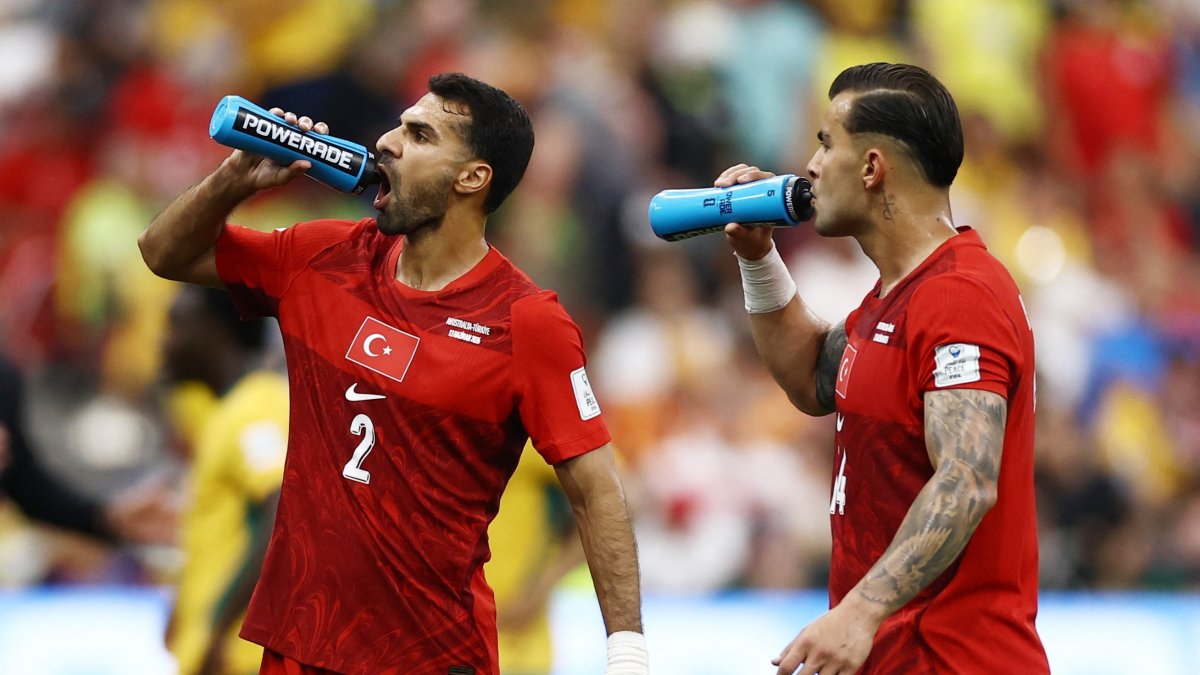
Hydration breaks at the World Cup are intended to help players cope with extreme heat, but they have quickly sparked debate over whether they affect the flow of matches more than the weather itself.
Germany coach Julian Nagelsmann made the most of one in his side’s opener against Curaçao. After the underdogs struck a surprise equalizer, the stoppage gave him a chance to reset his team. The response was immediate. Germany moved ahead 3-1 by halftime and eventually cruised to a 7-1 win.
“The hydration break was actually a good opportunity to simply show some things on the whiteboard,” Nagelsmann said afterward.
The breaks are effectively reshaping matches into four segments rather than two halves, a structure more familiar in sports such as basketball and American football. Supporters see a player welfare measure. Critics argue it doubles as a tactical timeout that can shift momentum.
In each half, referees are supposed to pause play for three minutes after 22 minutes. The system was introduced out of concern for players’ physical strain.