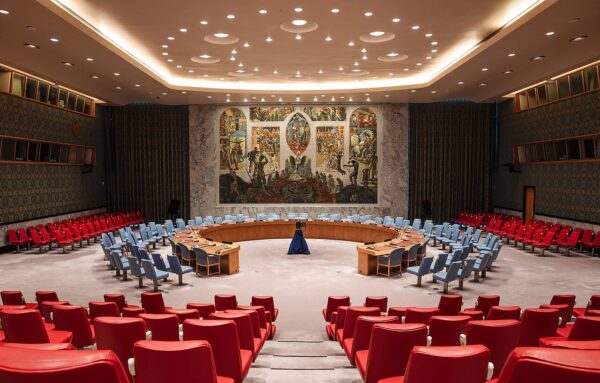
Earlier this month, the United States, alongside France and the United Kingdom, blocked a joint China-Pakistan proposal at the United Nations Security Council (UNSC) to list the Baloch Liberation Army (BLA) and its Majeed Brigade as global terrorist entities.
Islamabad and Beijing had jointly submitted the resolution to blacklist the militant group under the UNSC’s 1267 Sanctions Committee. Pakistan had argued that both groups operate from sanctuaries in Afghanistan and threaten regional security. To justify the listing under the U.N.’s counter-terrorism architecture, Pakistan’s U.N. envoy, Asim Iftikhar, explicitly linked the BLA to global jihadist networks operating out of Afghanistan.
“Entities such as ISIL-K, al-Qaida, Tehreek-e Taliban Pakistan (TTP), East Turkistan Islamic Movement, BLA, and the Majeed Brigade are based in Afghan sanctuaries, with over 60 terrorist camps facilitating cross-border infiltration and assaults,” he pointed out.
However, three UNSC permanent members – the U.S., France, and the United Kingdom – invoked technical issues to point out that the committee specifically targets al-Qaida, Islamic State, and their affiliates. They claimed that localized militant groups do not automatically qualify under the 1267 Sanctions Committee’s mandate, irrespective of the severity of their actions or the threats they pose to regional stability.