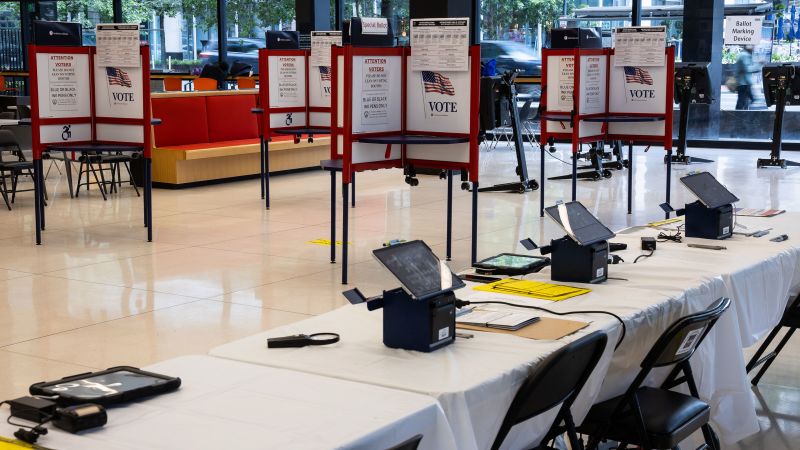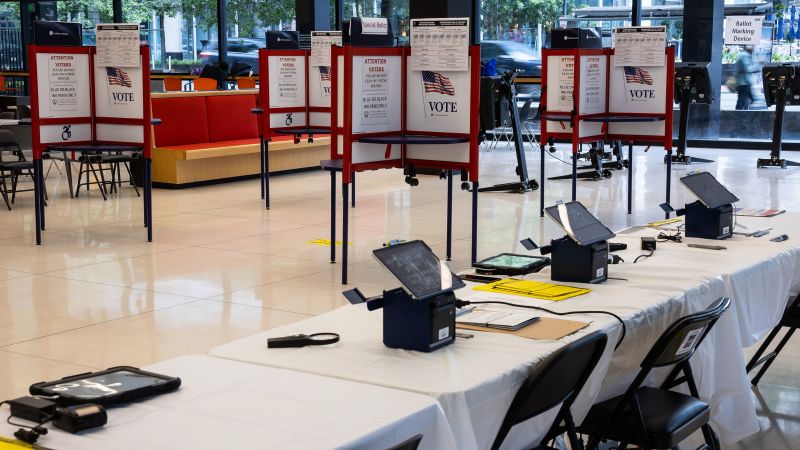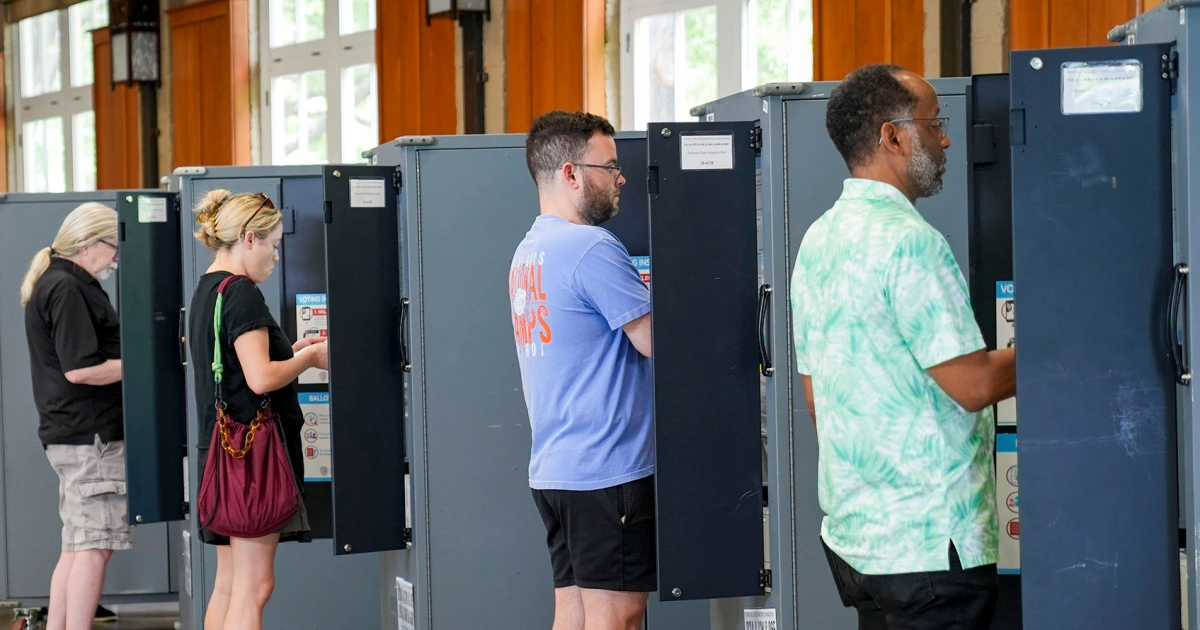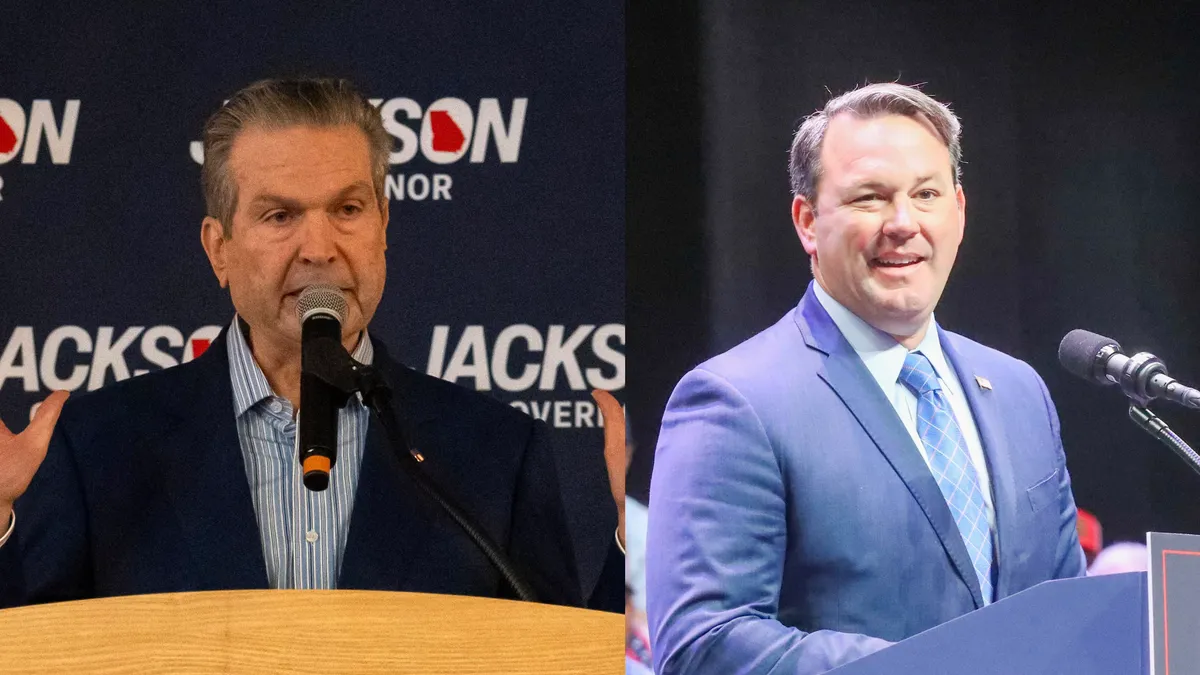
Runoff elections are coming up as a busy cycle of primary contests continues across the country.In Georgia and Alabama, candidates who receive enough support to advance out of their May primary races, but did not win more than 50% of the vote, will face off again on June 16. Whoever wins the runoffs will be on the November ballot as President Donald Trump and the GOP try to hold onto a narrow majority on Capitol Hill.But it's not clear that the same set of voters will flock to the ballot box on June 16 after the competitive May races, according to Enrijeta Shino, assistant professor of political science at the University of Alabama. Typically fewer voters come out for runoffs compared to the first round, she says."What I’d watch most is turnout," Shino said. "The real questions are which voters return, and which candidates’ supporters return in greater numbers, in a low-turnout, mid-June election."Here are the races happening on June 16 and a few key contests to watch.Which states have June 16 elections?Alabama: House, Senate runoffsCalifornia: Special House election to replace former Rep. Eric SwalwellWashington, D.C.: Mayoral primaryGeorgia: House, Senate, governor runoffsOklahoma: House, Senate, governor primariesJune 16 races to watch: Georgia runoffsTwo Republicans are facing off in a June GOP Senate runoff in the Peach State. Rep. Mike Collins and college football coach Derek Dooley go head-to-head after neither won a majority in the May 19 primary, according to the Associated Press and CNN. Collins picked up 40.5% of the votes last month, while Dooley garnered 30.2%.Dooley saw momentum leading up to runoff day in part thanks to Georgia Gov. Brian Kemp. Kemp's political action committee has funneled millions of dollars into the Dooley campaign, according to reports.But the race experienced another shakeup when Trump weighed in just days before the election, giving his endorsement to Collins in a late-night Truth Social post. Trump called Collins a MAGA "warrior" and resurfaced his arguments over voting legitimacy in Georgia.Polling has shown Collins and Dooley are locked in a tight race.The winner will face incumbent Democratic Sen. Jon Ossoff.On the House side, in Georgia's 1st Congressional District, Democrats Joyce Griggs (34.5% of votes) and Amanda Hollowell (24.7% of votes) advanced to a runoff election after neither took a majority on May 19, according to the Associated Press and CNN. The winner will face Republican Jim Kingston in the race to replace Rep. Earl "Buddy" Carter, who did not seek reelection to run for Senate.The Peach State's gubernatorial primary also headed to a runoff as Lt. Gov. Burt Jones and healthcare CEO Rick Jackson secured the most votes during the May 19 midterm primary, but failed to reach a majority. Jones has Trump's endorsement. The winner will face the Democratic nominee, former Atlanta Mayor Keisha Lance Bottoms, in the general election.In Georgia's (and Alabama's) runoff, voters can't switch from the party they voted for in the first round in May. But if you haven't yet cast a ballot in either state's primary, either party's primary is fair game, Shino says."Whichever party’s ballot you chose in May, that’s the party you’re tied to on June 16," Shino says. "However, anyone who didn’t vote in the May primary is free to pick either runoff. It’s a rule that may surprise people voting in a runoff for the first time."Alabama House, Senate runoffsAlabama is looking to replace Republican Sen. Tommy Tuberville, who is running for governor. The Republican primary resulted in a runoff between U.S. Rep Barry Moore and Jared Hudson after Moore (39.2% of the votes) and Hudson (25.6% of votes) each failed to earn over 50% of votes in the May 19 primary, according to the Associated Press and CNN. Moore, who has Trump's endorsement, has served in Congress since 2025. Hudson is a former U.S. Navy SEAL.There's also the question of getting voters physically to polls, according to Shino. Unlike Georgia, Alabama does not permit early, in-person voting, and requesting a mail ballot for the runoff requires a state-approved excuse."Most Alabamians have to vote in person on June 16," she said. "With only weeks between the primary and the runoff, these election rules significantly affect who will show up to vote again."The Democratic race went to a runoff after Everett Wess (39.6% of votes) and Dakarai Larriett (29.1% of votes) also failed to reach the 50% threshold last month, according to the Associated Press and CNN.Alabama's House primary also headed to a runoff: In the 5th District, it's Democrats Andrew Sneed (42% of votes) and Candice Duvieilh (35.7% of votes). The winner will face incumbent Republican Rep. Dale Strong, who won the May 19 race uncontested.Primaries aren't done after today in Alabama. Voters in some Alabama districts cast ballots in primaries for U.S. House on Tuesday, May 19, following the state's redistricting push to pass a new map favoring Republicans. Only Alabama congressional Districts 3, 4 and 5 held primaries on May 19. Districts 1, 2, 6 and 7 will hold their respective primaries on Aug. 11.The seat Oklahoma Democrats want to flipTwo Democrats are looking for the nomination in Oklahoma's 5th congressional district to unseat Rep. Stephanie Bice. Ironworker and union leader Trey Martin, who was endorsed by Sen. Bernie Sanders, faces Jena Nelson, a former educator and Oklahoma Teacher of the Year in 2020.Whoever wins will face Bice, who has served on Capitol Hill since 2021 and faced no challenges, advancing to the general election.The race to take Swalwell's seatCalifornia features one of two contests this year involving the House seat vacated by former Rep. Eric Swalwell, who resigned from Congress following sexual misconduct allegations.The June 16 special House primary will select a name from nearly a dozen candidates to immediately fill his seat through the end of his term in January. According to the Associated Press, if a candidate doesn't win a majority of the vote on Tuesday, the top two finishers, regardless of party, will advance to a special general election on Aug. 18.Democrats Aisha Wahab and Melissa Hernandez advanced out of the June 2 primary for the regularly scheduled general election in November to serve a two-year term which begins in January 27.Contributing: Irene Wright
Primary elections today: Key races to watch in the South, West
Here's what to know about primary elections across Georgia, California and more.
1,030 words~5 min read