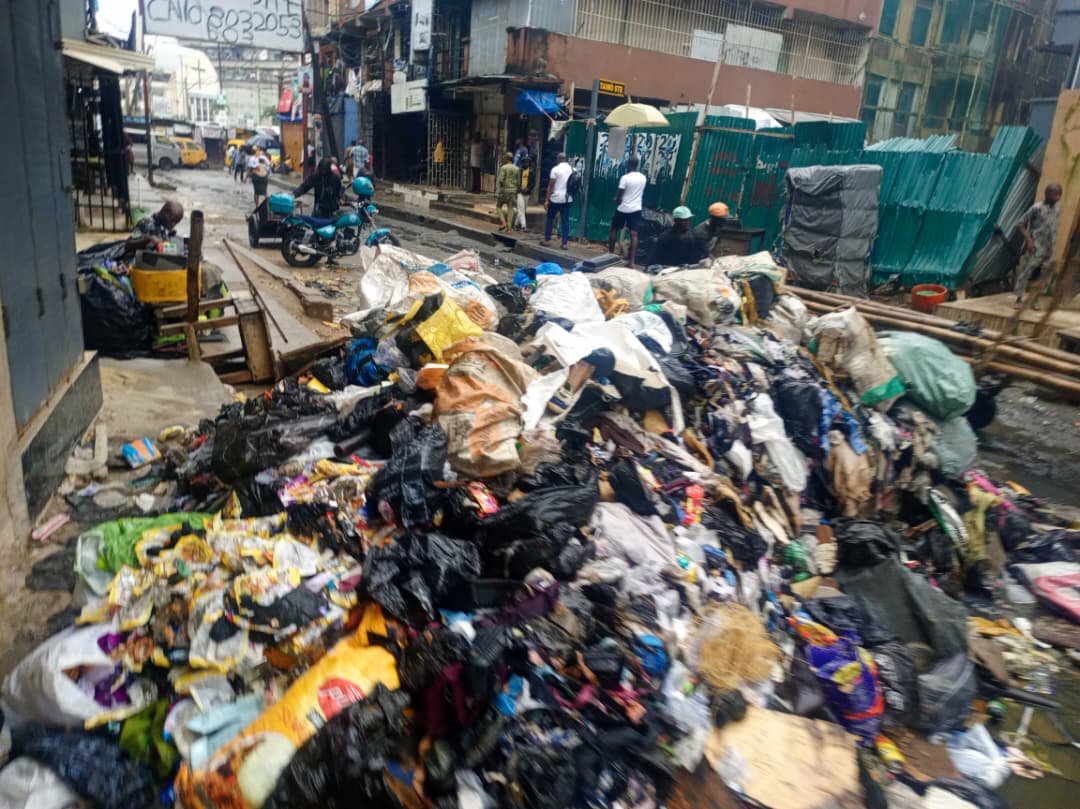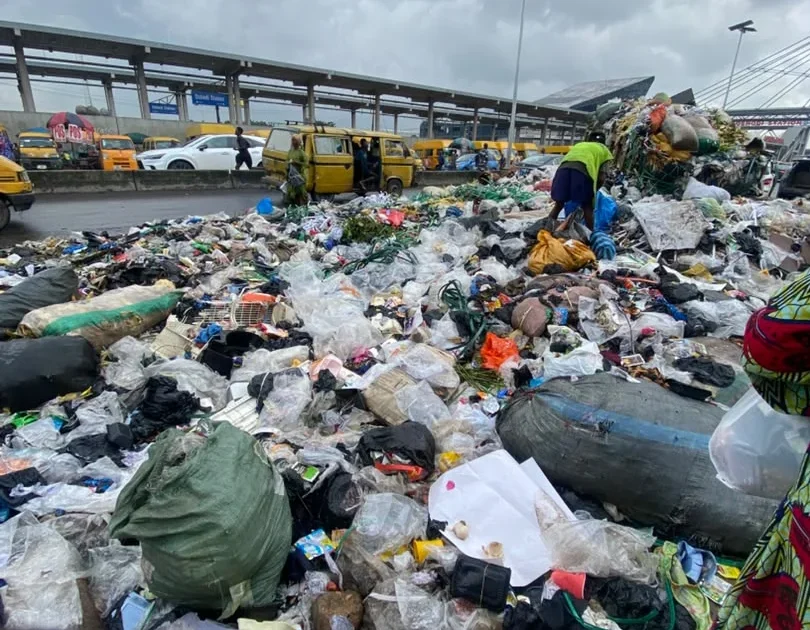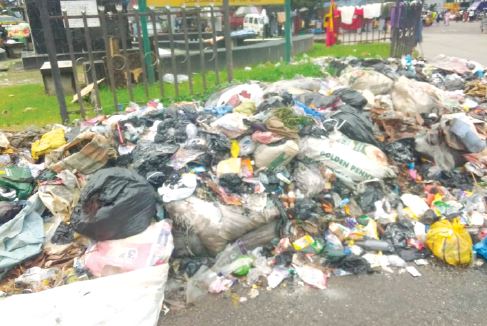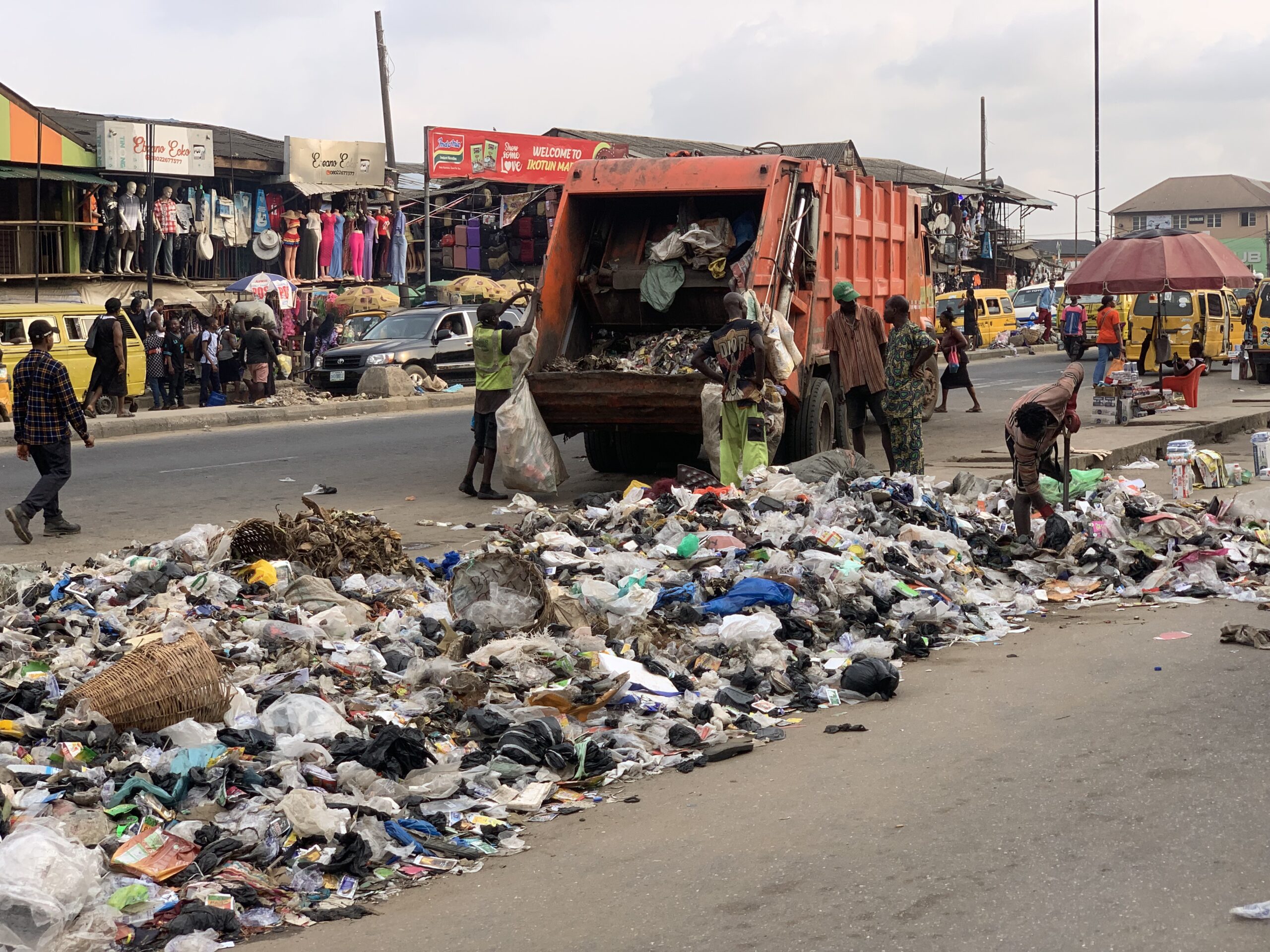
Flies hover around heaps of rotting waste a few metres from Christian Mbalisigwe’s point-of-sale (POS) stand at the Jakande roundabout in Ejigbo, Oshodi-Isolo Local Government Area in Lagos State. As buses slow to pick up passengers along the busy road, commuters cover their noses while others step around food waste, black nylon bags and dirty water trickling from piles of refuse in the centre of the road
For Mr Mbalisigwe, the smell has become part of daily life. From morning till evening, he attends to customers while facing piles of waste dumped opposite his kiosk. Sometimes, he said, the refuse remains there for days before officials clear it.
“It wasn’t like this before,” the 43-year-old said, recalling when the road median was mostly clear of waste. “Now, everywhere starts to smell when it is not cleared. We just have to manage it,” he added.
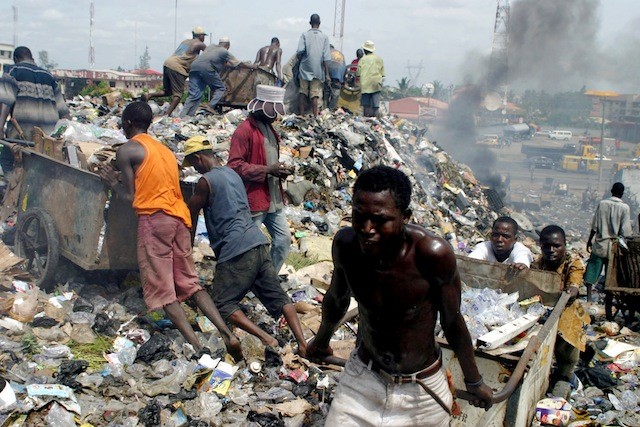
Lagos, a city of over 22 million people, generates an estimated 13,000 tonnes of waste every day, but only about 54 per cent is disposed of through the city’s waste disposal system. The rest ends up in open dumps, drainage channels, roadsides and waterways, a pattern that worsens flooding risks and public health concerns during the rainy season, says a 2024 World Bank assessment.