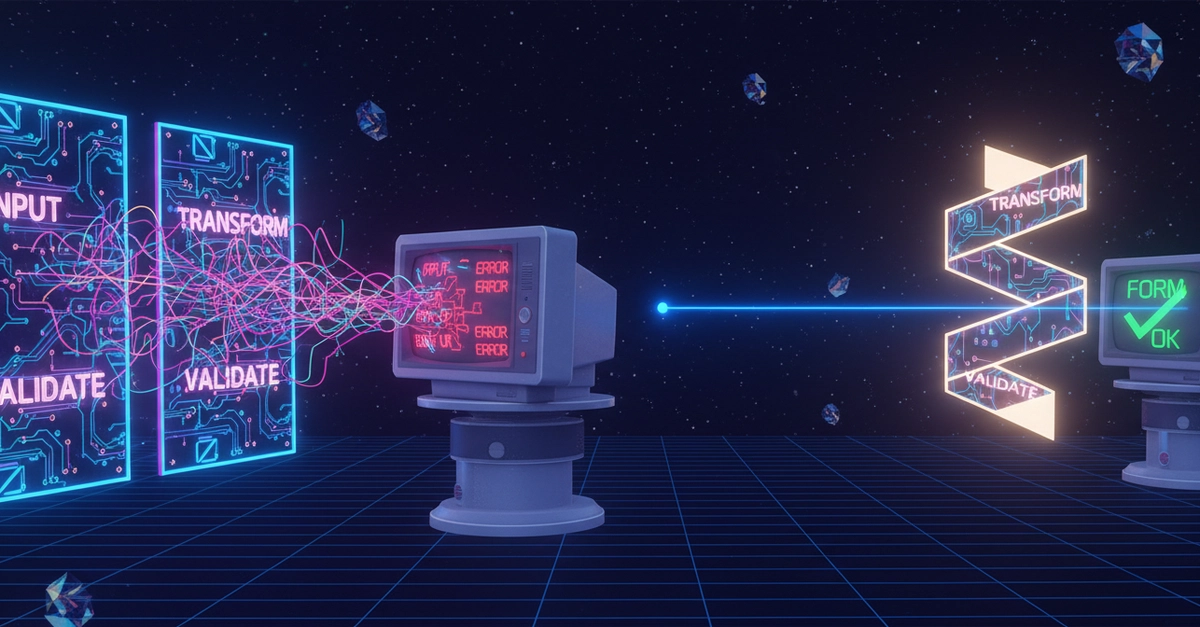
I use a form validation problem as a technical interview question. It's deceptively simple — and the solutions people reach for reveal a lot about how they think.
Then I tried it on Claude, ChatGPT, and Gemini. The results were illuminating, but not for the reasons I expected.
The Problem
Many form libraries share a common convention: form data is represented as a plain nested object, and the validation function returns an object of the same shape containing the errors. You'll find this pattern in Formik and React Final Form in React, and — full disclosure — in Inglorious Web, my own framework, which ships form handling built in without any extra dependencies.
const values = {