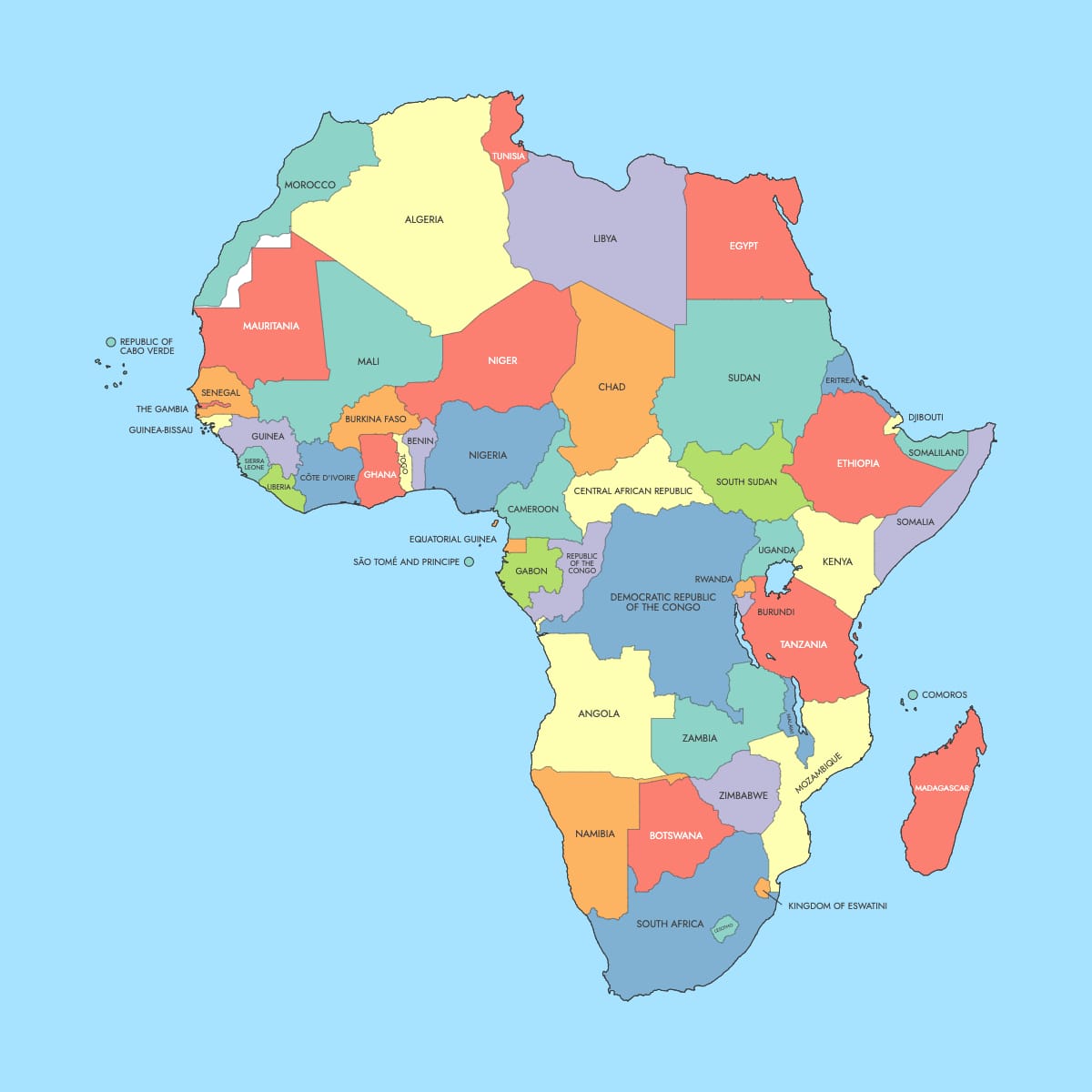
Optasia, a fintech with big South African institutional investment and a JSE listing, faces an uncertain future in Nigeria’s airtime credit market after nine Nigerian companies expressed interest in obtaining licences to operate in the sector it has dominated for nearly two decades. Optasia is the company behind the airtime lending businesses of mobile operators Vodacom and MTN. In Nigeria, it is key to airtime lending activity in the market, meaning its business was affected by a halt in trading.The regulatory underpinning for any such shift has not yet been signed, remains contested, and a court case is pending. Several Nigerian outlets have reported, citing unnamed government and Nigerian Federal Competition and Consumer Protection Commission (FCCPC) sources, that Nigeria’s President Bola Tinubu directed the commission to dismantle Optasia’s 12-year hold on the market and approved nine local firms to take its place. Those reports have not been confirmed on record by the presidency. The FCCPC has also formally distanced itself from that coverage.It comes as relations between Nigeria and South Africa are under severe strain, with Nigeria’s foreign ministry indicating last week it may consider retaliatory economic measures against Pretoria after a series of attacks on Nigerians in South Africa. The Nigerian government last week joined other African countries in repatriating their citizens from South Africa; the first 268 left the country after they were found to be living in South Africa illegally. The Nigerian government has not formally linked that diplomatic dispute to the decision against Optasia. The executive commissioner for operations at the Federal Competition and Consumer Protection Commission confirmed to Business Day that there is big interest from Nigerian investors in obtaining licences to operate in the market. However, he said the matter is before the courts, and a restraining order against the FCCPC remains in force. “As a law-abiding public institution, we obey court orders. Therefore, it is impossible for me to comment on your question while the case is still pending,” he said.The regulator added that enforcement of its digital, electronic, online or nontraditional consumer lending regulations had been suspended after a court order obtained by the Wireless Application Service Providers Association of Nigeria. A hearing in that matter is scheduled for July 20.Dianna Games, CEO of the South Africa-Nigeria Business Chamber, urged caution in reading the decision as politically motivated. “The decision in Nigeria to licence local companies to compete in the fintech market is part of the government’s drive to build Nigerian companies and retain revenues and value in the country, aims that have been well stated in the past,” she said.Games added that South African investors in Nigeria are making valuable contributions to the economy, working alongside regulators and government and paying taxes alongside other foreign investors and that any issues that arise are not necessarily about the investors being South African.On the question of diplomatic retaliation linked to the treatment of Nigerians in South Africa, Games nothing at this stage indicates that any retaliation specifically related to those tensions is imminent. She noted that the two countries work together at a political level under a binational commission run at a presidential level with the private sector brought along.“Optasia was founded by a Nigerian entrepreneur in Nigeria and is domiciled in the UAE, though it does have significant investment from South African institutional investors and it listed on the JSE last year,” Games said. Optasia said recently its Nigerian subsidiary, Nairtime Nigeria, is fully locally incorporated, locally staffed and locally led, with Nigerian national Uchenna Agbo serving as chief commercial officer since the company’s founding in 2012. Optasia said it remains committed to the Nigerian market and to working with regulators. “Optasia’s B2B2X model is built on partnerships with mobile network operators, financial institutions and regulated distribution partners. Its contracts are non-exclusive, and it operates alongside other providers in Nigeria under certain agreements,” the company said. “Through Nairtime Nigeria, Optasia is committed to playing a key part in developing Nigeria’s telecoms and fintech sectors, where regulated competition can create a dynamic and competitive environment that delivers safe, reliable services that benefit Nigerian consumers.“Optasia remains focused on ensuring that the Nigerian consumer remains at the centre of innovation and will continue working with regulators and our partners to promote a fair, transparent, and inclusive digital ecosystem that benefits Nigeria and all Nigerians.”
JSE-listed Optasia faces uncertainty in Nigeria as local rivals circle
The regulatory shift remains unsigned and contested as commission distances itself from reports of presidential directive
719 words~3 min read