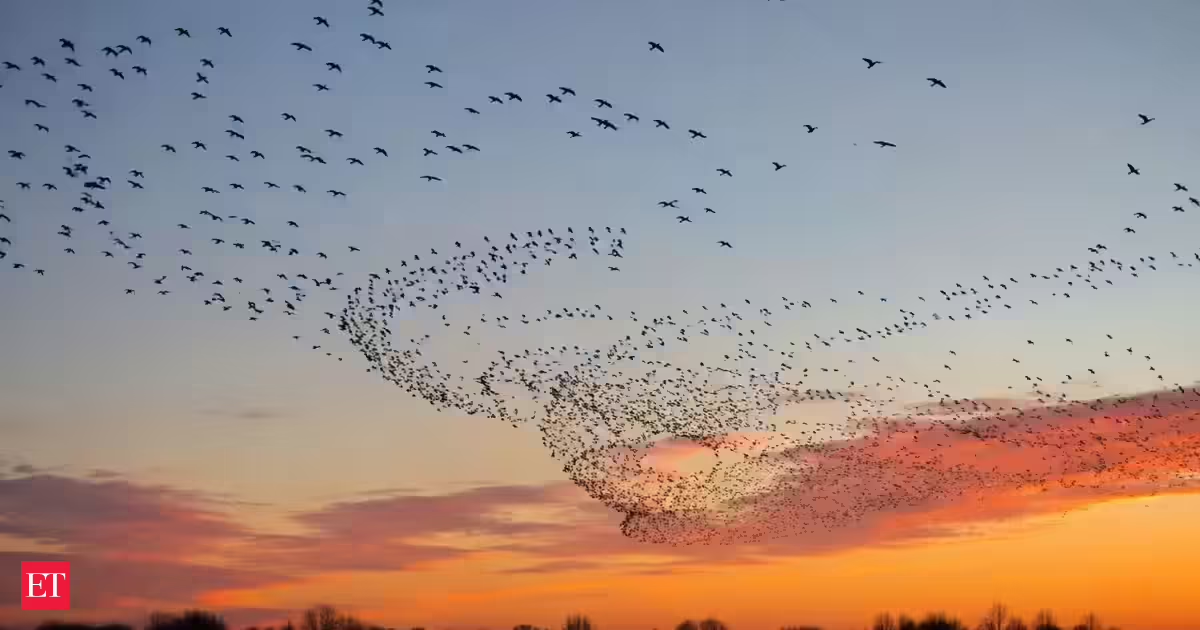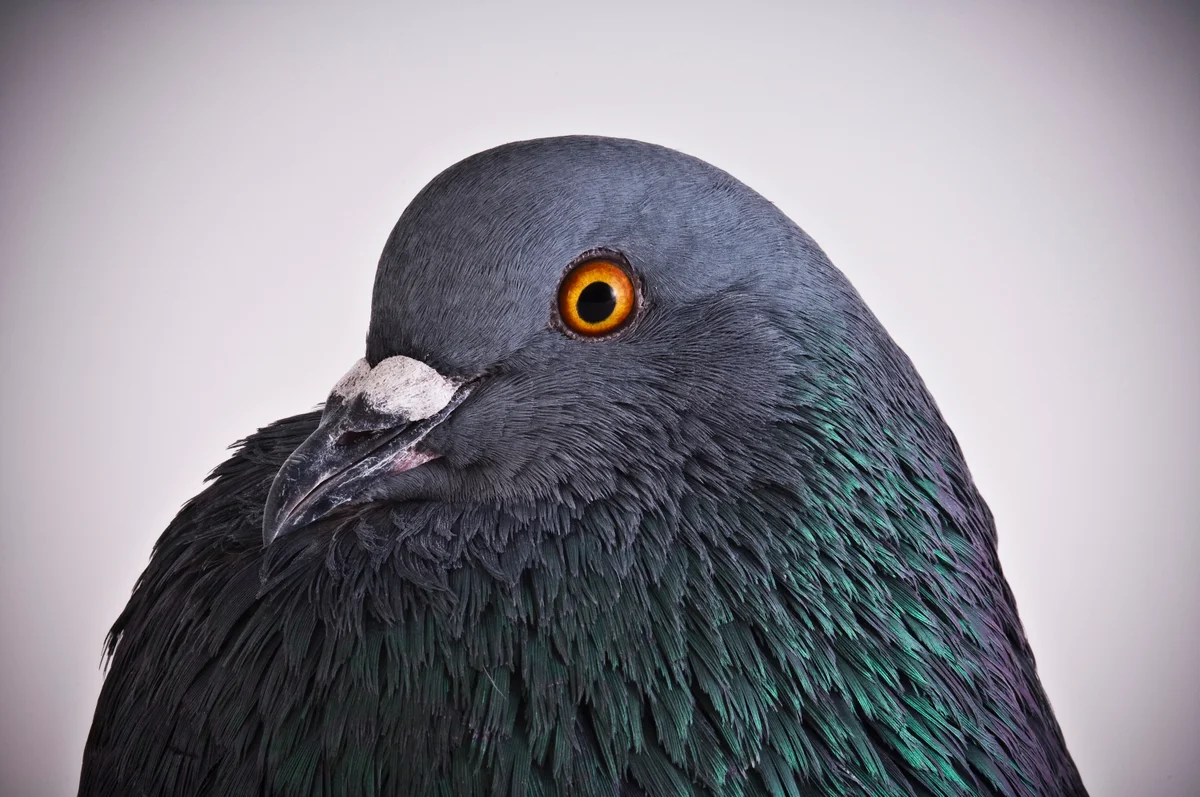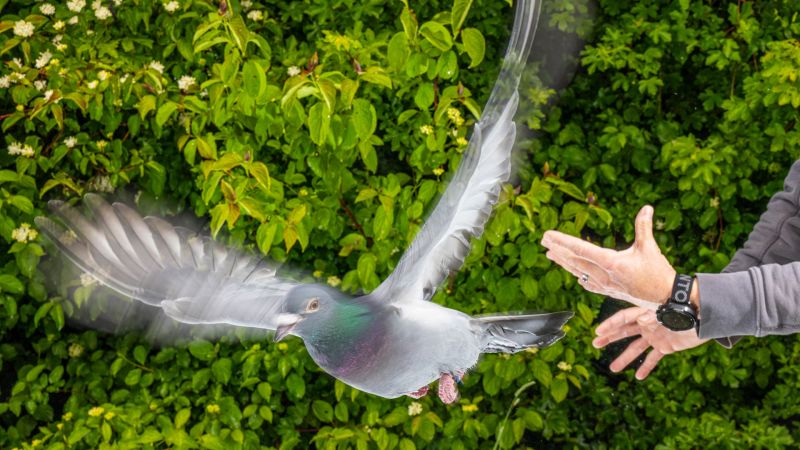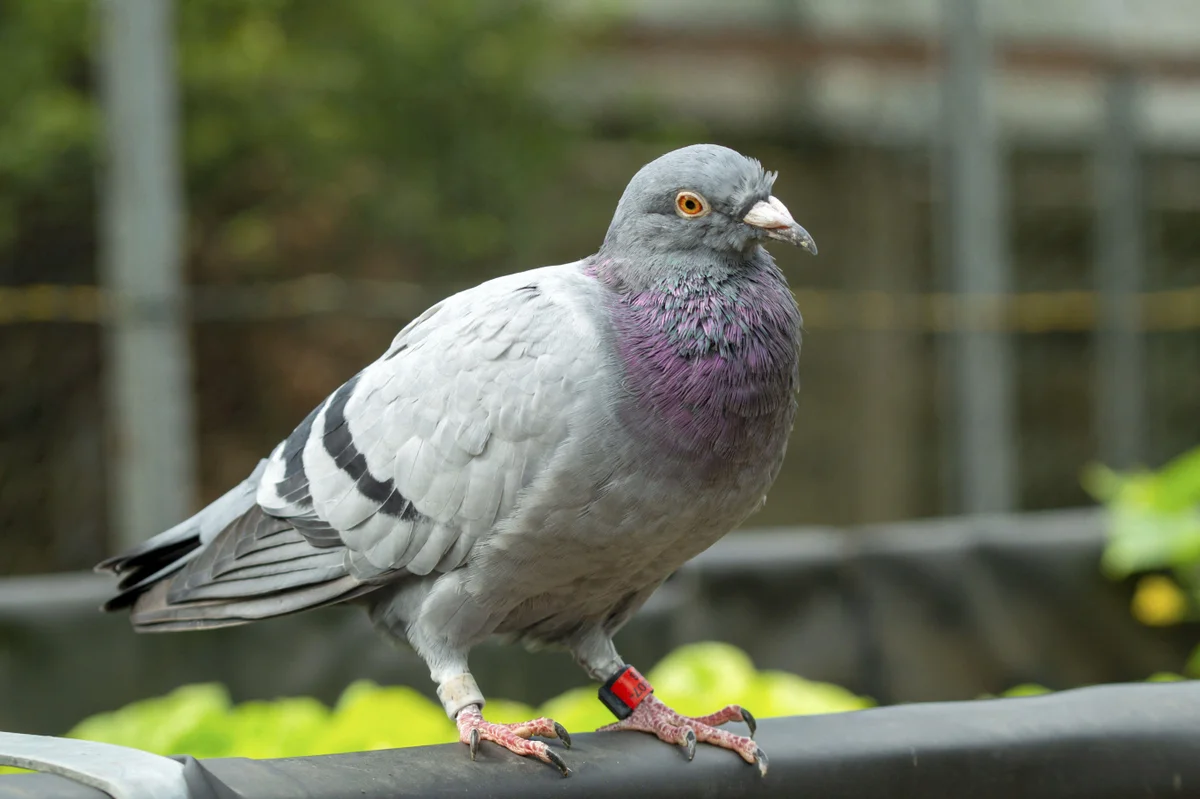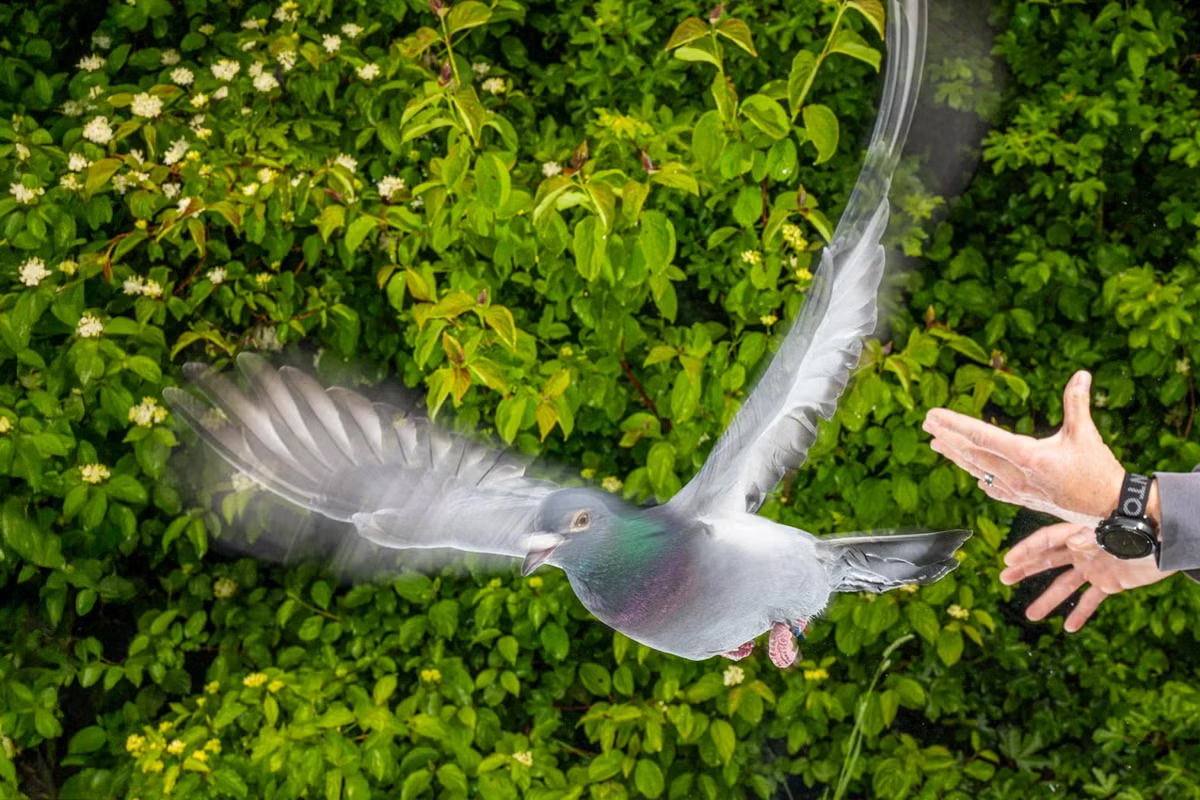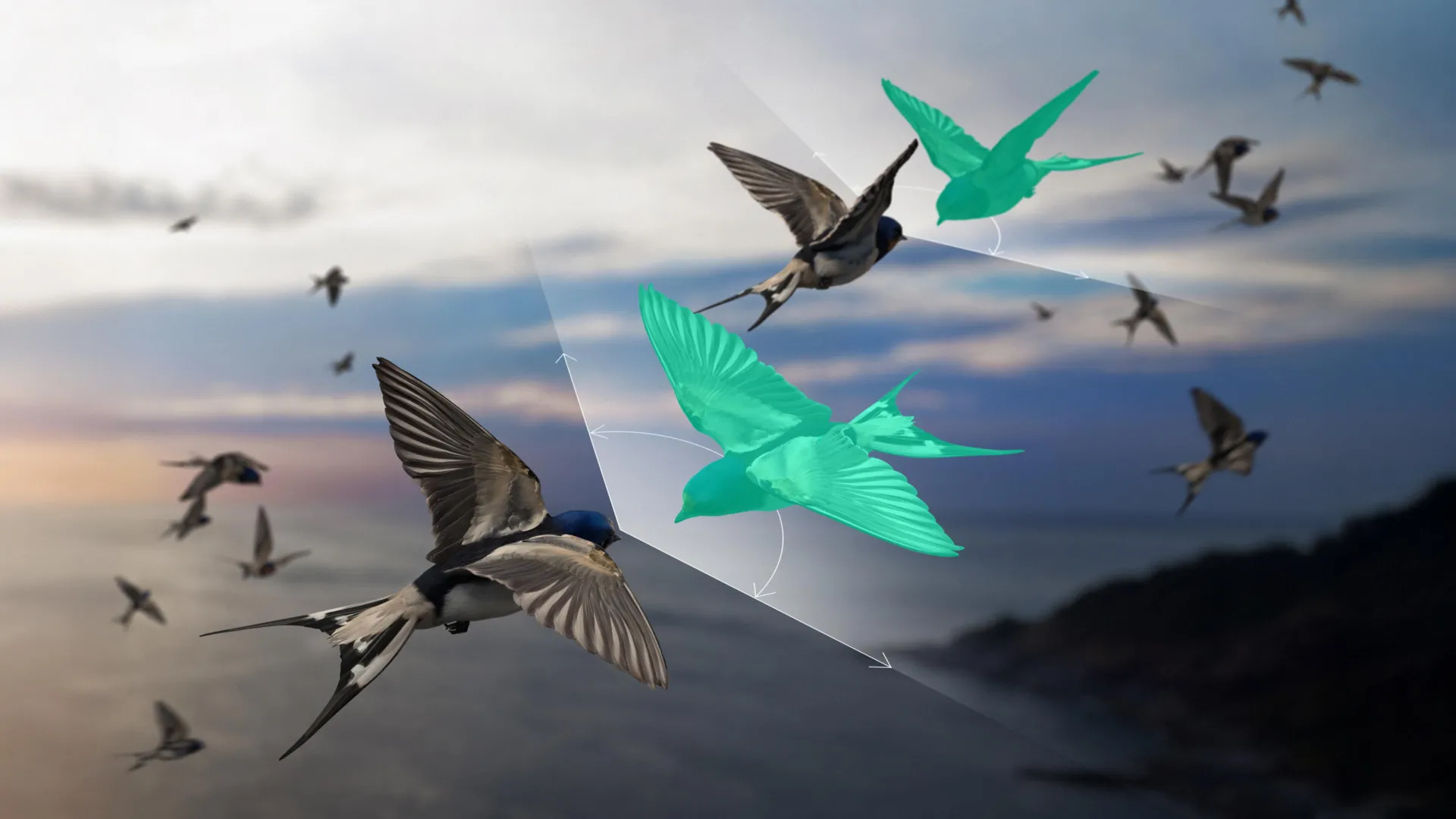
Birds can see a large portion of the world around them, but when they fly in flocks, they pay attention only to birds beside them or ahead of them. They do not align their movements with birds behind them. That behavior appears to conflict with Newton's third law, the famous action and reaction principle often summarized as "for every action, there is an equal and opposite reaction."
This principle is easy to see in everyday life. When we run, our feet push against the ground and the ground pushes back with an equal force. The same idea explains how cars move, how people row boats, and why a balloon shoots forward when air escapes from its opening. For more than 300 years, Newton's third law has been one of the foundations of classical physics.
"Whatever we normally teach our students in theoretical mechanics, it ultimately rests on the action-reaction principle," explains research group leader Marín Bukov.
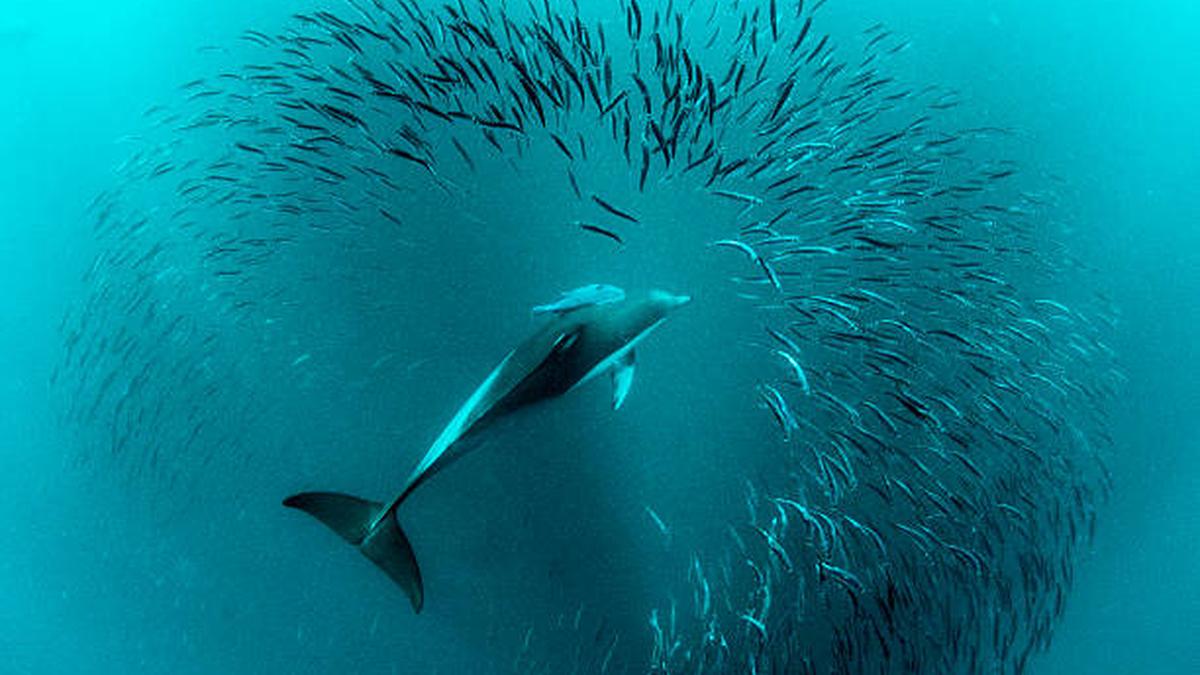
Bird flocks are not the only systems that appear to fall outside this rule. Bacterial swarms, crowds of people, and even groups of cells in living tissue behave similarly. In these systems, individual components respond to only part of their environment rather than everything around them. As a result, the interaction works in one direction, meaning that action and reaction are no longer balanced.