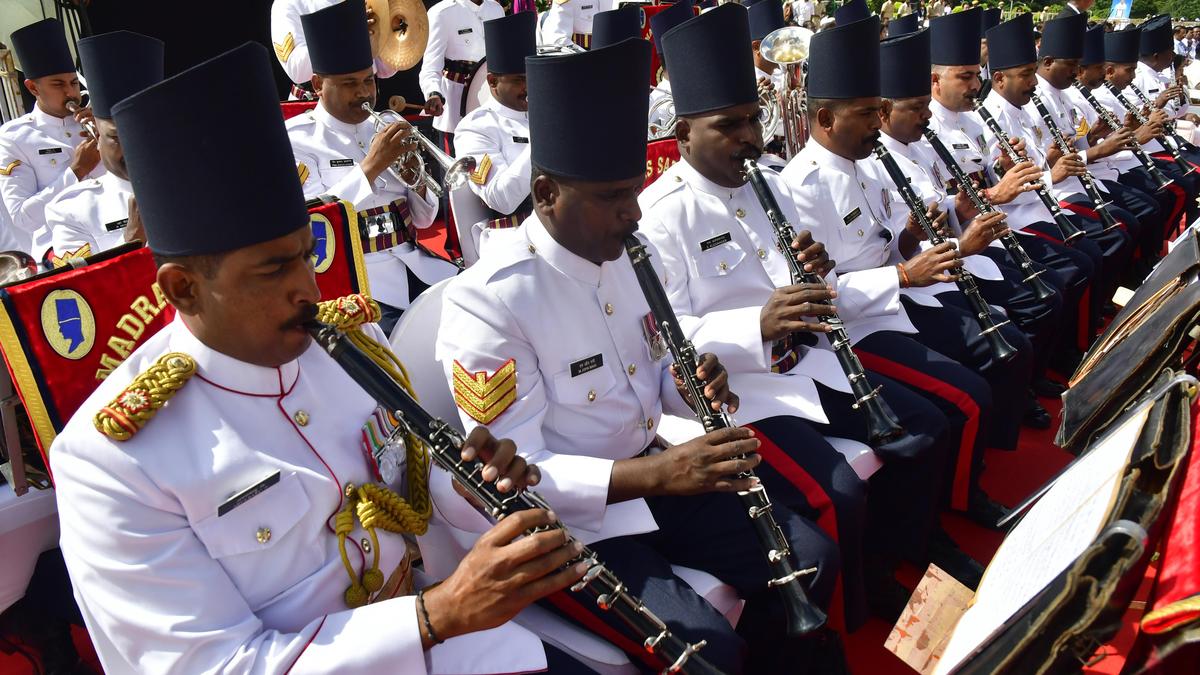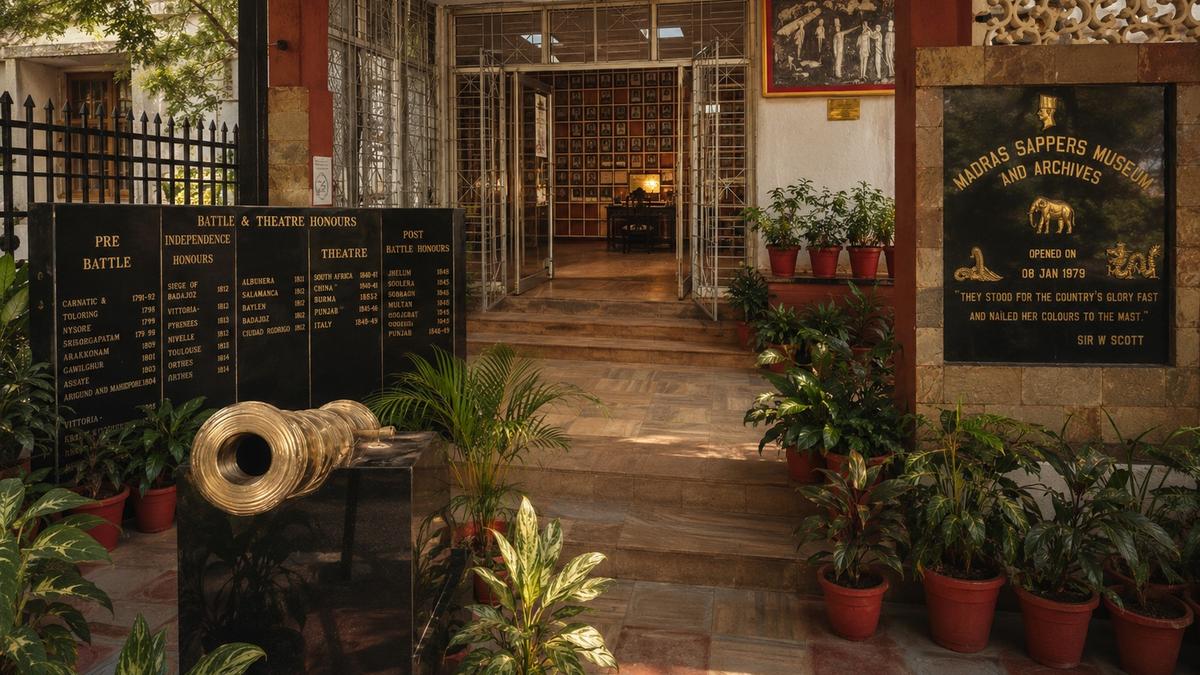
Two years ago, Kayal Kanni, the granddaughter of a Sapper, Marimuthu, visited the Madras Sappers Museum and Archives (MSMA) — that showcases the history of the Madras Engineer Group (called the Sappers, a regiment raised in 1780 ) — in Bengaluru to learn about how her grandfather passed away. Kayal, who visited with her mother, sister, and cousins, says, “My mother Maheshwari was just a year old when he went to Singapore to fight in the Second World War. She was only two when he passed away there. The family came to know of his death only after the war ended and a prisoner of war from a neighbouring village informed us after he returned home.” Kayal initially went to Singapore looking for his burial spot but “we found only Christian and Muslim graves. We were told that the Hindus were cremated. After we learnt that my grandfather was in the Madras Sappers, we visited the museum to learn more.”
Over 250 photographs have been restored, many enhanced using AI, that showcase the Sappers’ history
| Photo Credit:
Special Arrangement
Colonel Uday Sankeshwar (Retired), Director, MSMA, which opened to the public on June 1, 2026, says, “We showed them his photographs and this also helped us identify images from that period as many were undocumented. It was an emotionally-charged meeting.” This experience, among many others, is perhaps what led the Indian Army to open the Madras Sappers Museum to the public for the first time since it was first set up in 1979. The museum, he shares, was started with the intention of telling the history of the Sappers, the oldest regiment of the Corps of Engineers of the Indian Army. “The team began with collecting artefacts such as workshop instruments, medals, machinery, weapons, and photographs that were gifted to the museum by retired officers,” says Colonel Uday, who took charge in 2024 with the intention of making it “permissible to the younger generation”.