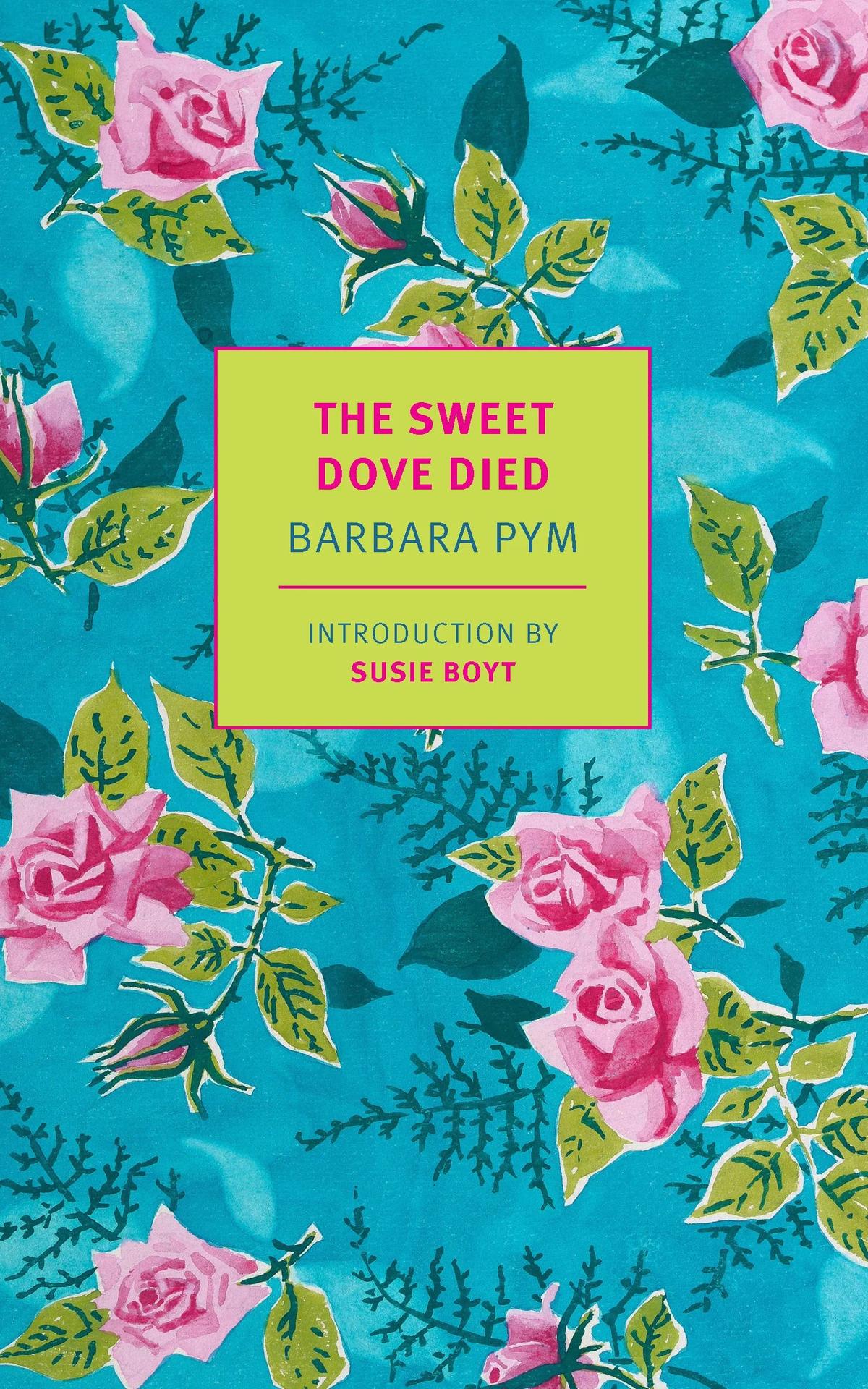
On Barbara Pym’s reissued novel of desire, aging, possession, and antiques.The Sweet Dove Died by Barbara Pym. NYRB Classics, 2025. 240 pages.Did you know LARB is a reader-supported nonprofit?LARB publishes daily without a paywall as part of our mission to make rigorous, incisive, and engaging writing on every aspect of literature, culture, and the arts freely accessible to the public. Help us continue this work with your tax-deductible donation today!IN AUGUST 1978, the 65-year-old Barbara Pym, Britain’s newest literary celebrity, appeared on the long-running BBC Radio 4 show Desert Island Discs to discuss The Sweet Dove Died, her just-published novel, and to account for her own disappearance. A prolific novelist throughout the 1950s and early ’60s, Pym drew on the comedy of Jane Austen and Anthony Trollope to explore a mid-20th-century bleakness often barely distinguishable from everyday tedium. She frequently redeployed 19th-century fiction’s stock characters, who lend Pym’s work of the 1950s a timeless quality. But this very aspect of her writing may also have made it seem antiquated to the clubby, male British publishing industry, which dropped Pym in 1963, the year when, as Philip Larkin wrote, “sexual intercourse began” in British culture.Pym’s clergymen and unmarried women dismissed as “spinsters” were competing, so to speak, with the adulterous lovers whose postcoital conversation opens Iris Murdoch’s A Severed Head (1961): “Only with a person so eminently sensible could I have deceived my wife.” Although she continued writing and sending out manuscripts throughout the 1960s and ’70s, the rejections took a toll. In 1978, Pym divulged to Desert Island Discs’ host Roy Plomley that she’d even tried sending out The Sweet Dove Died under a male pseudonym. “I thought that might give me some kind of pull,” she deadpanned as laconically as one of her own characters, “but it didn’t have any effect because presumably, the novel inside was just the same, just as unsalable.”Out of this demoralization arose a character unlike any Pym had created: Leonora Eyre, an elegant Londoner “approaching fifty” whose attachment to a closeted man half her age threatens to disarrange both their lives. Leonora has never set foot in an Anglican church, that second home for many characters in Pym’s earlier novels. A collector of Victoriana, she prefers Sotheby’s auctions and antique shops to parish halls and church bazaars. The novel teems with images of cages, fossils, hard glass objects, the icy surfaces of mirrors, and, especially, Leonora herself, her hair “stiffly lacquered […] as if she were made of some brittle unreal substance.” Leonora identifies with hardness to combat what her mirror reveals: not only “lines where none had been before,” but also a kind of time-lapse vision of her own decrepitude, death, and decay in “that softening and gradual disintegration of the flesh.”Time restarted, at least for Pym’s career as novelist, literally overnight. In a 1977 Times Literary Supplement poll of the century’s most “underrated” writers, Pym—who hadn’t published a novel since 1961—was not just the sole living writer recognized; she was the only one whose name appeared twice. Suddenly, her novels were celebrated for extending the 19th-century comic tradition, and publishers clamored for the same manuscripts they’d spurned years earlier. By the end of 1977, Pym’s comeback novel, Quartet in Autumn, written in the early 1970s, reached bookshelves—and the Booker Prize short list. The Sweet Dove Died was finally published in 1978, almost a decade after she’d completed it. However, readers who expected high comedy and a preponderance of curates found, instead, an acerbic tale of jealousy closer to the fiction of Guy de Maupassant and Henry James than to Trollope’s Chronicles of Barsetshire novels.“Ooh, that’s her dark one,” enthused a friend upon hearing of the reissue of The Sweet Dove Died. You can find darkness throughout Pym if you look for it. In Less than Angels (1955), the ex–Colonial Service officer Alaric “often avoided looking into people’s eyes when he spoke to them, fearful of what he might see there, for life was very terrible whatever sort of front we might put on it.” Nevertheless, the characters’ relentless appraisal of each other’s “fronts” accounts, almost 50 years after its publication, for The Sweet Dove Died’s unnervingly contemporary atmosphere.By shifting her novel’s setting away from parish jumble sales and homely London bedsits and into the world of auctions and the antique trade, Pym works the act of appraisal, as both metaphor and professional skill, into the narrative. We first see Leonora through the eyes of 24-year-old James, an appraiser in training, who is struck by “the unusual and old-fashioned elegance of her wide-brimmed hat which cast fascinating shadows on a face that was probably beginning to need such flattery.” James apprehends Leonora less as a woman than as a mystique; at the same time, he discerns how that carefully constructed allure has begun to falter. Leonora also beguiles James’s uncle Humphrey, an antiques dealer “nearing sixty” who is teaching his nephew the trade. When Humphrey mentions his specialty in “porcelain and bronzes and small objects,” her reply wows him: “‘Objets d’art et de vertu,’ she murmured, with a delightful accent.” Right off, he sees her as an “exquisite creature.” Uncle and nephew leave the Sotheby’s sale enmeshed in an impromptu, improbable love triangle, the “woman to whom they both seemed to be attracted” the topic of their unspoken conversation.This meeting sets in motion an increasingly dire power struggle marked by jealousy, possessiveness, and desire, both repressed and painfully awoken. In her introduction to the novel’s 2025 NYRB Classics reissue, British novelist Susie Boyt astutely characterizes The Sweet Dove Died as “a matrix of longing and loathing, the two states often indistinguishable.” Pym, both mesmerized and repelled by her own fictional creation, gets drawn into the matrix too. In 1969, she disconsolately asked Larkin, her superfan and pen pal, “[W]hat reader would want to identify herself with Leonora?” Identification implies a capacity for empathy, but Leonora possesses so little that even a photograph of James’s dead mother calls forth only her “rather bored reverence.” If Pym envisioned a female readership for The Sweet Dove Died, then what Boyt calls Leonora’s “disdain for female friendships” might have been a poison pill. Within the novel, that disdain has not only grown reciprocal but has also morphed into schadenfreude. Leonora’s frenemy Liz wants “the cold, proud and well-organised Leonora to suffer as she had suffered and so to provide an interesting spectacle.”At times, even the novel’s third-person narrator enters the fray to throw shade at Leonora: “She had always cared as much for inanimate objects as for people.” That single sentence links Leonora with some pretty nefarious collectors in literature: preeminently, Gilbert Osmond in Portrait of a Lady (1881), who ominously appraises the newly wealthy Isabel Archer as “a young lady who had qualified herself to figure in his collection of choice objects.” The collecting of people-as-objects also lies at the heart of The Golden Bowl (1904), which Pym chose for her desert island reading on Plomley’s radio program. The novel opens with romantic repartee between Maggie Verver, an affluent American, and an Italian prince, her fiancé. Their conversation depends on an in-joke about Maggie’s father, Adam, an art collector who values the impecunious prince for the aristocratic Euro-prestige he’ll bring to the New World Ververs. “You’re a rarity,” Maggie teases, “an object of beauty, an object of price.”A collector on a much smaller scale than Osmond or Adam Verver, Leonora tastefully decorates her flat with “small early Victorian pieces and china and glass objects of the same period.” A photograph of her grandmother “in late Victorian dress” (her parents’ pictures stay in a drawer) reinforces Leonora’s self-branding. Her collection also encompasses a circle of “men friends,” which soon includes Humphrey: devotees “who admired her elegance and asked no more than the pleasure of her company” on dates to expensive restaurants or to the opera. As Humphrey learns when he makes a rather clumsy pass at her, this admiration ends outside her bedroom door. Leonora refers to this bevy of gentlemen as “elderly,” but Humphrey is at most 10 years her senior. Do the lines that have begun to appear on her face and neck augur a time when even these men will find her less alluring, when they’ll appraise her at a lower value? One answer to this question lies in Leonora’s increasing preference for James over Humphrey, to the older man’s chagrin.A kind of male ingenue, James possesses “good looks and pleasing manners,” that draw him his own set of admirers—both male and female—almost from page one. If his “sexual inclinations had never been quite clear” to Humphrey, they’re a bit nebulous to James too—perhaps only because they’re mingled with apprehension. Disrupting his exchange of covert glances with a “raffish” man, James’s initial encounter with Leonora “save[s] him from a fate worse than death.” Pym began the novel before the United Kingdom partially decriminalized homosexuality in 1967, and James experiences the Swinging Sixties as a series of hurried encounters with men whose propositions bring a “not unbecoming blush to [his] cheek,” even if he’s not yet ready to accept them.James is eager, however, to spend most of his evenings with Leonora. She serves him his favorite foods and asks him questions she wouldn’t put to her “elderly” dinner dates: “‘You’re looking particularly handsome tonight,’ she teased. ‘I wonder how many people have fallen in love with you today?’” For Leonora, this banter, couched in mock-maternal fondness, both releases and contains her desire for the younger man. She doesn’t want to sleep with James; indeed, Leonora reflects that “she had never enjoyed that kind of thing.” Nevertheless, their evenings have a particular intimacy, especially when James reads the catalog for a Sotheby’s furniture sale aloud to her: “the seductive descriptions” send her into “a delightful confusion so that she hardly knew what was being described, only that it was something exquisitely desirable.”For James, Leonora’s elegant flat and his relationship with her become a retreat from the risks—and potential pleasures—of the outside world. At the same time, he grows increasingly aware that Leonora has, in a way, collected him: “Sometimes it seemed almost as if she had created him herself—the beautiful young man with whom people were always falling in love and who yet remained inexplicably and deeply devoted to her, a woman so much older than he was.” Leonora’s narrative enfolds James into a dyad with her that, before long, begins to feel like a cage. Their age difference inspires funny-not-funny jokes about her need for reading glasses and about what she calls his “secret life”—the life they both know she doesn’t want him to have.Leonora’s possessiveness of James increasingly drives the storyline once real lovers emerge from his “secret life” to challenge her hold on him. The story’s demi-villain arrives in the person of Ned, the older American lover James brings back from his continental travels. At their first meeting, Leonora’s panic practically screams from the page in a run of staccato monosyllables: “[T]his young man wanted to take James away from her and she was not going to let him.” The novel’s most Jamesian character, Ned is a player, a collector—as James soon learns—of conquests. Ned, a Keats scholar who “appear[s] younger than his twenty-nine years, until a closer look at his face revealed that life had, after all, left its mark,” shares an adversary with Leonora: time. His awareness of his own shelf life, so to speak, makes him a particularly brutal appraiser of others’. Ned’s concern for the older woman—“Leonora, I think you want your tea. You look exhausted”—carries a venomous solicitude.In the novel’s extended denouement, even the ubiquitous “exquisite objects” get in on the action. When James hurls “a heavy Venetian glass paperweight” at Ned and the mirrored wall behind him, missing both, Ned’s eyes “sparkl[e].” He revels in fomenting drama. However, the real drama of Leonora’s long-anticipated suffering occurs almost entirely in private. Liz doesn’t get to gloat over her comedowns, which begin with this un-Jamesian sentence: “In the larder misery came over her.” That sounds a bit like a hackneyed novel that Leonora wouldn’t read, let alone imagine herself in. Her despondency transpires among tins of the absent James’s favorite foods, “prawns and lobster, asparagus tips, white peaches.” If these upmarket but still mass-produced objects embody some of the nurturance, perhaps even love, she feels toward him, they also have expiration dates stamped on their metal surfaces.The novel’s minutely recorded particulars, including Leonora’s tinned foods, may have inspired a cutting letter Pym received from one of the publishers—21 in total!—who rejected The Sweet Dove Died prior to her comeback. “What is wrong with being obsessed with trivia?” Pym fumed to her journal in 1970. “Some have criticised The Sweet Dove for this. What are the minds of my critics filled with? What nobler and more worthwhile things?” Indeed, the novel abounds, if not with trivia, then with the minutiae of everyday life, including the “inanimate objects” central to the narrative, and each key character—like a novelist—possesses a sharp, appraising eye for details. Leonora, of course, cannot “bear to have anything not quite perfect” in her surroundings: “As she picked up a miniature jug decorated with flowers she noticed that a petal from one of the forget-me-nots was chipped off. How had she not seen this before?”Throughout The Sweet Dove Died, Leonora struggles to surmount the world of trivia, which encompasses not only chipped flower petals but also human desire in all its messy, wounding imperfections. “She has constructed,” Boyt suggests, “a world for herself that is out of the real world’s league,” not merely from the outset of the novel but at the end as well, when she reassumes, with some effort, her battered but still serviceable mystique. Leonora stands imperiously apart, both from the world of Pym’s earlier novels and from the larger world of British fiction of the 1960 and ’70s. Abjuring change, she tenaciously holds on to a vision of herself—grandiose, a bit absurd, and ultimately unattainable—as “a woman from another century, fascinating and ageless.” Pym herself may have drawn strength from Leonora’s steeliness in her determined attempts to get The Sweet Dove Died past the gatekeepers and onto bookshelves. Less than two years before her death from cancer in 1980, she wrote to her friend Bob Smith: “I really think all those years of not being published have made me as hard as teak, or whatever is a hard wood.”LARB ContributorEric Gudas is the author of Best Western and Other Poems (Silverfish Review Press, 2010), and his essays and reviews have appeared in Raritan, All About Jazz, Poetry Flash, Senses of Cinema, Reading in Translation, and elsewhere. He contributed the afterword to Natalia Ginzburg’s Family and Borghesia (NYRB Classics, 2021).ShareLARB Staff RecommendationsA Nice Hobby, Like Knitting: On Barbara PymNow recognized as a master for her wry, comic novels of spinsters and clergymen, Barbara Pym was unpublished until the very end of her life.Victoria PattersonJul 16, 2015A Particularly Intimate Mourning: On Susie Boyt’s “Loved and Missed”Eric Gudas reviews Susie Boyt’s “Loved and Missed.”Eric GudasOct 11, 2023
Exquisite Objects, Exquisite Creature | Los Angeles Review of Books
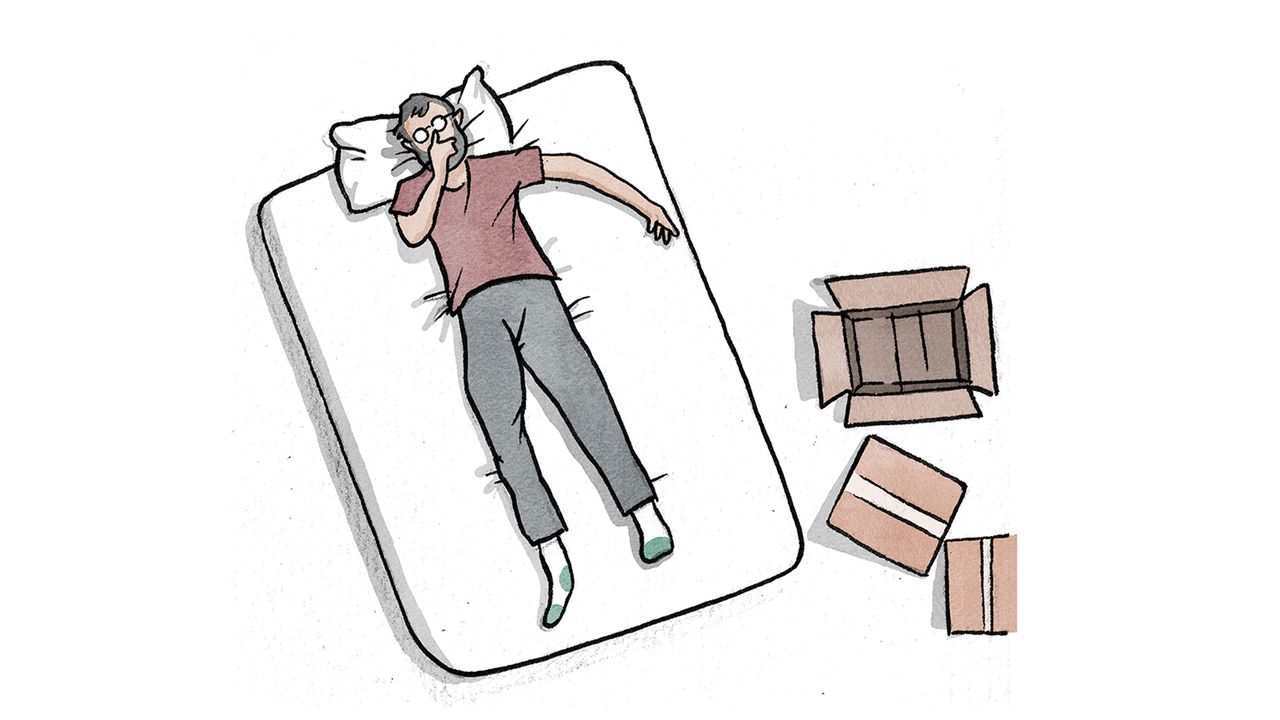
On Barbara Pym’s reissued novel of desire, aging, possession, and antiques.
2,510 words~11 min read