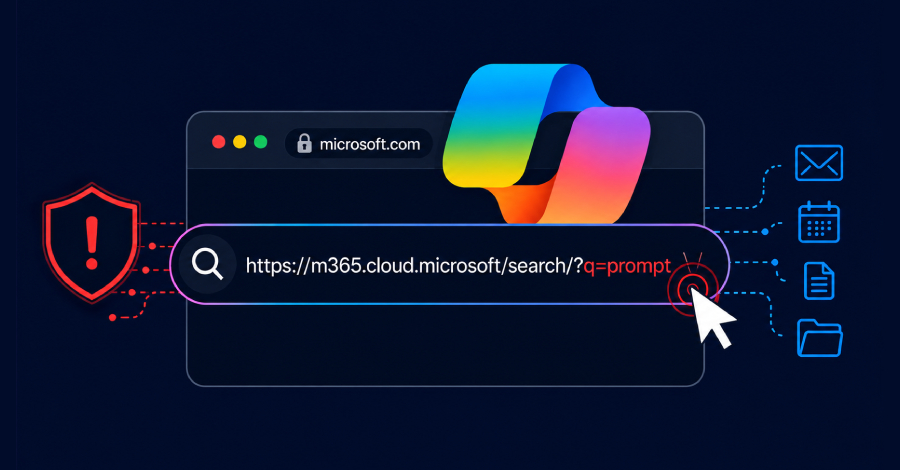
To bring about the Parameter-to-Prompt Injection an attacker sends the target an email that contains the URL with the syntax https://m365.cloud.microsoft/search/?auth=2&origindomain=microsoft365&q=. The field contains an instruction. Copilot readily complied.
“The search functionality is exactly what attackers need, because even with limited capabilities, a user with access to critical information is enough,” the researchers wrote Monday. “To exfiltrate the data, an attacker crafts a URL that tells Copilot to ‘Search the user’s emails,’ extract the title, and embed it in an image URL.” The victim doesn’t type anything. They click a link, and Copilot does the rest.
Normally, the guardrail wrapping output in <code> blocks would kick in. But the researchers discovered that the protection fires only after the “thinking” phase. Prior to that, Copilot generated its response using raw HTML, which is temporarily rendered in the browser DOM.
The researchers wrote:
So, the sequence looks like this: