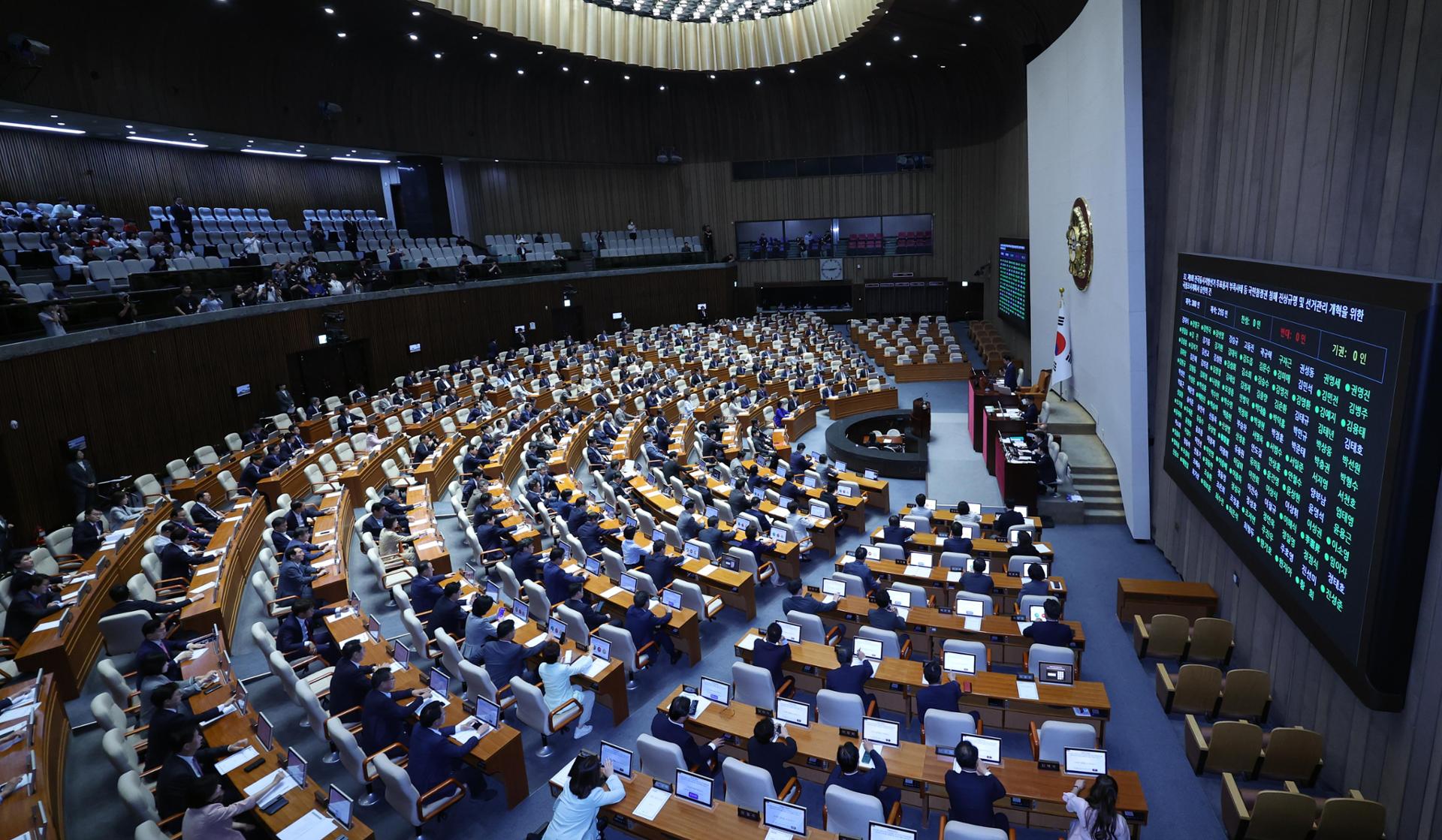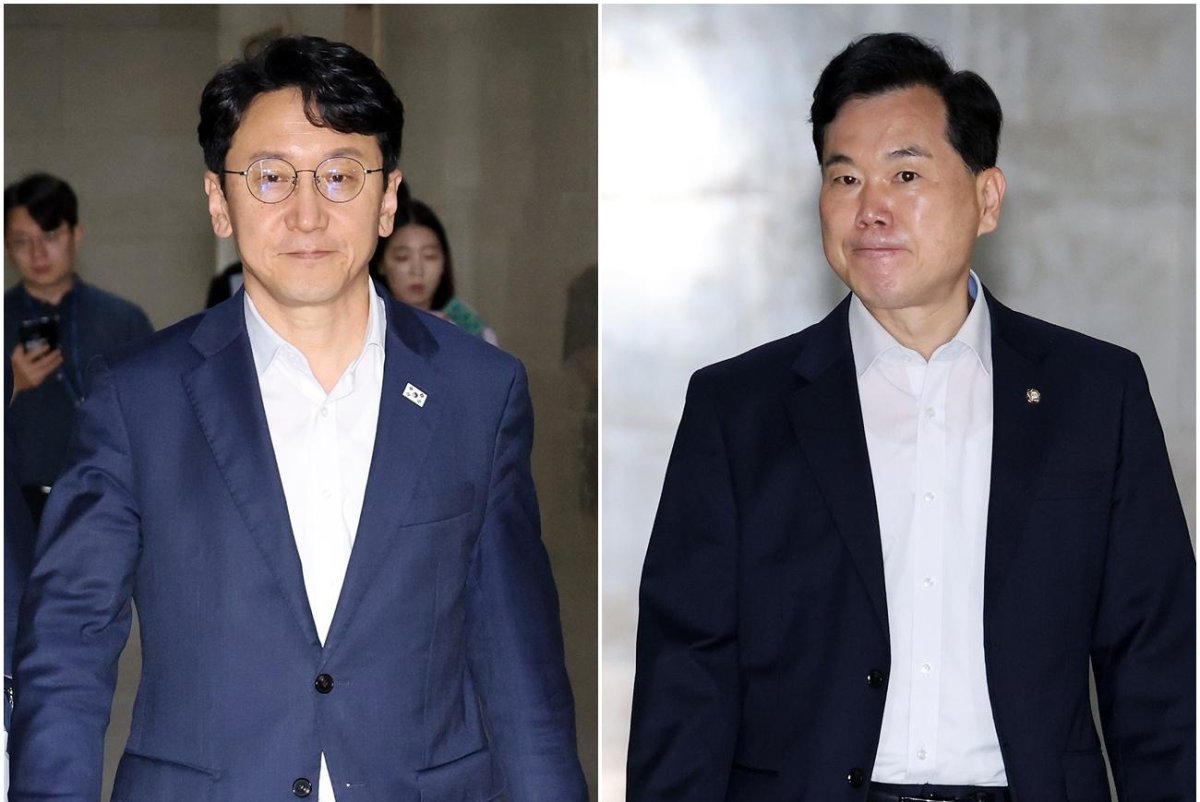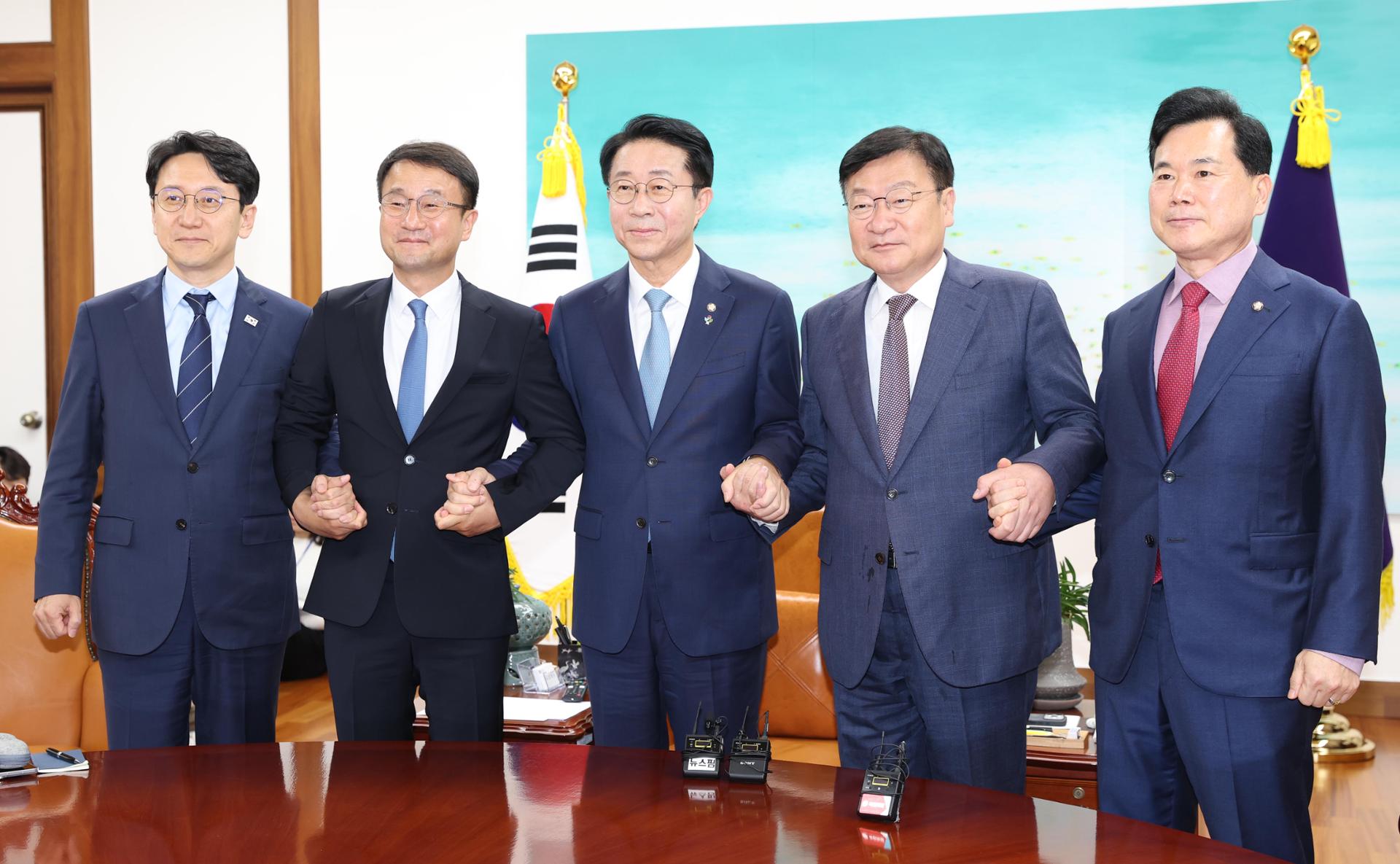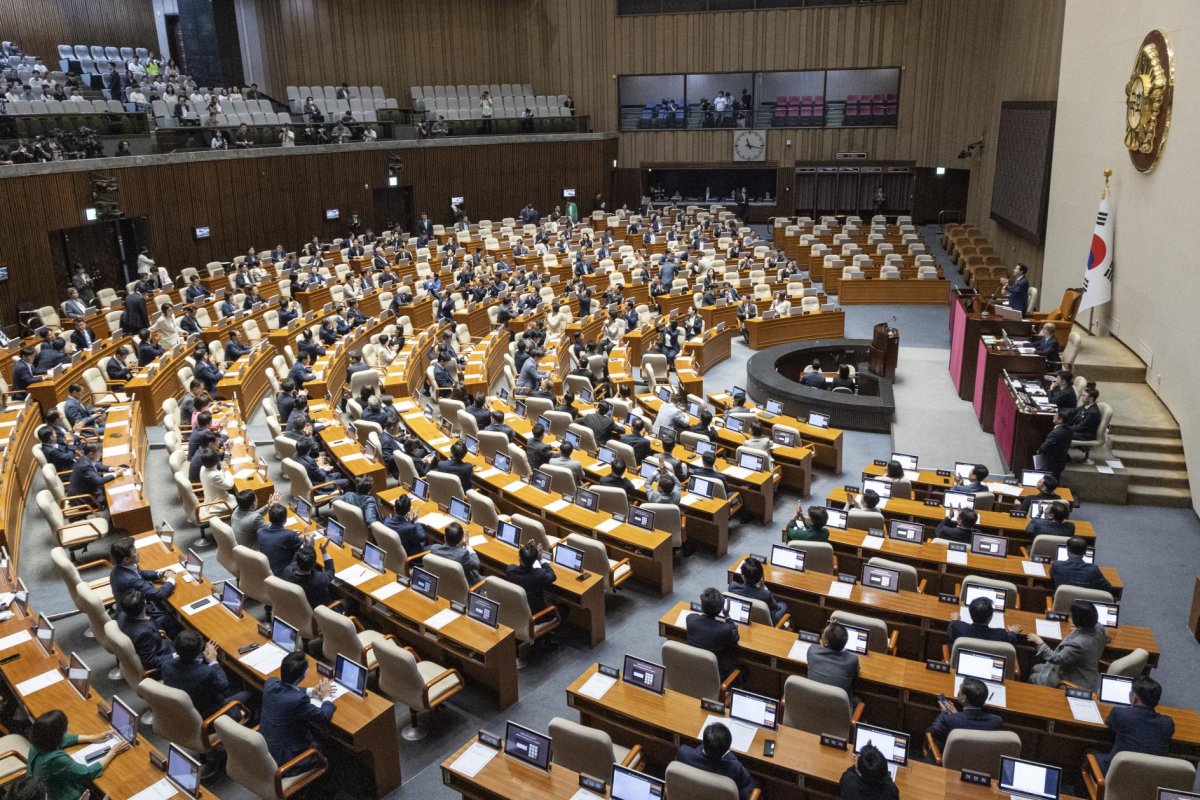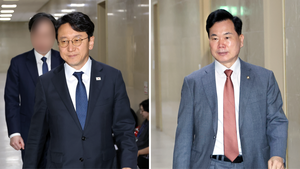
Rep. Cheon Jun-ho (left) of the ruling Democratic Party of Korea and Rep. Kim Seung-su of the main opposition People Power Party, the senior deputy floor leaders in charge of parliamentary operations, walk to a meeting at the National Assembly in Seoul on Tuesday. (Yonhap) South Korea’s National Assembly is set to launch a parliamentary probe into ballot shortages reported during the June 3 local elections, after the rival parties agreed to pass an investigation plan at a plenary session set for Thursday.Rep. Cheon Jun-ho of the ruling Democratic Party of Korea and Rep. Kim Seung-su of the main opposition People Power Party, the senior deputy floor leaders in charge of parliamentary operations, reached the agreement Tuesday.The bipartisan move comes amid growing criticism that the election watchdog failed to properly prepare for voter turnout and protect citizens’ right to vote after unprecedented ballot shortages were reported at some polling stations on Election Day.Speaking to reporters at the National Assembly in Seoul, Cheon said, “We agreed to launch the parliamentary investigation to swiftly uncover the facts behind the ballot shortages and lay the institutional groundwork for a broad reform of the National Election Commission.”The planned investigation will cover the NEC and its regional branches.A special parliamentary committee will be formed with nine lawmakers from the Democratic Party, seven from the People Power Party and two from minor parties or independent lawmakers. The investigation will run for an initial 45 days, with the possibility of an extension if needed.Kim said the parties agreed to keep the inquiry relatively short, citing the need to swiftly address an issue of major public concern.He also said the rival parties agreed to cooperate actively in summoning witnesses, including the interior minister, Interior Ministry officials, and local government officials in cities, counties and districts where ballot shortages occurred.“We agreed that there should be no restrictions in sufficiently investigating relevant institutions,” Kim said.
National Assembly to launch probe into ballot shortages, NEC reform
South Korea’s National Assembly is set to launch a parliamentary probe into ballot shortages reported during the June 3 local elections, after the rival parties
316 words~1 min read