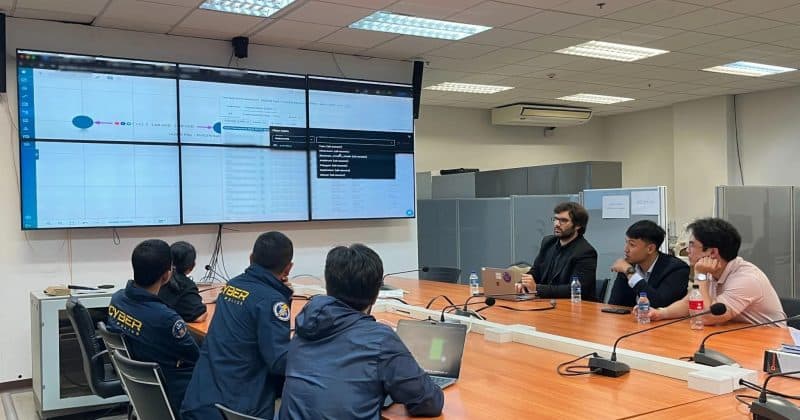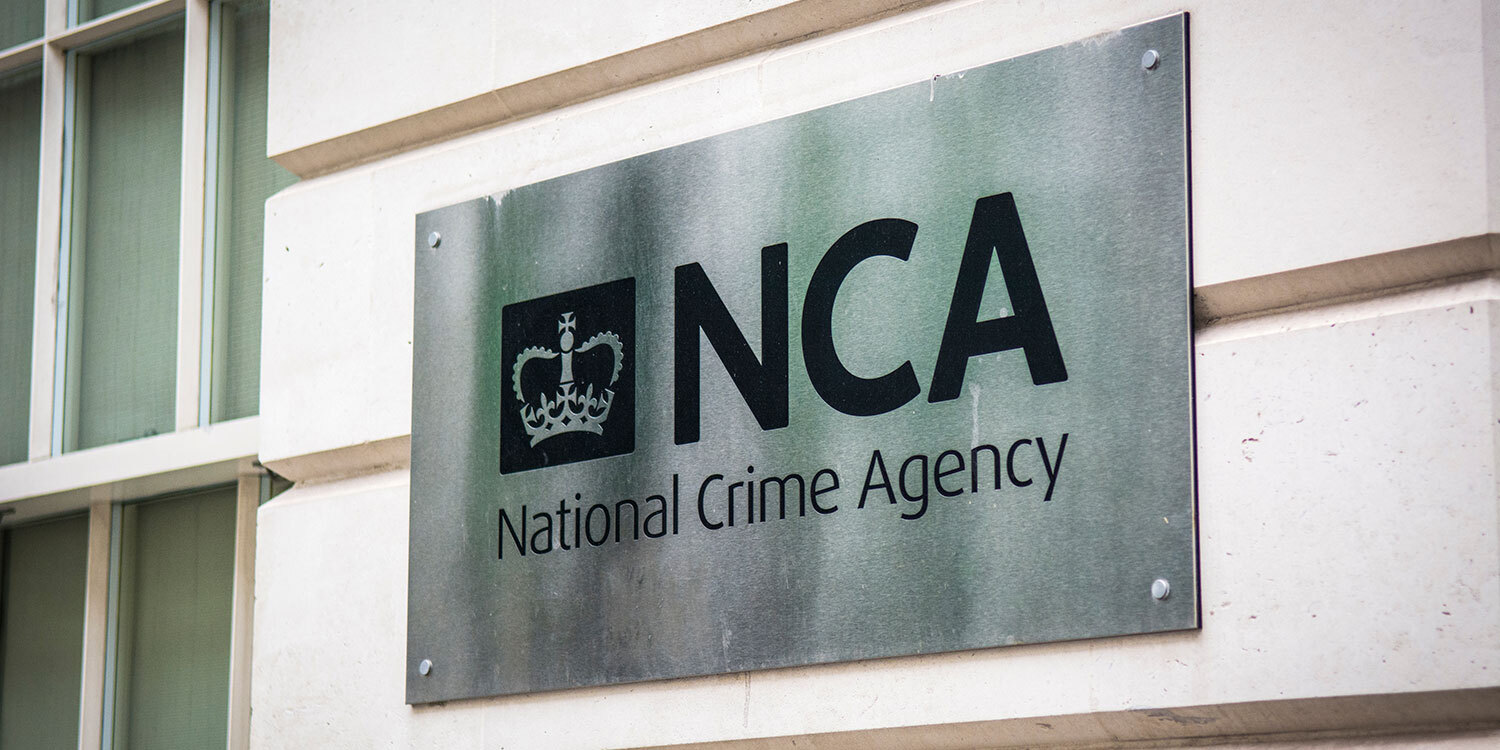
When an e‑commerce “investment” platform promising high-yield returns began circulating in Ghana, thousands of people signed up to run online shops, earn points from trading and referrals, and grow what they believed were legitimate balances. Behind the sleek interface, however, sat a Chinese-Malaysian organized crime group using the scheme to siphon millions of dollars from victims in Ghana and beyond, then launder the proceeds through cryptocurrency.In a first-of-its-kind outcome for West Africa, Ghana’s Economic and Organized Crime Office (EOCO) and international partners including Europol and the UK National Crime Agency (NCA) worked together to identify, freeze and seize roughly $15.1 million linked to the enterprise using Chainalysis Reactor. These funds are now being prepared for restitution to victims in both Ghana and the United Kingdom.The case, recently highlighted at the UNODC Global Fraud Summit in a panel moderated by Chainalysis’ James Lee with Mr. Raymond Archer, Executive Director of EOCO, and Mr. Matthew Perfect, Senior Manager, Fraud Threat Leadership at the UK’s National Economic Crime Centre (NECC), offers a template for how public–private collaboration and technology can turn fragmented fraud reports into concrete victim recovery.From suspicious trades in Europe to a fraud hub in GhanaThe investigation began not in Ghana but at OKX, a global cryptocurrency exchange, where compliance teams spotted unusual activity linked to an apparent investment scheme and reported it to Europol. Europol passed the case to the UK NCA, whose analysts traced key operational nodes — including a physical office fronting the fraud and mule accounts receiving victim funds — back to Ghana.Recognizing that Ghanaian authorities were best placed to act, the NCA International Liaison Officer based in Accra referred the case to EOCO, sharing both traditional financial intelligence and early blockchain analysis. That handover triggered a complex, multi‑agency response.Legal agility: freezing fast, then building the evidential caseBecause crypto funds can move in minutes, EOCO’s first priority was to stop the outflows. Ghanaian law gives the Executive Director power to impose a 14‑day administrative freeze on assets without first obtaining a court order – a tool Mr. Archer described as “crucial” for crypto investigations.In this case, EOCO used that authority to freeze relevant exchange accounts, then secured a formal court order requiring the exchange to maintain the freeze while the criminal investigation advanced. At the same time, EOCO obtained KYC records from the exchange, linking wallet activity to named individuals and corporate entities, including members of the Chinese-Malaysian organized crime group who had already fled Ghana.Unmasking the network with Chainalysis ReactorWith the assets secured, the next challenge was to understand the full scale of the scheme and its victim base. That was where Chainalysis Reactor came in.During their investigations, EOCO and the NCA used Chainalysis Reactor to cluster related blockchain addresses and map out the flows associated with the fraudulent platform. What initially appeared to be separate wallets and accounts were revealed as parts of a single, coordinated operation. Based on this activity, Chainalysis later attributed the same cluster as a major investment scam within its broader dataset.In total, the teams identified criminal proceeds equivalent to 119.4 BTC, 93 ETH, and 2.85 million USDT, much of which had at one point been held in DOGE before being consolidated. These assets were spread across nearly 20 different coins and tokens, reflecting the fraudsters’ efforts to fragment and obscure their holdings.According to Mr. Perfect, one of the most powerful aspects of the partnership was that investigators in Ghana and in the UK could look at the same on-chain picture in real time.Mr. Matthew Perfect, Senior Manager, Fraud Threat Leadership, National Economic Crime Centre (NECC), UK, shared: “In this case, EOCO analysts could see exactly what we were seeing in the blockchain data. That meant we weren’t just sending each other reports — we were co‑investigating. It gave us more brainpower on the problem and helped us link UK victims to the Ghanaian fraud much faster.”Ultimately, following the seizure by law enforcement, the assets were sold via private sector partnerships with ComplyCrypto and their custodian, Zodia Custody, and approximately $15.1 million was transferred into a dedicated exhibit account in Ghana. EOCO is now in the process of screening victims and designing a process for restitution. Some of those affected are British citizens, meaning that part of the recovered funds will eventually be repatriated to the UK.Mr. Raymond Archer, Executive Director, Economic and Organized Crime Office (EOCO), Ghana, said: “The concept of public-private partnerships is not a new thing, but the evolving nature of new threats such as fraud requires a new kind of partnership built on intelligence sharing and advanced tools. Chainalysis has been a very useful partner in this investigation as its tools helped us to nail down the cluster of addresses that are linked to the various scam accounts.”What this case signals for the future of fraud enforcementGhana’s recovery of $15 million from a Chinese-Malaysian fraud network is significant on its own terms. It is among the first examples in West Africa of a major crypto-based fraud being not only disrupted, but also converted into meaningful compensation for victims.It also points to a broader shift in how fraud and economic crime will be tackled in the years ahead:
Ghana and the UK Recovered $15 Million via Blockchain
Learn how Ghana's EOCO and the UK NCA used Chainalysis Reactor to trace and seize $15.1M in crypto fraud proceeds and return funds to victims.
1,266 words~6 min read