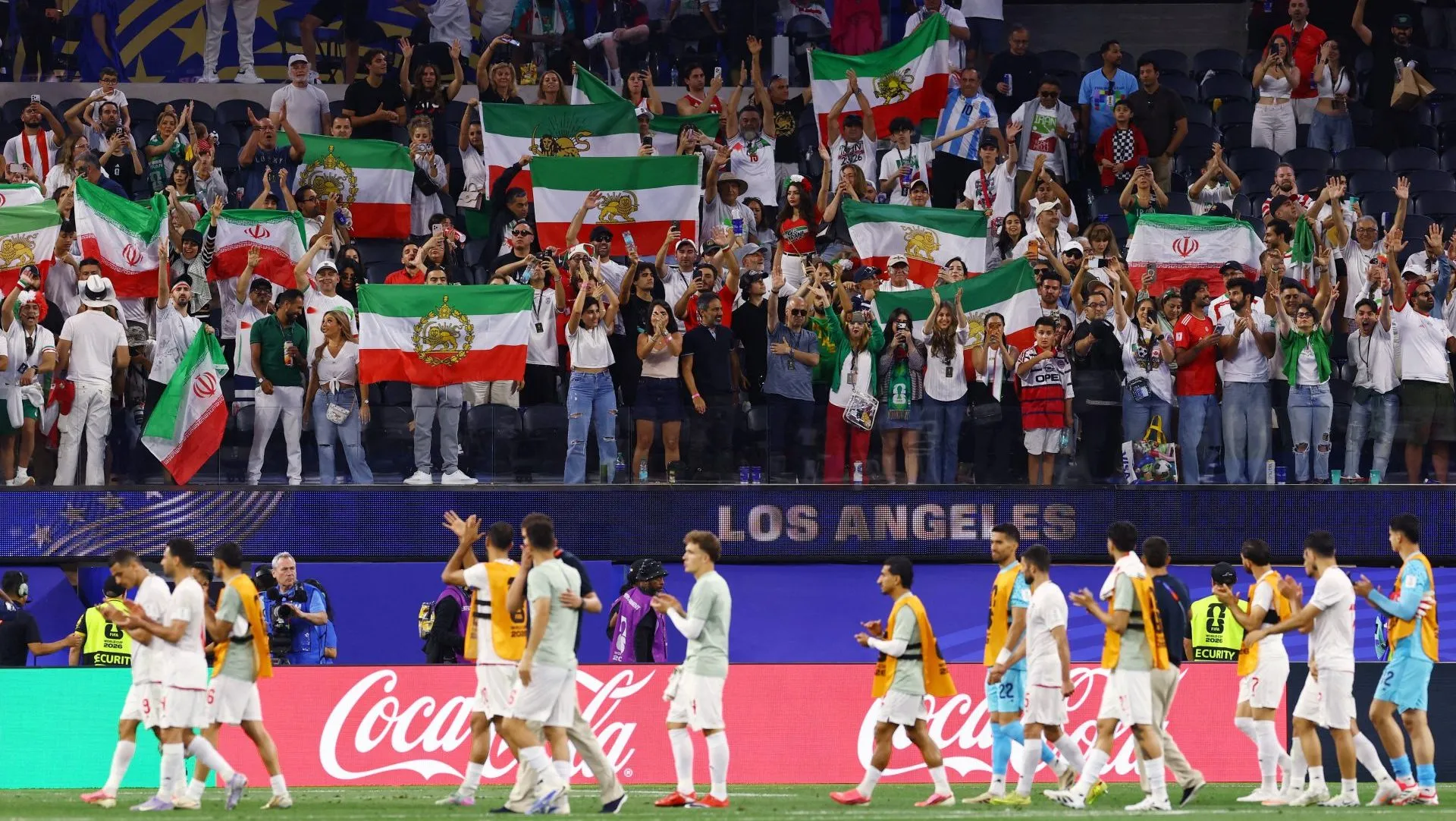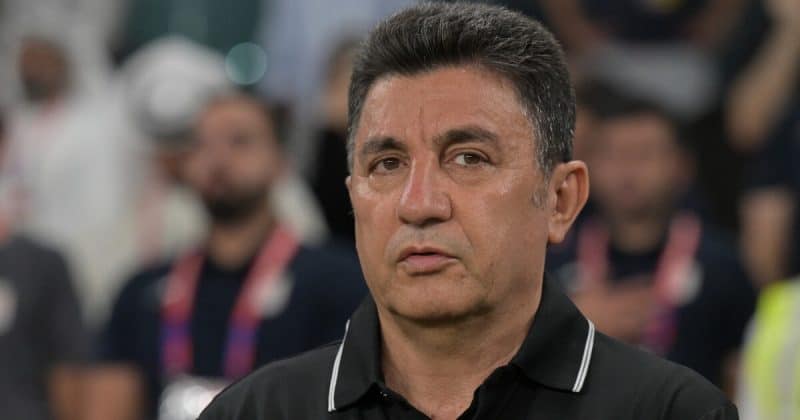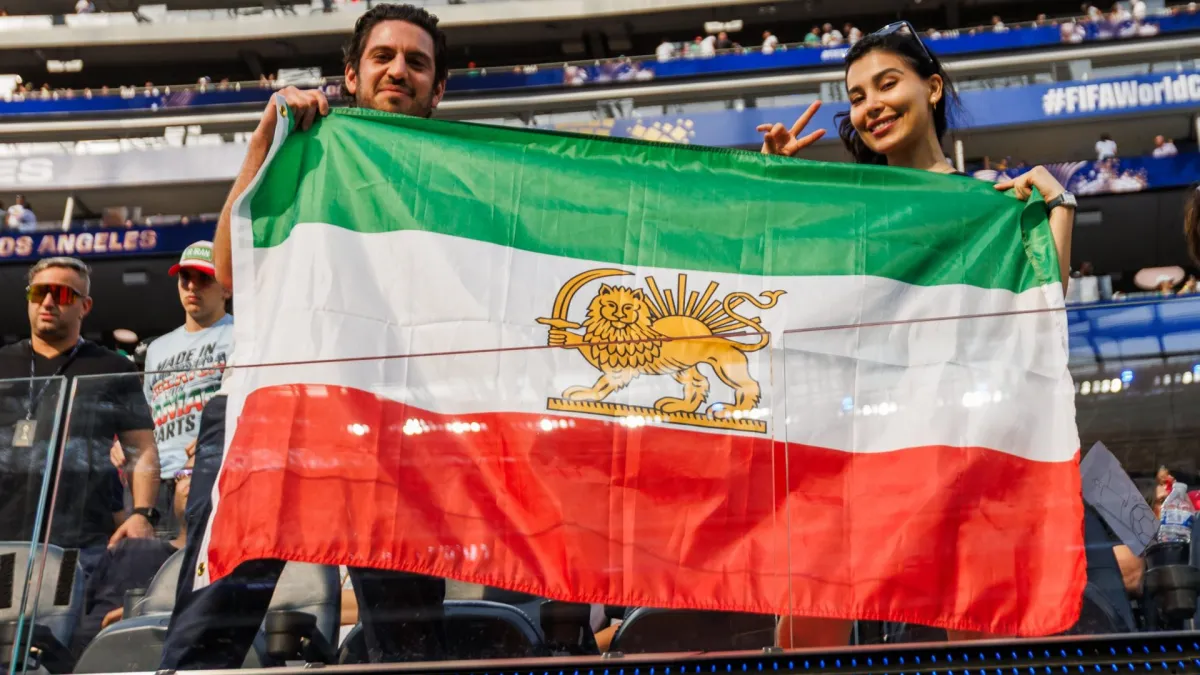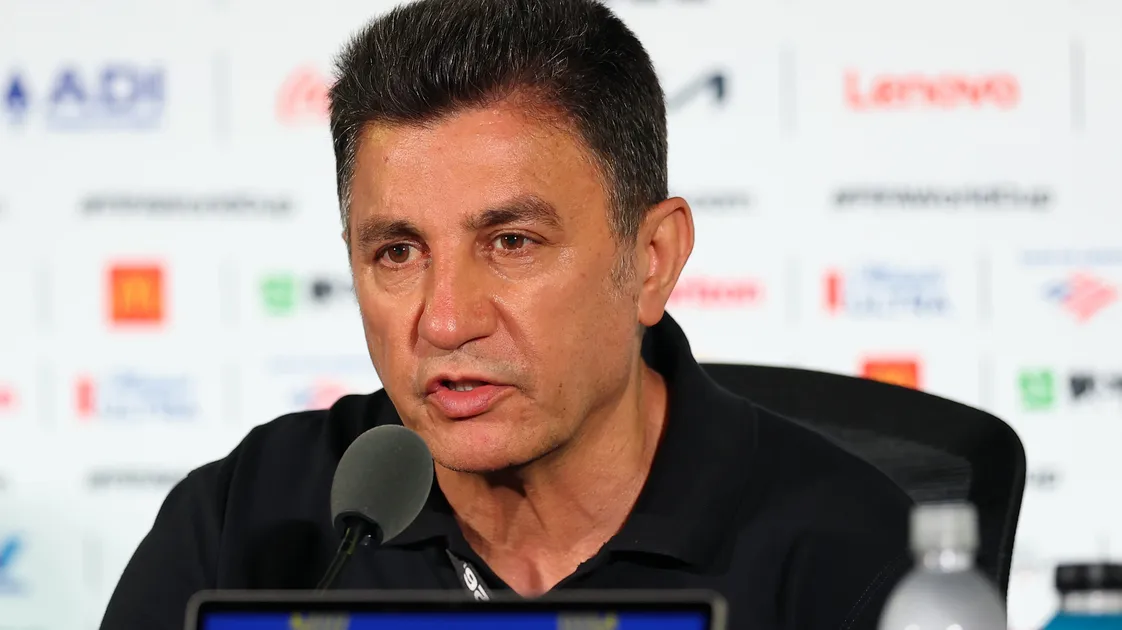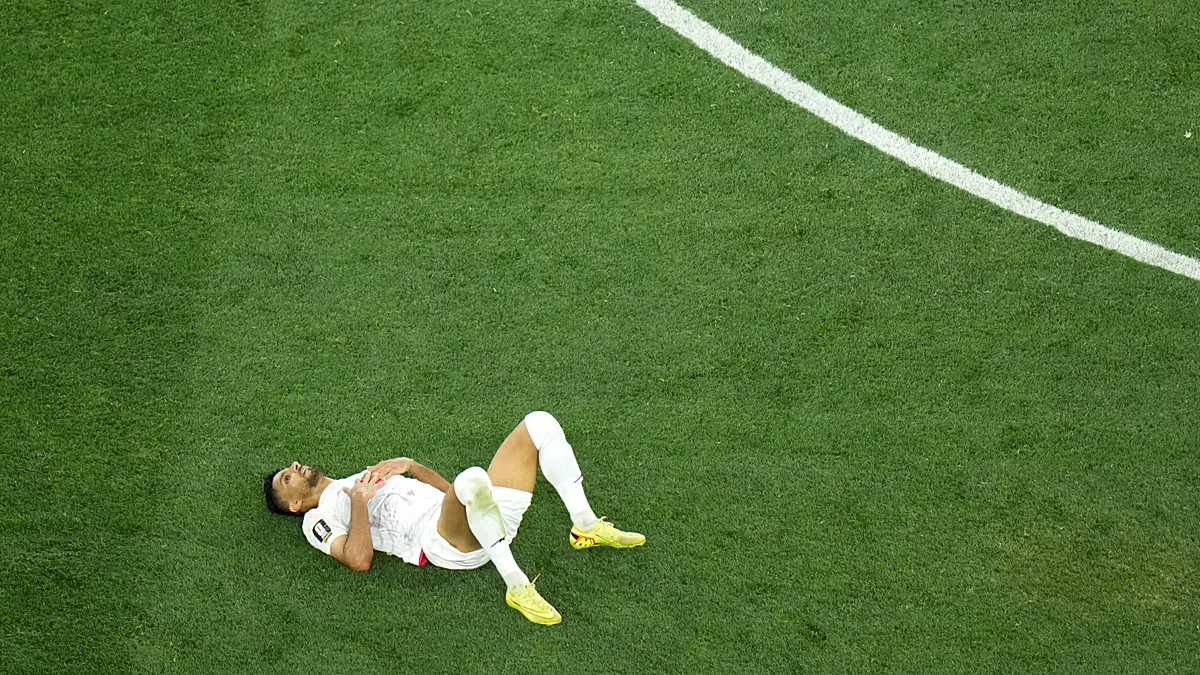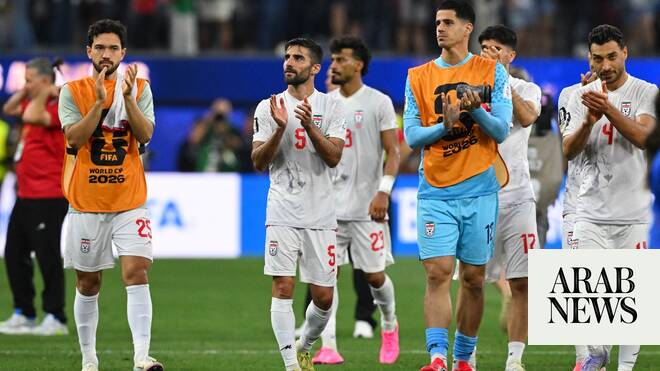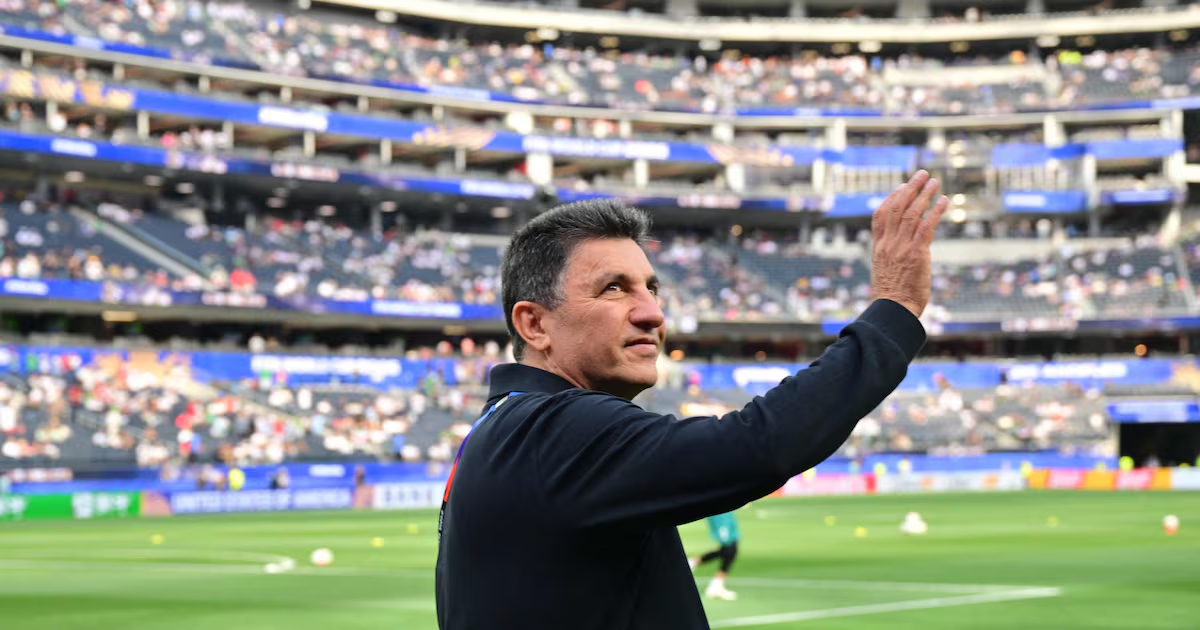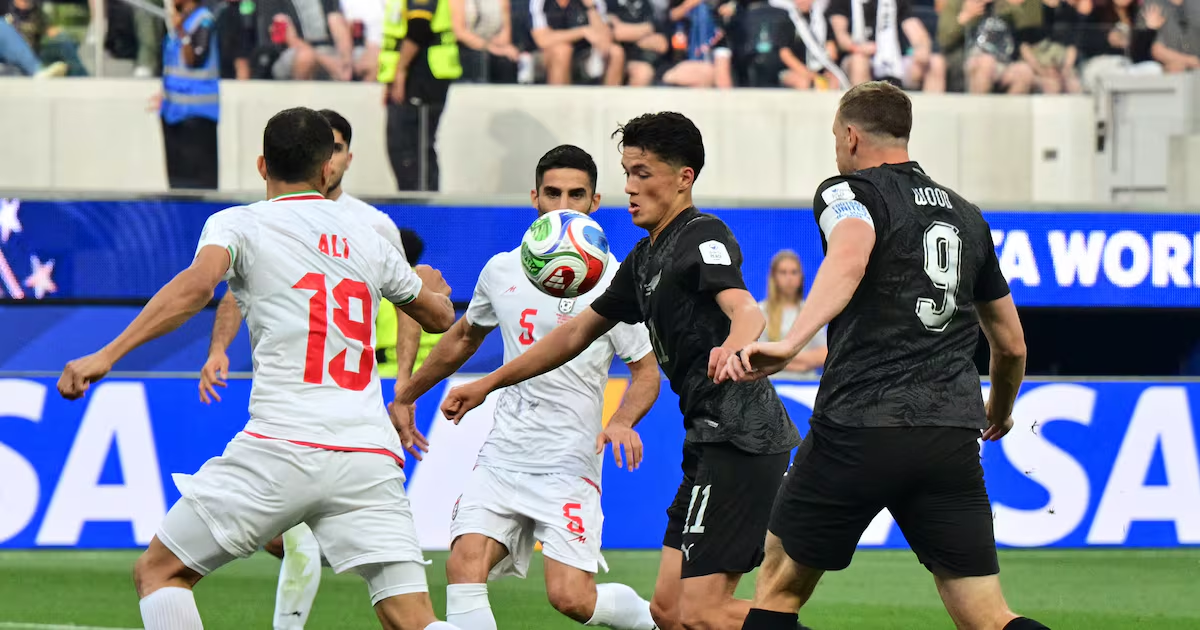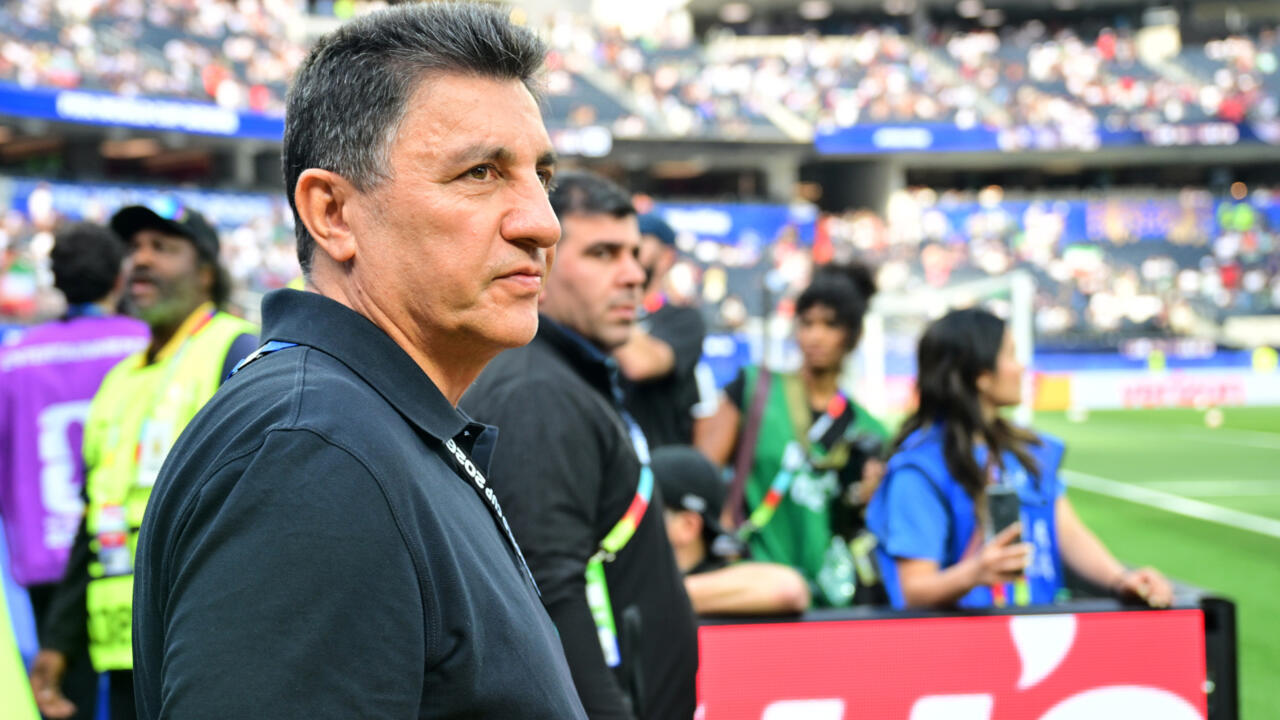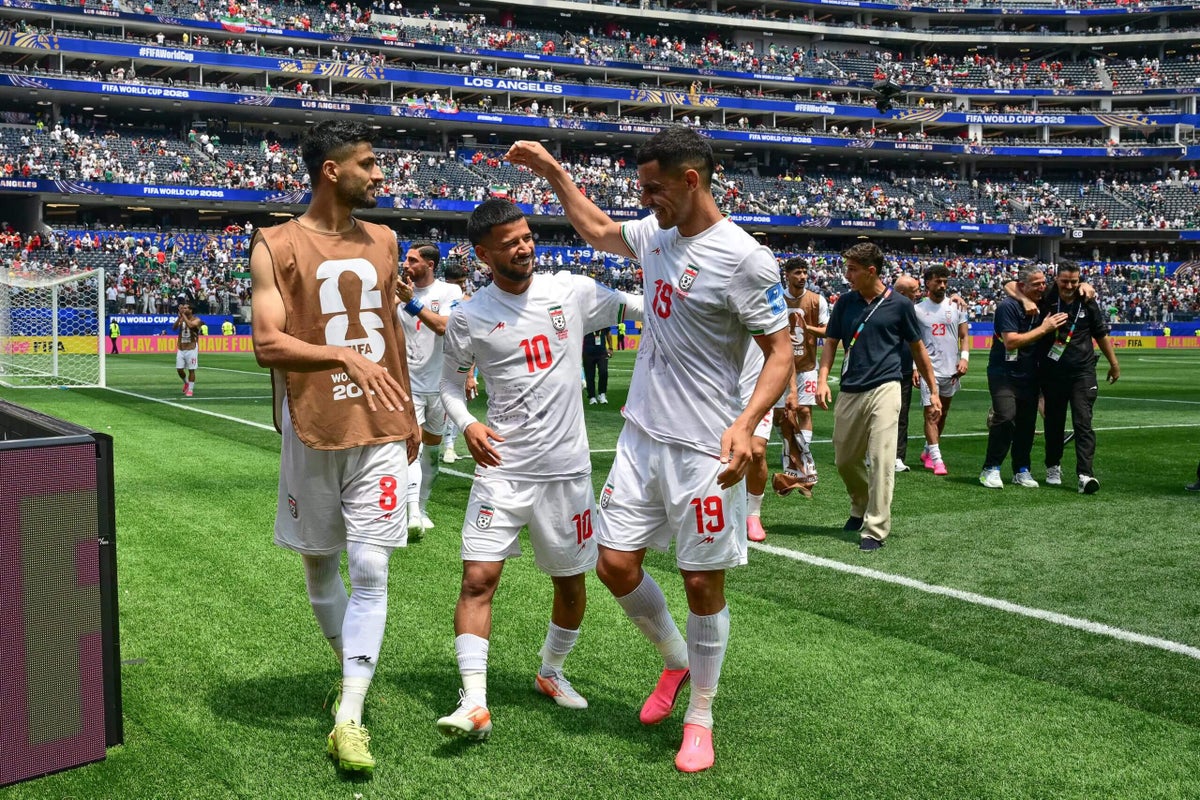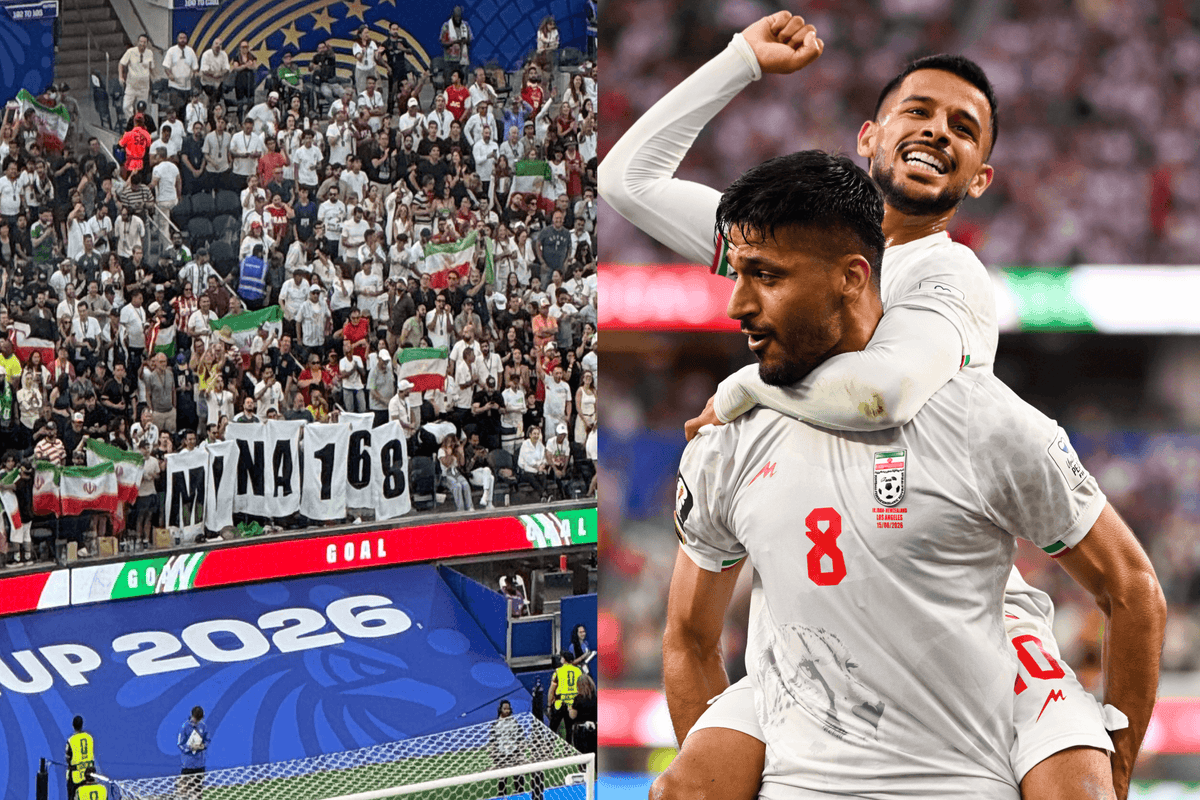
Iran’s opening matchday at this World Cup began with a battle in the courtroom and finished in a fiery press conference, where head coach Amir Ghalenoei called his team “the most oppressed one” in the entire competition.In between, Iran played in one of the most entertaining games of this tournament so far, coming back twice to draw 2-2 with New Zealand in Los Angeles. But the action on the pitch is only ever half the story with Iran in the United States. So much else is going on.In terms of the day itself, the first event concerning Iran came in room 836 on the eighth floor of the Stanley Mosk Courthouse, one of LA’s County Superior Courts.It was there, with wood-panelled walls, that lawyer Shahrokh Mokhtarzadeh tried to argue FIFA’s ban on pre-revolution Iran flags being brought into the stadium should be lifted on the grounds of free speech.On the opposite side were three lawyers acting on behalf of FIFA, and once their cases had been made, judge Curtis A. Kin decided in favour of football’s governing body, ruling such rights of expression have limitations when it comes to a private company’s regulations.Later, several fans smuggled the flags past security at the SoFi Stadium, currently known as Los Angeles Stadium, in any case, or wore the lion-and-sun motif as T-shirts, which could not reasonably be refused entry.In one particularly pointed moment before kick-off, a group of fans on the far side of the ground held up their pre-revolution flags in direct response to the enormous flag of the current Iran government being unfurled on the pitch opposite New Zealand’s as part of matchday protocols.Iranian fans hold up pre-revolutionary flags (Patrick T. Fallon / AFP via Getty Images)That sense of protest had been seen at LA Galaxy’s ground as Iran had their only training session in the U.S.A group of 20 or so chanted loudly, through megaphones, against the Iranian government and one woman, who declined to be named for fear of reprisals, said: “We are gonna take our sun and lion flag, which is a true representative of Iran. We don’t care, we have ways, you can never stop us.”Protests out LA Galaxy’s stadium as Iran trained on Sunday evening (The Athletic)Having fled Iran more than 25 years ago, she insisted the players should speak out against the religious leaders, calling player Sardar Azmoun “a real Iranian supporter of football”. Azmoun, arguably Iran’s best player, is not here. The forward, who is third on Iran’s all-time goalscoring list, had previously made social media posts that caused controversy in Iran and drew a response from the Iranian Revolutionary Guard Corps.The woman added: “We want to show them that we do not support the players. They represent the regime which kills people. From their conversations, their speeches, we do not see that they are neutral. They play the role of propaganda.“I will boo if they score. We will boo the anthem. There will be a lot of us there. We create a hell in Los Angeles.”Sardar Azmoun is not in Iran’s World Cup squad (Fatemeh Bahrami/Anadolu via Getty Images)A homemade banner made it inside the stadium that read: “42,000 #IranMassacre” — a reference to civilians allegedly killed by Iranian authorities since the start of the year, per the Canada-based International Centre for Human Rights. And some Iranian fans did cheer when Elijah Just put New Zealand ahead.But there were many thousands more supporting the Iran team in a partisan atmosphere. It was another strand in a complex picture.Sohail Shakeri will attend Iran’s match against Belgium on Sunday. Shakeri presents a different perspective again and says National Iranian American Council (NIAC) polls show opinion shifting on the U.S. and Israel war on Iran. In February, the NIAC survey showed 49.3 per cent opposed the invasion, 48.9 per cent supported it.In March, that had shifted to 66.1 per cent opposition, 32.7 per cent support.“It was a popular revolution, and the Islamic Republic was a fraction of that,” Shakeri said. “But maybe 25 per cent still, which is about the ratio of support amount the whole population that a government gets in this country (the U.S.).“So I support with the current flag. They’ve done some good things, like defend the country against an invader. They were attacked, they didn’t start the war.”Shakeri, who studied for a masters in philosophy and theology at Harvard, was born in New Jersey to parents who left Iran, with his dad having his education funded by the U.S. “I was born the year of the revolution; I am still gonna honour it, and part of me honouring is being critical of different components,” he said.“I went to Iran one summer when students were protesting for more freedoms, specifically to participate in those protests with them. I am all for native change. Changed authored in the country, not something imposed by the U.S. or Israel.“I would visit every three or four years growing up. Every time I would go to my parents’ city of the capital Tehran, I would see development. ‘Oh, this is a new school, oh, a new museum.’ The people are politically aware, socially conscious.“It’s being more realistic in your perspective, so I am perfectly comfortable with the current Iranian flag, even though I’ve had family members executed by that government over the last 47 years, including in the recent protests.”There are also those killed by U.S. strikes, and the 168 elementary school children who died on the first day of the conflict were remembered at the SoFi by a banner which spelt out “MINAB168”.Iran supporters hold up ‘MINAB168’ banner during the game (The Athletic)The players have worn ‘#168’ pins during training at their base in Tijuana, and it appeared Ramin Rezaeian may have been making some kind of statement when marking his goal by pulling his shirt over his face. He said it was “not political” but declined to elaborate on the meaning.He was also asked about boos during the national anthem but said that was “none of your business”.Iran scored the goal of the game, equalising for a second time after Just had put New Zealand back in front, when Mohammad Mohebi headed in Rezaeian’s deep cross.Mohebi celebrated by replicating NBA player LaMelo Ball’s signature move, tapping three fingers on his arm. For LaMelo, it is supposed to signify his ice-cold mentality.Just as the day seemed to be over, with temperatures cooling, Ghalenoei emerged to give a heated address to reporters. His target? FIFA and the U.S. government.“I want to talk about the hard time Iran had,” he said. “We spent so much time in air; they didn’t even give us time to recover. Even after the game today, they have said we have to leave immediately, we have been asked to get on a plane and return to our camp in Tijuana. We are really troubled by that.“We don’t know why they are returning us. It seems very strange. It seems others are doing the planning for us. We were supposed to come two nights before the game, but they didn’t permit us. And we were supposed to stay here tonight until tomorrow lunchtime, to recover.“Our team is the most oppressed one in the whole World Cup. Our president isn’t here, our media isn’t here, many of our management team aren’t here.“Because of circumstances and what we have been going through, our players were very dynamic; even though we showed fatigue, we came back twice. The atmosphere in the stadium gave us energy. The players were brave.“It was one of the most beautiful games in Group G.“We are happy to go back to the Mexican people in Tijuana. But from a technical perspective, we should have stayed here this evening.“They are making the situation more and more difficult, more hurdles, but we are not gonna stop doing our best.”
A day with Iran, from a Los Angeles courthouse to scoring two goals at the World Cup
After his side’s entertaining 2-2 with New Zealand, the Iran manager called his team ‘the most oppressed one in the whole World Cup’
1,304 words~6 min read