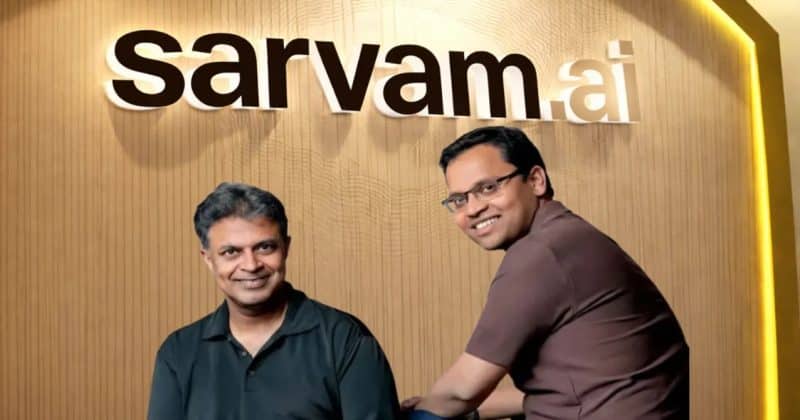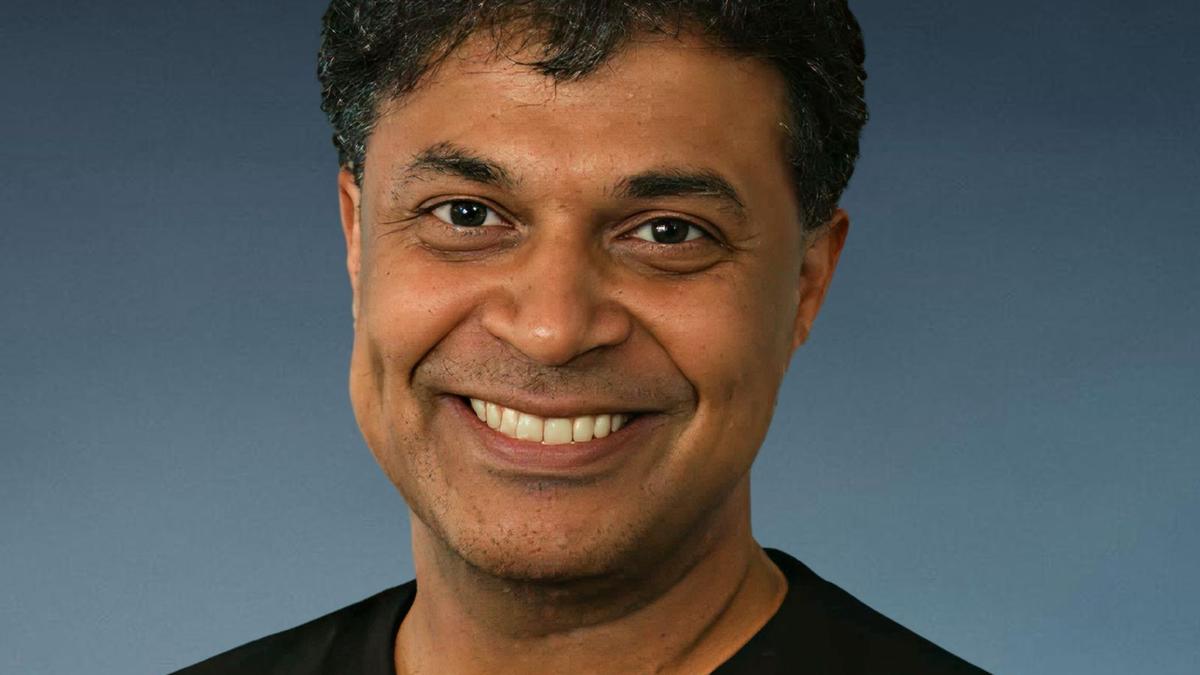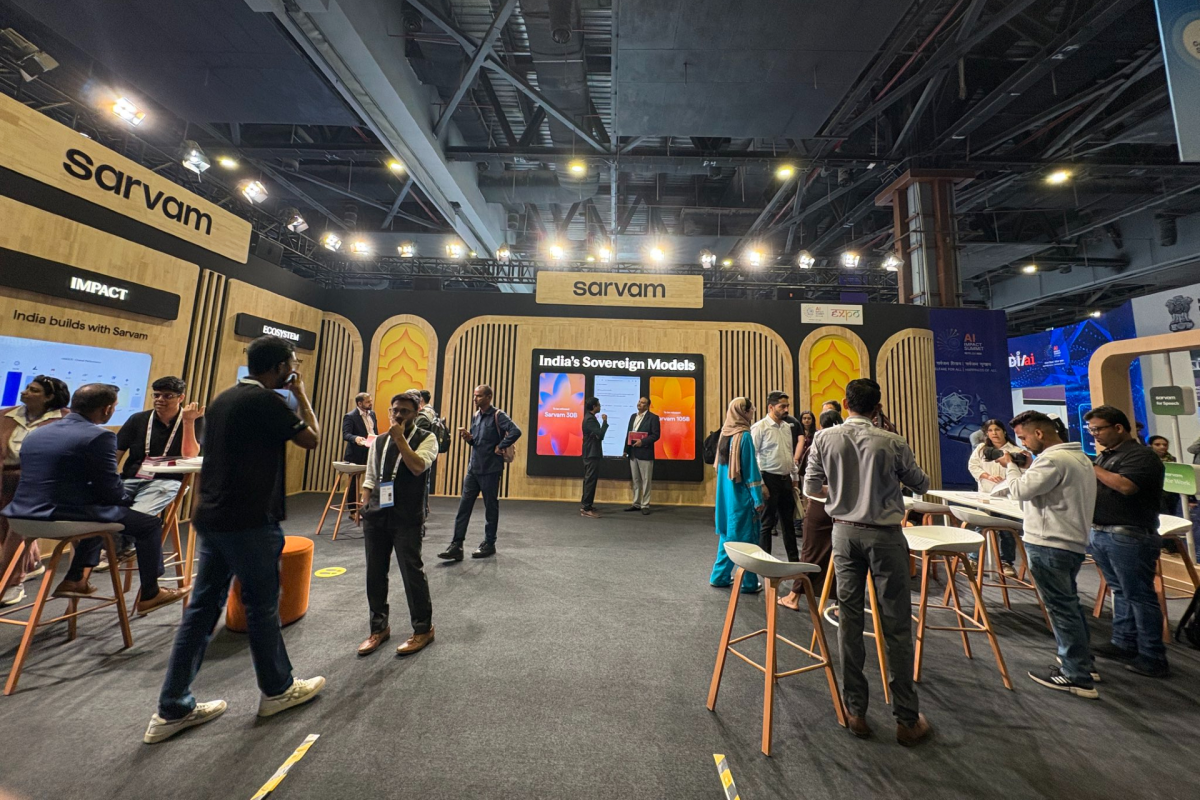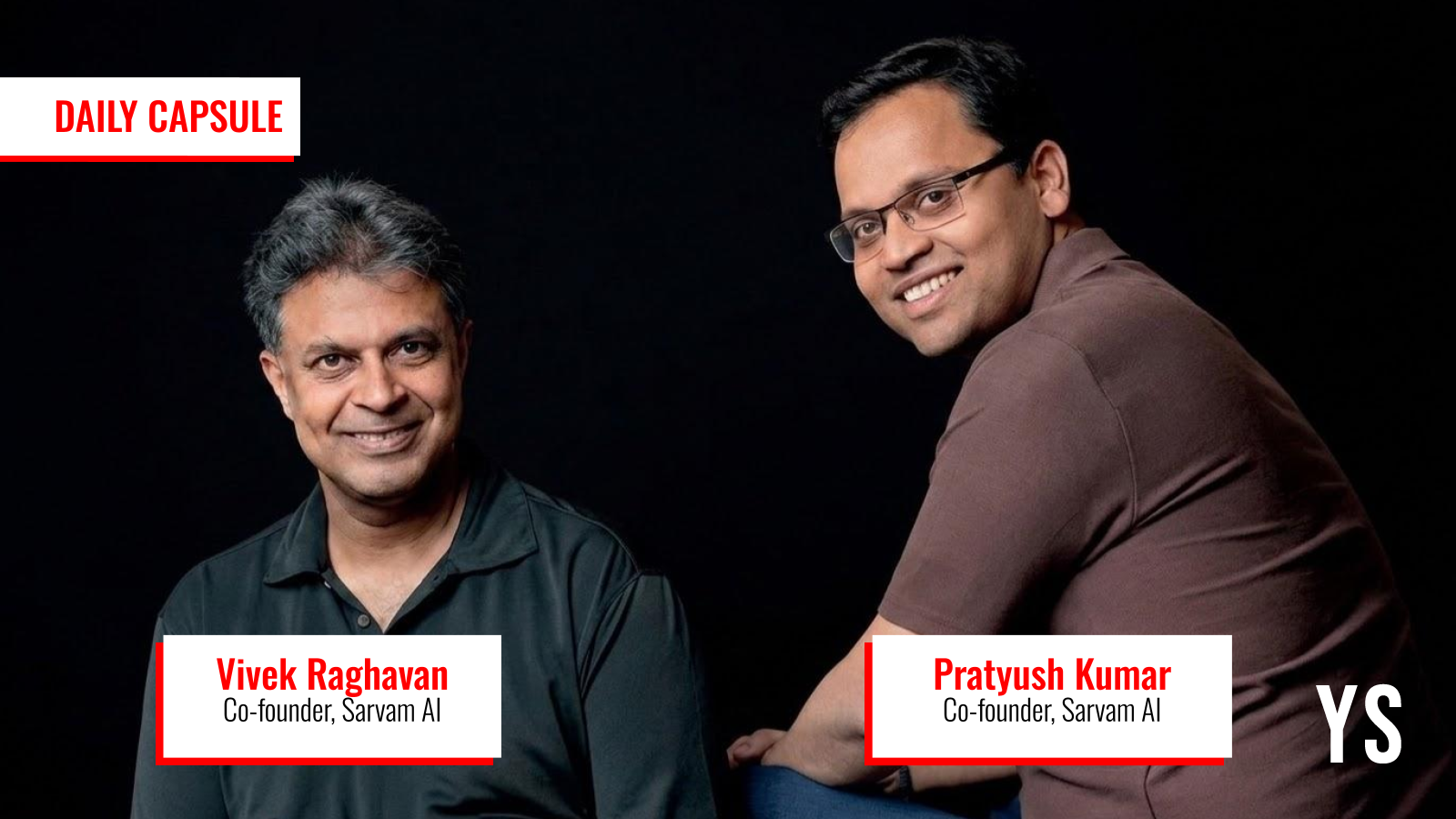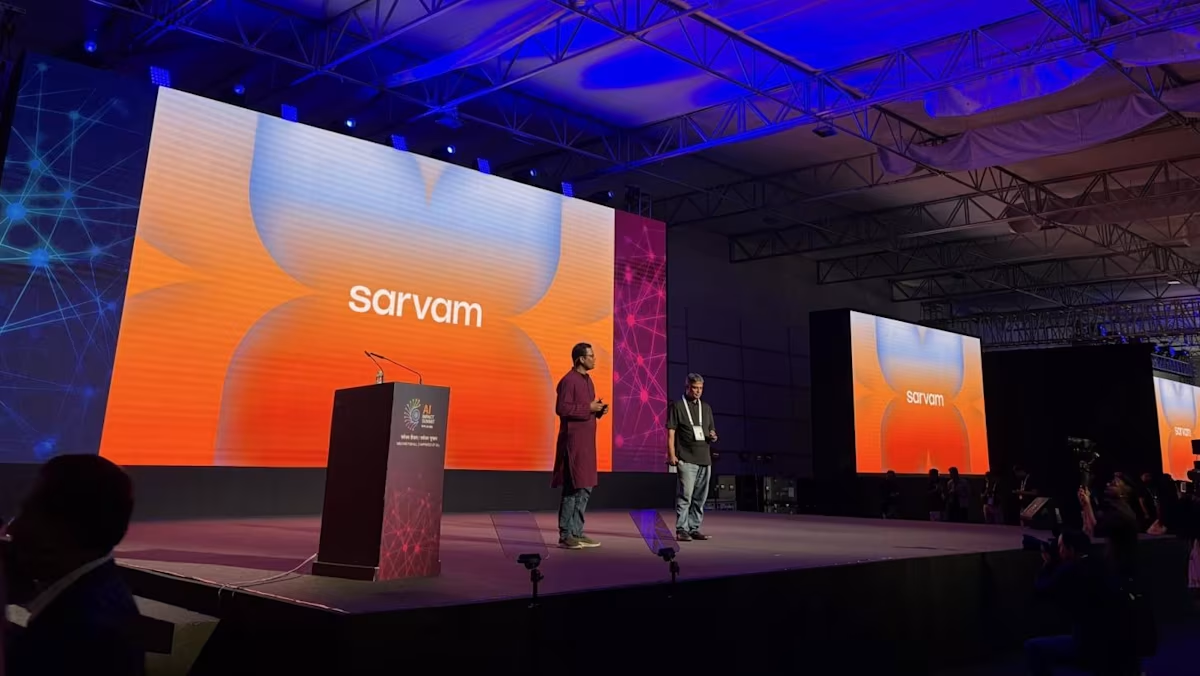
India has no shortage of engineering talent, data or market scale, but it has largely remained a consumer of foundational artificial intelligence (AI) technologies built elsewhere. Sarvam AI's rise to a $1.5 billion valuation, following its $234 million funding round led by HCLTech, is set to change that narrative in an important way. The funding itself is significant, but the timing is even more telling. It comes just days after the United States ordered Anthropic to suspend access to its most advanced AI models for foreign nationals, exposing the risks of depending on technologies controlled by foreign governments and corporations. In that context, Sarvam's emergence as India's first major sovereign AI unicorn is not merely a startup success story but a test case for India's broader AI ambitions.ALSO READ | Sarvam raises $234 million led by HCLTech at $1.5 billion valuationIndia's sovereign AI moment has arrivedThe debate around AI sovereignty has been building for months, but the US decision to restrict access to Anthropic's Fable 5 and Mythos 5 models has transformed what was once a theoretical discussion into a practical concern. For years, countries and companies outside the US assumed that access to frontier AI models would continue uninterrupted. The Anthropic episode showed how fragile that assumption is, because access can be withdrawn overnight and the most advanced capabilities can be placed behind national security barriers. AI infrastructure, like semiconductors before it, is increasingly becoming part of geopolitical competition.Sarvam cofounder Pratyush Kumar, talking to ET after the US ban, warned that users should not confuse access with ownership and that any critical technological advantage controlled by external entities leaves users vulnerable. The significance of Sarvam's rise lies precisely here. It is attempting to ensure that India does not become permanently dependent on foreign AI systems whose availability may ultimately be dictated by decisions taken in the US rather than India.Why this funding round mattersThe $234 million first close of Sarvam's Series B round is the largest fundraising by an Indian foundational AI company. In global AI terms, it however is quite modest. OpenAI, Anthropic and other frontier AI companies have raised tens of billions of dollars. Sarvam's founders themselves acknowledge this reality. As Vivek Raghavan told ET, "The capital we have raised is very large in the Indian context, but it is still quite small compared with the global context."But focusing solely on the size of the round misses the larger point. The real significance is that an Indian company has convinced investors that building frontier AI technology in India is a commercially viable proposition. For years, sceptics argued that foundational AI was a game only American and Chinese companies could play because of the enormous capital requirements. Sarvam's ability to attract investors such as HCLTech, Bessemer Venture Partners, Khosla Ventures and Peak XV suggests that this assumption is beginning to change.The company's journey from a valuation of roughly $110 million in 2023 to $1.5 billion today reflects growing confidence that India can build meaningful AI capabilities rather than simply consume them.HCLTech's bet is a big shiftAnotehnr important aspect of the round besides the amount raised is the identity of the lead investor. HCLTech's $150 million investment marks the first major strategic commitment by a large Indian IT services company to the foundational AI ecosystem. That matters because Indian IT firms are confronting an existential challenge. Agentic AI systems are rapidly becoming capable of automating many of the coding, maintenance and back-office tasks that have traditionally powered India's outsourcing industry. Investors have already begun pricing in this threat, contributing to pressure on valuations across the IT services sector.Rather than treating AI as a threat, HCLTech appears to be making a strategic decision to participate directly in building the next generation of AI infrastructure.The partnership also creates a bridge between cutting-edge AI research and enterprise deployment. Sarvam brings model-building capabilities while HCLTech brings deep relationships with enterprises and governments across the world. Together, they could potentially create an alternative AI stack tailored for customers who care about sovereignty, compliance and control.The investment is an important venture capital bet but more importantly it is acknowledgement that India's AI future cannot rest solely on consuming foreign technologies.Building the full stack, not just modelsOne of the most notable aspects of Sarvam's strategy is that it is not positioning itself as merely another large language model company. Raghavan has argued that self-reliance in AI requires capabilities across the entire stack. As he told ET, "Training large language models is only one part of it. We also need compute infrastructure, training frameworks, large-scale inferencing, or what we call a token factory, and agentic orchestration."Much of the public conversation around AI focuses on models. But long-term competitiveness depends equally on access to computing infrastructure, deployment frameworks, inference systems and enterprise software layers. Sarvam is trying to build across all of these components. The company says it has trained models from scratch in India, built speech and vision systems tailored to Indian use cases, created an inference platform processing millions of API calls daily and developed enterprise products for sectors such as banking, insurance, government technology and defence.The strategy mirrors the lesson learned from previous technology waves. Countries that control only the application layer often capture a fraction of the value generated by technological revolutions.India's AI challenge is different from America'sComparisons between Sarvam and companies such as OpenAI are inevitable, but they can also be misleading. India's AI challenge is not simply to replicate ChatGPT. The country's needs differ. India requires systems that work across dozens of languages, understand regional accents, process handwritten records, digitise legacy government documents and operate at costs that enterprises and governments can afford. These are not peripheral concerns but central to AI adoption in India.Sarvam's focus reflects this reality. Its speech models are handling large-scale multilingual interactions. Its vision systems are being used to digitise millions of pages of records. Its conversational AI platform is already processing millions of interactions daily. The company's emphasis on enterprises and government rather than consumer chatbots also reflects a pragmatic reading of the market. Consumer AI remains dominated by global players with enormous financial resources. Enterprise and government deployments offer a more defensible route to building sustainable businesses while solving uniquely Indian problems.The emergence of an Indian AI ecosystemSarvam's rise also highlights an encouraging shift in India's technology ecosystem. Historically, India's most successful startups excelled at adapting global business models for local markets. Deep-tech innovation was often concentrated elsewhere. AI offers an opportunity to change that equation. The company's founders stress that India possesses the talent required to build frontier technologies. What has often been missing is the capital, infrastructure and institutional support necessary to retain that talent.HCLTech's investment is therefore important not just for Sarvam but for the broader ecosystem. It indicates that large Indian corporations are willing to back indigenous deep-tech efforts. That could encourage more researchers, engineers and entrepreneurs to build in India rather than relocate overseas.The road ahead remains difficultNone of this means India's AI challenge has been solved. Sarvam remains tiny compared with the global leaders. Frontier AI development is becoming more expensive, not less. Access to cutting-edge GPUs remains constrained. The race to develop increasingly capable models is accelerating. Raghavan acknowledges that the company is still "at the beginning of this race." The funding round gives Sarvam more resources, but it does not eliminate the structural gap separating Indian AI companies from their American counterparts.What it does provide is proof that an alternative path exists. India no longer has to choose between building nothing and attempting to match OpenAI dollar for dollar. It can build strategically around sovereign capabilities, enterprise deployments and locally relevant applications.Sarvam's unicorn status is ultimately significant for reasons that extend far beyond startup valuations. The company turned into a unicorn while several major shifts are happening such as the rise of AI as a strategic technology, growing concerns about technological dependence and the emergence of sovereign AI as a national priority. The Anthropic restrictions have served as a warning about the risks of relying entirely on foreign AI providers. Sarvam's rise offers one possible response. For a country that aspires to be a leading digital power, that may be an important shift of all.
Sarvam: When US slams the door, India begins to find its own opening
Sarvam AIs rise to a $1.5 billion valuation after raising $234 million marks a major milestone for Indias push toward AI sovereignty. The funding comes shortly after the U.S. restricted foreign access to some of Anthropics most advanced AI models, highlighting the risks of relying on foreign-controlled AI technologies.
1,368 words~6 min read