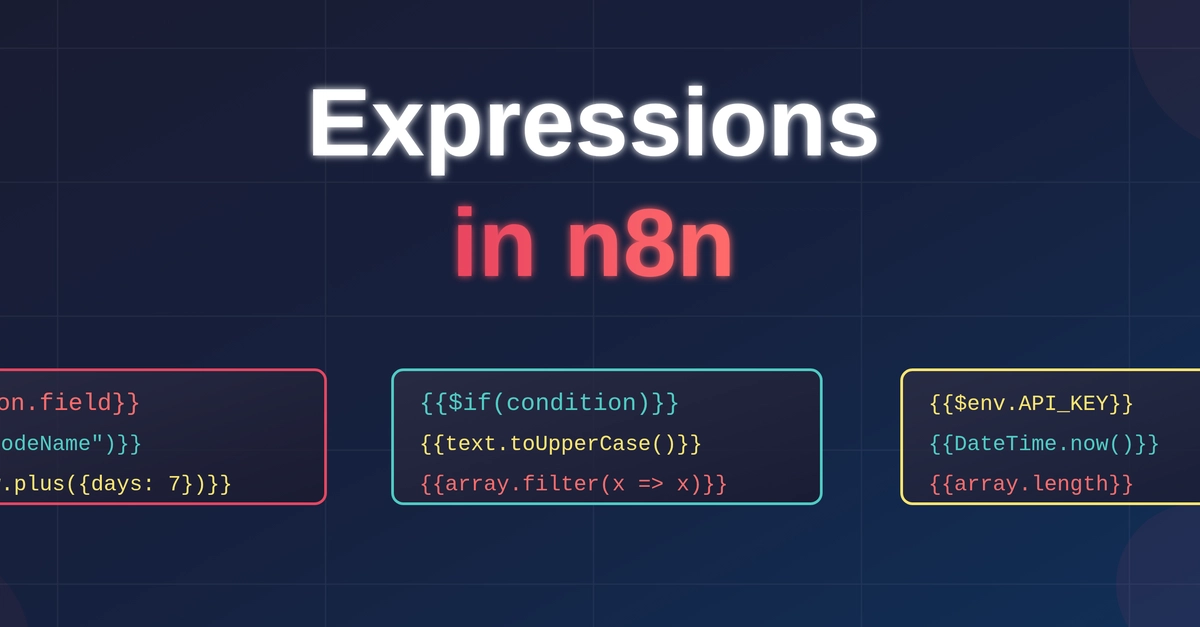
In our previous parts, we looked at how Vyshyvanka executes tasks and handles failures. But what makes a workflow truly dynamic? The answer is our Expression Language. Today, we are going to look at how we turn static node configuration into dynamic logic that adapts to data at runtime.
Why Expressions?
If nodes were static, workflows would be useless for anything beyond fixed sequences. You would need to hard-code every email address, every database query value, and every condition. That does not work in the real world. You need your workflow to respond to incoming data — like a dynamic ID from a webhook or a calculated value from a previous database query.
The Double-Brace Syntax
We use a simple, double-brace syntax to reference data. If you have ever used Jinja2 or Liquid, you will feel right at home.