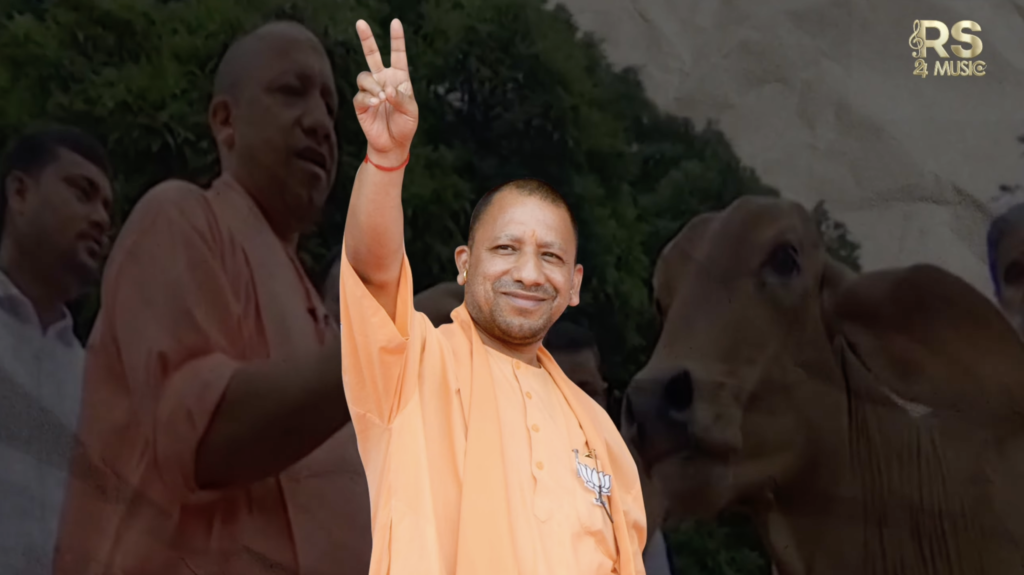
Yogi Adityanath's face fills the screen before a single lyric is sung. The Hindu monk-turned-politician, who governs India's most populous state, is pictured as dramatic music swells beneath images of cows, saffron flags and Hindu nationalist iconography. Then comes the threat.
In "Gau Mata" ("Mother Cow") posted on YouTube, singer Biru Kataria warns India's Muslims that anyone who slaughters a cow will be hunted down, burned alive and cut to pieces. The song repeatedly uses the slur "katwein," a derogatory reference to circumcision, to describe Muslims.
Adityanath is among the most recognizable faces of India's Hindu nationalist movement. He has championed aggressive cow-protection policies as cow vigilantism, where mobs attack people they accuse of slaughtering cows, considered sacred by Hindus, has been linked to the killings and lynchings of dozens of Muslims. Today, multiple versions of this track remain available on YouTube, and it has been used to create more than 40,000 Instagram reels.
Hate music is often amplified online when it is reshared and reused by other creators.
In India, music engineered to dehumanize religious minorities reaches hundreds of millions of listeners, delivered by big tech companies across popular social media platforms. Known as Hindutva pop, or H-Pop, the genre is rooted in Hindu nationalist ideology, a far-right supremacist belief that India is fundamentally a Hindu nation whose culture, politics and public life should be defined by its Hindu majority. Across hundreds of songs, India's Muslims and Christians are portrayed as enemies, invaders, traitors, demographic threats and legitimate targets of violence.