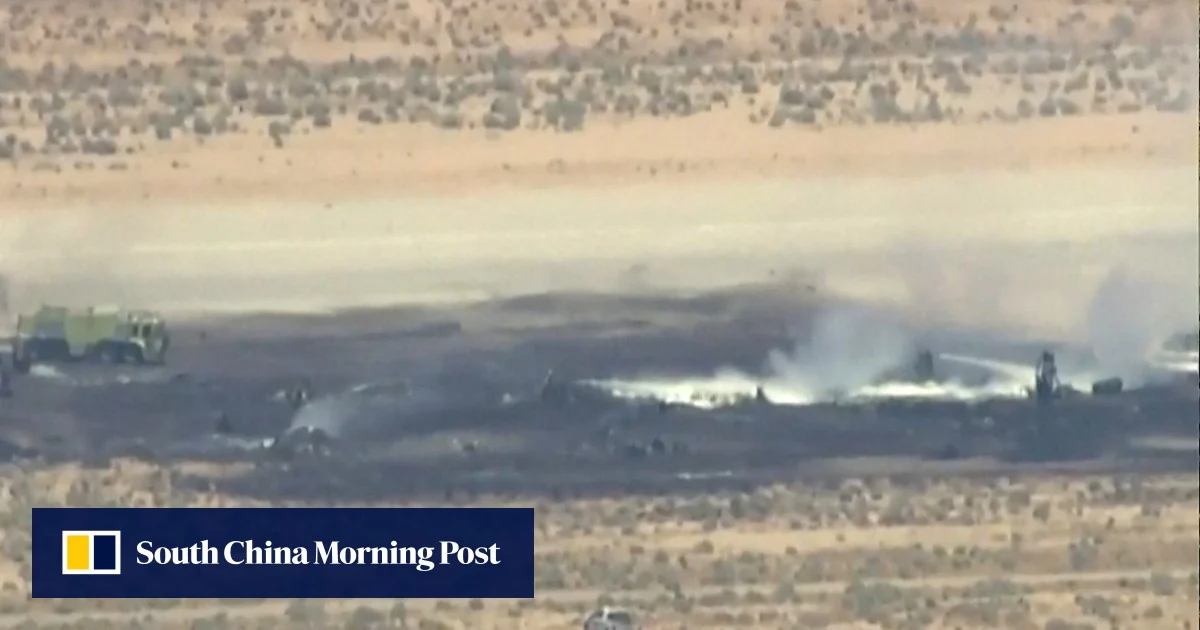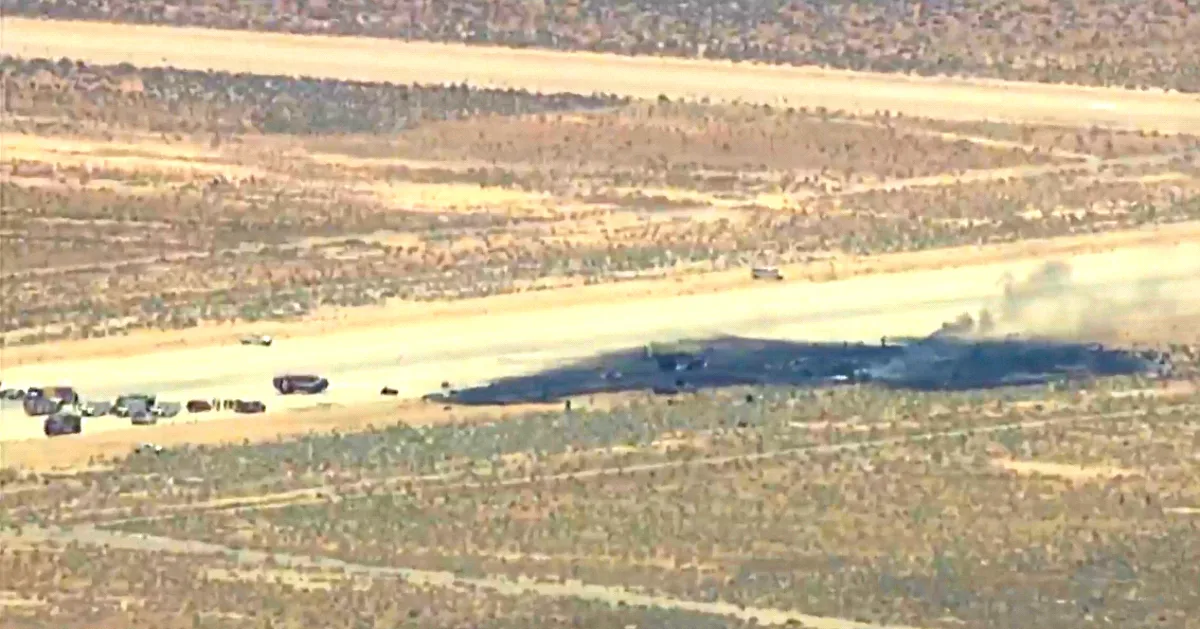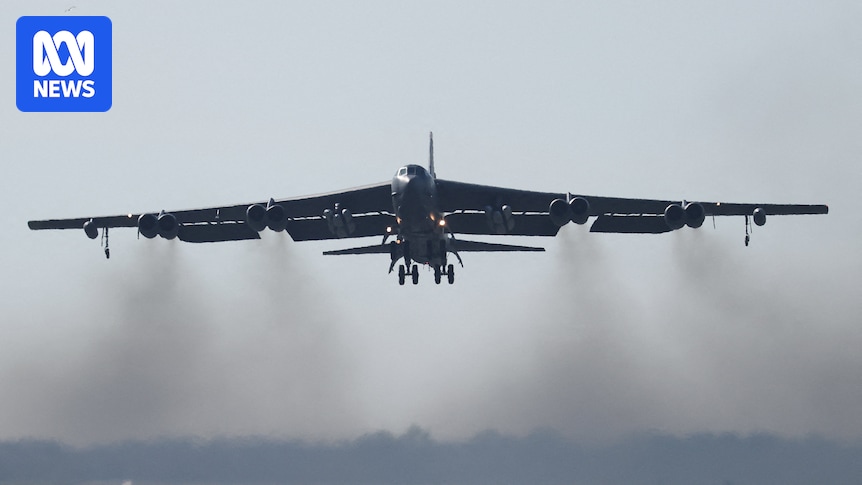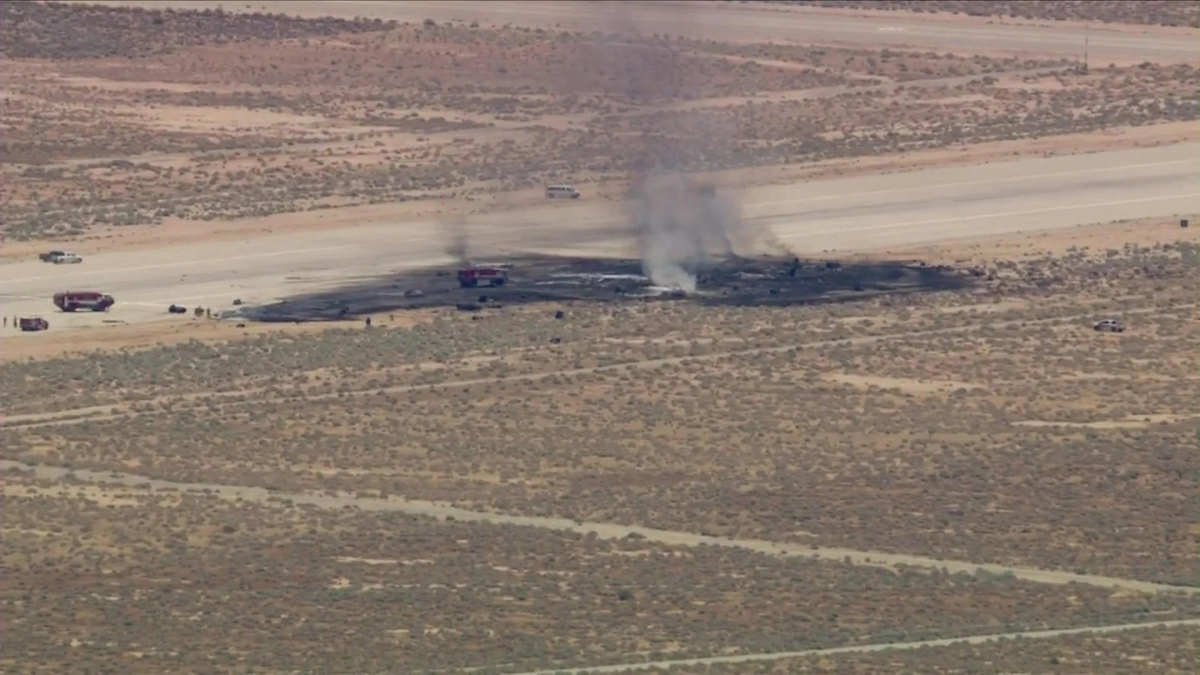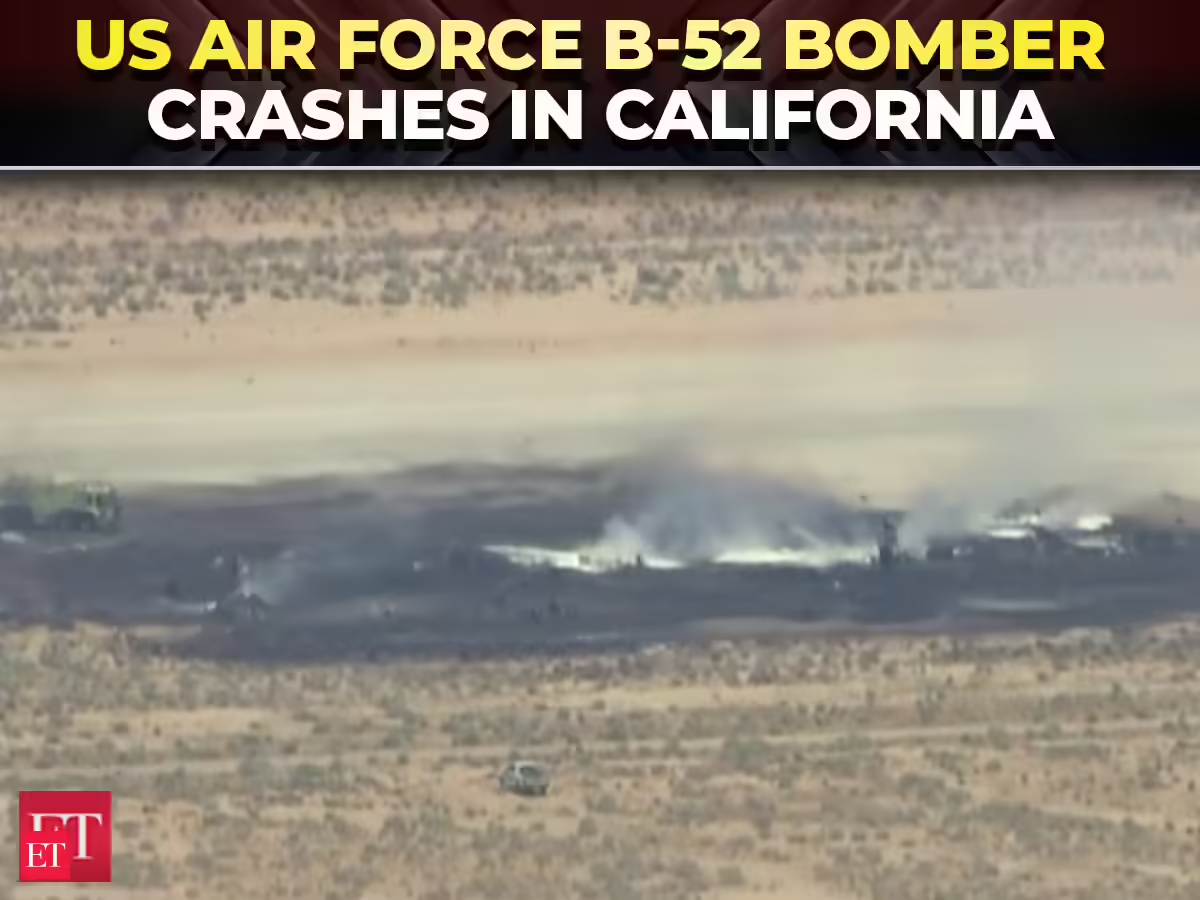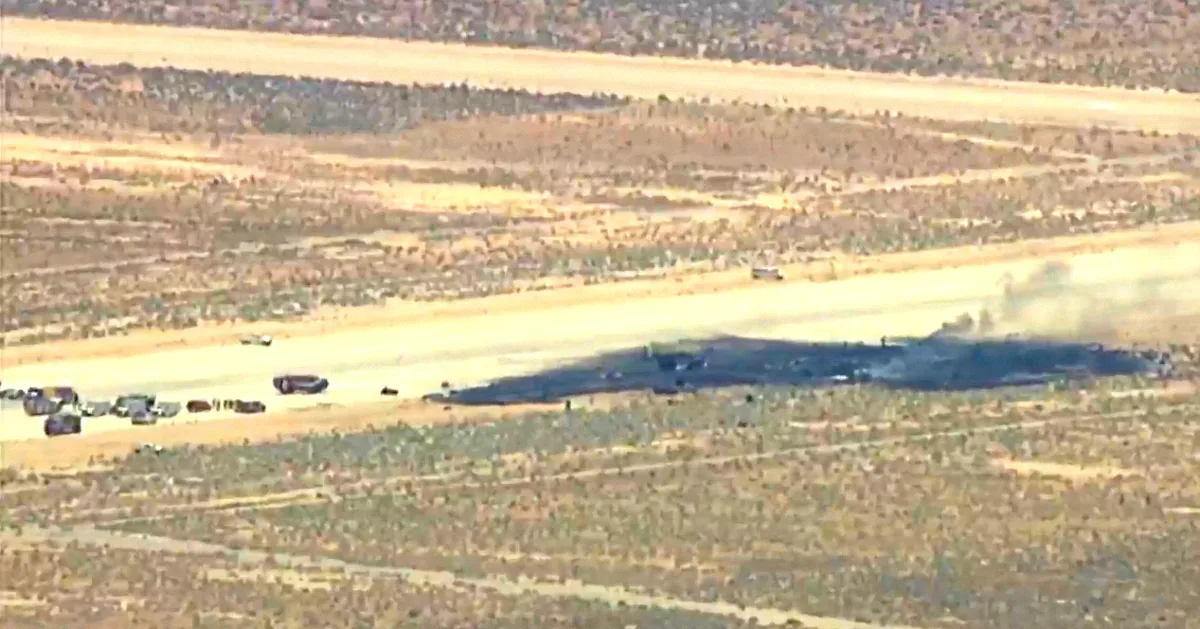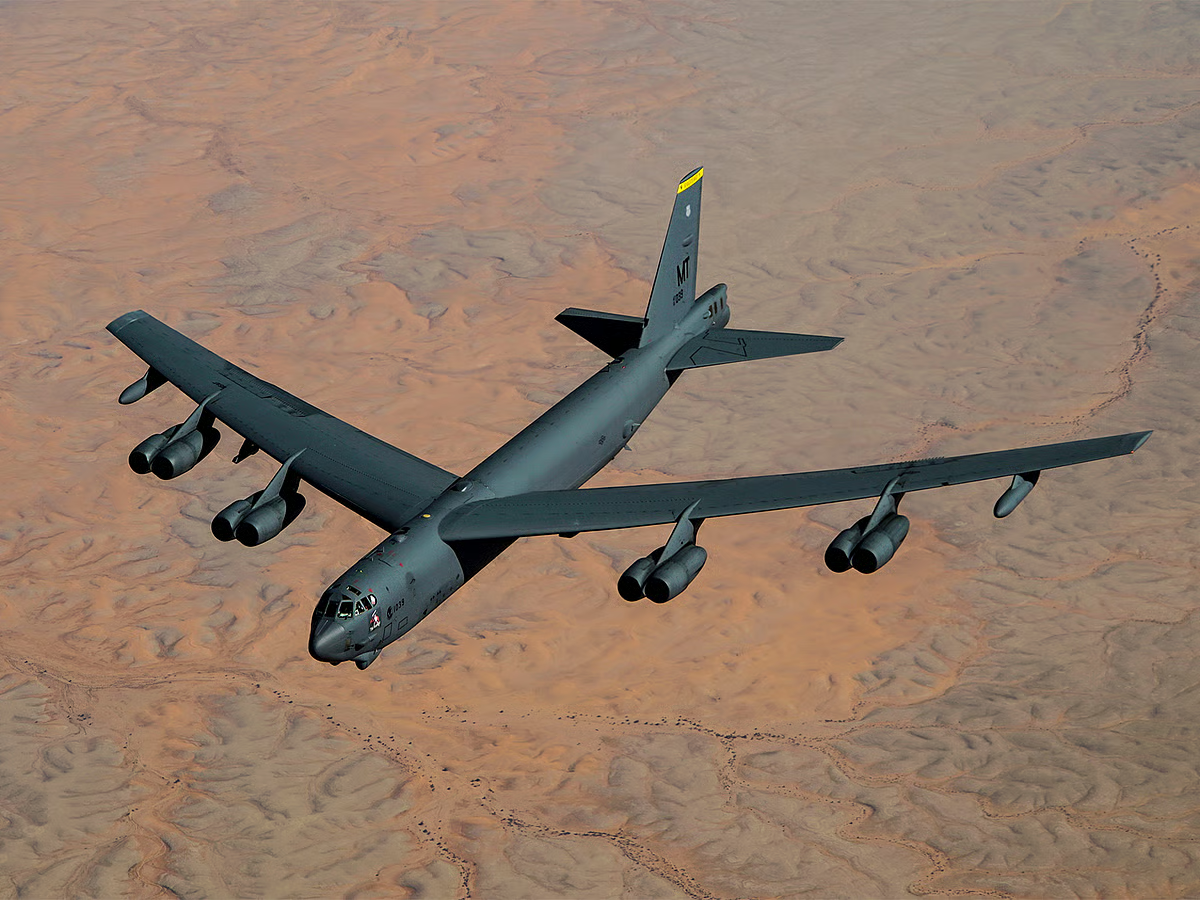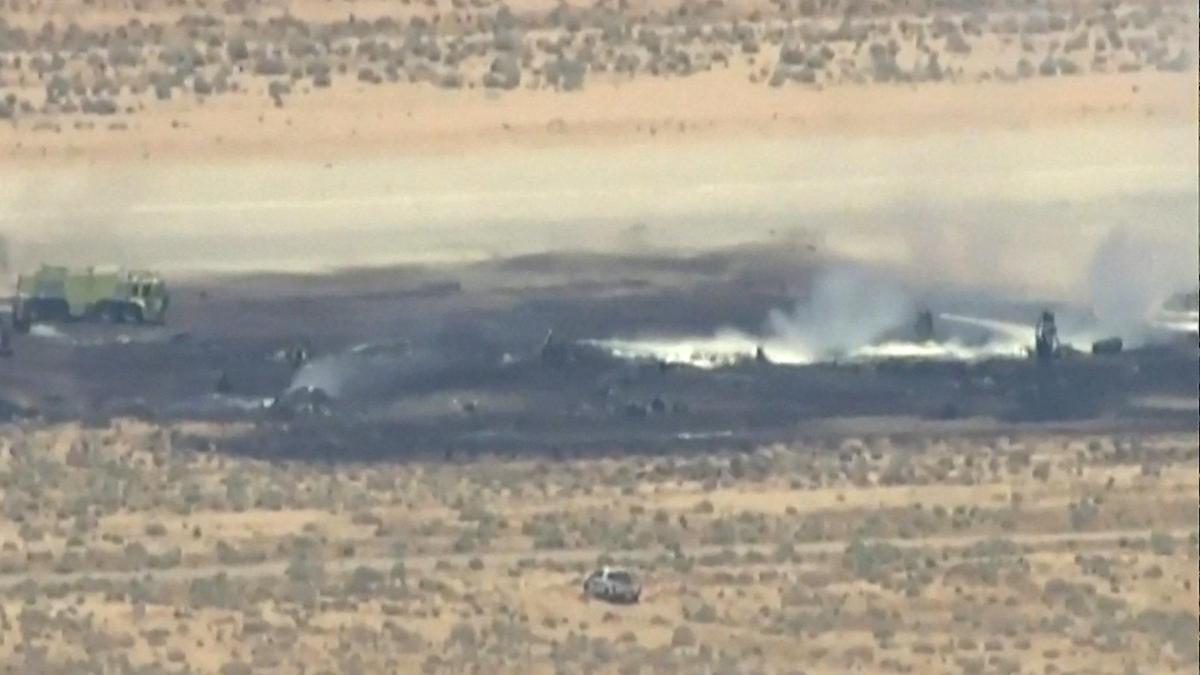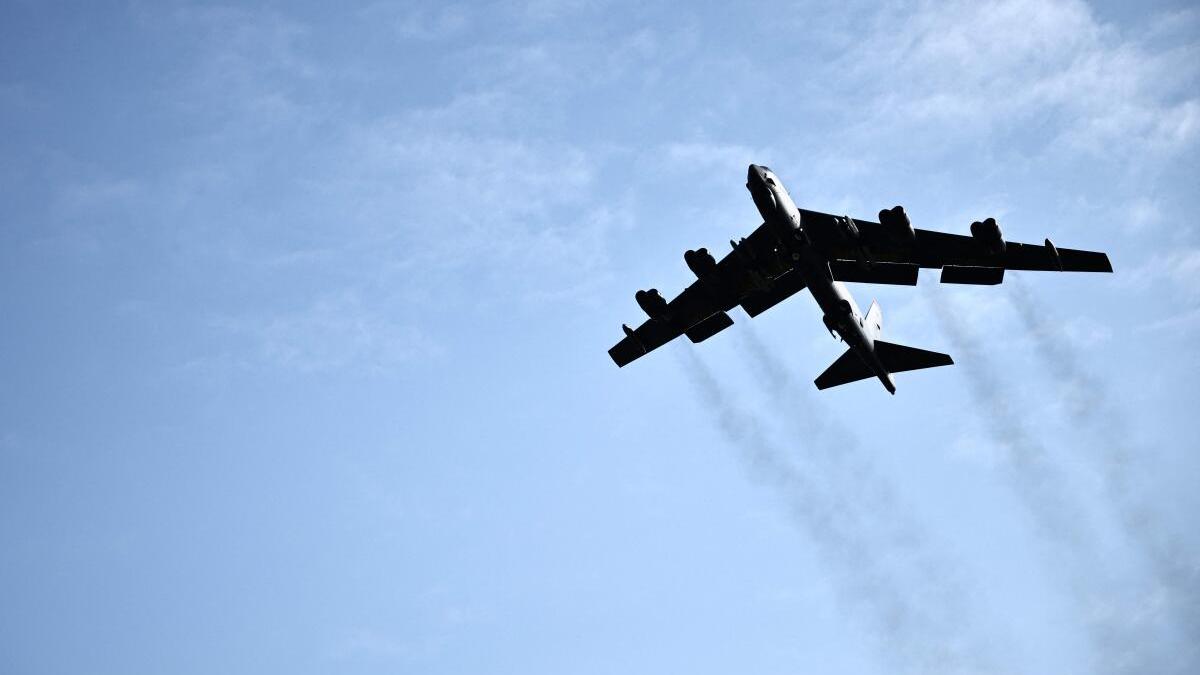
Eight people on board a B-52 bomber that crashed shortly after take-off on Monday (June 15, 2026) morning at a U.S. Air Force base in Southern California’s Mojave Desert are feared dead, according to the Air Force.“Initial indications are that the crash was not survivable,” Edwards Air Force Base, located north of Los Angeles, said in a social media post.From the AFMC Commander: It is with great sadness that we can confirm the tragic death of eight of our teammates today at Edwards AFB following the crash of a B-52 Stratofortress. Our thoughts and prayers are with the families and loved ones. https://t.co/485TD5Hf5N— U.S. Air Force Materiel Command ✈️ (@HQ_AFMC) June 16, 2026The cause of the crash is under investigation, officials added. There was no immediate information on the crew, though aerial footage showed little of the aircraft remained.What is a B-52 bomber?The Boeing B-52 Stratofortress is a long-range bomber that entered service in 1955. Designed to carry both conventional and nuclear weapons, it has been used by the U.S. military in conflicts from Vietnam to those involving Iran.Typically crewed by five personnel, the aircraft has been operated by the U.S. Air Force since the 1950s. According to an U.S. Air Force fact sheet, each aircraft costs about $84 million.The bombers played a key role in Operation Desert Storm in the early 1990s, and in more recent years have been deployed in operations involving Iran, striking targets such as air defence systems and command centres.In conventional operations, the B-52 can undertake strategic attacks, close air support, air interdiction, offensive counter-air and maritime missions.B-52 specificationsThe aircraft, capable of carrying a wide range of weapons including bombs and cruise missiles, has a wingspan of about 185 feet (56 metres) and a length of 159 feet (48 metres).It is usually crewed by a five-member team, including an aircraft commander, pilot, radar navigator, navigator and electronic warfare officer, according to the U.S. Air Force.With a combat range of up to 8,800 miles, it can carry nuclear payloads. For over six decades, B-52s have formed the backbone of the United States’ strategic bomber fleet.The aircraft can deploy a wide array of weapons, including gravity bombs, cluster munitions, precision-guided missiles, joint direct attack munitions and nuclear warheads, at altitudes of up to 50,000 feet.B-52H: the last operational variantThe B-52 is a heavy bomber that first flew in 1954 and was originally designed for war with the Soviet Union.At present, only the B-52H model remains in service, stationed with the 5th Bomb Wing at Minot Air Force Base, North Dakota, and the 2nd Bomb Wing at Barksdale Air Force Base, Louisiana.Modern upgradesFirst flown in 1954 and originally designed during the Cold War, the B-52 has undergone continuous upgrades to remain operational.In 2025, Boeing delivered a B-52 equipped with a modern Active Electronically Scanned Array (AESA) radar system to Edwards Air Force Base. Testing was scheduled through 2026 to support future production decisions, the U.S. Air Force said. It remains unclear whether that aircraft was involved in Monday’s crash.Advanced capabilitiesB-52 bombers are equipped with advanced targeting pods that enhance long-range detection, identification and surveillance. These systems improve operational effectiveness across missions, including close air support, in both day and night conditions and in adverse weather.Aerial refuelling capabilities extend the aircraft’s range significantly, making it limited largely by crew endurance. Its unrefuelled range exceeds 8,800 miles (about 14,080 km).Role in U.S. defenceThe B-52 provides the United States with both nuclear and conventional global strike capability. With its large payload, long range and operational flexibility, it remains a key element of U.S. strategic deterrence, according to aircraft manufacturer Boeing.Its ability to remain on station for extended periods, supported by aerial refuelling, allows it to project power globally. The aircraft’s reliability also supports sustained operations and rapid response across military branches.
What is the B-52 bomber that crashed at a U.S. air base in California?
With a combat range of up to 8,800 miles, it can carry nuclear payloads. For over six decades, B-52s have formed the backbone of the United States’ strategic bomber fleet.
630 words~3 min read