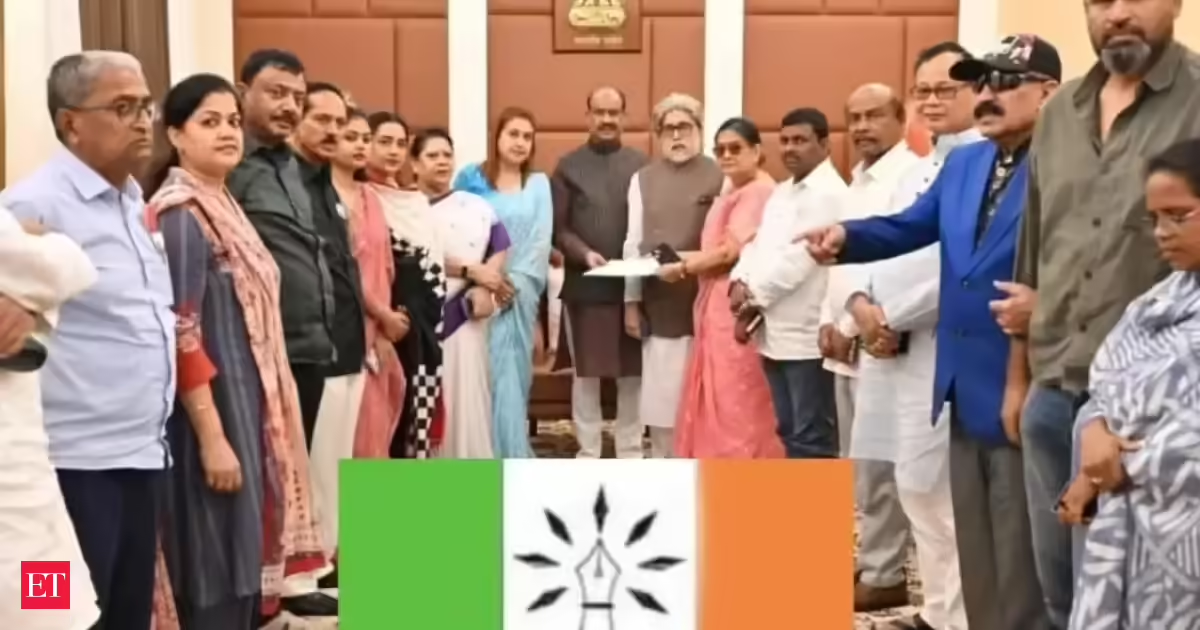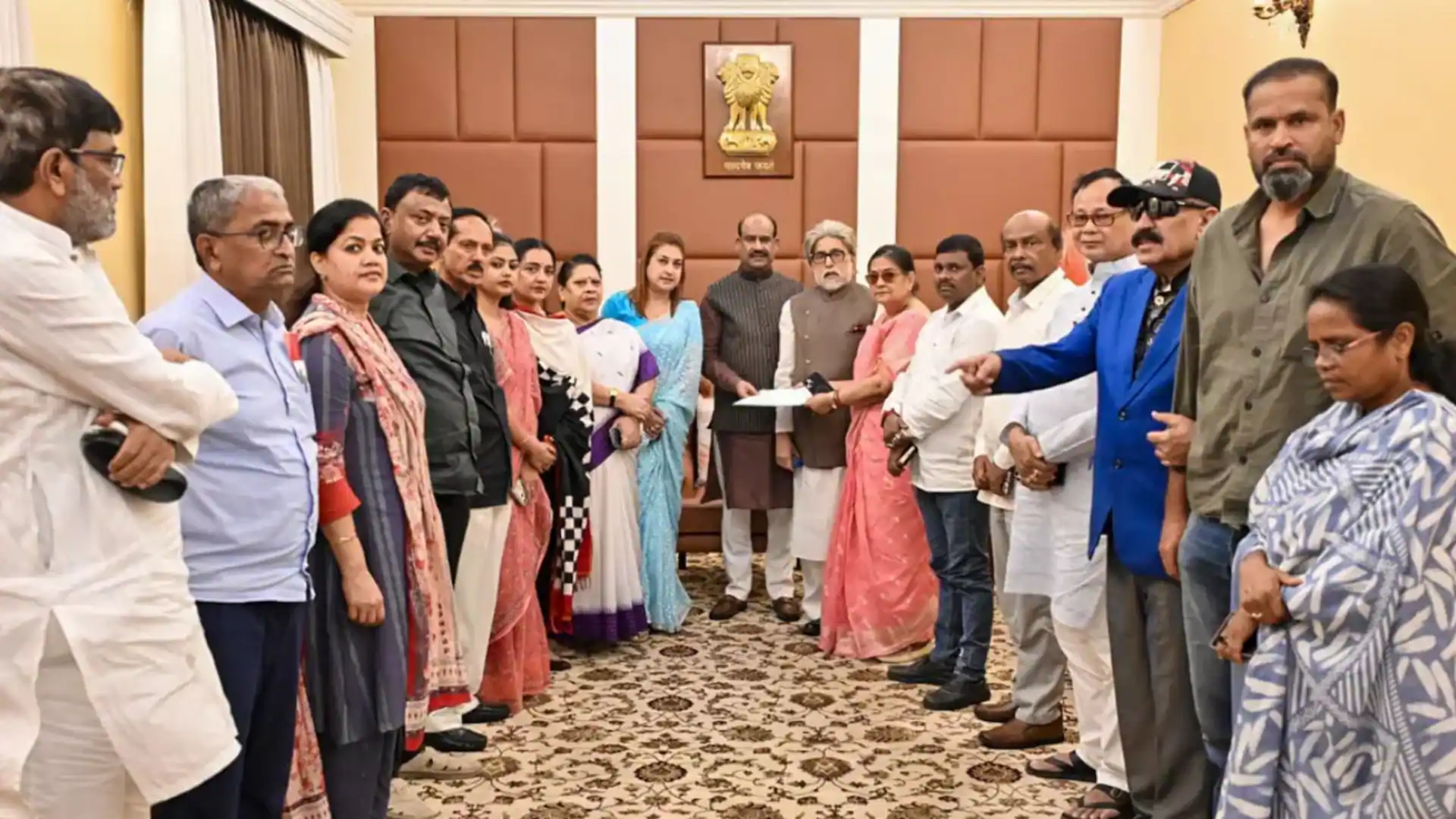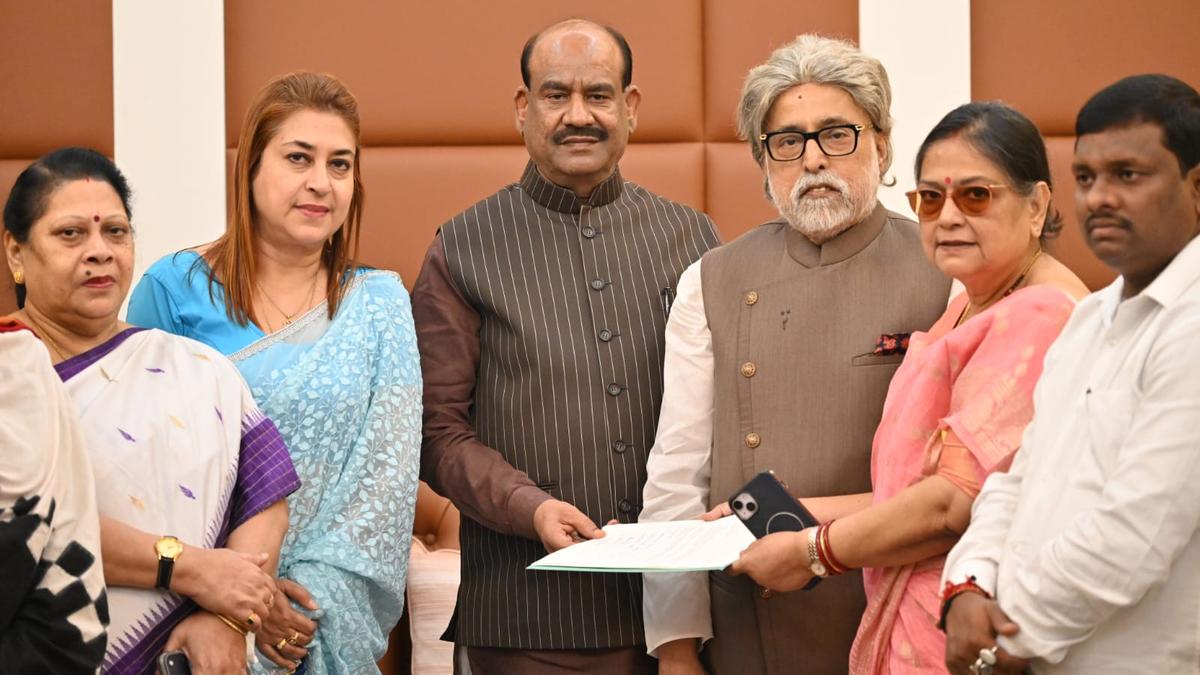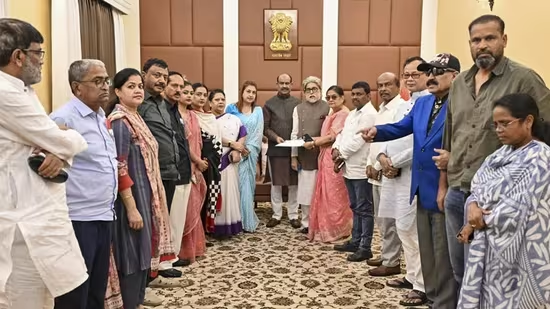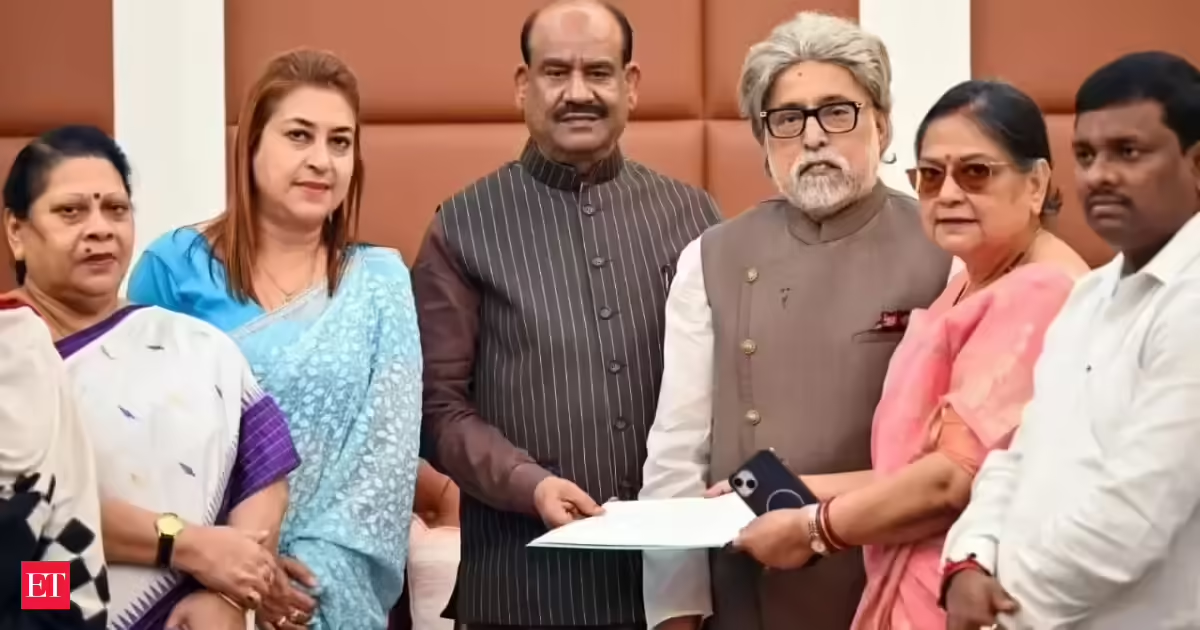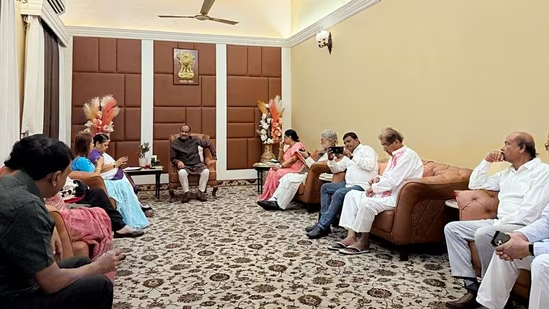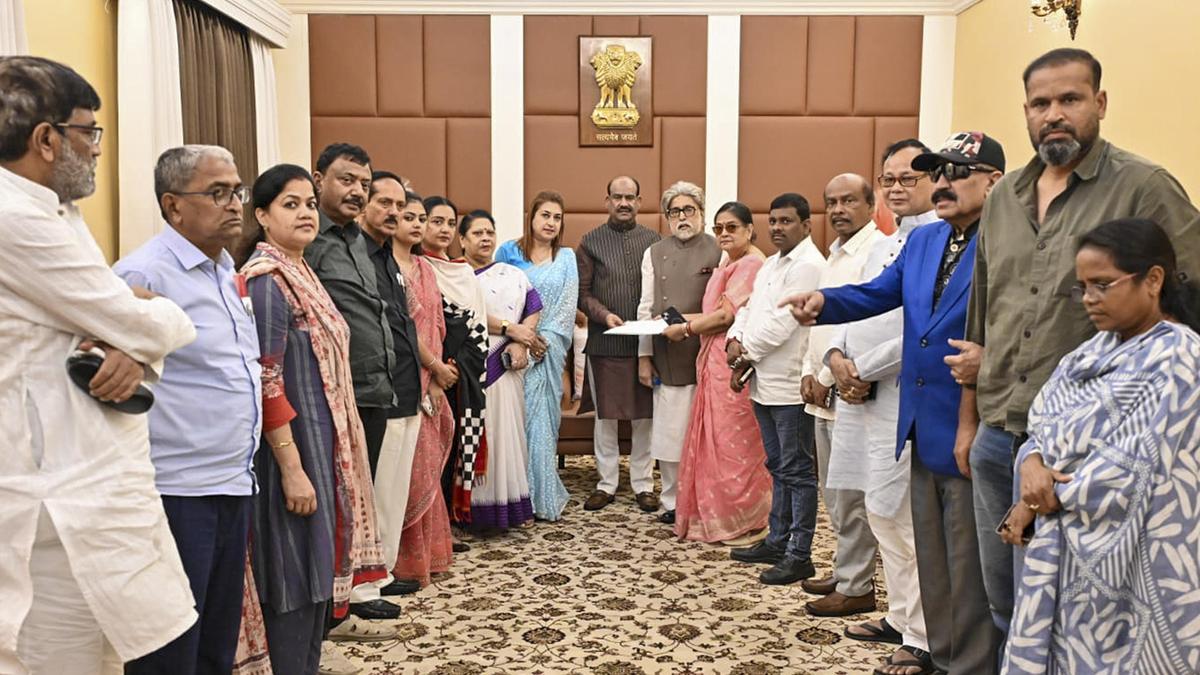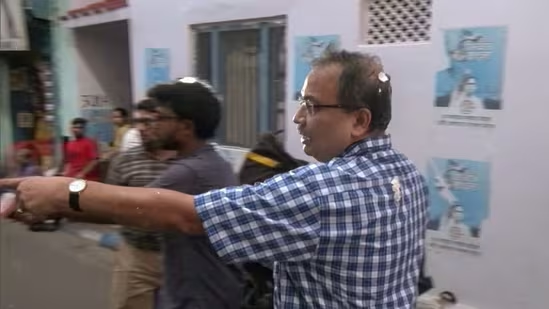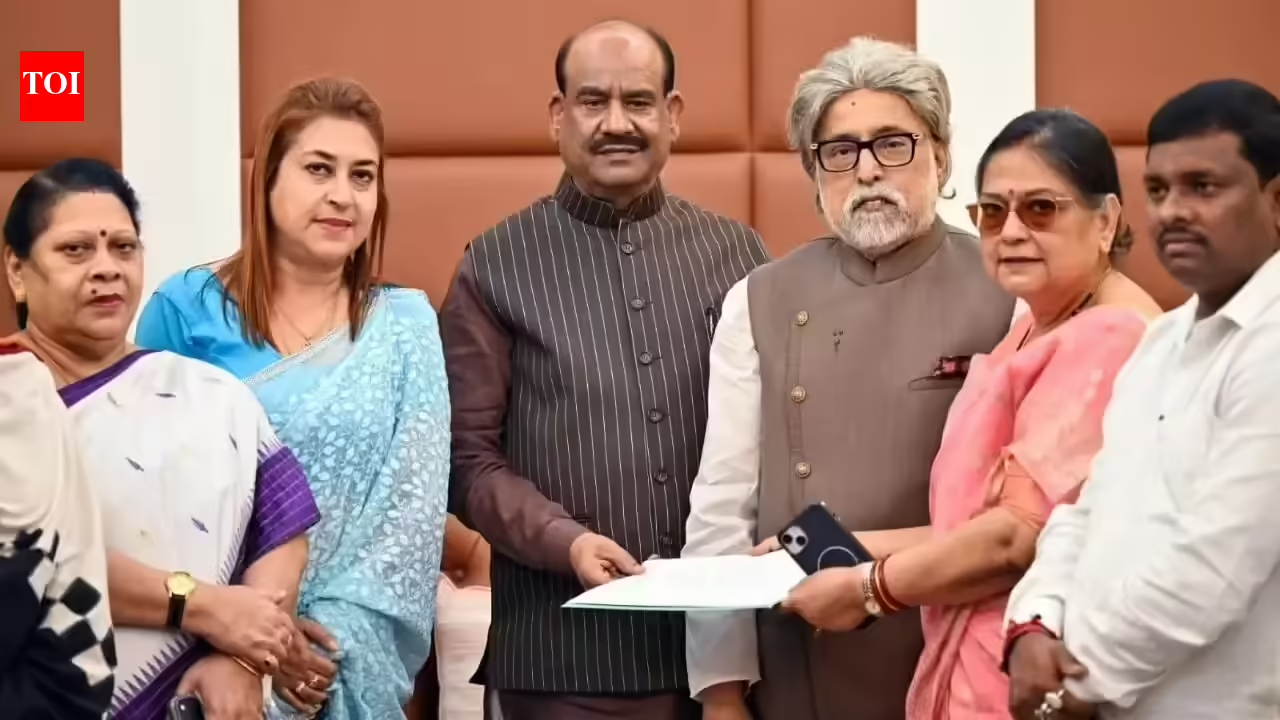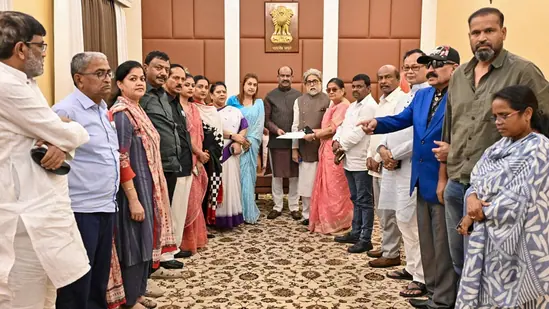
Until this week, the Nationalist Citizens Party of India (NCPI) was an obscure political outfit with no MPs, MLAs or local body representatives, a modest donation pool and a cash balance that once stood at just Rs 75, Times of India reported. Now, following an extraordinary rebellion within the Trinamool Congress (TMC), the little-known party finds itself at the centre of national politics.Twenty dissident TMC Lok Sabha MPs announced on Sunday that they would merge with the NCPI and extend support to the BJP-led National Democratic Alliance (NDA), a move that, if approved by Lok Sabha Speaker Om Birla, would dramatically alter the parliamentary landscape.The merger would instantly elevate the NCPI from a Registered Unrecognised Political Party (RUPP) with virtually no electoral footprint into the fifth-largest party in the Lok Sabha and the NDA's second-largest constituent.The development unfolded against the backdrop of a widening revolt within the TMC. The rebel MPs met Birla seeking separate seating arrangements in the House, arguing that they constituted the two-thirds threshold required under anti-defection provisions.Speaking to reporters after the meeting, rebel MP Kakoli Ghosh Dastidar said 20 MPs had signed the representation submitted to the Speaker."Two-thirds of TMC MPs have given a letter to the speaker for a separate seating arrangement. We will merge with the Nationalist Citizens Party and support the NDA," she said.The announcement has thrust the NCPI into an unexpected national spotlight, prompting fresh scrutiny of a party that had until now existed largely on the fringes of Indian politics.A party of modest meansThe NCPI was registered with the Election Commission of India in January 2023. According to ECI records, its registered address is located in a building in Sankarail in West Bengal's Howrah district.Its early financial disclosures paint the picture of a shoestring operation.In its auditor's report for the 2022-23 financial year, the party reported receiving Rs 1,13,075 in donations from "well-wishers" and spending nearly the entire amount. It closed the year with a cash balance of just Rs 75.Of the roughly Rs 1.13 lakh spent during the year, Rs 49,400 went towards campaigning in the 2023 Tripura Assembly elections — one of the party's first electoral outings.Among its nine listed donors were founder president Shewly Kundu and vice-president Uttiya Kundu, who contributed Rs 15,000 and Rs 18,000 respectively.Contribution reports and audited statements for 2023-24 and 2024-25 do not appear in publicly available ECI records.A humble electoral debutThe NCPI made its electoral debut in the 2023 Tripura Assembly elections, fielding four candidates under the slogan: "Reject political turncoats".The results underscored the party's limited reach.Two candidates contested on the party symbol, one fought as an Independent and another's nomination was rejected.Candidate Barjeda Tripura secured 536 votes — just 36 more than the NOTA tally — while another NCPI nominee polled 286 votes. The Independent candidate associated with the party received 376 votes.Speaking to PTI on Sunday, Barjeda said he worked as a daily wage labourer and was unaware of the dramatic developments unfolding around the party.Unconventional leadershipThe NCPI's leadership profile has also attracted attention because of the eclectic professional backgrounds claimed by its founders.Founder president Shewly Kundu describes herself as an advocate at the Calcutta High Court. Her listed qualifications include "MSc in Mathematics, Ex MBA, LLM", alongside certifications ranging from financial markets to land surveying.On Monday, however, Shewly told reporters that she had stepped down as party president.Vice-president Uttiya Kundu describes himself as a "Bengali newspaper editor, mathematics teacher, motivational speaker, ISO auditor, health consultant and yoga volunteer". His declared qualifications include an MSc in Mathematics and multiple diplomas in yoga training, technical disciplines and land surveying.His social media activity has also drawn fresh attention.On May 13, following the BJP's victory in the West Bengal Assembly elections, Uttiya shared a photograph with senior BJP leader Suvendu Adhikari and wrote: "with your determination, may every speck of dust in Bengal be revitalised".Questions over decision-makingEven as the proposed merger catapulted the NCPI into national prominence, questions emerged about who was actually making decisions within the party.Shantanu Dey, who identified himself as the party's "national organisation general secretary", said he had been caught off guard by the TMC MPs' announcement, although he welcomed the prospect of expansion."It is good if people join us, as the party will grow," Dey said.He added that decisions within the organisation should be taken collectively."So far, I was the decision maker. Now, a leadership will come. But we want a decision to be taken after taking the members into confidence," he said.Dey also maintained that his tenure under the party constitution runs until 2027.But Shewly disputed his claim to any official position, asserting that Dey was not an office-bearer and had merely been associated with the party during the Tripura elections.From obscurity to influenceThe NCPI remains classified as a Registered Unrecognised Political Party, meaning it is formally registered with the Election Commission but has not fulfilled the criteria required for recognition as either a state or national party.Until the TMC rebellion erupted, it had no elected representatives and little presence in India's electoral landscape.The Speaker's ruling on the proposed merger could now determine whether a party that once ended its financial year with Rs 75 in cash becomes one of the most consequential forces in the Lok Sabha almost overnight — a transformation few in Indian politics could have imagined just days ago.
From Rs 75 in cash to the Lok Sabha spotlight: The obscure party at the centre of the TMC rebellion
An unknown political party, the Nationalist Citizens Party of India, is now central to national politics. Twenty Trinamool Congress MPs announced a merger with the NCPI. This move, if approved, would significantly change the Lok Sabha's composition. The NCPI, previously with minimal presence, would become a major force. The development follows internal dissent within the Trinamool Congress.
885 words~4 min read