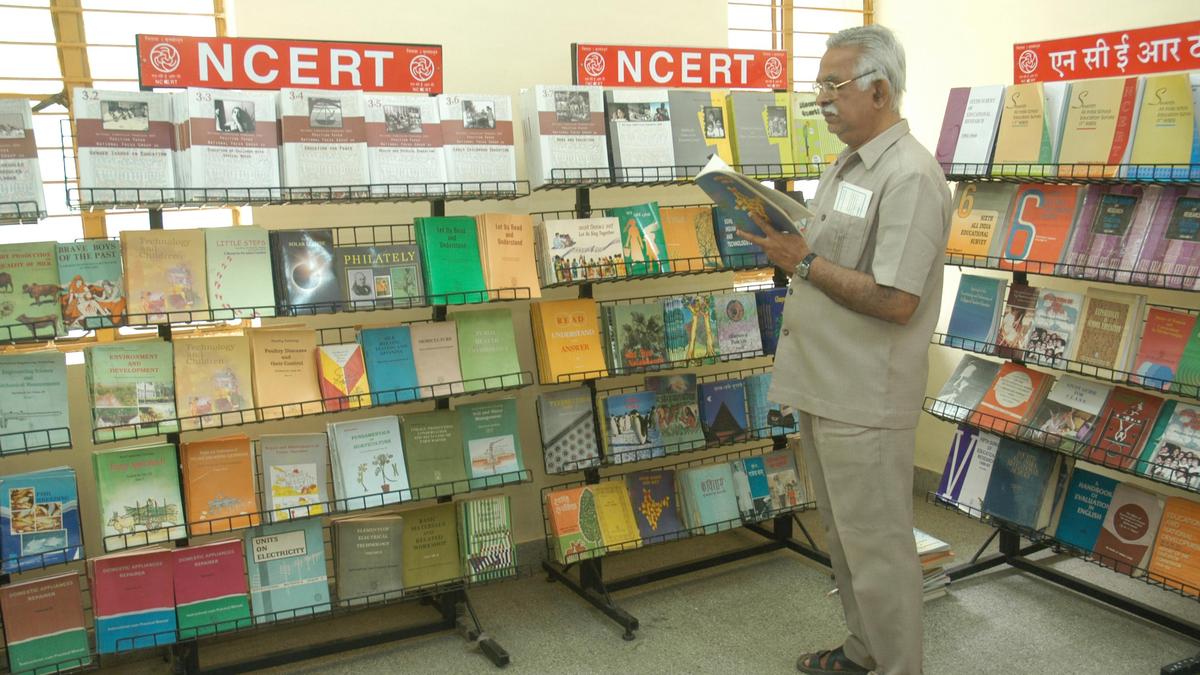
The recent decision of the Ministry of Education (MoE) to grant deemed university status to the National Council of Educational Research and Training (NCERT) marks a significant institutional shift in the country’s education landscape. Since its establishment in 1961 as an autonomous body under the Union government, NCERT has functioned as an academic authority mainly responsible for curriculum design, textbook and digital content development, and pedagogical guidance for school education. Its transformation into a university signals an expansion of its mandate and raises many questions.After criticism, NCERT to restore original 'Dancing Girl' image in school textbook(Sign up for THEdge, The Hindu’s weekly education newsletter.)Mandate versus adaptationNCERT was established to act as a national institution that would ensure academic coherence and pedagogical innovation in school education across India. Its founding principles were rooted in promoting equity, quality, and scientific temper in knowledge dissemination. Over time, NCERT shaped the intellectual foundation of millions of students, especially those in public schools in the country.The shift toward becoming a deemed university reflects a global trend where teacher education is increasingly integrated within higher education ecosystems. Globally, many high-performing education systems place teacher preparation within universities to ensure strong links between research, pedagogy, and classroom practice; although alternative pathways also exist.The Indian context introduces many complexities. NCERT’s primary responsibility has always been school education. By transitioning into a university-like entity, there is a risk that its focus may shift from grassroots requirements and could dilute its core function as a public institution serving the under-resourced regions. Becoming a deemed university may improve NCERT’s research capacity but if its contributions deviate from its original mandate, the credibility of the institution may be questioned. Whether this shift strengthens or weakens the system depends on how closely the NCERT adheres to its original mandate while adapting to new roles.Universal trends, Indian divergenceThe transformation of NCERT into a deemed university comes at a time when education systems worldwide are undergoing rapid change. Technology is reshaping how knowledge is produced and disseminated. Artificial intelligence is influencing both teaching and learning processes. Education systems globally are expected to balance three critical objectives: maintaining scientific rigour, ensuring equity, and fostering global competence. India’s challenge lies in achieving all three simultaneously.Recent global reports consistently identify teacher quality as a critical determinant of learning outcomes. UNESCO, the World Bank, and the OECD all underscore the central role of well-prepared and supported teachers; alongside curriculum, pedagogy, and learning environments. For instance, the World Bank’s “From Prospective to Prepared Teacher: A Global Study of Initial Teacher Education”, the OECD’s “Trends Shaping Education 2025”, and UNESCO’s “Global Report on Teachers: Addressing Teacher Shortages and Transforming the Profession” highlight a global shift toward strengthening teacher preparation, professional development, and system alignment to improve learning outcomes.India’s policy architecture reflects these global priorities. The introduction of the four-year Integrated Teacher Education Programme (ITEP) aims to professionalise teaching. Digital platforms such as DIKSHA (Digital Infrastructure for Knowledge Sharing) and initiatives like NISHTHA (National Initiative for School Heads’ and Teachers’ Holistic Advancement ) are designed to enhance teacher capacity. Yet, the real challenge lies in implementation. The gap between policy design and classroom reality remains significant. One indicator of this challenge is India’s limited experience with international assessments such as PISA 2009, where students demonstrated difficulties with application-based, competency-oriented questions.A major reason for this disconnect is the state of teacher education. The transition to experiential and inquiry-based teaching requires large-scale re-skilling of teachers, which has not yet been achieved uniformly. Elite private schools have been quick to adopt global pedagogies and curricula. In contrast, government schools often lack basic infrastructure, digital access, and exposure to modern teaching methods.The result is a layered school system. This stratification is not merely institutional; it is deeply social. Students in well-resourced schools gain access to global competencies such as critical thinking, digital literacy, and intercultural awareness. Over time, this creates unequal opportunities for higher education and employment -- especially for students from the marginalised sections – and would reinforce existing social hierarchies.The credibility dilemmaOn the surface, India’s education reforms appear strongly aligned with global trends. The National Education Policy 2020 and the National Curriculum Framework 2023 reflect several features observed in advanced education systems such as a stronger focus on early childhood education, competency-based learning, and holistic development. The shift from the traditional 10+2 structure to a 5+3+3+4 model also signals an effort to align schooling with evolving pedagogical approaches.In this changing landscape, the transformation of NCERT into a deemed university presents both an opportunity and a set of challenges. It opens the possibility of strengthening research-led curriculum development, deepening the integration of teacher education, and fostering engagement with global academic networks. However, these gains are contingent upon the institution’s ability to remain anchored in its foundational commitments to scientific rigour, inclusivity, and pedagogical innovation.In a globalised knowledge economy, the credibility of an education system depends on its capacity to balance local relevance with adherence to global academic standards. This challenge becomes particularly important in the context of recent controversies around textbook revisions and “content rationalisation”. In such a scenario, the transformation of NCERT into a university assumes more significance.Ultimately, the decision to elevate NCERT is emblematic of a broader systemic transition -- one that reflects the government’s aspiration to position the institution more assertively within the changing global education landscape. Whether this transition yields substantive gains will depend on how effectively such institutions navigate their expanded mandates while remaining faithful to their original mission.(Eldho Mathews is Programme Officer, Internationalisation, at the Kerala State Higher Education Council, Thiruvananthapuram. Views are personal)
NCERT’s new identity: Questions that remain
NCERT's new deemed university status signifies a pivotal shift in India's education policy, expanding its role amid global educational trends.
925 words~4 min read