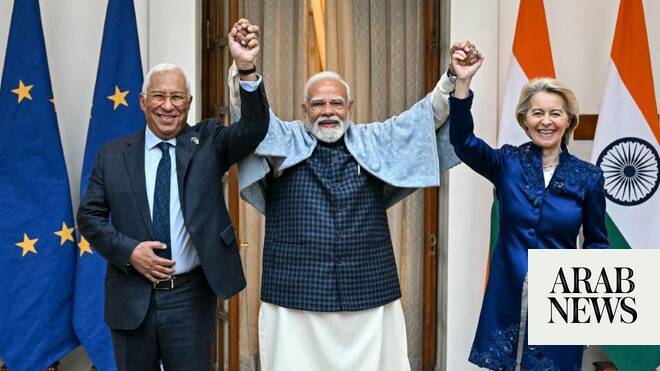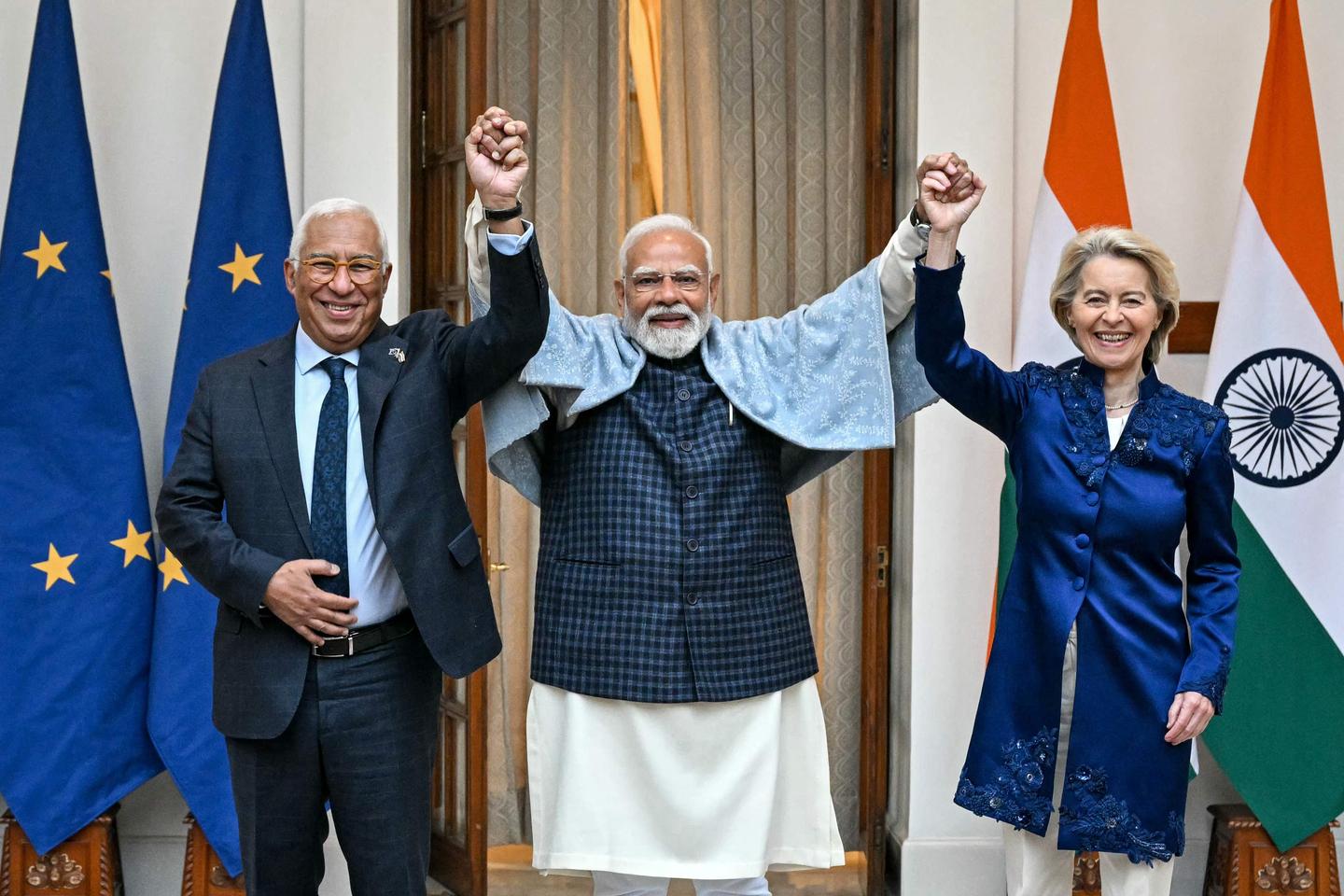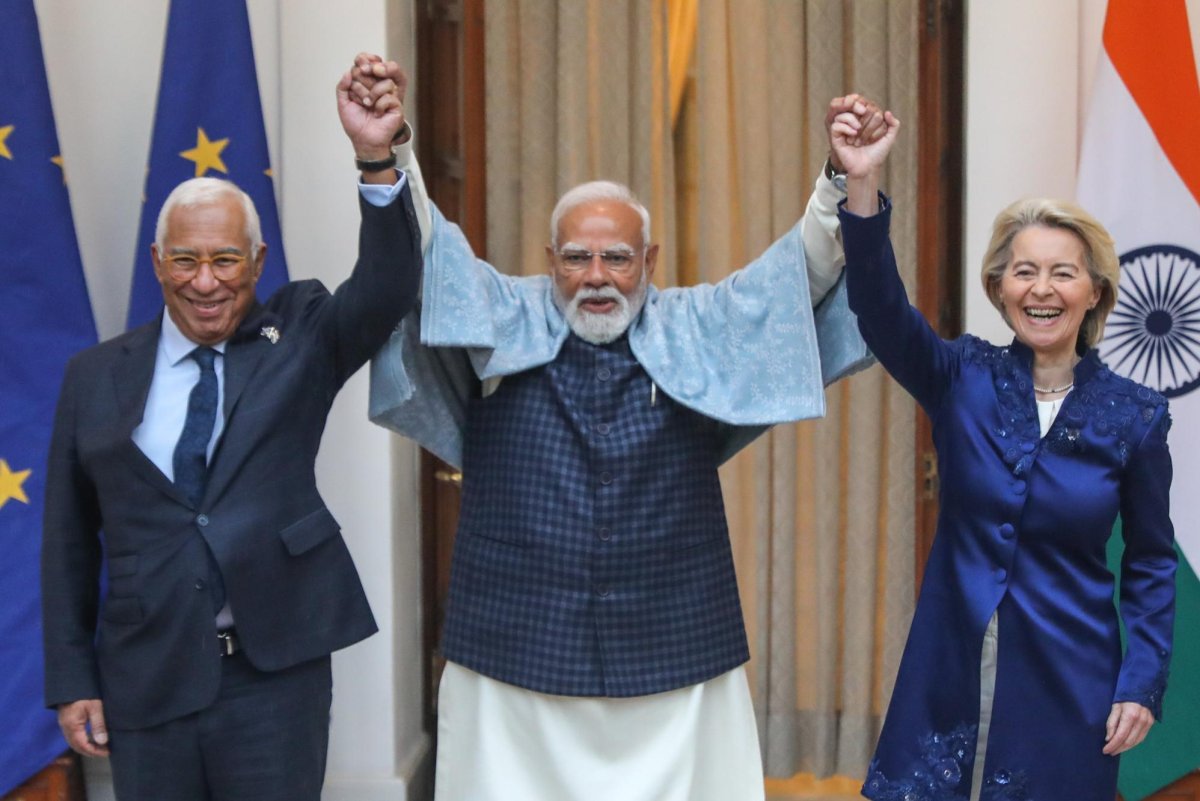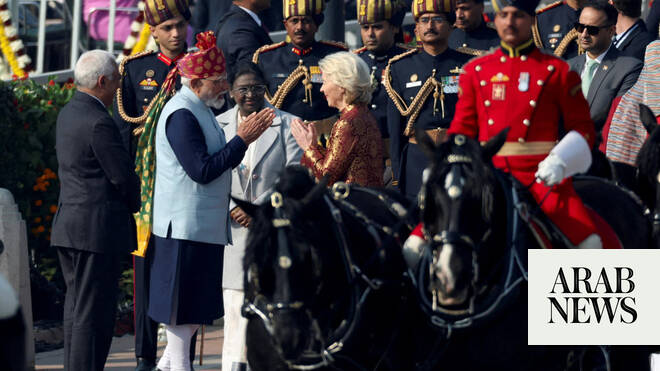
When Ursula von der Leyen stood beside Narendra Modi in New Delhi on January 27 and called the EU-India trade deal "the mother of all deals," the phrase landed with the kind of finality that large diplomatic moments tend to produce. Eighteen years of on-and-off negotiations, collapsed in the best possible way. The photographs were warm. The joint statement was long. And both sides went home having accomplished something genuinely significant, which is also, in the EU-India story, precisely the moment when the real difficulties begin.Prime Minister Narendra Modi with European Council President António Luís Santos da Costa and European Commission President Ursula von der Leyen, at Hyderabad House in New Delhi. (DPR PMO)A trade deal concludes negotiations. It does not create a relationship. The EU and India have had a strategic partnership since 2004, a Trade and Technology Council since 2022, and bilateral goods trade worth 120 billion euros in 2024 that has doubled over a decade. What they have not had is the kind of normative convergence, shared regulatory logic, aligned threat perception, that distinguishes a strategic partnership from a very productive bilateral. The FTA is the biggest thing this relationship has ever produced. It is also a useful occasion for honesty about what the relationship still lacks.Start with digital governance, which is where the structural gap is most legible. India's Digital Personal Data Protection Act of 2023 drew heavily from the GDPR in architecture and vocabulary. The consent framework, the fiduciary obligations, the data principal rights, all recognisably European in origin. But the Act also gives the central government sweeping powers over the Data Protection Board, builds in carve-outs for State processing that European law would not permit, and leaves enforcement at the government's discretion in ways the GDPR explicitly forecloses. The result is a law that reads as European from a distance and diverges in the places that matter most to Brussels. European officials have noticed. The TTC's working groups on AI and digital standards have produced real outputs, but what they have produced is coordination, not alignment. Then there is the Carbon Border Adjustment Mechanism, which is the most concrete example available of how European internal policy creates external friction that no joint communique can paper over. India's CBAM-exposed exports to the EU exceed 6 billion euros annually, dominated by iron, steel, and aluminium. As CBAM moved from its reporting phase into active financial enforcement, Indian aluminium shipments to the EU fell 41.7% in a single year. India is projected to bear 18% of total CBAM costs, nearly double its share of EU import value, because Indian steelmaking is carbon-intensive and India's domestic carbon price is a fraction of the European level. Finance minister Nirmala Sitharaman called CBAM unilateral and arbitrary. She was not wrong to notice the asymmetry, even if the EU's reasoning is internally coherent.This is not a reason to oppose the FTA. It is a reason to understand what the FTA has to navigate. A climate instrument that functions in practice as a cost barrier for developing country exporters generates exactly the kind of quiet resentment that accumulates at the working level long before it surfaces at the summit table. Both sides know this. Neither has found a way to say it plainly to the other.The larger geopolitical context is genuinely pressing for both capitals. American unpredictability under Trump's second term has accelerated the search for alternatives in both Brussels and New Delhi, but the logic driving each side is different in ways that matter. For the EU, India is the indispensable missing piece in a de-risking strategy that needs a large democratic economy in the Indo-Pacific. For India, the operative doctrine is strategic autonomy, which means remaining valuable to all major players precisely by committing fully to none. India did not sign this FTA because it decided the EU was its primary partner. It signed because the window was open and the terms were acceptable. That is a rational calculation, not a rejection of European partnership, but it is a different starting point from the one Brussels tends to assume.The India-Middle East-Europe Economic Corridor was supposed to make all of this tangible in infrastructure. Announced with considerable ceremony at the 2023 G20 in New Delhi, IMEC was the physical embodiment of the EU-India strategic vision: A trade and connectivity corridor that would give the partnership a geography. As of mid-2026, its implementation remains doubtful, with no firm funding commitments and no finalised construction timelines. The Levantine conflict disrupted the Israel corridor. Geopolitical friction between India and the United States added uncertainty to the logistics chain. The vision remains. The corridor does not yet exist.None of this diminishes what was agreed in January. A free trade zone covering two billion people and a quarter of global GDP is not nothing. But the EU-India relationship has a specific recurring pathology, which is that both sides are better at announcing ambition than at doing the unglamorous work that ambition requires. The DPDP-GDPR gap needs a serious regulatory dialogue, not a working group communique. The CBAM friction needs a negotiated accommodation within the FTA's sustainability chapter, not a press statement. IMEC needs financing, not another memorandum of understanding.(The views expressed are personal)This article is authored by Sanket Kumar Prajapati, doctoral candidate, Centre for European Studies, School of International Studies, Jawaharlal Nehru University, New Delhi.
EU-India trade deal: The path ahead
Authored by - Sanket Kumar Prajapati, doctoral candidate, Centre for European Studies, School of International Studies, Jawaharlal Nehru University, New Delhi.
889 words~4 min read