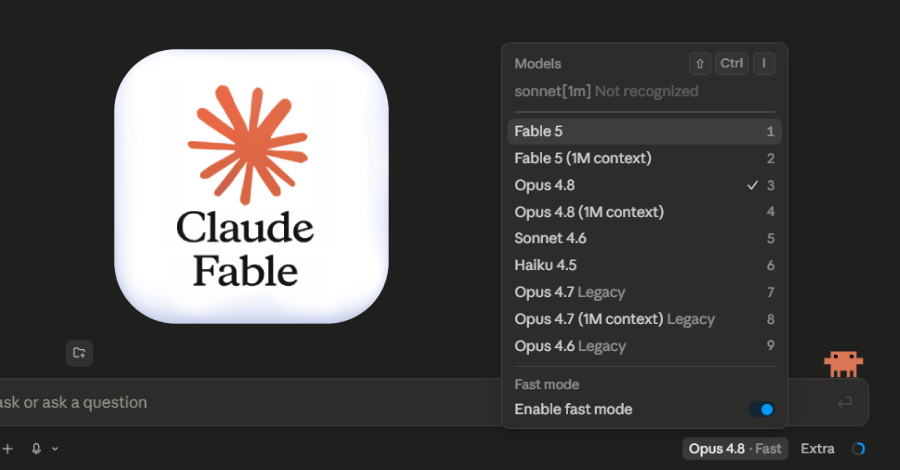
Both are the same underlying model. The difference is a layer of safety classifiers, separate AI systems that run alongside Fable 5 and intercept certain kinds of queries, sitting on top of it. These classifiers watch for requests related to cybersecurity, biology, chemistry, and what Anthropic calls “distillation”, or meaning attempts to extract the model’s capabilities in order to train competing AI systems. When a query gets flagged, the response is handled instead by Claude Opus 4.8, an older and less capable Claude model. Users are notified when this happens. Anthropic says this fallback triggers in fewer than 5 percent of sessions.Mythos 5 is effectively the same model as Fable 5 but without the safety filters applied in certain areas. Where Fable 5 hands off a cybersecurity-related query to an older model, Mythos 5 responds to it directly with its full capability. For vetted partners such as government cyber defenders, this means access to the model’s most powerful features in precisely the areas that are blocked for general users.It is currently available only to partners in Project Glasswing, a programme Anthropic runs in collaboration with the US government for cyber defenders and critical software infrastructure providers. That group now spans roughly 150 organisations across 15 countries, up from a smaller initial cohort when the programmw launched in April with an earlier model, Claude Mythos Preview.
Anthropic’s most powerful AI model can win a Pokémon game using just screenshots. Meet Claude Fable 5
Claude Fable 5 ships with built-in safety filters that redirect certain queries to an older model. Claude Mythos 5, a second, less restricted version, goes only to govt-vetted partners.
1,259 words~6 min read