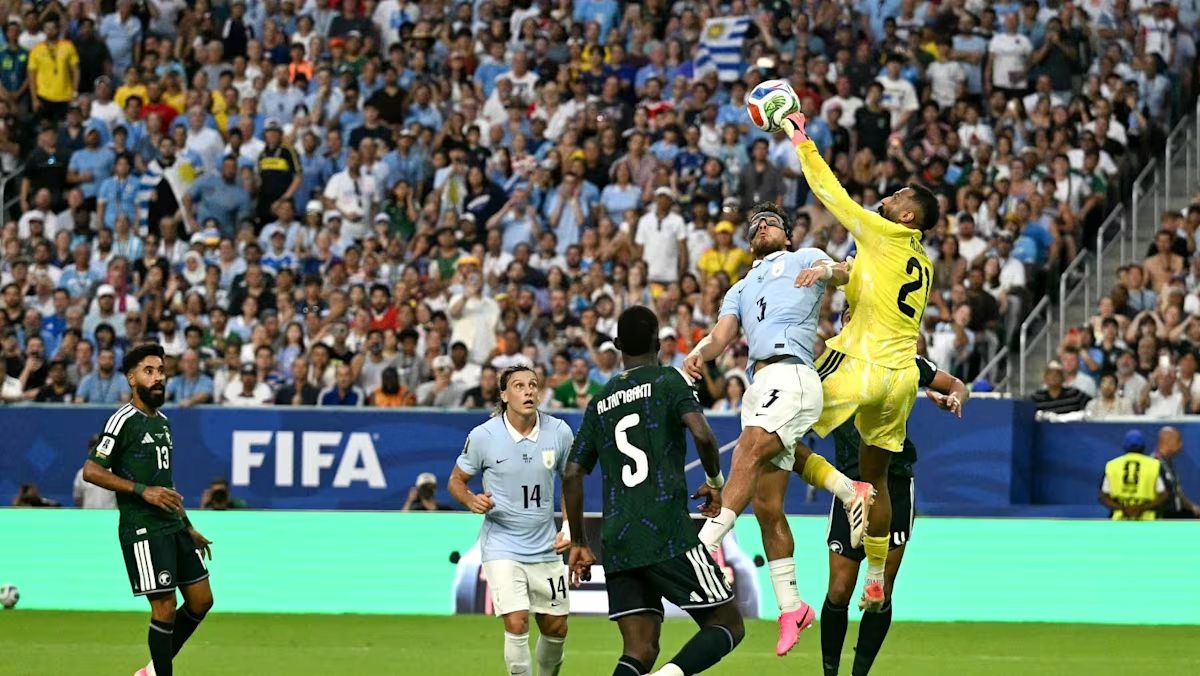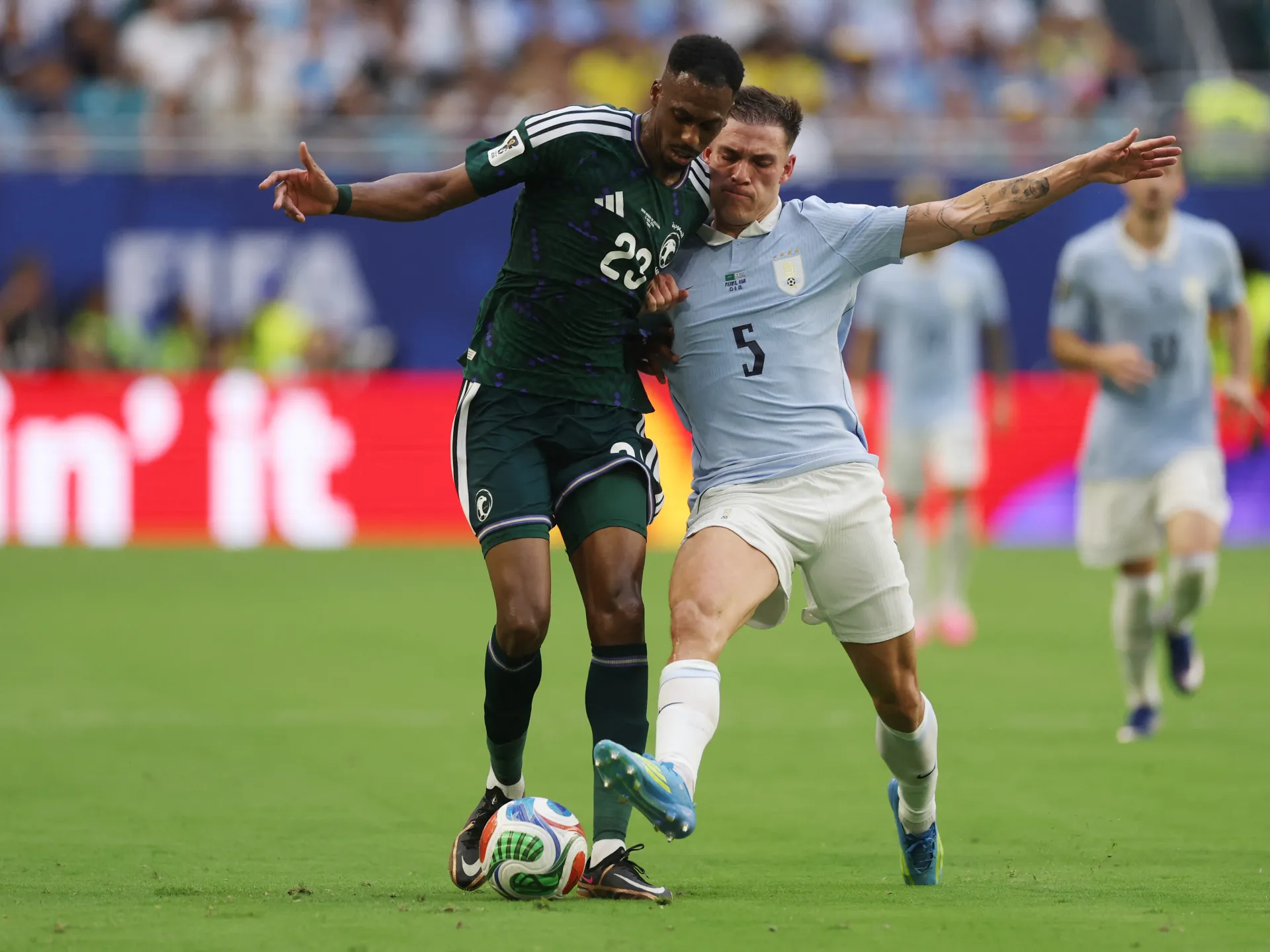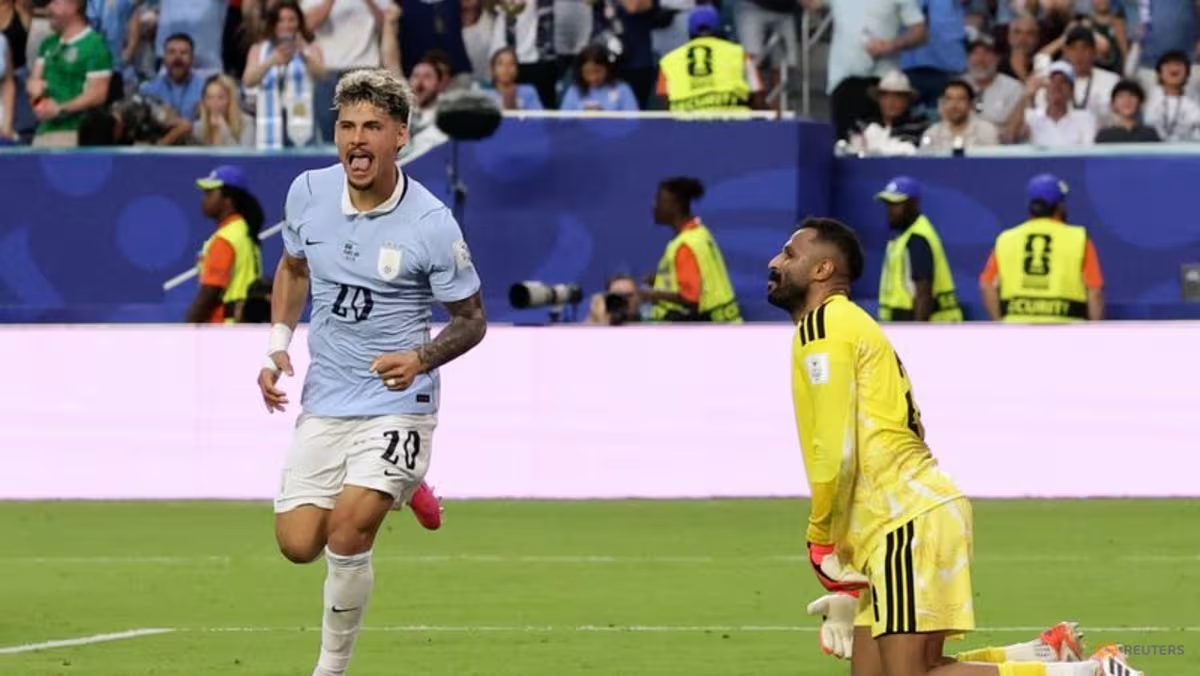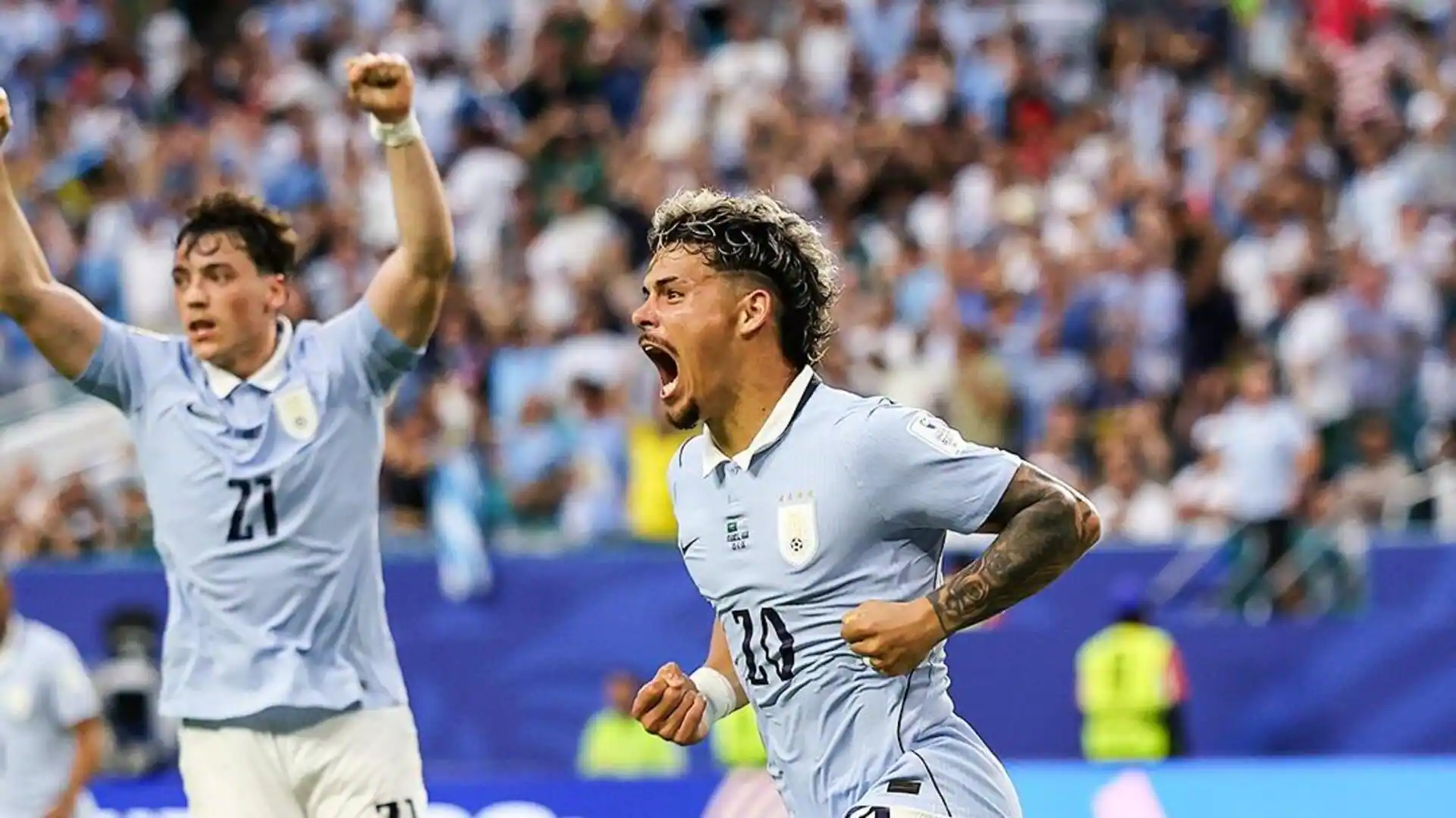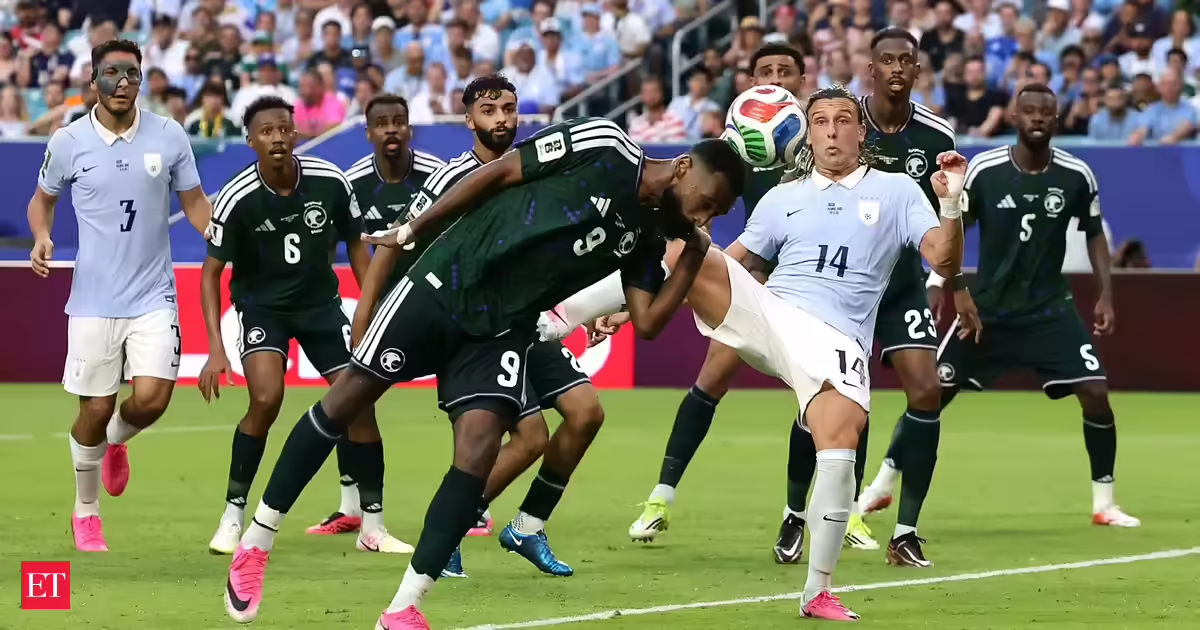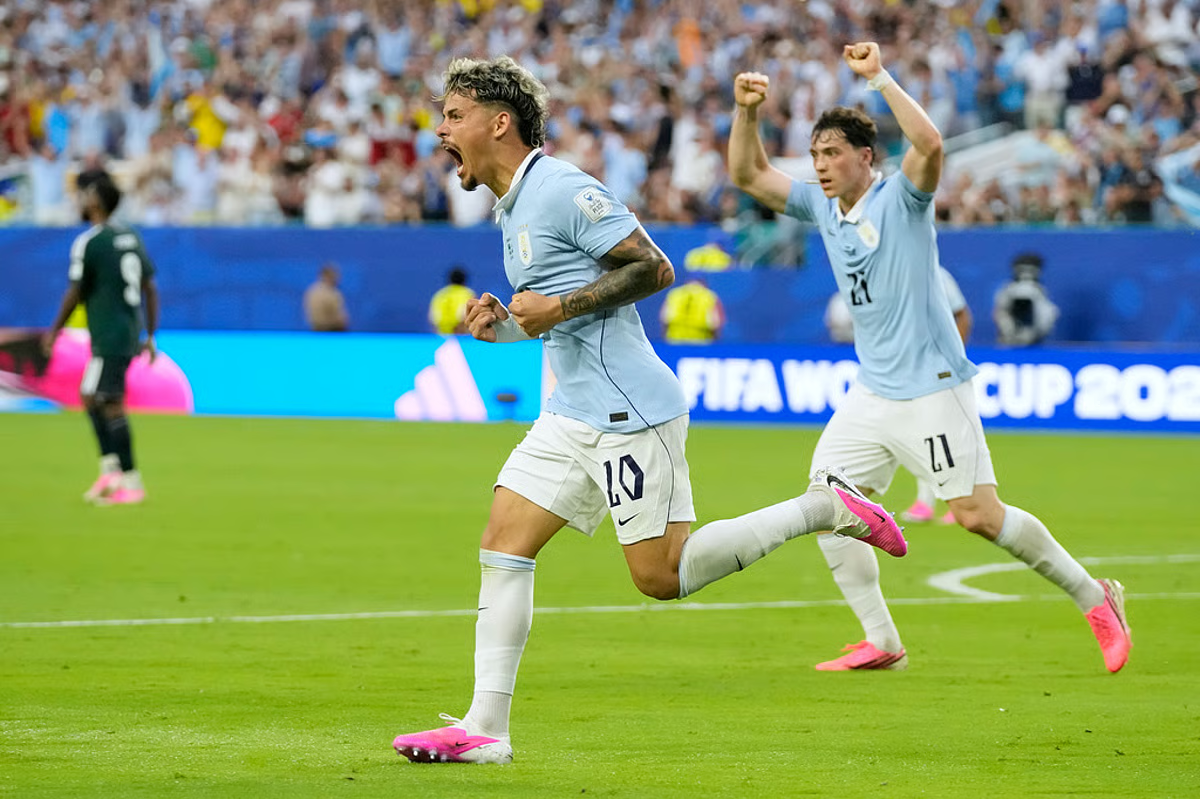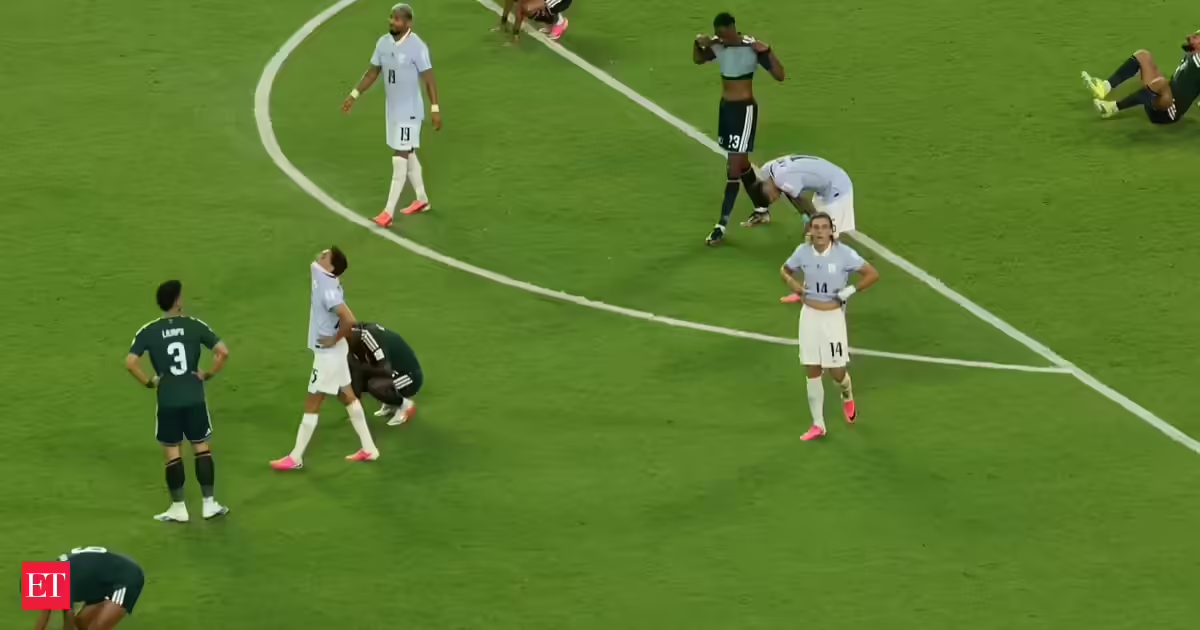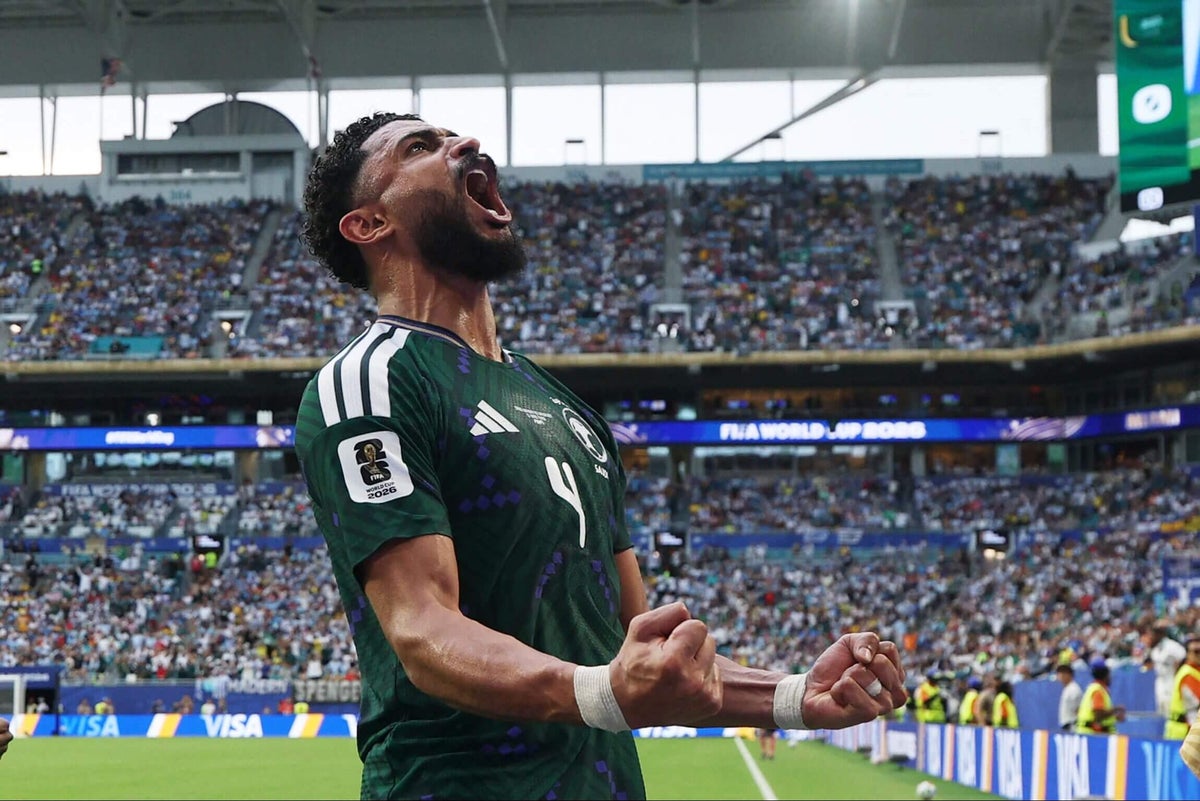
Hours after Cape Verde stunned Spain there looked to be another World Cup upset on their cards in Group H until Uruguay’s late equaliser against Saudi Arabia in Miami.A first-half goal from centre-back Abdulelah Al Amri at the Hard Rock Stadium, after the Uruguay goalkeeper Fernando Muslera had spilled the ball into this path, put the team ranked 49th in the world temporarily top of Group H.But with 10 minutes left to play Uruguay eventually forced a breakthrough when Maximiliano Araujo whipped a shot into the far corner after another goalkeeping mistake, this time by Mohammed Al Owais. The Saudi goalkeeper made amends late on though, with some fine saves to preserve a point. Over the course of the game, Uruguay had 21 shots at goal.Two draws in Group H means all four teams have one point after one round of fixtures.Michael Cox and Jacob Whitehead analyse the key talking points from Miami…Asian sides flying out the blocks at this World CupFor many years, the Asian Football Confederation (AFC) has been something of an afterthought at men’s FIFA World Cups — having only ever had one nation, South Korea in 2002, reach the semi-finals.When the World Cup was expanded to 48 teams, many said that the tournament’s quality would be diluted — and with the AFC’s share rising from six to nine nations, the implication was that the qualification of more Asian countries would be part of that.Not so in North America so far. AFC countries are unbeaten in their first five games at this World Cup, earning a total of two wins and three draws — with victories for South Korea and Australia (who have competed in the AFC since 2005 to play more competitive matches) as well as impressive comebacks for both Qatar and Japan.Saudi Arabia will host the World Cup in eight years time, with the national team’s success a major part of the government’s vision — the evolution of the AFC into a stronger confederation will only help their development.
Saudi Arabia hold Uruguay to draw. Weren’t there supposed to be ‘underdogs’ in Group H?
Maxi Araujo scored late on to equalise for Uruguay at the Hard Rock Stadium, hours after Cape Verde had stunned Spain in a 0-0 draw
937 words~4 min read