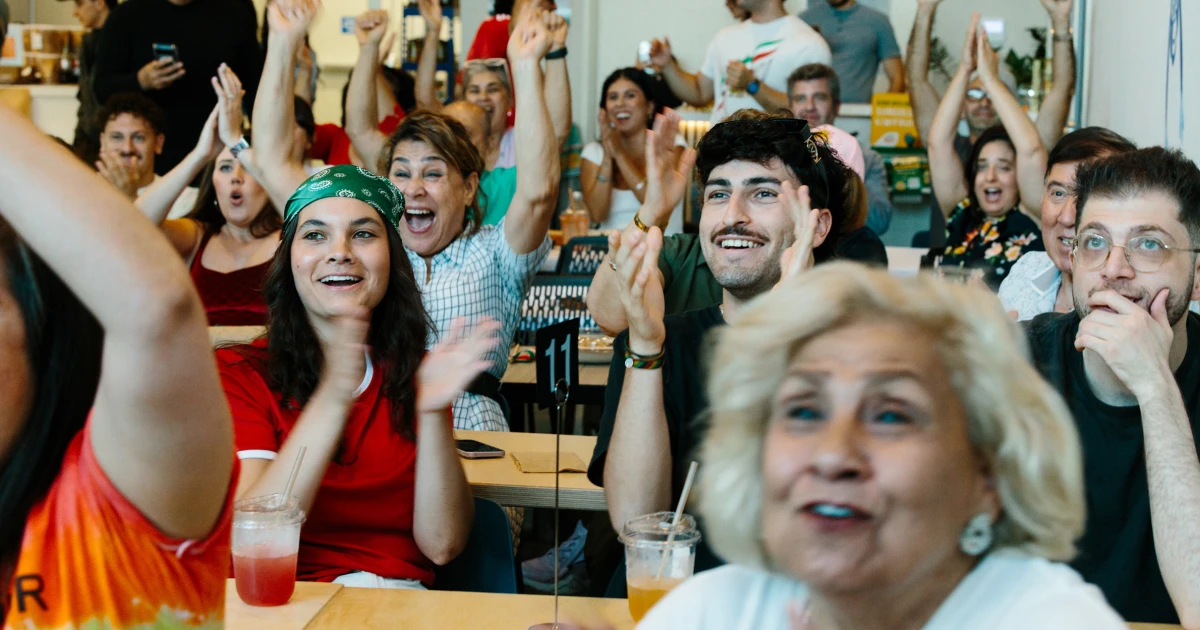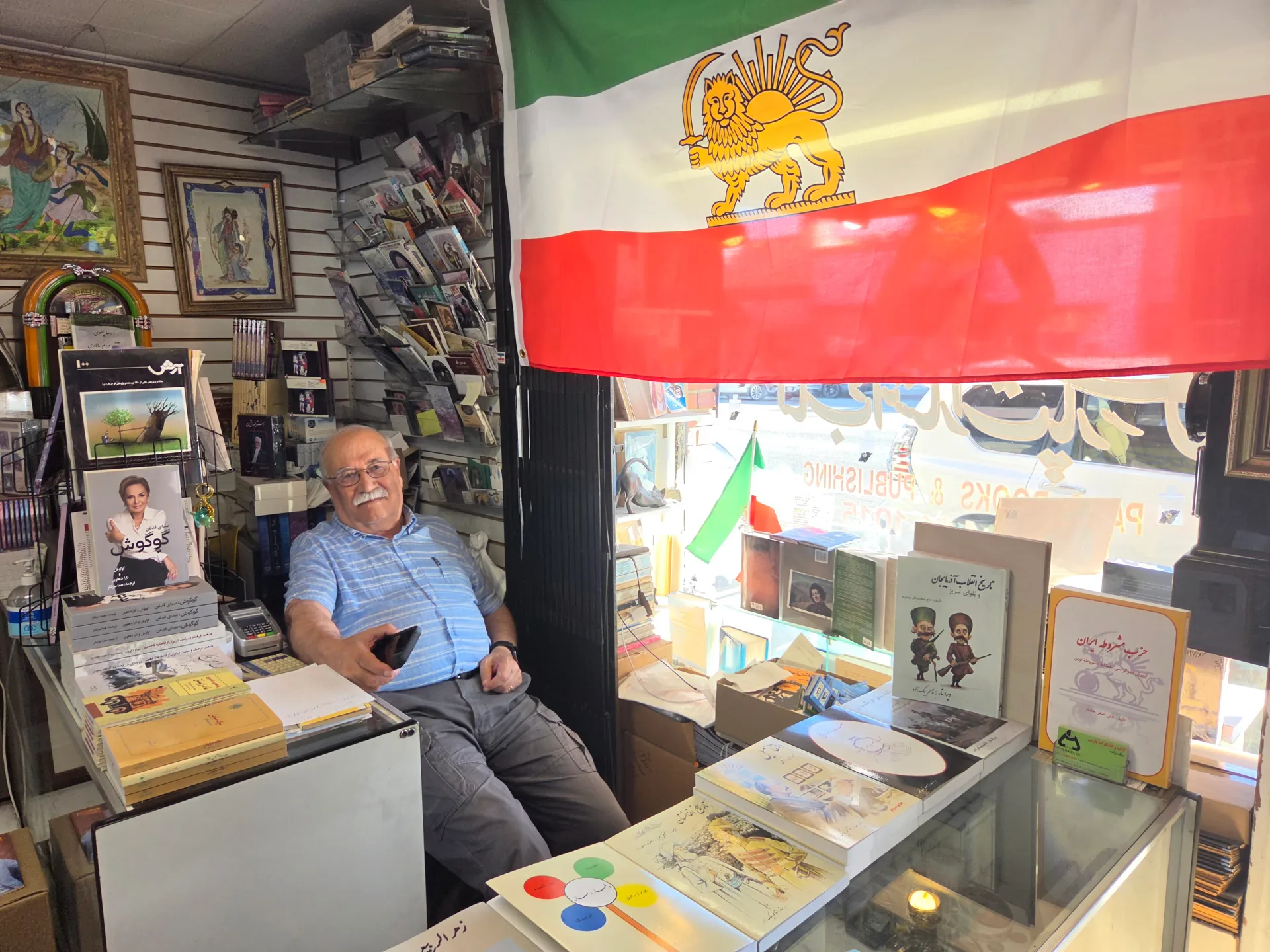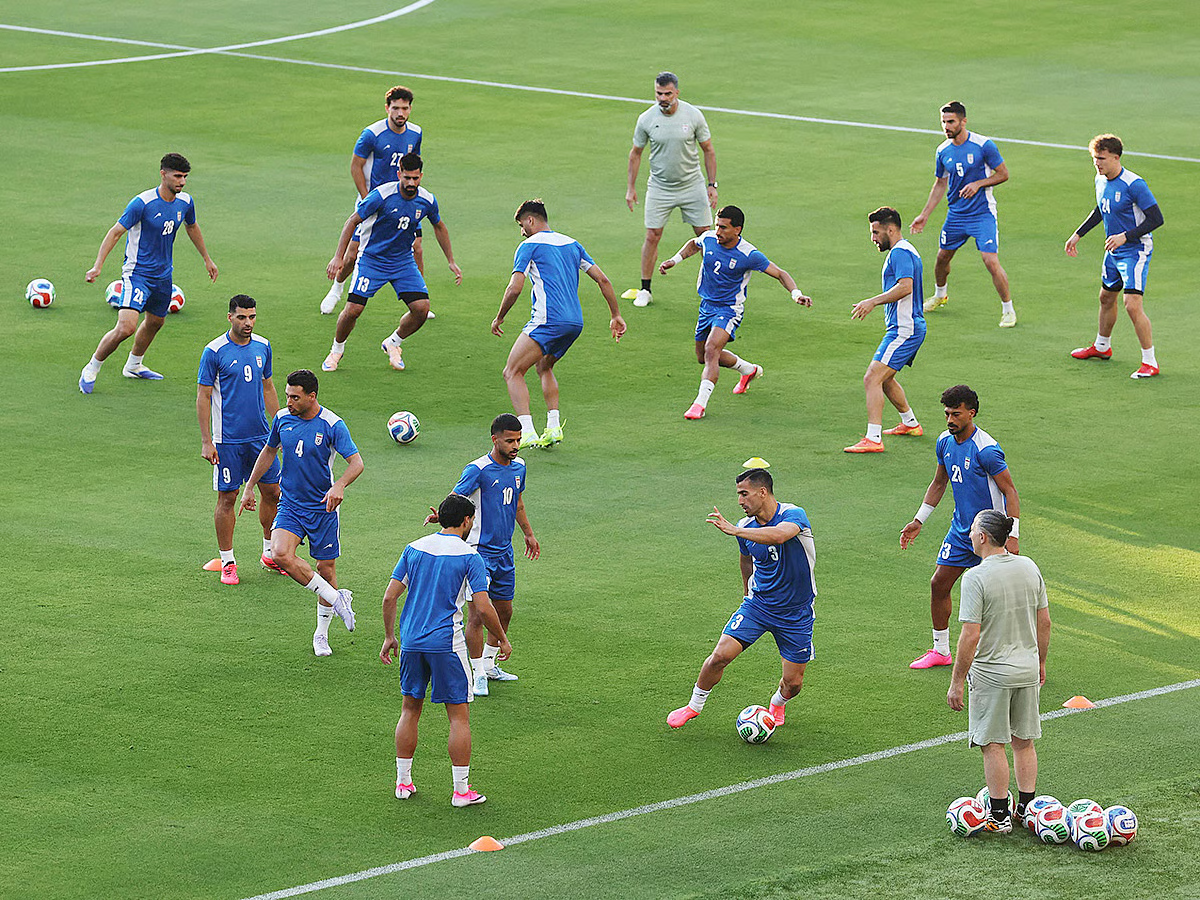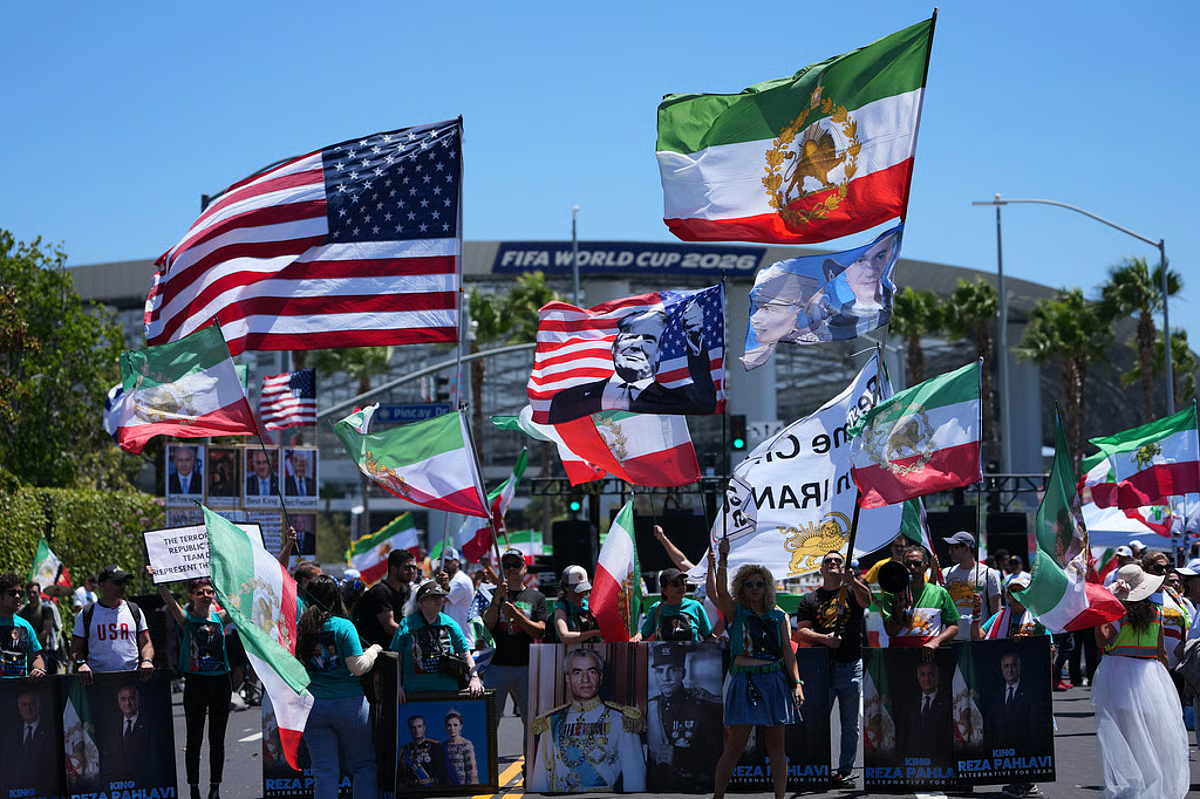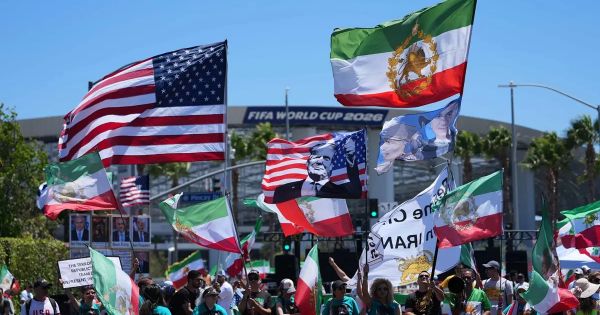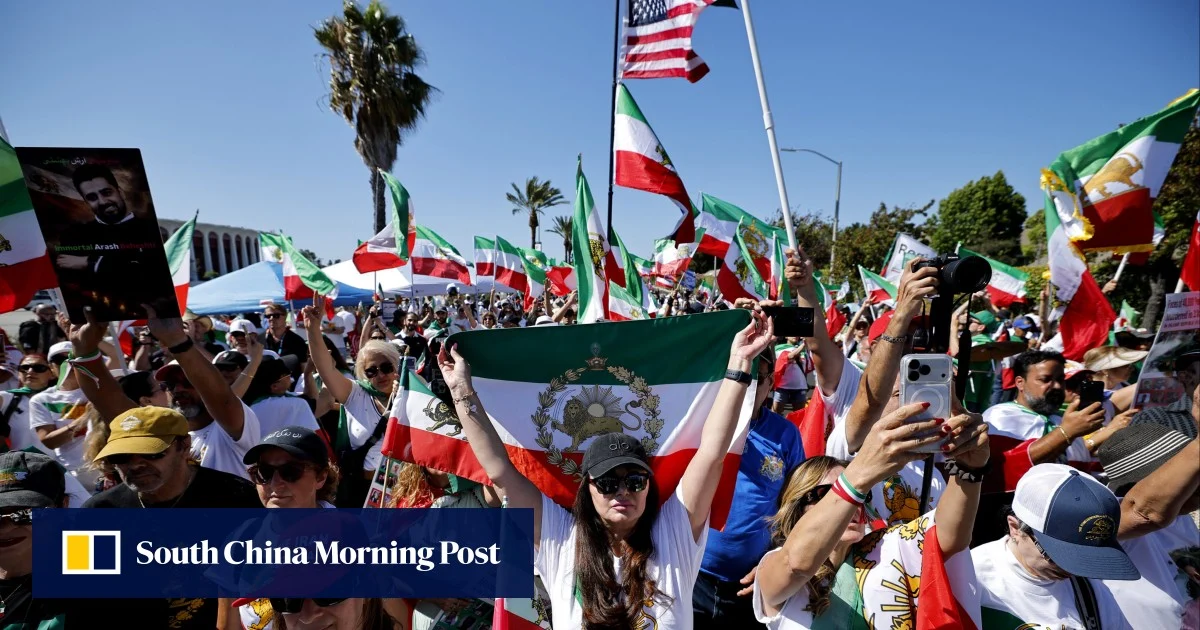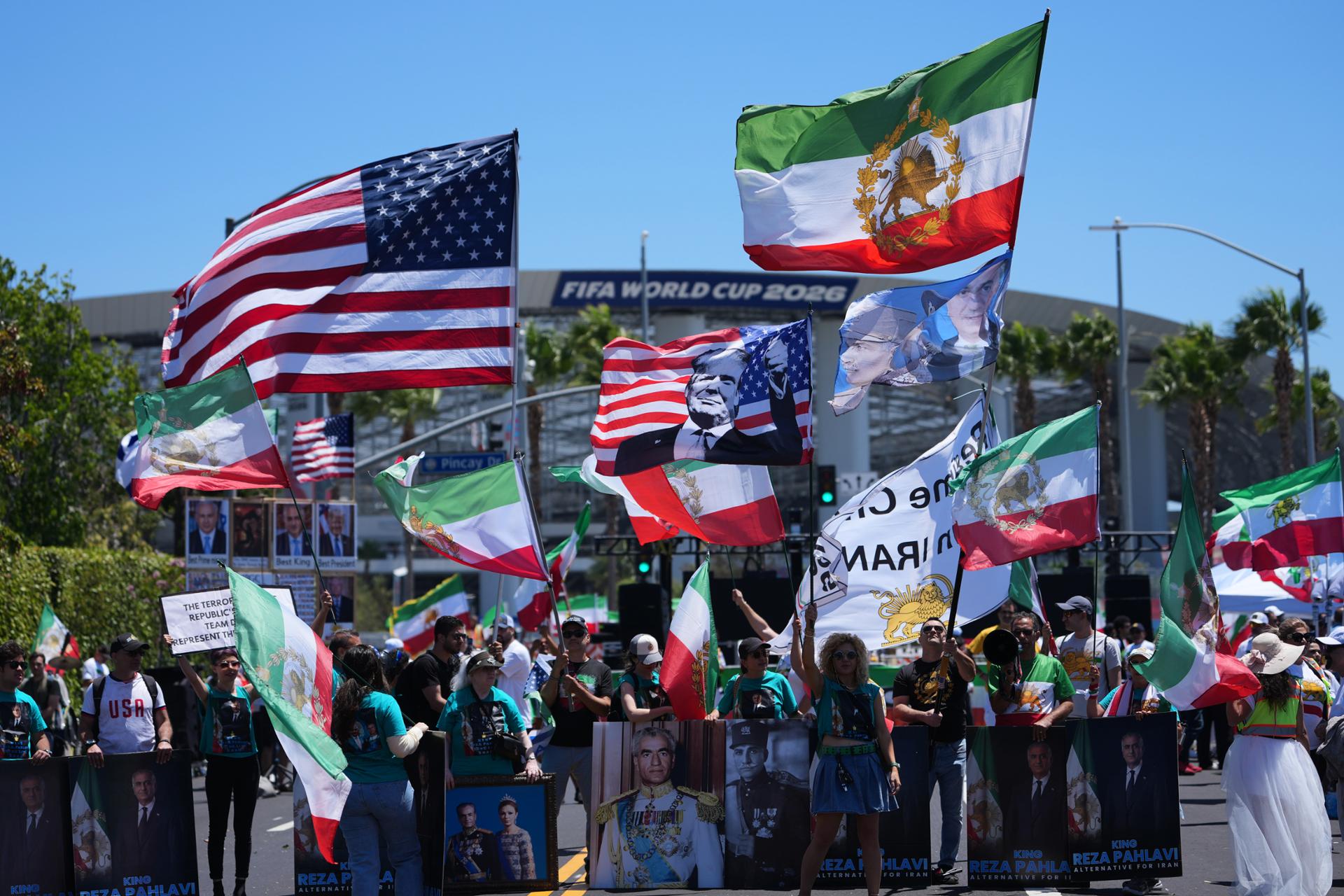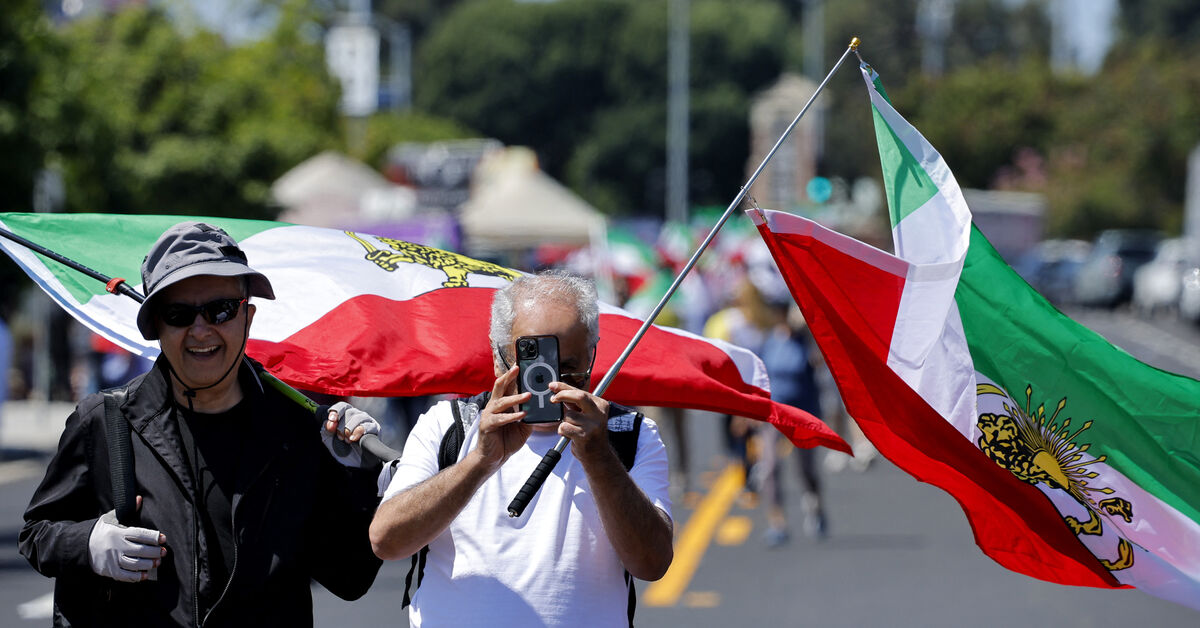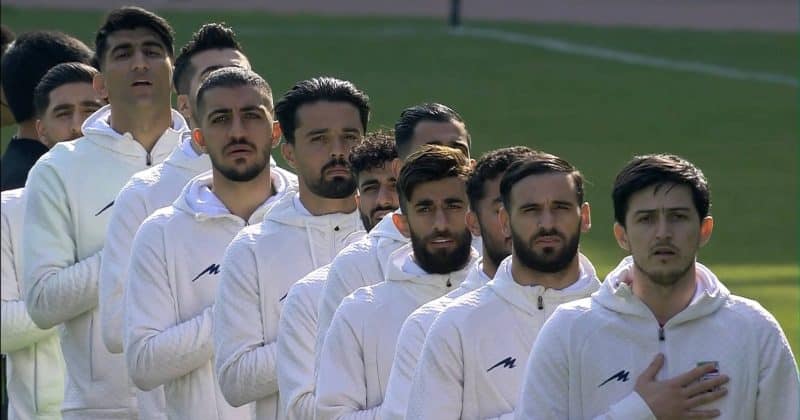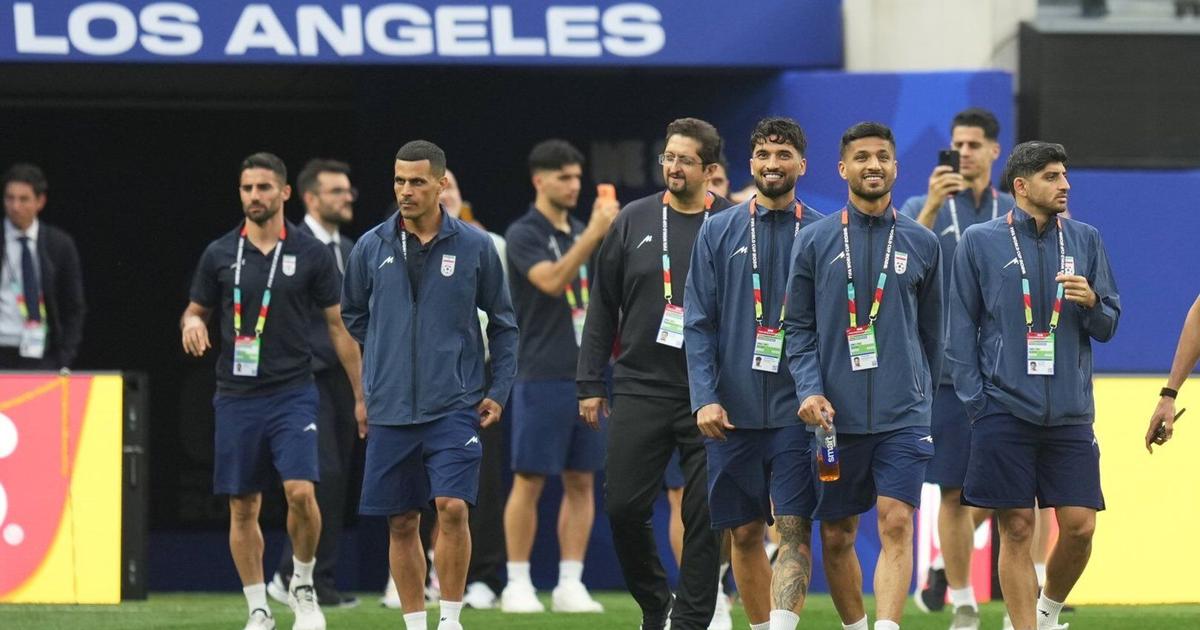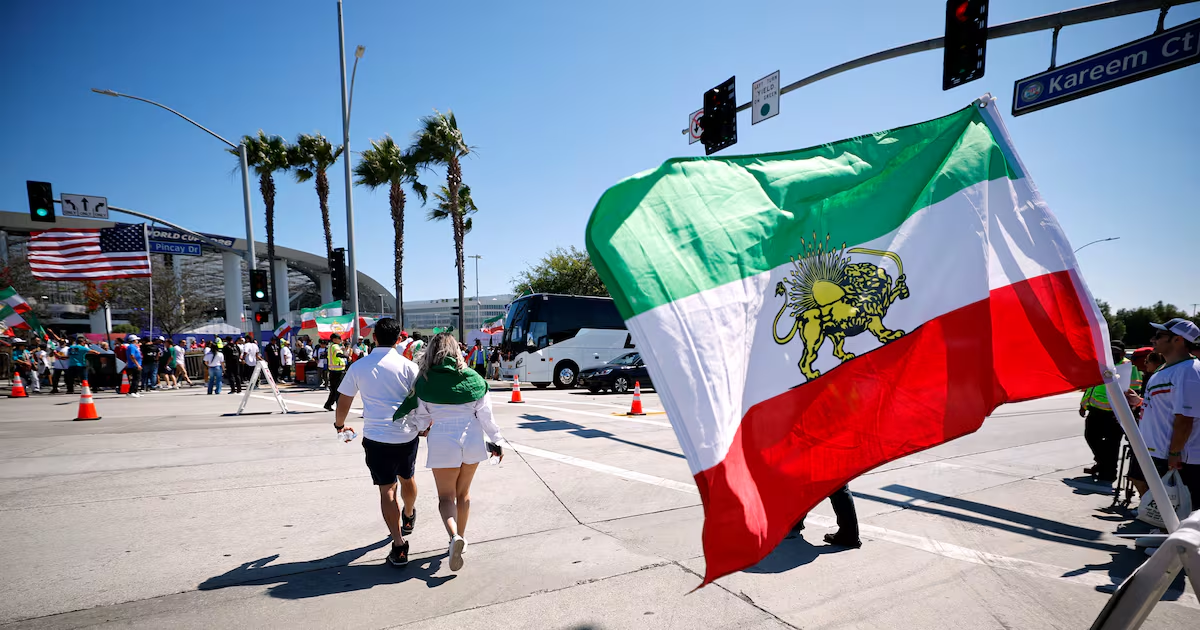
Dozens of football fans crowded into Saffron & Rose on Westwood Boulevard in west Los Angeles dressed in Team Melli shirts and preparing for a World Cup match many had waited years to see.On Monday, Iran’s national team will face New Zealand in the city that is home to the world’s largest Iranian diaspora community – which has earned Los Angeles the nickname “Tehrangeles”.Westwood Boulevard is lined with Iranian bookstores, restaurants, cafes and shops, where owners offer tea and chat with customers in Farsi. Many display Iran’s pre-1979 lion and sun flag.Mahshid Mazooji travelled from New Jersey and met relatives who flew in from across the country. Together they wore matching jerseys and ribbons in the colours of the Iranian flag.“My whole life I wanted to see a World Cup game,” she said. “Every time Iran made it to the World Cup, I watched religiously.”Mahshid Mazooji had an icecream at Saffron & Rose ice cream parlor before heading to the stadium. Jihan Abdalla/The NationalInfoShe had taped over the emblem of Iran's flag in the centre of her shirt. Her parents had criticised her decision to attend, arguing that going to the match amounted to supporting the Iranian government.“I don’t feel all athletes are reflective of the regime,” she said. “I want to support them and their work towards that goal – no pun intended.”While thousands of supporters have travelled to watch Team Melli, others say they will boycott the match or protest outside.The announcement by US President Donald Trump that Washington and Tehran had reached a peace settlement after months of war appears to have done little to bridge divisions within the diaspora.“I can’t in good conscience support a team that, in my view, represents the current regime,” said Alex Mohajer, vice president of Iranian American Democrats for California.“I’ve also been a vocal critic of the Trump administration’s actions in Iran.”Mr Mohajer said he would not watch the match and hoped demonstrations would include displays of Iran’s pre-1979 flag, which Fifa has banned inside stadiums.About 500,000 Iranian Americans live in the Los Angeles area. The community includes Jewish Iranians, Armenians and Assyrians, many of whose families left in the years surrounding the 1979 revolution that toppled the Pahlavi monarchy and brought Ayatollah Ruhollah Khomeini to power.Qasem 'Sam' Beigzadeh opened his Perisan bookstore in Westwood 47 years ago. Jihan Abdalla / The NationalInfoMany describe a generational divide.Among some older people, there remains support for Reza Pahlavi, the exiled son of Iran’s last shah – a sentiment observers say reflects nostalgia for a country they feel they lost.“A crown prince returning to reclaim his country – there’s a certain heroic nostalgic narrative there,” Mr Mohajer said.Younger Iranian Americans, meanwhile, often speak more about democratic transition than restoration.Mana Kharrazi, an Iranian-American community organiser, travelled to Russia in 2018 to watch Iran play in the World Cup. This year, despite the tournament being in her own state, she plans to watch from home.“Politics and soccer always go hand in hand,” she said. “But for the first time I feel really conflicted, because this feels more like a team of the state than a team of the people.”She added: “How can I watch this sport as business as usual when people are being executed and aren’t even allowed to have gravestones?”Addressing criticism directly, forward Mehdi Taremi said the team hoped to bring joy and unity to Iranians everywhere despite war and political tensions.“We respect all Iranians,” he said. “For many years the civilised country of Iran has been a united nation. We want to showcase that unity. We are here at the World Cup to bring joy to Iranians wherever they are.”Nakkisa Akhavan, a lawyer in Los Angeles and a long-time football fame, said she too would likely watch from home – if at all.“I wish I could root for the team and that it was easy,” she said. “But I want to make sure I’m listening to what people on the ground in Iran are saying.”With internet restrictions still affecting communications inside Iran, she said many in the diaspora feel disconnected.“I wish the voices coming from Iran were louder than the diaspora voices right now to give us a little more direction.”
In Tehrangeles, Iran’s World Cup return stirs celebration – and protest | The National
Iranian Americans remain divided over whether supporting the team means supporting the state
698 words~3 min read