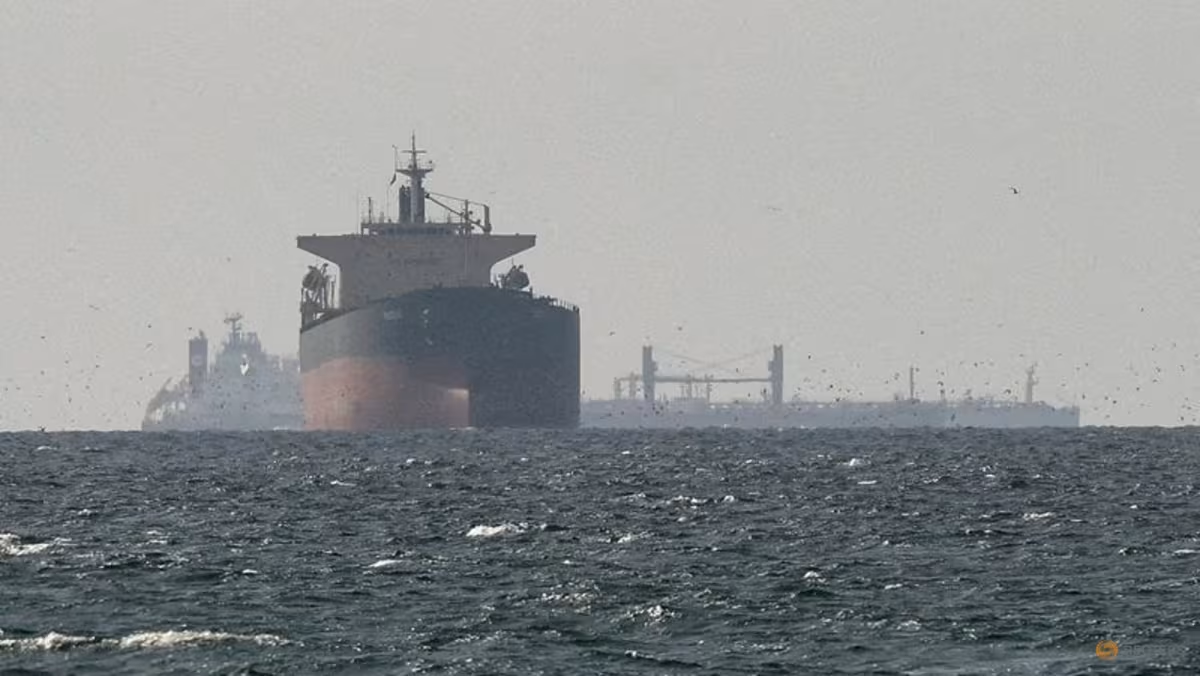
HOUSTON, June 15 : Oil prices settled down $4 a barrel to a three-month low on Monday after President Donald Trump said the United States and Iran have signed a memorandum of understanding aiming to end the Iran war and reopen the Strait of Hormuz.Brent crude futures settled down $4.16, or 4.76 per cent, to $83.17 a barrel and U.S. West Texas Intermediate settled at $80.75, down $4.13, or 4.87 per cent.Both contracts erased a chunk of the war-risk premium they had accumulated over the last few months, with Brent and U.S. crude futures closing at their lowest levels since March 4.The memorandum of understanding has been signed by Trump and Vice President JD Vance and Iranian parliament Speaker Mohammad Bagher Qalibaf, one U.S. official said.
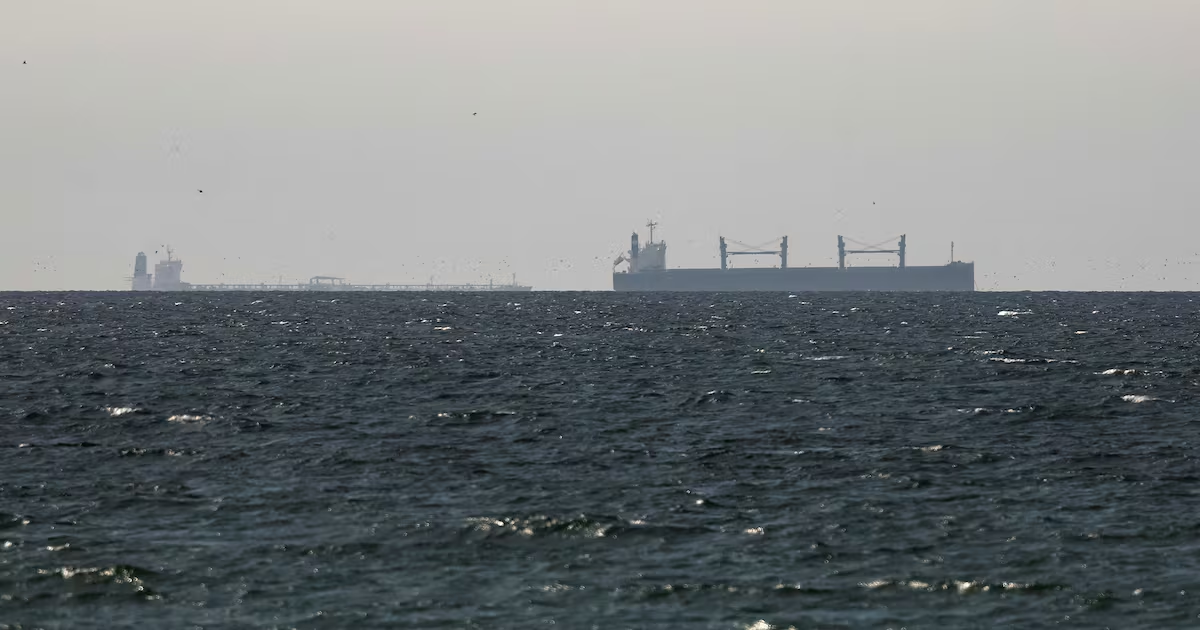
An official signing ceremony for the agreement is due to be held on Friday in Geneva. Iran's semi-official Mehr news agency said the draft deal called for reopening the Strait of Hormuz within 30 days under Iranian arrangements."With a wall of oil supply very possibly on the way, the selloff looks justified," said Dennis Kissler, senior vice president of trading at Bok Financial.Iran lowered the official selling price for its light crude oil grade for Asian buyers to $7.15 a barrel above the Oman/Dubai average for July, the state-owned National Iranian Oil Company said on Monday, compared with the previous month's premium of $13 a barrel. Citi on Monday cut its average Brent crude forecasts to $75 and $70 per barrel for the third and fourth quarters of 2026, respectively, citing expectations that the Strait of Hormuz trade flows will resume and normalize. The world has lost millions of barrels of oil and gas supply since the war closed the Strait of Hormuz, a chokepoint for a fifth of the world's oil and liquefied natural gas supplies, for more than three months. It is unclear how quickly those barrels will return to market once the waterway is opened. "Getting the vessel supply chain in place and the restarts all running smoothly within the Arab Gulf will be tough. And some vessel owners will be hesitant to ballast towards the Arab Gulf until we hear from insurers," said Neil Crosby, head of research at Sparta Commodities. Investors are also watching cautiously how quickly Middle Eastern producers can resume oil production and exports following damage from the war, and whether more ships will enter the region.More than 14 million barrels per day of oil output is shut, or about 14 per cent of world demand, according to the International Energy Agency's most recent report. A full return to pre-war production and refining levels is likely to take weeks, months or even years, industry officials say. Lower oil inventory levels, a slower process to restart production and the refilling of strategic oil inventories should support oil prices in the longer term, UBS analyst Giovanni Staunovo said.Stockpiles in the world's largest economies are headed toward their lowest levels since at least 2003, squeezed at a record pace due to the lost Gulf output, according to the U.S. Energy Information Administration.Stocks of crude oil in the U.S. Strategic Petroleum Reserve fell to 340.3 million barrels, the lowest level since 1983, according to data from the Department of Energy on Monday.Inventories in the government's emergency stash fell by 8.9 million barrels, the third-steepest draw on record. The drawdowns are a part of a U.S. agreement to release 172 million barrels from the facility.Israeli Defense Minister Israel Katz said the military would remain in security zones in Lebanon, Syria and Gaza indefinitely in order to protect the border and Israeli settlements.The fate of Iran's nuclear program, another thorny issue, will also be addressed in those later talks, sources previously told Reuters.E4 nations, which include the UK, France, Germany and Italy, said on Sunday the countries were prepared to lift sanctions on Iran in response to steps on its nuclear program.