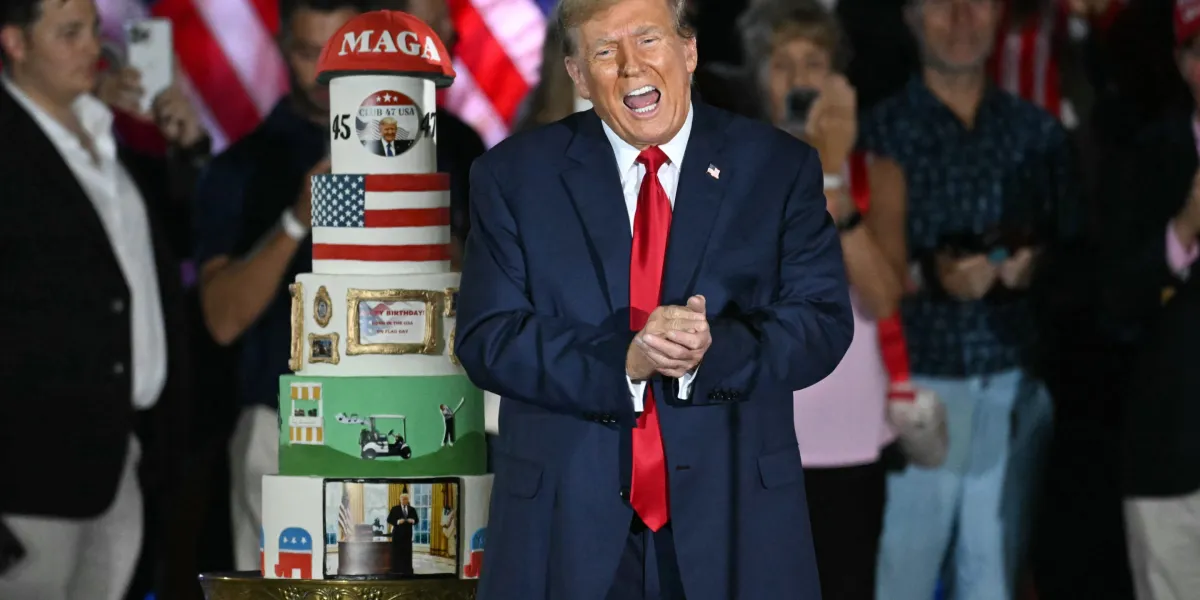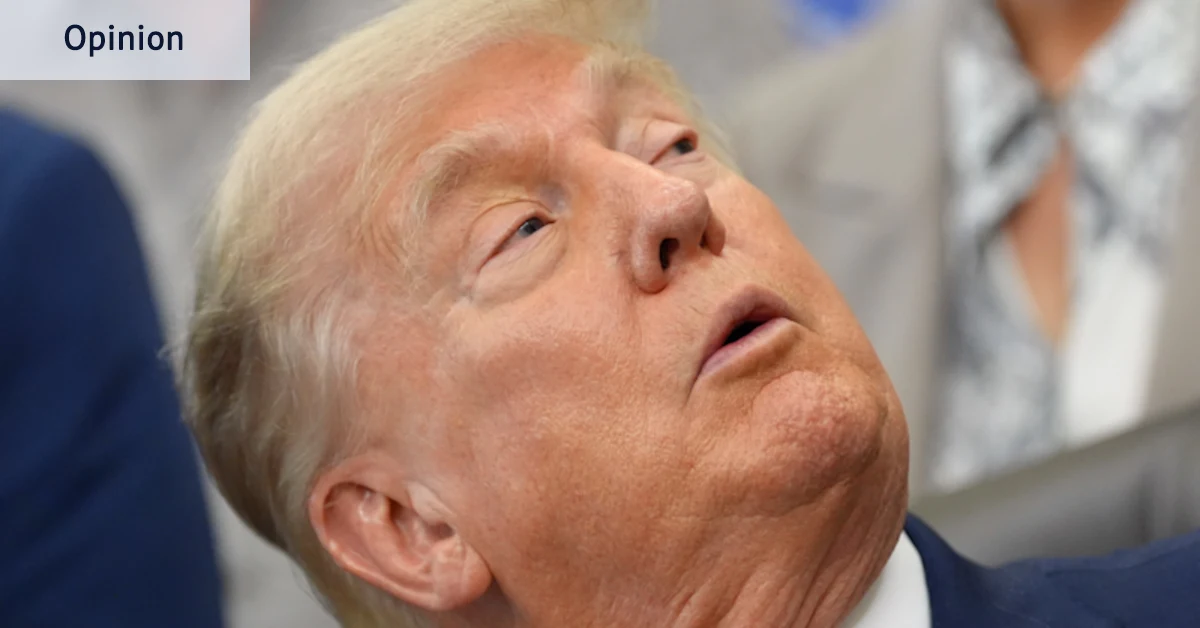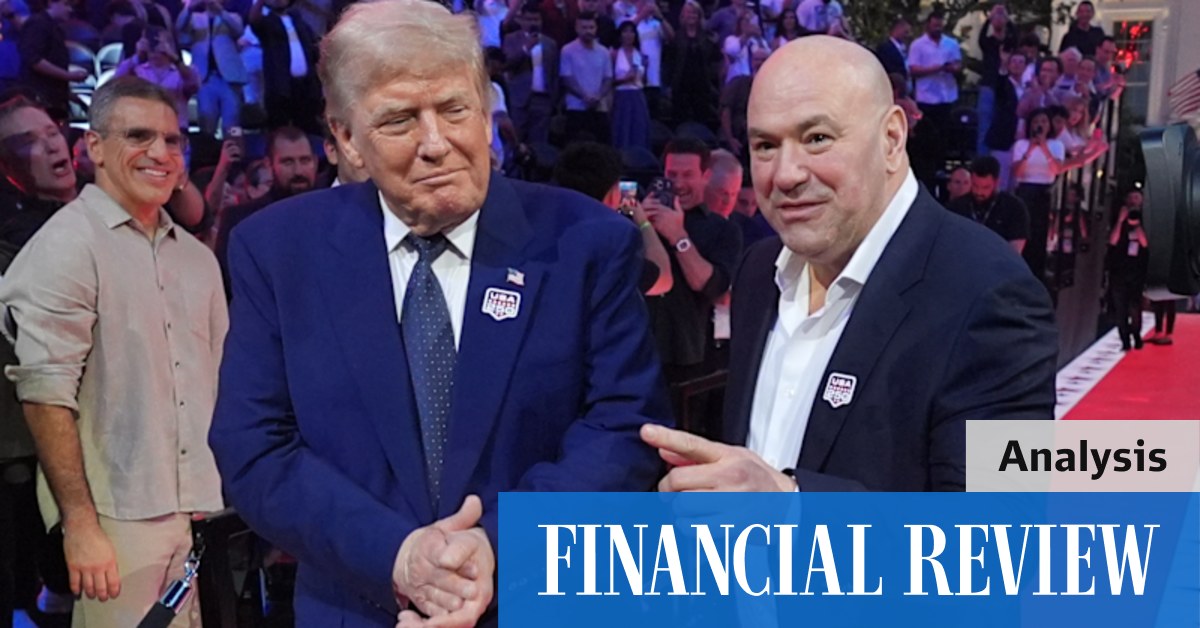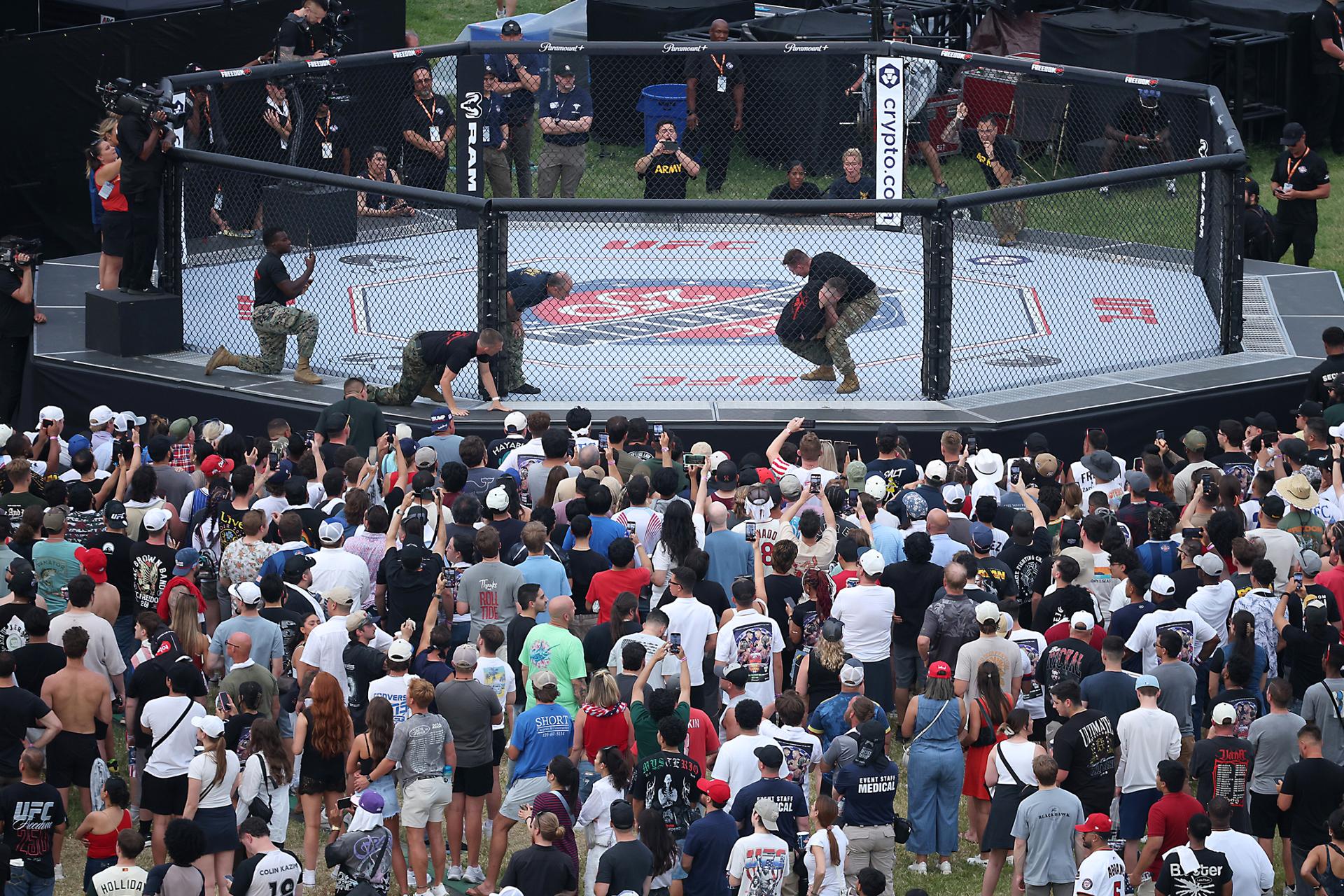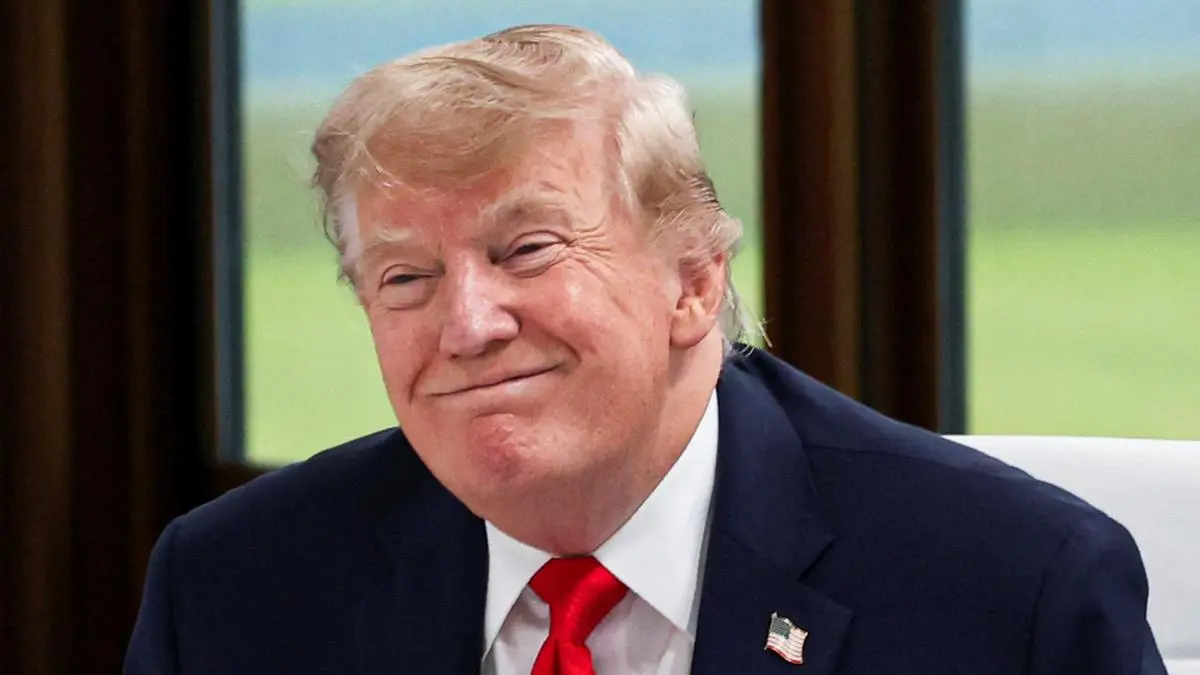
The US president’s 80th birthday began with a bang that kicked off on social media, resonated in the roars on the White House South Lawn as fighters pummeled each other in a cage, and left Middle East experts reeling as they examined the geostrategic impact of Donald Trump’s birthday gift to the world. In pictures Trump marks birthday with UFC spectacle The US president had made it known that he wanted an Iran “peace deal” on his birthday, come what may. So, when Israel kicked off the day with strikes in Dahiyeh, the Hezbollah stronghold in the southern suburbs of Beirut, the US president was incensed with Prime Minister Benjamin Netanyahu. “Why did Bibi have to do a fucking attack,” Trump fumed in an interview with US news site Axios. “He has no fucking judgment,” he added.
To display this content from X (Twitter), you must enable advertisement tracking and audience measurement.
By the end of the day, the storm had settled. Pakistani Prime Minister Shehbaz Sharif took to X to announce a deal had been reached, which was followed by a Trump post on Truth Social declaring “The Deal” was “now complete”. The 55-word message stated that the US president had “authorized” the opening of the Strait of Hormuz and that “ships of the world” could “start their engines”. Just like it was before the US and Israel started the Iran war, when the Strait of Hormuz was open for business with 20 percent of the world’s oil and natural gas passing through the critical waterway. ‘Back to square one’ Now that the celebrations on the South Lawn have wrapped up, the international community is looking the gift horse in the mouth and asking who got the biggest party favor at the end of the day. Trump’s Sunday night announcement was “both a birthday gift for himself and a gift for the Iranian regime”, said Karim Emile Bitar, international relations professor at Beirut’s Saint Joseph University and lecturer at Paris-based Sciences Po university. “It is quite ironic that the main accomplishment of this deal is reopening a strait (the Strait of Hormuz) that was wide open four months ago. It showed that Iran found out that the control of the strait could be a deterrent, arguably even more important than a nuclear deterrent, that they could have the entire world's economy basically slowed down by simply closing this trade,” Bitar noted. The details of what Trump calls “the deal” and diplomats call “the Islamabad Memorandum of Understanding (MoU)” will not be released before Friday. But news reports based on multiple sources say the agreement provides for a 60-day cessation of hostilities during which the two sides will negotiate a final peace deal. Read moreWhat we know about the US-Iran memorandum of understanding While Trump’s message on Sunday declared the Strait of Hormuz would be opened “toll free”, senior administration officials had no details on the time schedules. In an interview with CNBC television on Monday, Vice President JD Vance was asked if the MoU provided a toll-free opening of the waterway for just the initial 60-day period. Vance replied that, “Our expectation is that the strait is going to be opened in a toll-free way for the long term, and that’s the sort of thing that we’re going to figure out in these technical negotiations.” Trump on Monday declared that many ships loaded with oil are starting to pass through the Strait of Hormuz, calling it “totally safe, secure and pristine”. But maritime trackers have yet to show an uptick in traffic since the deal was announced. Minesweeping operations are expected to last several weeks while France and the UK readied for a support mission to help the reopening of the vital waterway. More than a century after US writer and satirist Mark Twain wryly noted that, “God created war so that Americans would learn geography,” the Trump administration may have finally had a crash course in geostrategic waterways. But critics say the lesson came too late for Washington, handing Tehran a win as the war dragged past the three-month mark. “Over the three-month trajectory, what Iran showed is that, yes, they were the underdog, attacked by two nuclear powers with military supremacy. But they also had their own cards to play,” said Negar Mortazavi, senior fellow at the Washington-based Center for International Policy, in an interview with FRANCE 24. “The defining point in this war is the strategic geographic advantage that Iran has over the Strait of Hormuz. And it seems like President Trump and the US just couldn't get them to reopen the strait with force. This brought [the US] to the negotiating table and, essentially, back to square one, because the Strait of Hormuz wasn't even a problem before the war.” First US president to negotiate directly with Iran In the past, the US has held only indirect, mediated talks with the Islamic Republic, such as the negotiations leading up to the signing of the Joint Comprehensive Plan of Action (JCPOA) – the 2015 nuclear deal Iran signed with six world powers – during the presidency of Barack Obama. But Washington has never had to negotiate with Iran for peace, noted FRANCE 24’s Noga Tarnopolsky, reporting from Jerusalem. “No previous American president has tried to make peace with the Islamic Republic of Iran. It was never on the table, there was never an actual war between the United States and Iran necessitating a peace. Before this, Iran has always been viewed as a threshold nuclear state that is increasingly dangerous. That was the aim of Obama's Joint Comprehensive Plan of Action, to try and curb Iran's nuclear ambitions. It didn't go beyond that,” Tarnopolsky explained. The period between the 2015 signing of the JCPOA and Trump’s 2018 withdrawal from the nuclear deal during his first presidency were “the only three years when Iran’s nuclear program was held back and was scrutinized by international authorities”, Tarnopolsky said.