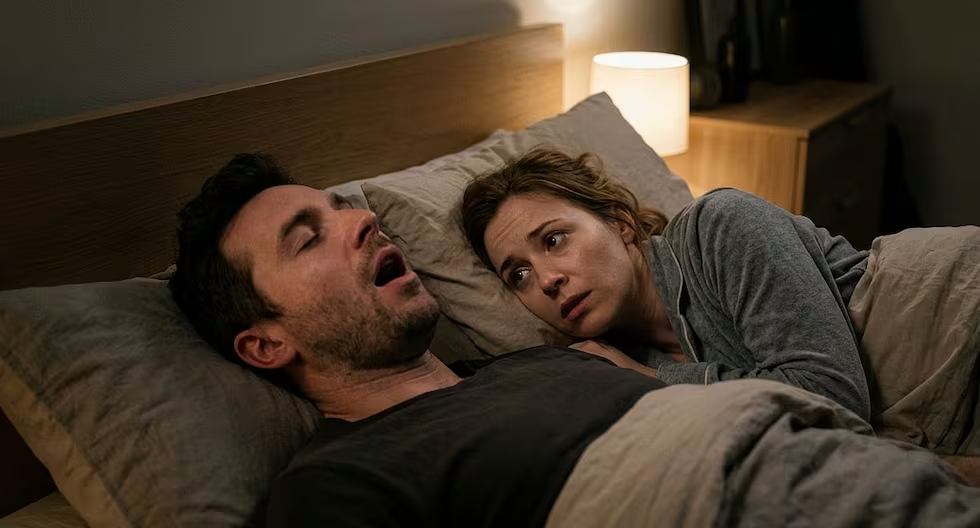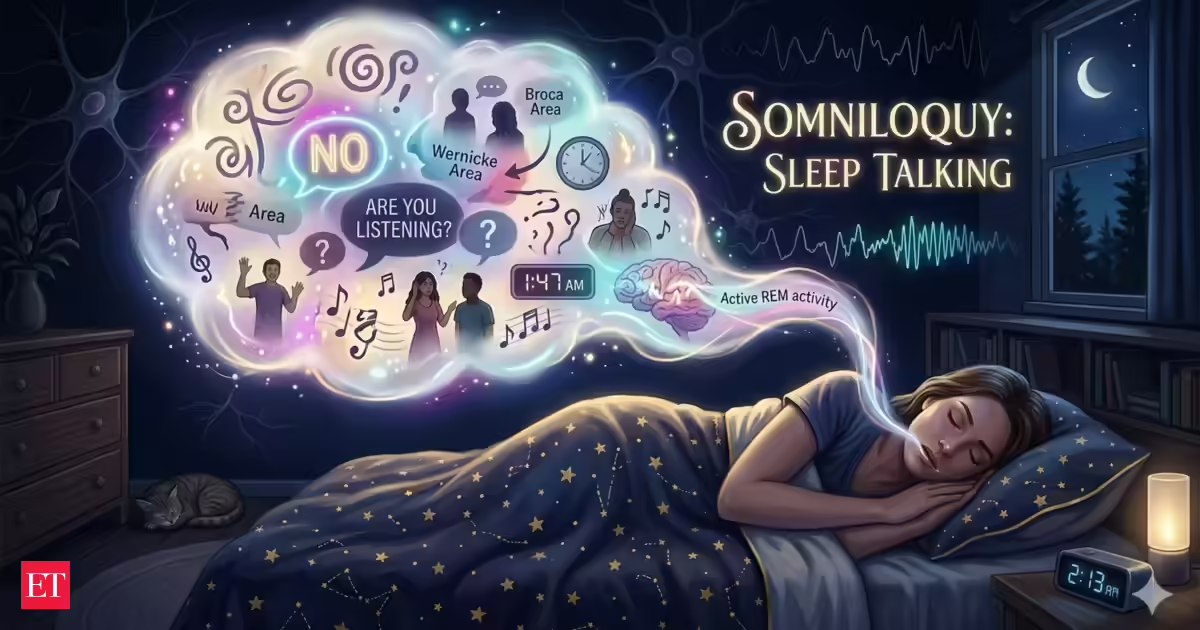
Sleep talking somniloquy explained: Most nights, consciousness doesn’t shut off all at once. It gradually fades as the brain moves through different stages of sleep, each with its own pattern of activity. Awareness drops, the body becomes still, and speech normally disappears completely.But sometimes, words still slip through. This is sleep talking, scientifically called somniloquy, a condition where people speak during sleep without being aware of it, as per a report.Sleep Talking (Somniloquy): A Common Nighttime BehaviorSleep talking is far more common than most people expect.A research, as per a Forbes report, suggests:Around 66% of adults have experienced it at some pointAbout 17% report recent episodesNearly 50% of children talk in their sleepIt is usually noticed by someone nearby rather than the person speaking.You Might Also Like:Why Sleep Talking Changes Depending on Sleep StageSleep talking does not come from a single brain state. It depends on which stage of sleep it occurs in.NREM sleep: structured brain activity with brief instabilityDuring non-REM sleep, especially stages 2 and 3, the brain cycles through slow waves of activity. These include alternating periods of reduced and increased neural firing. Speech that occurs here tends to sound structured rather than random.REM sleep: vivid internal experienceSleep talking can also appear during REM sleep, the stage linked with dreaming. Brain activity is more intense and emotionally charged, which can sometimes leak into speech.In both cases, the brain is not fully awake, but it is not completely inactive either.You Might Also Like:What Sleep Talking Reveals About Language in SleepA major study led by neurologist Isabelle Arnulf analyzed sleep speech in 232 adults, recording 883 sleep speech episodes and over 3,000 words, as per the Forbes report.Key findings included:The most common word was “no”Negations appeared in more than 21% of clausesQuestions made up 26% of episodesGrammatically correct sentence structures appeared in 13% of casesProfanity appeared in about 10% of clausesSleep speech often sounded like real conversation, including pauses as if responding to someone else. This suggests that conversational structure remains active during sleep.Language regions of the brain, including Broca’s area and Wernicke’s area, remain involved during these episodes, as per the Forbes report.Researchers observed that sleep speech is often negative, tense, and directed toward another person rather than the self.You Might Also Like:Why Sleep Talking Happens: Different Scientific ViewsThere is no single agreed explanation for somniloquy. Instead, several theories attempt to explain it.Memory processing during sleepOne theory suggests sleep talking may reflect memory consolidation. A 2019 review in Sleep Medicine Reviews proposed that sleep speech may be linked to the brain replaying and organizing recent experiences, as per the Forbes report.Threat simulation during dreamingThe threat simulation theory by Antti Revonsuo suggests dreaming evolved to rehearse survival situations. In studies of recurring dreams, 66% included threats, often with defensive responses. Sleep speech may reflect this internal simulation process, especially its frequent use of negative language like “no.”Motor control leakageAnother explanation is more mechanical. During sleep, the brain normally suppresses movement. If this suppression is incomplete, speech can occasionally slip out. This is more common in children, where inhibitory systems are still developing.Combined explanationThese ideas are not mutually exclusive. Sleep talking may result from a combination of motor leakage, emotional processing, and memory activity occurring at the same time.When Sleep Talking Is Normal and When It Needs AttentionFor most people, sleep talking is harmless. It can be triggered by sleep deprivation, fever, alcohol use, or stress and usually does not require treatment.However, some patterns may be more significant.When movement is involvedIf sleep talking is accompanied by actions like kicking, punching, or getting out of bed, it may be linked to REM sleep behavior disorder.Why REM sleep behavior disorder mattersThis condition is important because research has shown it can be an early marker of neurological disease. Many people with RBD later develop Parkinson’s disease or Lewy body dementia, sometimes years after symptoms begin, as per the Forbes report.Other warning signsSleep talking should also be considered in context if it occurs with:SleepwalkingNight terrorsBreathing disruptions during sleepEven without underlying disease, frequent episodes that disturb sleep may require attention.FAQsWhat is sleep talking?It is speaking during sleep without being aware of it.Does it happen in all sleep stages?Yes, but it differs between REM and NREM sleep.You Might Also Like:
Do you talk in your sleep? What somniloquy reveals about your brain, sleep stages, dreams and when it may signal a serious sleep disorder
Sleep talking somniloquy explained: Discover the science behind sleep talking (somniloquy), its relationship with sleep stages, dreams, and potential indicators of sleep disorders such as REM sleep behavior disorder. Learn about the common factors contributing to this fascinating phenomenon.
TL;DRAI
Neurologist Isabelle Arnulf's study of 232 adults identified sleep speech patterns—21% negations, 26% questions—linked to memory consolidation and emotional processing. Sleep talking with movement may signal REM sleep behavior disorder, an early marker for Parkinson's disease.
703 words~3 min read