The diagnostic framework I run every time I join a new engineering organization, and why the data is only half the picture.
The first week at a new company is a lot. You're meeting strangers, trying to read rooms you've never been in, figuring out who the actual decision-makers are and how decisions get made. For me, as an introvert, there's also the sheer exhaustion of performing extroversion for eight hours a day while trying to simultaneously form a coherent picture of a place I've never seen before.
And everyone is watching. The people above you want to know if they made the right hire. The people who report to you are wondering whether their jobs are safe, whether you're going to blow up the way they've been doing things, whether you're someone who actually gives a damn or just another executive who issues mandates from a conference room. You try not to let that pressure paralyze you. But you feel it.
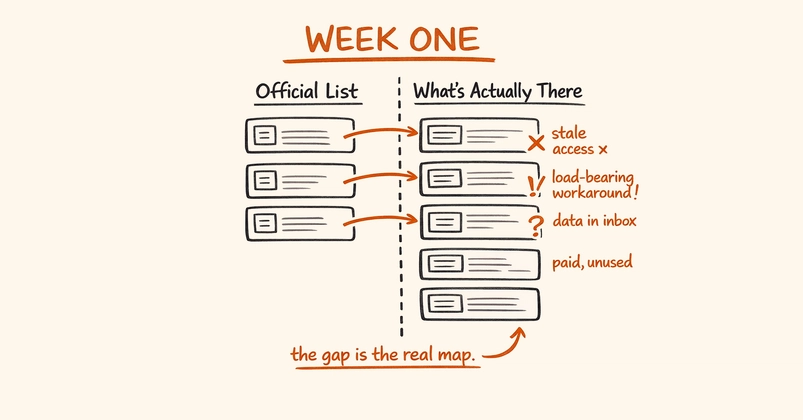
The thing that helps me most is having a framework. Not because frameworks give you answers, but because a good framework gives you the right questions to ask. The two main questions I'm trying to answer in week one each open into several more questions, and the answers to those won't come from the data. They'll come from the team. The data just tells me where to look and what to ask about.