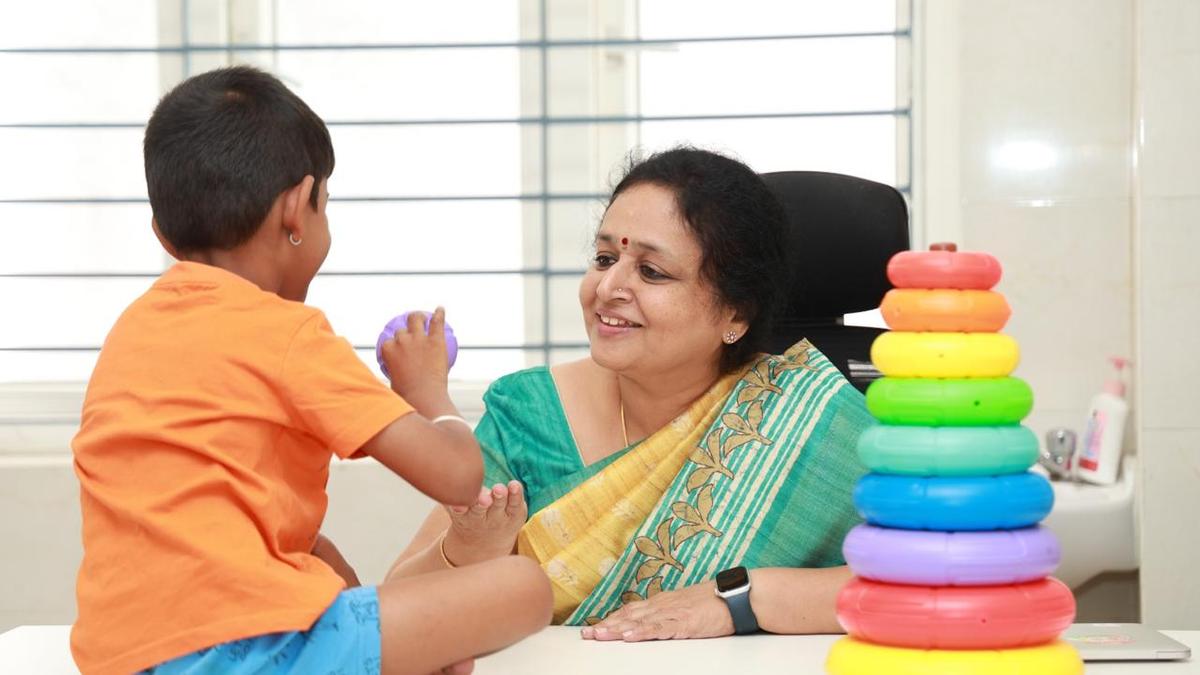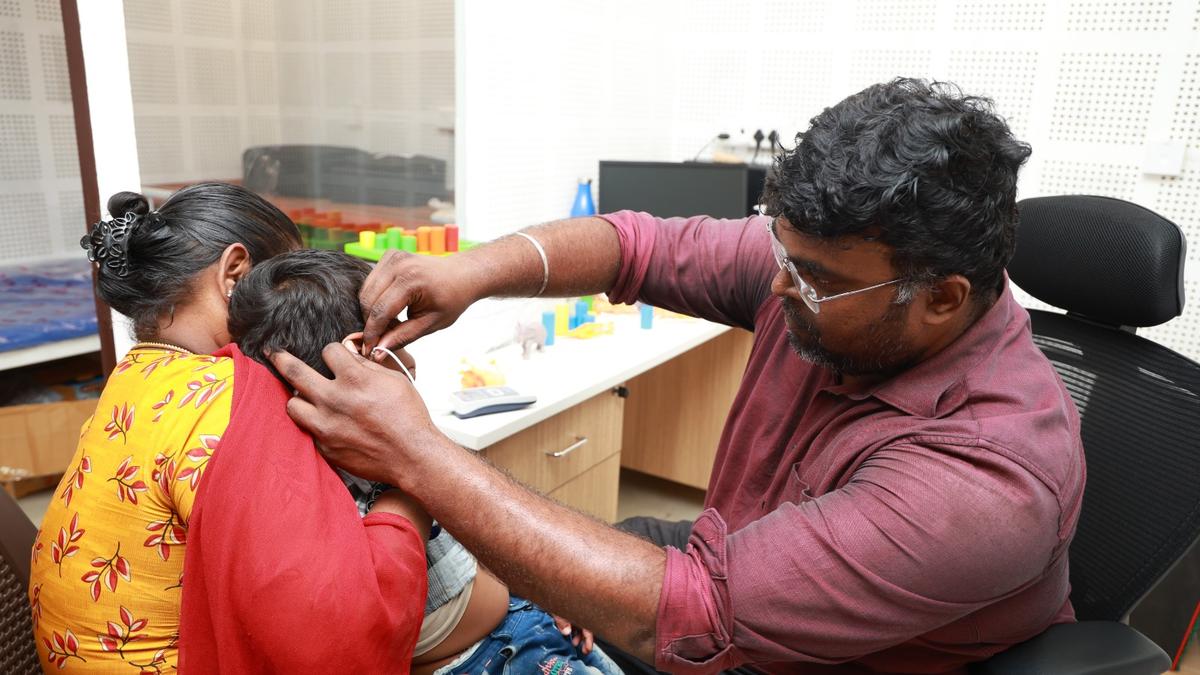
The centre in K.K. Nagar sees nearly 100 persons daily, according to Rema Chandramohan, deputy chief executive officer, Centre of Excellence (CoE) for Persons with Autism.
| Photo Credit: Special Arrangement
The Centre of Excellence for Persons with Autism has crossed 1,000 enrolments in 18 months of its launch, with a total of 1,050 children registered so far. It is now scaling up its services for persons with autism by planning to add physical education, pre-vocational training for children under 18, vocational training for adults and new infrastructure, including a swimming pool for hydrotherapy and a sensory park.The centre, which was established on December 5, 2024 on the campus of the Government Institute of Rehabilitation Medicine, K.K. Nagar sees nearly 100 persons daily, with eight to 10 new patients every day, according to Rema Chandramohan, deputy chief executive officer, Centre of Excellence (CoE) for Persons with Autism.In the initial month, the CoE saw five to 10 patients but awareness through word of mouth has driven steady growth. “We now have nearly 1,050 enrolled children. Of this, more than 700 are benefitting from regular therapy sessions at the CoE,” she said. The centre was initially supported by the National Health Mission, Tamil Nadu.The team includes paediatricians, psychiatrists, clinical psychologists, occupational therapists, speech therapists, special educators, and physiotherapists. A paediatrician first screens the child using the Modified Checklist for Autism in Toddlers, a screening mandatorily done in Western countries when a child is brought for immunisation at 18 months. “This is when the signs can be picked up. Not responding to name calling, poor communication and poor social skills are the three main signs of autism,” Dr. Chandramohan said.A psychiatrist and a psychologist evaluate the child further, with the latter confirming the diagnosis using the Indian Scale for Assessment of Autism and Childhood Autism Rating Scale-2. The child then goes to each of the therapists. They identify the developmental gaps, set individualised goals and begin training focussed on daily living skills.Autism Spectrum Disorder (ASD) might come with certain comorbidities for which the children need to be treated. “ASD with ADHD ranges between 30% to 70% in different studies, while other comorbidities include depression, anxiety, and sleeplessness. Medications are prescribed for these conditions,” Dr. Chandramohan said.“We have a daycare centre being run along with an NGO (Madhuram Narayanan Centre for Exceptional Children) where 25 children aged 1.5 to eight years are enrolled. Special educators train children in skills - 200 skills for children under three and 600 skills for those aged three to eight. These include eating independently, buttoning clothes, and writing,” she said.The centre is developing a mobile application for therapists and parents. This will allow them to track the therapy sessions and goals. Soon, pre-vocational training, including in block printing and fireless cooking for children under 18 and vocational training for adults, including in computer skills and tailoring will be introduced. The centre receives persons from across the State. A few persons who had travelled from countries such as Canada and the Middle East for vacation had also approached the centre, Dr. Chandramohan added. Published - June 16, 2026 12:41 am IST