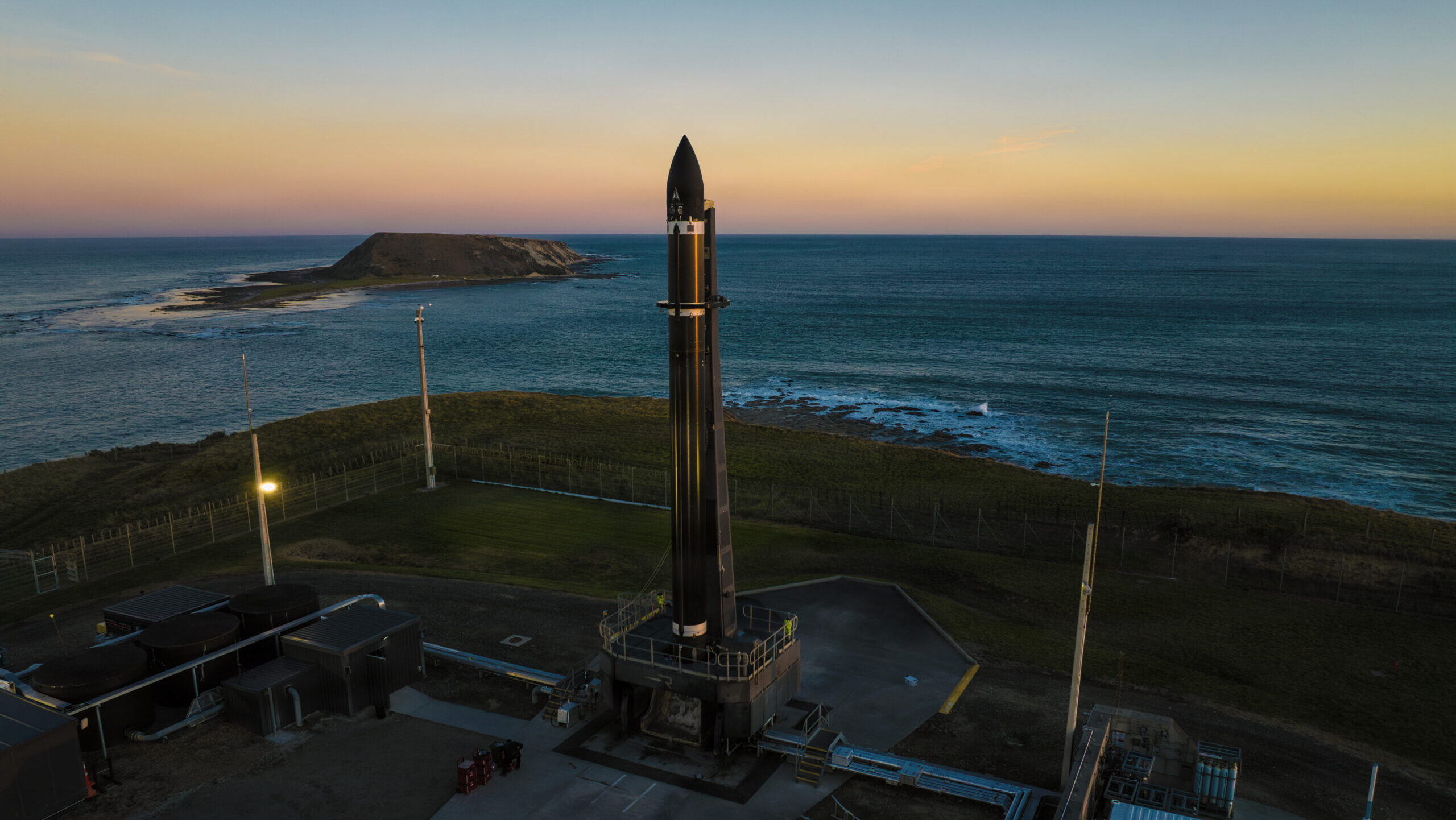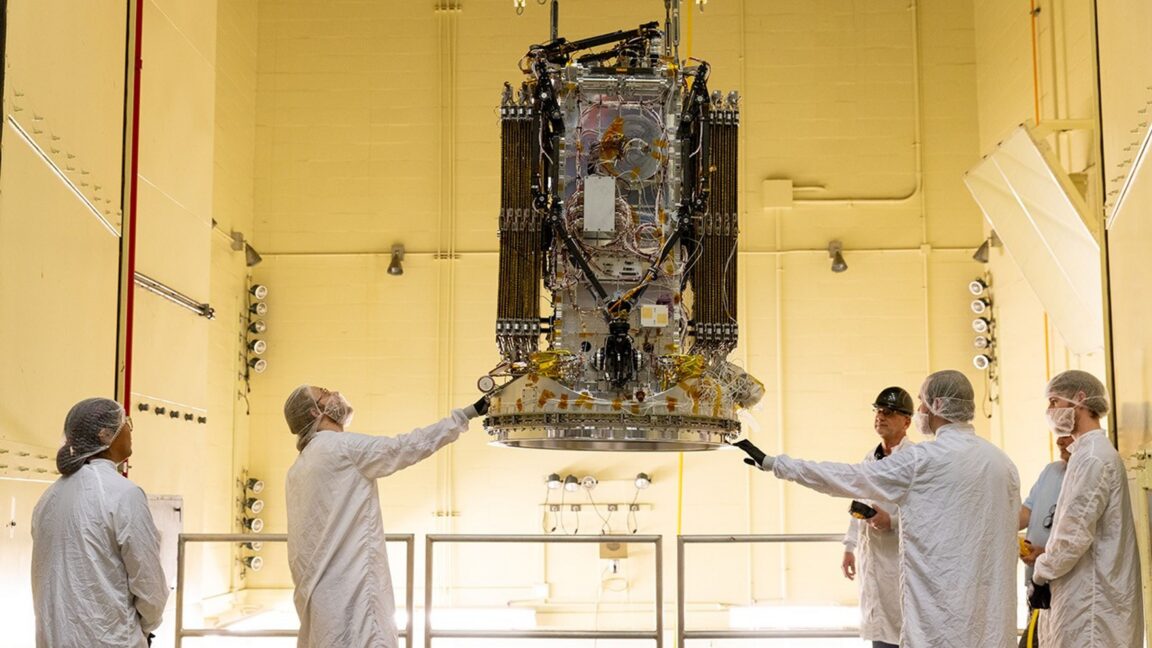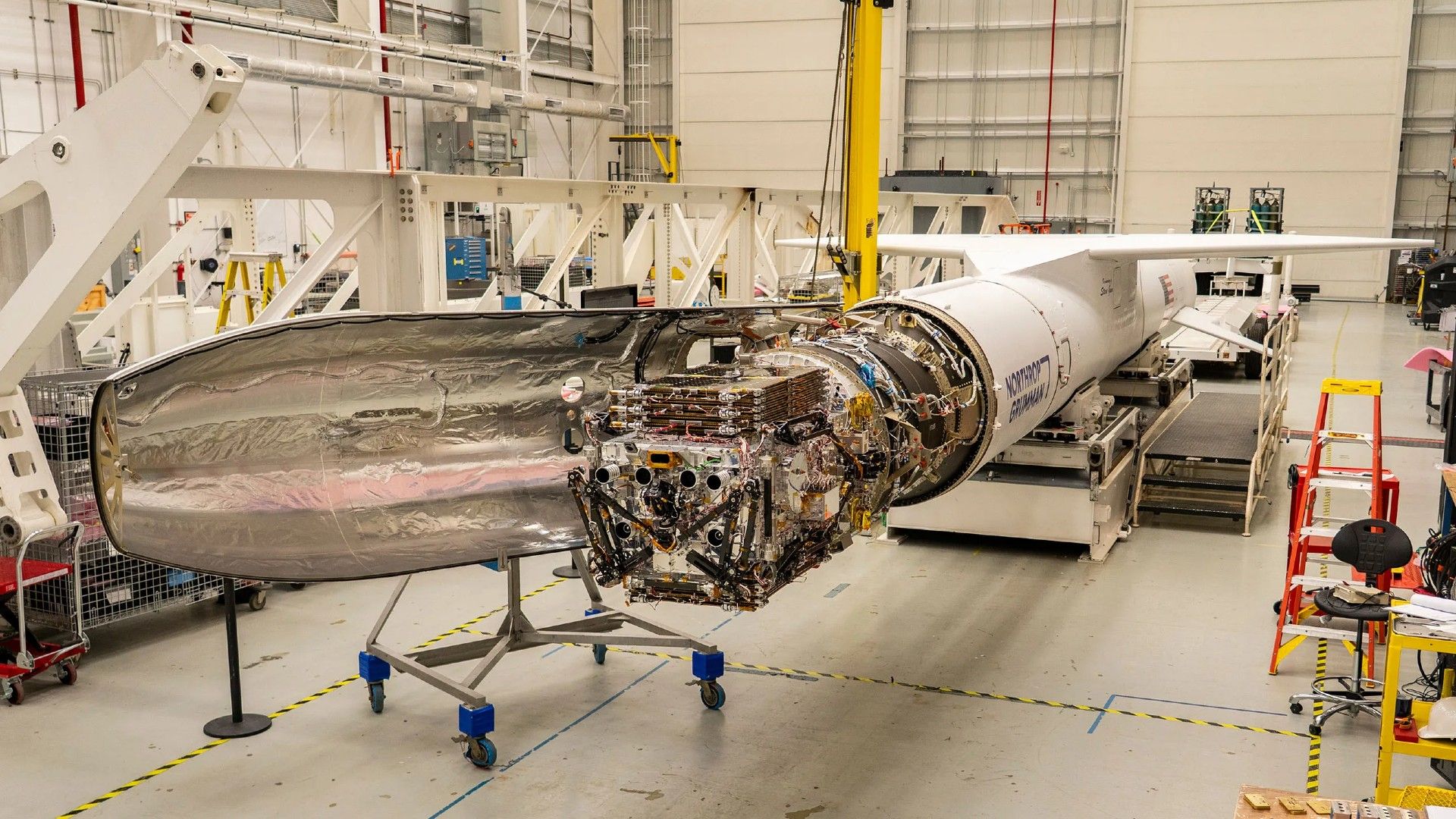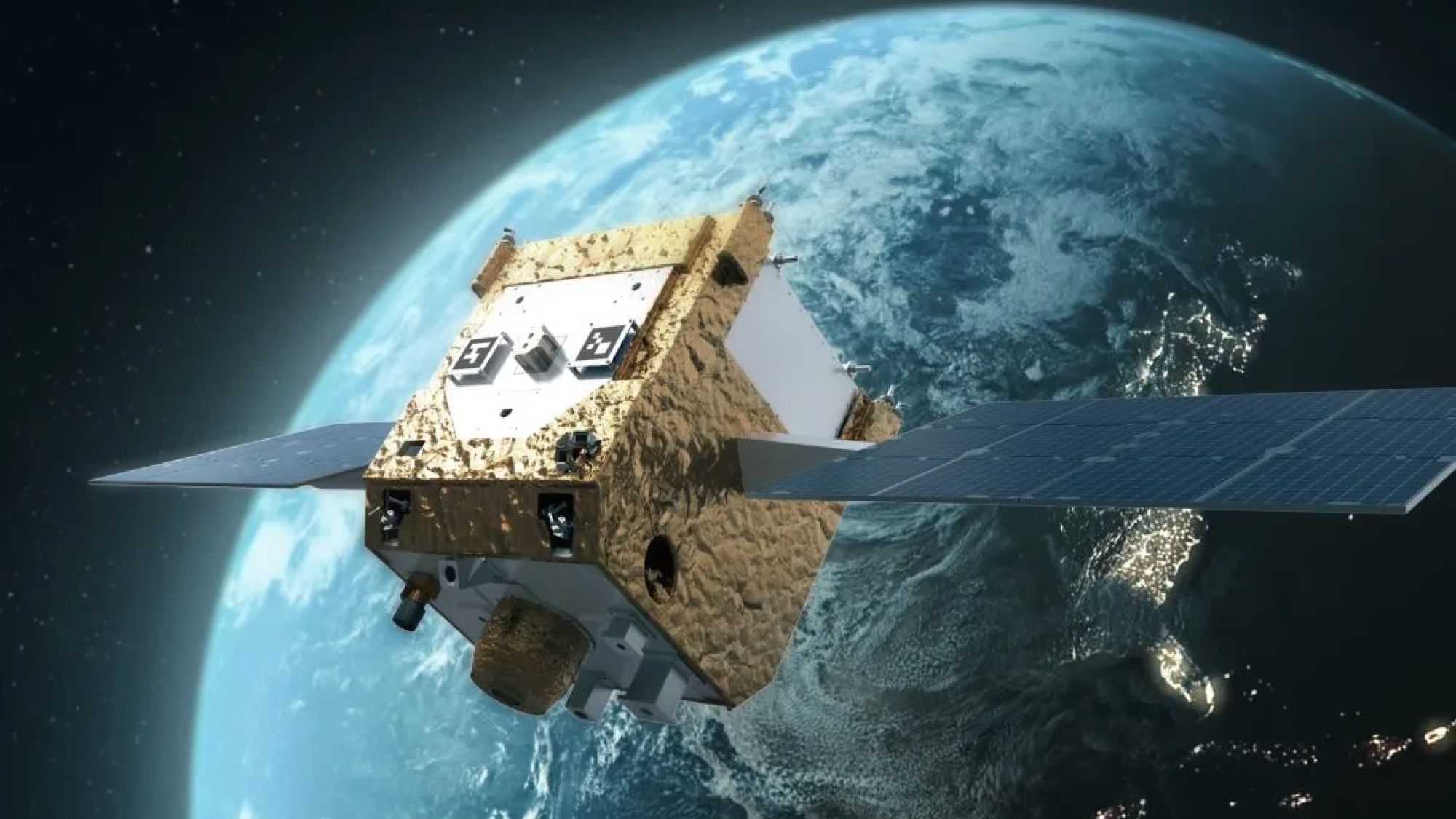
Against the backdrop of the Earth, Firefly Aerospace’s Alpha FLTA003 successfully deployed the Victus Nox satellite into orbit after launching Sept. 14 at 7:28 p.m. PDT from Space Launch Complex 2 West (SLC-2W) at Vandenberg Space Force Base, Calif. (Courtesy photo: Firefly Aerospace)
WASHINGTON ― The Defense Advanced Research Projects Agency (DARPA) is turning to industry for help in identifying technologies and operational concepts to allow the reconstitution of space assets damaged or destroyed by adversaries, or on-orbit accidents.
“The end goal is to develop and deploy effective response mechanisms to rapidly restore critical services to minimum levels or higher, on tactical timelines of hours to weeks, in response to demand surge needs, lost assets resulting from potential adversaries’ ASAT [anti-satellite weapons] engagements, or orbital debris collisions,” the Pentagon’s far-future agency said in a June 12 request for information (RFI).
DARPA’s RFI notes that the Space Force has been working on developing “the ability to rapidly deploy and operate space-based assets in response to immediate, urgent, and often unforeseen tactical needs” ― including through the Tactically Responsive Space program and the Victus series of demonstrations aimed at minimizing the time between a launch order and actual launch.