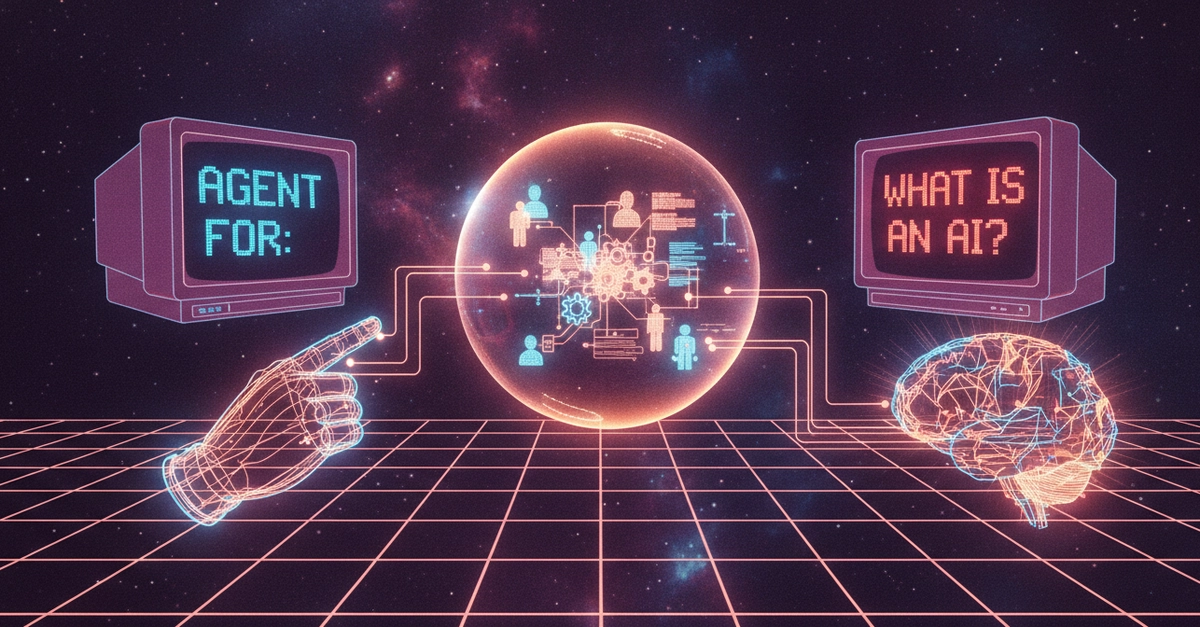
"AI agent" is one of those terms that has earned the right to mean almost anything. Ask a grandmother using a voice assistant, a QA engineer writing test harnesses, and a software architect designing orchestration layers, you'll get three definitions that barely overlap. That's not a problem with the term. That's a feature of how the technology actually lands in the world.
Your relationship to an AI agent is shaped entirely by what you need it to do. And what you need it to do is shaped by where you sit. But what's interesting isn't just that these definitions differ it's how they differ. The gap between a non-technical user and a software architect isn't just vocabulary. It's a completely different mental model of what an agent is, what it owes you, and what goes wrong when it doesn't deliver. That gap has consequences: products get built for the wrong user, expectations get set in the boardroom that engineering can't meet, and users get handed tools they were never taught to distrust.
So let's walk the ladder, not purely by technical knowledge, but by proximity to the system itself: from the person who just wants the thing to work, all the way up to the person who has to decide whether to build it in the first place.