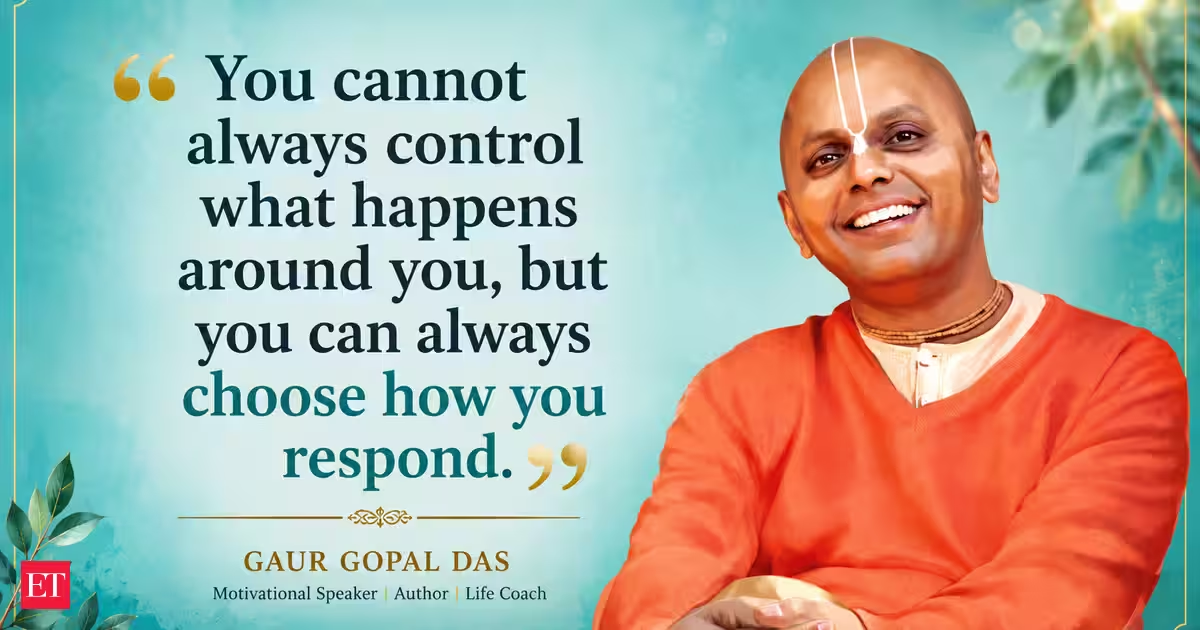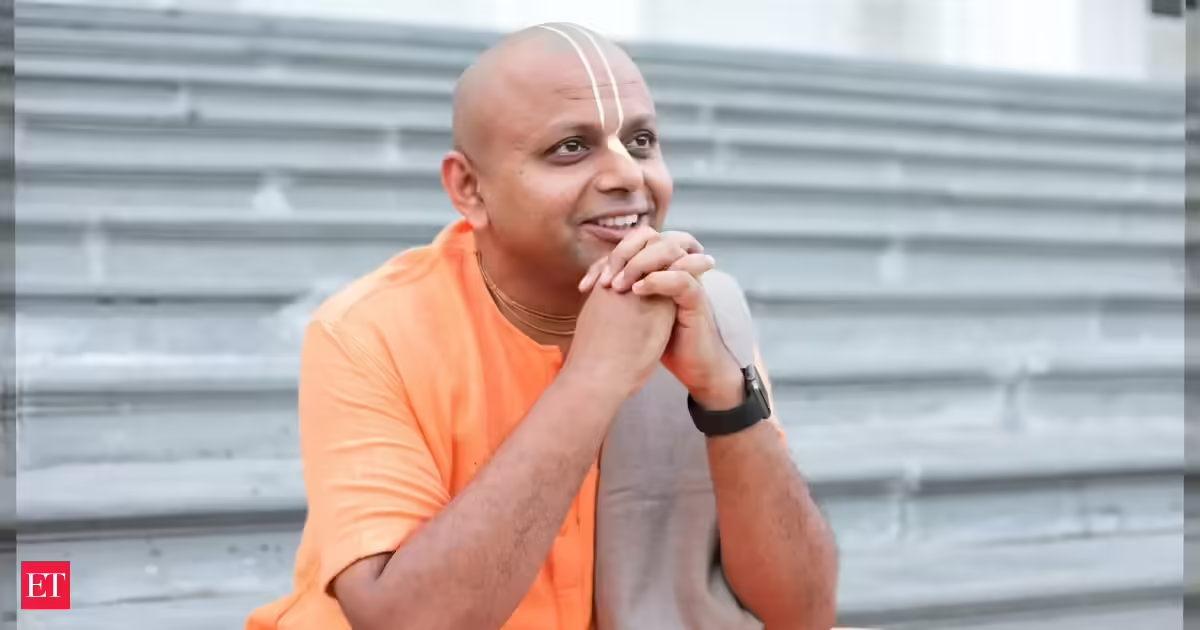
Life lesson of the day by wellness advisor Gaur Gopal Das brings a simple yet powerful reminder that is quietly reshaping how people think about failure, guilt, and emotional recovery. In a world where mistakes are often treated as setbacks or reasons for self-criticism, this teaching shifts the entire perspective. Instead of asking, “Why did I fail?” , it gently redirects attention toward a deeper question: “What did this experience come to teach me?”This idea has become especially relevant in today’s fast-paced environment, where pressure to perform leaves little space for reflection. People often rush from one task to another without processing what went wrong or why it happened. As a result, emotional baggage builds up silently. The wisdom shared by Gaur Gopal Das encourages a pause—not to judge the past, but to understand it. That small shift changes how the mind processes regret and turns it into awareness.Life lesson of the day: How reflection turns mistakes into learning opportunitiesOne of the most important aspects of this life lesson is its focus on reflection instead of punishment. Many people instinctively react to mistakes with frustration or self-blame. However, this reaction often blocks growth. When emotions settle and reflection begins, a different kind of understanding emerges—one that is constructive rather than destructive.This philosophy aligns closely with modern psychology, which suggests that self-awareness is a key driver of behavioral change. When individuals slow down and analyze their actions without judgment, they begin to notice patterns. These patterns often reveal why certain decisions are repeated, why certain situations feel familiar, and what internal beliefs influence those choices.History also offers real-world examples of this mindset. Thomas Edison, for instance, did not treat his unsuccessful experiments as failures in a personal sense. Instead, he treated them as information. Each attempt brought him closer to refinement. That perspective eventually led to breakthroughs that changed the world. The lesson here is simple but powerful: progress is built on observation, not self-criticism.Life lesson of the day by wellness advisor Gaur Gopal Das fits naturally into this idea. It reminds individuals that mistakes are not endpoints but feedback loops. When understood properly, they become stepping stones rather than emotional burdens.Why self-compassion is stronger than self-criticismA major reason this teaching resonates with so many people is because it replaces harsh self-judgment with self-compassion. In everyday life, people are often their own harshest critics. A small mistake at work, a misunderstanding in a relationship, or a poor decision can quickly turn into long-lasting guilt.But constant self-criticism does not lead to improvement. In fact, it often creates fear of failure, which prevents people from trying again. Self-compassion, on the other hand, allows space for learning without emotional damage. It creates a safe mental environment where growth becomes possible.When individuals reflect with kindness instead of judgment, they begin to separate identity from action. A mistake becomes something they did, not something they are. This distinction is crucial. It prevents emotional labeling and helps preserve confidence even after setbacks.Life lesson of the day by wellness advisor Gaur Gopal Das encourages exactly this mindset. It does not ask people to ignore mistakes but to reinterpret them. Instead of saying, “I am not good enough,” the internal response becomes, “What can I learn from this moment?” That small change in language can completely transform emotional resilience over time.The role of awareness in personal growth and decision-makingAwareness is at the heart of this wisdom. Without awareness, mistakes tend to repeat themselves. With awareness, they become lessons that guide better decisions in the future. This is why reflection is considered such an important part of emotional intelligence.In professional life, this approach is especially valuable. Leaders, entrepreneurs, and creators often make decisions under pressure. Not every decision leads to success. However, those who pause to analyze outcomes tend to grow faster than those who simply move on without reflection.In relationships too, awareness plays a similar role. Misunderstandings often arise from communication gaps or emotional reactions. When people take time to understand their own responses, they become better at understanding others as well. This reduces conflict and builds stronger connections.Life lesson of the day by wellness advisor Gaur Gopal Das reinforces this idea by encouraging mindful observation of one’s own behavior. Instead of reacting repeatedly to similar situations, individuals begin responding with greater clarity. Over time, this builds emotional maturity and stability.
Life lesson of the day by wellness advisor Gaur Gopal Das: “Reflect on a mistake you made recently … not to punish yourself for it, but to understand what it came to teach you” — how can this mindset transform emotional resilience, mindfulness, self-growth, and daily decision-making in modern stressful life?
Life lesson of the day: Gaur Gopal Das lesson on mindful reflection delivers a powerful insight on emotional intelligence, self-growth, and modern stress management. It teaches that mistakes are not failures but learning signals for personal development. This wisdom supports mental clarity, resilience building, and positive mindset shift.
722 words~3 min read