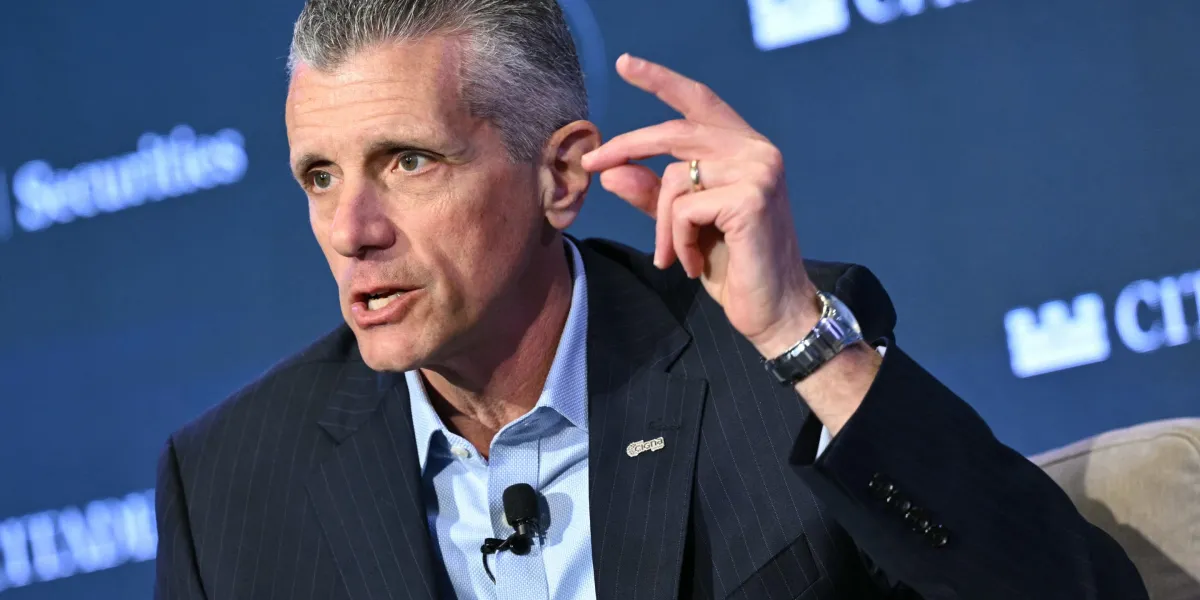
When Steve Nelson was hired to lead Aetna in November 2024, he had his work cut out for him. The nation’s third largest commercial health insurance provider had brought down the total earnings of parent company CVS Health as care costs skyrocketed. In its mid-2024 earnings report, year-over-year operating income for the health benefits portion of the business was down 39.1%. Nelson, as executive vice president of CVS Health and President of Aetna, was part of a slate of new leadership brought in by then-new CEO David Joyner for a comprehensive turnaround.A year and a half later, the story has changed significantly. In its most recent earnings report last month, CVS’s profits hit $2.9 billion, with a 52.6% year-over-year increase in adjusted operating income in Aetna’s health care benefits segment.This edition of the Forbes CEO newsletter will focus on how Nelson has been able to bring about this turnaround at Aetna, his strategies for success and outlook for the future.Until next time.This is the published version of Forbes’ CEO newsletter, which offers the latest news for today’s and tomorrow’s business leaders and decision makers. Click here to get it delivered to your inbox every week.Redefining Purpose + CultureNelson’s first changes at Aetna were less about healthcare or insurance, and had more to do with the business itself. When he started, Nelson said he noticed deep credibility and trust issues from all sides: shareholders, government and private clients, and employees themselves. Skyrocketing costs, leadership changes and a precarious market had made many people wary of the company. Even people who worked for Aetna, Nelson said, seemed to be wondering if what they were doing actually mattered.Steve Nelson, executive vice president of CVS Health and president of Aetna.CVS HealthSo he doubled down on the reason Aetna exists and its purpose: The company started more than 200 years ago as a fire insurance provider named after Sicily’s active volcano Mt. Etna. “Fires and calamities and things will come, but the mountain stays strong,” Nelson said. “That’s the legacy that we’re leaning into: Resilience.”He also set clear priorities for the company, rebuilding a culture that had been lost through difficult times and leadership changes. He brought together a team of advocates for a transformational culture, and they helped open the lines of communication between leaders and employees. Nelson said the strong communication fostered an environment of “relentless execution,” rejuvenating the company from within.Another opportunity that Nelson noticed—along with Joyner and other new leaders at CVS Health—the entire company wasn’t always operating as a complete unit. Nelson said he’s been leaning into the enterprise aspect of CVS Health—which includes the pharmacy, pharmacy benefit manager Caremark, and primary care provider network for Medicare patients Oak Street Health. Nelson said this also drove a unified company-wide culture and a meaningful increase in worker engagement.“In the last 18 months or so, I’ve seen more progress in our company—and in healthcare, actually—than I’ve seen in the last 10 years. So I’m incredibly encouraged and optimistic.”Michael Cherny, a senior managing director for Leerink partners who covers CVS Health, said the enterprise strategy with Joyner and his new leadership team—focused “on maximizing individual lines of business, but also on how each individual line of business can be made better by other parts of the business working closely together”—has been well executed.Making A DifferenceSteve Nelson speaks to a group.CVS HealthIt’s not easy to make big changes to processes in an industry as heavily regulated and consistently depended upon as health insurance. But Nelson said his experience and knowledge of the industry showed him exactly where he could lean into the system to make things better. Having worked in both large healthcare systems and insurance providers, Nelson said he understands the perspective where both sides have, and can bridge the gaps between them.Nelson also knows patience is important, and a deliberative approach wins out. Coming into Aetna, it was apparent change had to happen—but lighting a fire under the company wasn’t going to do it. They’re lessons he’s gleaned both from years in the healthcare industry, but also years as an endurance athlete.“I’ve learned that sometimes you do have to go a little slow to go fast,” he said. “So setting the context, making sure you have the right team. Let’s be thoughtful about the priorities and let’s talk about it until I am so sick of hearing myself talk about them. Then I might be breaking through.” Nelson recognized that leading a prominent component of a publicly traded company, there is definitely more pressure to make change quickly. “So you’ve got to put some wins on the boards, but you’ve got to do it in a thoughtful way,” he said.He pointed out most people who get involved with the healthcare industry, himself included, are there to make a difference for people. Aetna is in a space to provide that through the way it connects its people to caregivers and customers, he said. Aetna is doing more to advocate for customers, proactively working to clear up paperwork-based coverage denials. But they’re also optimizing relationships with providers, working to create better data-sharing experiences for both Aetna and its patients, as well as partnering to improve preventive care.Aetna also brought nurses to hospitals and care facilities to help patients navigate the care they need after leaving, Nelson said. These nurses work with patients on things like diet, follow-up plans, help at home, transportation—some of the aspects of care that can make a big difference to the patient’s quality of life, as well as reduce expensive medical interventions needed down the line.“It’s just, again, navigation advocacy and a better partnership,” Nelson said. “That’s some of the nitty gritty of what happens when you can transform a business.”Tough ChoicesBrad Horrigan/Hartford Courant/Tribune News Service via Getty ImagesAetna’s turnaround has demanded more than changing culture and care strategies—there were hard, company-defining decisions, too. This year, Aetna exited the individual health care exchange business through the Affordable Care Act, which insured about 1 million customers in 17 states. Earlier this year, the company also paid $117.7 million to settle federal government charges of defrauding Medicare through making false claims.Nelson said these decisions are complicated and he’s lost sleep over trying to figure out the right thing to do. But having a clear set of priorities at the center of everything makes it easier to make the best choices. Aetna has done well with employer-sponsored, Medicare and Medicaid plans, Nelson said, so stepping back from the Affordable Care Act helped serve those priorities.But Nelson said decisions aren’t made unilaterally, either. Under his leadership, Nelson said he listens to many voices and has candid and honest conversations with many stakeholders. He makes sure different viewpoints are on the table—even if he walks into a meeting with his mind mostly made up. He said there are many reasons to operate this way. He works with smart people who have unique perspectives, but he also wants to reinforce a company culture of working together. And, given the stringent government regulations the health insurance industry operates under, Aetna has to ensure that everything complies with complex state and federal laws.“When you’re always chasing some sort of frustrating thing that isn’t serving those priorities, the culture takes a hit, too,” Nelson said. “People are smart. They’re like, ‘Why are they making me do this? It doesn’t make sense. He talks about priorities, but this doesn’t feel aligned.’“I appreciate our teams holding me accountable.”No Substitute For ExperienceSteve Nelson speaks on a panel at the Semafor World Economy conference in April.ANNABELLE GORDONThe health insurance industry has been facing challenging times, but Nelson had the deep experience to tackle its problems. He’s been working in healthcare and insurance for more than 30 years, spending 15 years at insurance leader UnitedHealthcare—the last two as its CEO. Right before taking the job at Aetna, he was CEO of primary care company ChenMed.Leerink Partners’ Cherny said Nelson’s experience was invaluable to Aetna. “Any good company may have a strategy that just needs a bit of pivoting, a bit of course correction, and bringing in individuals from the outside brings that different perspective that didn’t exist in the past,” Cherny said. “And Steve, having had experience with leading players in the market, I think certainly provided that.”Nelson’s Leadership AdviceWhen I get up at a town hall and I talk about our purpose and our priorities, people know this isn’t something I’m mailing in. I really love this, I want to make the world a better place, and if you’re interested in joining me, we’re going to go on a very cool adventure, and it’s going to be amazing. Being able to clearly articulate the why and your priorities is super important. The team matters. Of the 13 senior executives at Aetna, 12 of them are either new to Aetna or new to a role. We have great diversity of skills, experiences, gender and backgrounds. We spend a lot of time making sure that we can have the honest conversations and hold each other accountable. I go out of my way to make sure they know that I have their back, they have my back, and I’m listening. It is very challenging to get an organization to the new destination with the exact same team that got you to that spot. It’s helpful for people to come in to be fired up, with new perspective.It is an endurance sport. The typical turnaround things are fixed pricing, cut your costs. Yes, of course. But lay some foundation, make sure people understand why you’re doing what you’re doing. And if you do, they will actually help you get there way faster in the long run. If you don’t get something done pretty quickly, you’re not going to be around long enough to transform the organization, but patience and deliberateness is what’s really important. Make sure that you’ve had a talk with yourself about why you’re doing this, because people can sniff that out pretty quickly.Comings + GoingsFlooring manufacturer Mohawk Industries promoted Paul F. De Cock to its chief executive officer role, effective September 30. De Cock joined the firm in 2005 and currently works at the company as its president and chief operating officer. He will succeed Jeffrey S. Lorberbaum, who will remain with the firm as chairman.Food service and hospitality firm Compass Group Canada promoted Gaétan de L’Hermite to chief executive officer of Compass Group Canada & ESS North America. De L’Hermite currently works for Compass Group Asia Pacific as CEO, and he will succeed Saajid Khan, who is moving to another role within the company.Private equity firm Compass Diversified appointed Zach Sawtelle as its next chief executive officer, effective December 31. Sawtelle steps into the role from Compass Group Management LLC where he was partner and chief operating officer, and he will succeed Elias Sabo, who is retiring.Strategies + AdviceCEOs like to have all of the answers, but when it comes to new and transformative technology like generative AI, they often don’t. To successfully change the way your company operates—and keep employees and customers on board—CEOs need to have honest conversations with themselves and leadership teams about what it all will mean. Here are seven steps to build an AI leadership agenda.Departing Apple CEO Tim Cook led his last WWDC conference last week, and his presence and storytelling skills on the main stage again captivated audiences and viewers. Cook followed in legendary Apple cofounder Steve Jobs’ storytelling footsteps by continually articulating a noble purpose for the company: enriching lives.QuizLegendary airline CEO Ed Colodny turned 100 on June 7. Which former major airline did he lead?A. Eastern AirlinesB. TWAC. Continental AirlinesD. US AirwaysSee if you got the answer right here.
How Aetna’s Steve Nelson Pulled Off A Turnaround
This edition of the Forbes CEO newsletter focuses on the strategy, vision and tough decisions to rejuvenate the CVS Health-owned insurance company’s business.
1,945 words~9 min read