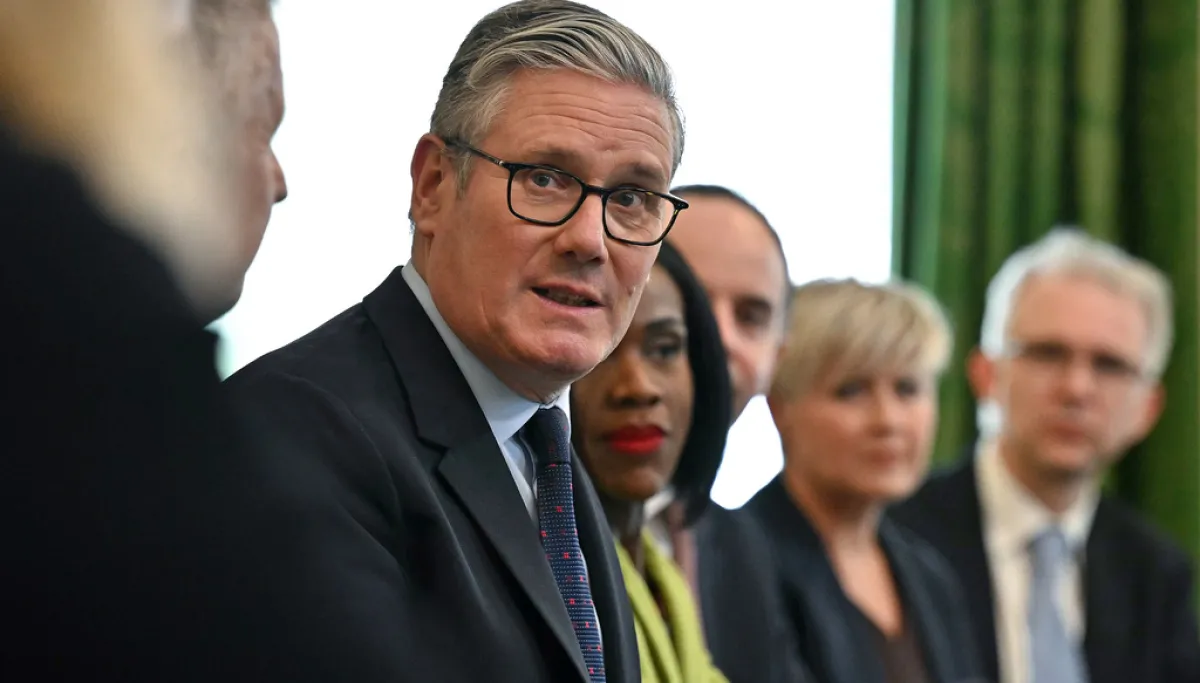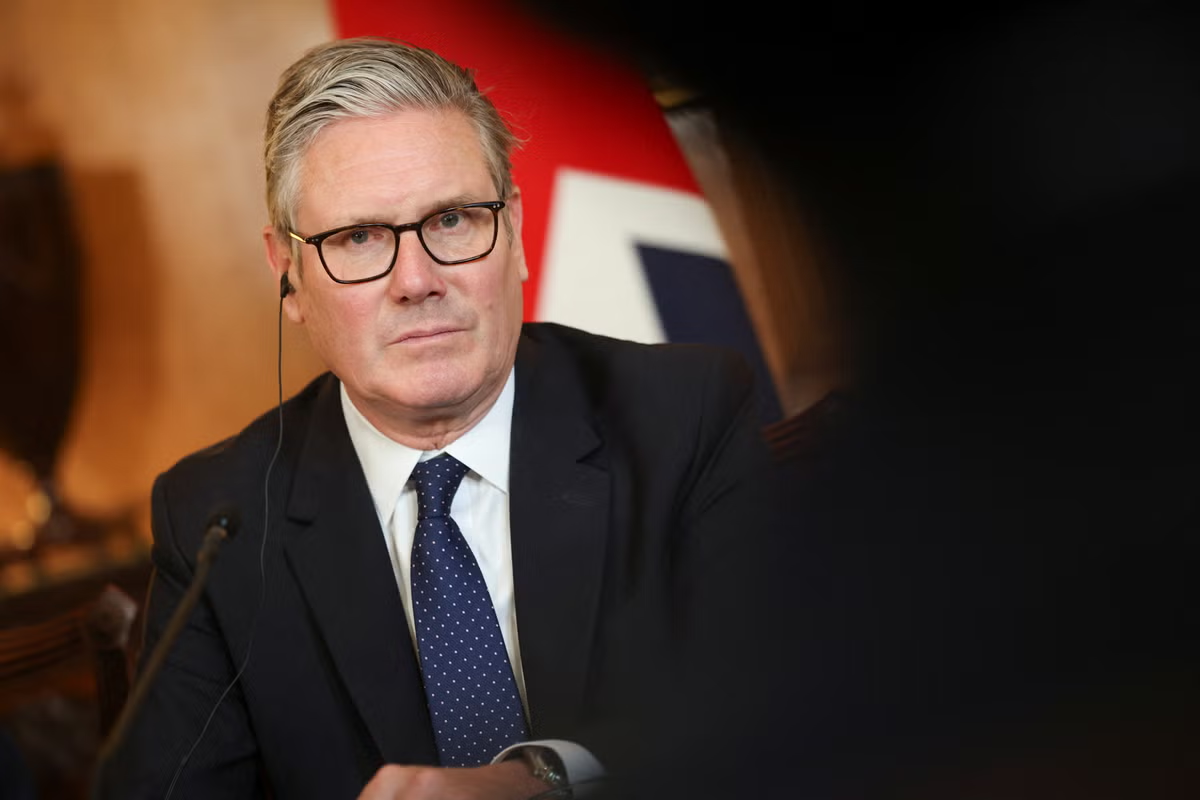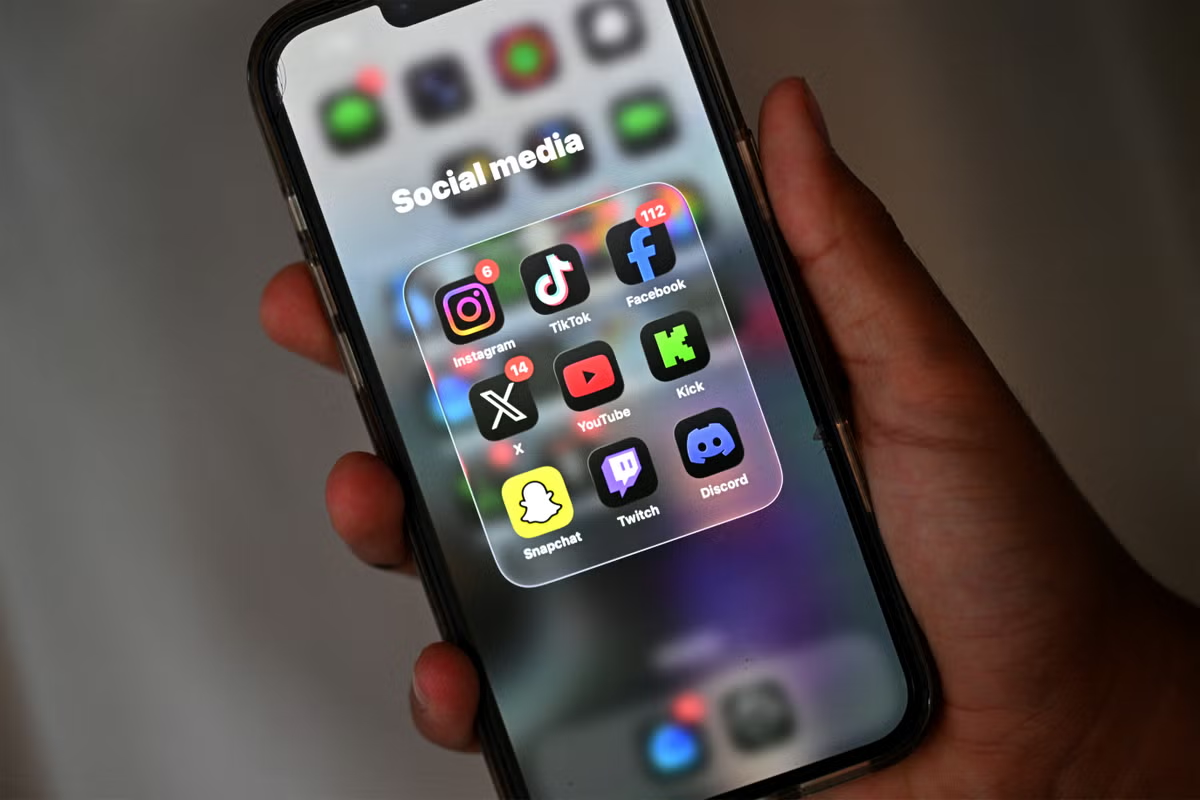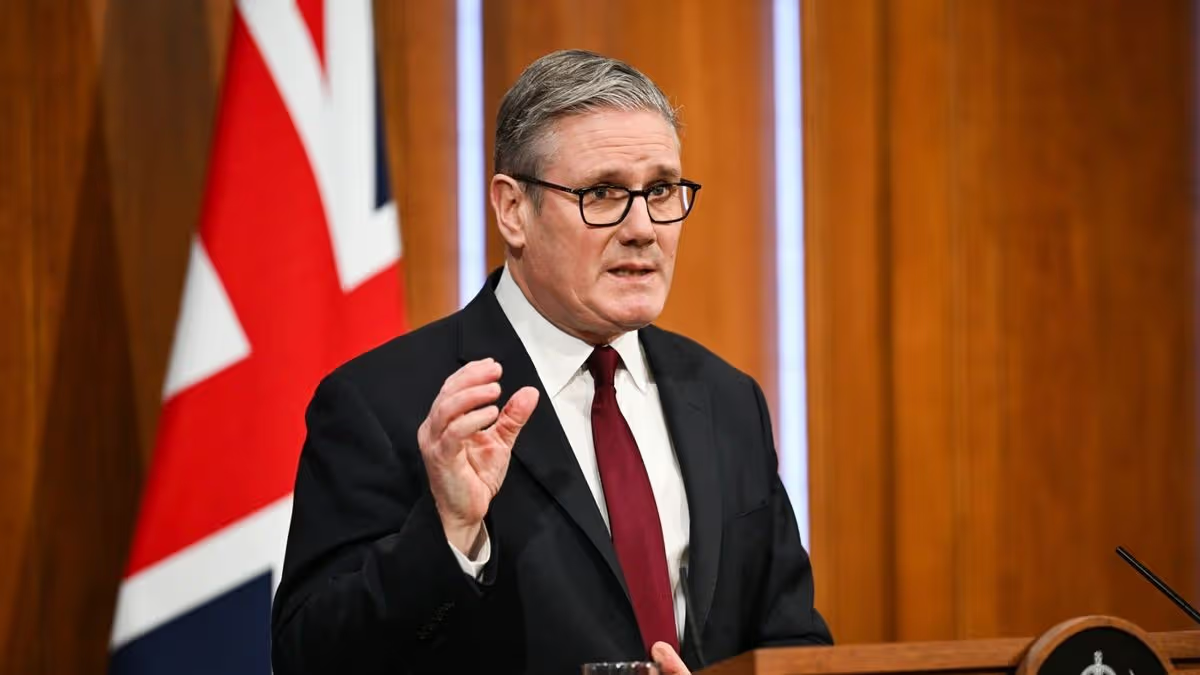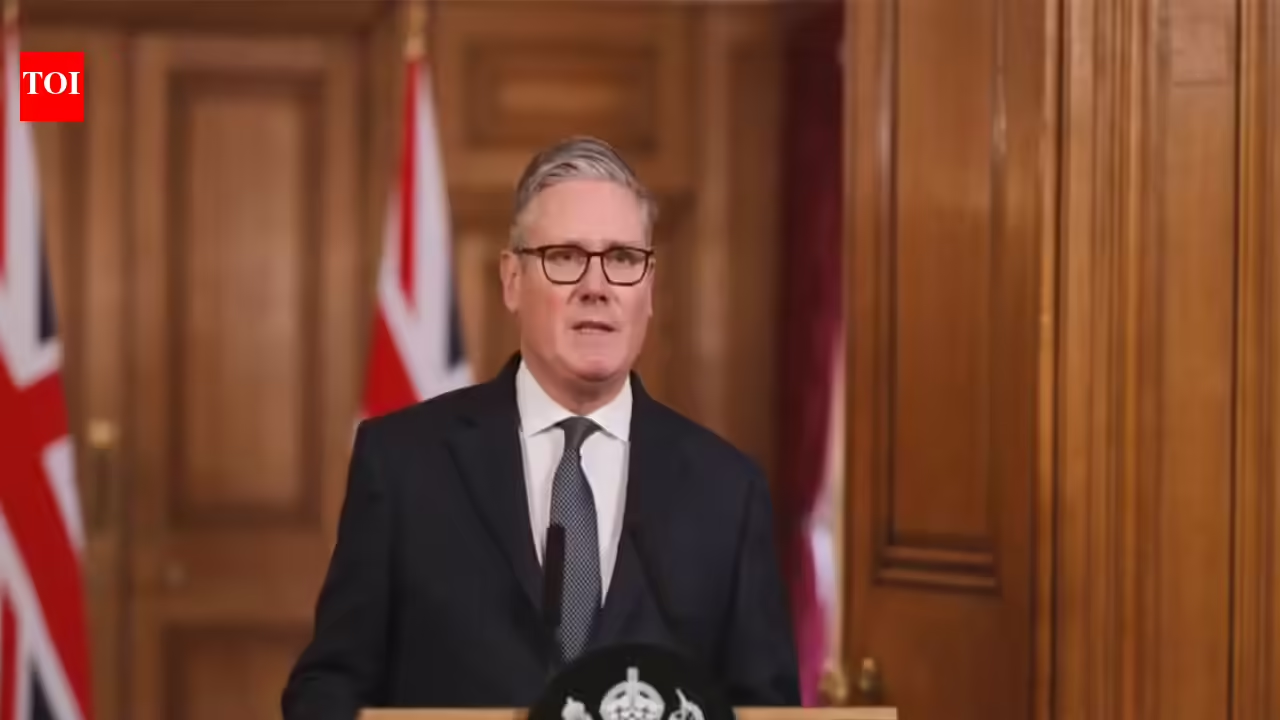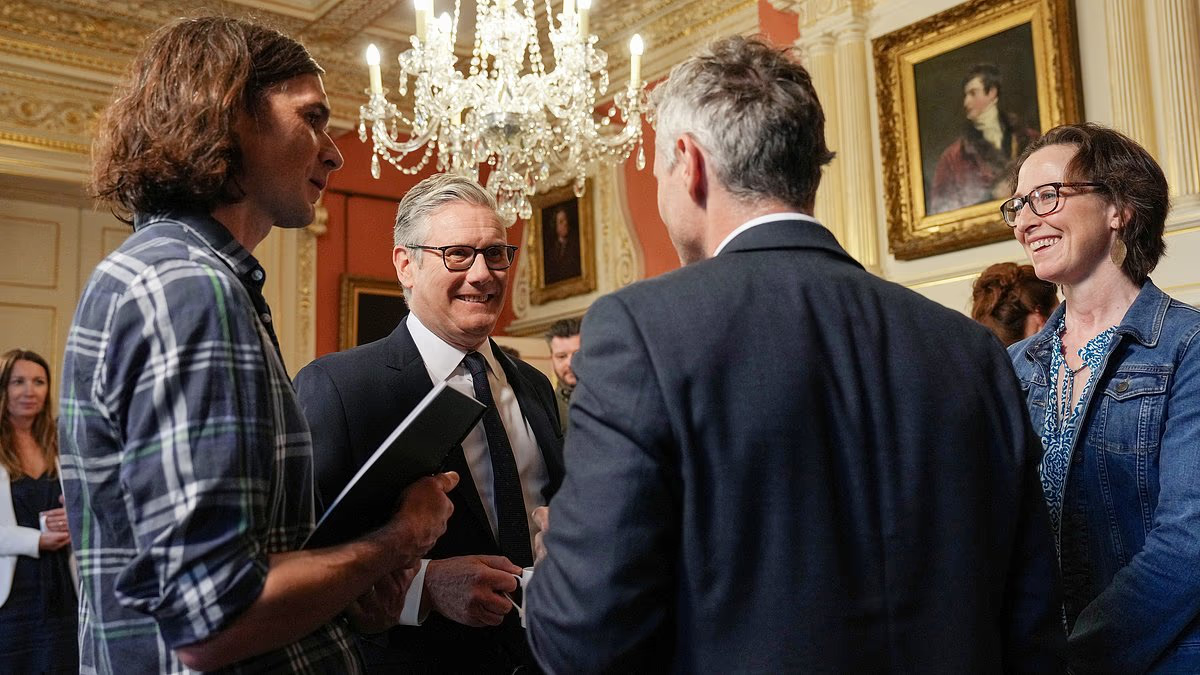
As Sir Keir Starmer today confirmed children under 16 will be banned from accessing social media, many people were left wondering how it will work and be enforced. The measures have been described as an 'Australia plus' package as Britain follows Australia's example in raising the minimum age to 16 for sites including TikTok, Instagram, Threads, Facebook, X/Twitter, YouTube, Snapchat and Reddit.But the ban will go further than Australia's by including romantic or sexual AI chatbots - and children could also be blocked from chatting to strangers on gaming platforms.Sir Keir said the government had 'learned from the Australian model' – but it comes after young people in that country claimed the ban was not working because defiant children are still able to get around it and some have not been kicked off their apps. Speaking at Downing Street, Sir Keir said it was clear to him that 'a full ban is the right choice' following a Government consultation on various possible measures.'Every parent can see it with their own eyes,' he added. 'Social media is making children unhappy. It's making it easier for bullies to harass and abuse them.'But some critics have claimed the ban is going too far - and improved policing of the existing system would be better, while others suggested it would be unenforceable 'given the mass adoption of VPNs' and will give parents a 'false sense of safety'.Campaigners are also concerned that social media platforms 'will have no incentive to implement robust protections' and will continue to be used by children. Sir Keir Starmer speaks about the ban during a press conference at Downing Street today What has happened?Sir Keir Starmer said today that children under age 16 will be banned from social media.The Government will also take action on gaming and live streaming platforms so strangers will not be able to contact children. The restrictions will be required to be switched on by default for children up to 17.Ministers are also looking at potential overnight curfews and breaks in infinite scrolling for under-18s.Which social media sites will be banned?The ban is set to include all the main social platforms like Snapchat, TikTok, YouTube, Instagram, Facebook and X, with separate restrictions on online products such as gaming apps.The government does not intend for messaging services such as WhatsApp and Signal to be included in the social media ban.Why is the social media ban being brought in?The Prime Minister warned social media was having an impact on children's happiness and mental health.Sir Keir said he would not compromise on the 'safety and happiness of our children'.The ban follows a public consultation on the issue, which closed on May 26 and received about 116,000 responses, making it the second-largest in history.More than 83 per cent of parents who responded said social media risks outweigh the benefits for children, with 91 per cent backing a minimum age of 16 before platforms can offer their services to children.How will the social media ban be enforced?Sir Keir has said he is confident the ban can be effective but acknowledged some children would find their way around it.The government says firms must take 'reasonable steps' to keep children off their platforms, using several age assurance technologies.These could include government IDs, face or voice recognition, or 'age inference', which analyses online behaviour to estimate a person's age.Sir Keir said: 'Will it mean that no child ever looks at social media again? No. But look, this might shock you, but it doesn't shock parents of teenagers; they get around other laws too.'But we don't say, 'Look, a teenager managed to get a drink somehow, so let's not bother banning alcohol sales to children.' We don't do that, do we? That will be utterly ridiculous. And so I just don't accept that argument.' Sir Keir Starmer speaks today with families involved in the consultation at Downing StreetWhy do some critics think it's a bad idea?Some groups have argued that a ban may not be the appropriate instrument to tackle the widespread social media harms.The Molly Rose Foundation, set up in memory of 14-year-old Molly Russell, who took her own life in 2017 after viewing harmful content online, said a social media ban 'will fail to tackle fundamental product safety risk issues and leaves parents with a false sense of safety'.Chief executive Andy Burrows said: 'A majority of children will continue to use high-risk sites that will have no incentive to implement robust protections.'This is not what online safety experts believe will work and is necessary. Keir Starmer has chosen to abdicate responsibility for tackling harmful algorithms and his legacy will be setting back children's safety by years.'The co-chairwoman of the All-Party Parliamentary Group for digital creators, Labour's Feryal Clark, argued young people should not lose access to good-quality content that helps young people learn and find communities.She said: 'High-quality, creator-led educational video content is a critical public resource and is not the same thing as social media.'For example, many young people use it to revise for GCSEs, to learn a language or a musical instrument. Any legislative intervention must capably address this distinction.'Failing to do so would be dangerously short-sighted and cut off opportunities from young people at exactly the moment they need these things most.'Leanda Barrington-Leach, executive director of the 5Rights Foundation, a non-governmental organisation that campaigns for online safety, said 'a ban or curfew may change who comes through the front door, but it does not change what is waiting for children inside' and that firms must be driven 'to make their products safe for kids'.Reform UK leader Nigel Farage tweeted: 'Whilst the social media ban is well-intentioned, it's unlikely to work given the mass adoption of VPNs.'It will also mean the introduction of Digital ID via the back door. The real answer here is handsets for children with limited features.'How will the ban impact chatbots?So-called AI 'romantic companion' chatbots – designed to simulate sexual relationships or roleplay with users – will have to enforce a minimum age of 18, the Government said.It added that similar intimate functionalities will be restricted for under-18s on AI chatbots more widely. The Government posted this message on social media to announce the ban this morningWhen will the ban come into force?The measure is expected to come into force by early 2027.Sir Keir said the government hopes to pass the regulation before Christmas and bring the social media ban into force in the early part of next year, 'probably about spring time, so we can move at real pace here'.'We took powers earlier this year to make sure we could move at speed,' he said.'I was very conscious that with the Online Safety Act, it took the last government eight years from identifying the beginnings of the problem to actually passing legislation. I was determined that will not happen in this case.'He said legislation already passed gives ministers the powers to act using secondary legislation.What will Donald Trump think?Sir Keir's announcement came shortly before he travelled to the G7 summit in France, where he will be joined by world leaders including US president Donald Trump.There has been resistance from the Trump administration about action against social media sites which are largely based in the US.Sir Keir said he had spoken to Mr Trump and would discuss the issue with him again but stressed that many countries around the world were 'grappling' with the issue of children's safety online.How will this compare to the Australia ban?The government plans to use the same model for a social media ban as Australia.It said this would 'capture user-to-user platforms, whose purpose is to enable social interaction and which allow users to post material, alongside algorithms'.Sir Keir added that the government had learned from the Australian model.'I think we'll be better at enforcing it, actually, having learned from the Australian model and having learned from our own experience with the Online Safety Act. So I genuinely think we can enforce it.'Starmer was clear that children breaking the ban will not be punished.'We're not going to start taking action against 13 or 14, 15-year-olds who are trying, as they always will, to get around the rules that adults put in their path,' he said.Some young people in Australia say the ban is not working because children are still able to get around it – and have not been kicked off their apps, according to an investigation by ABC News published on Saturday.What is the political context?The move comes with Sir Keir fighting for his political future ahead of the Makerfield by-election on Thursday which could see Andy Burnham return to Westminster to launch a campaign to replace him as Prime Minister and Labour leader.
Will Starmer's 'Australia plus' social media ban for under 16s work?
As Sir Keir Starmer today confirmed children under 16 will be banned from accessing social media, many people were left wondering how it will work and be enforced.
1,442 words~7 min read