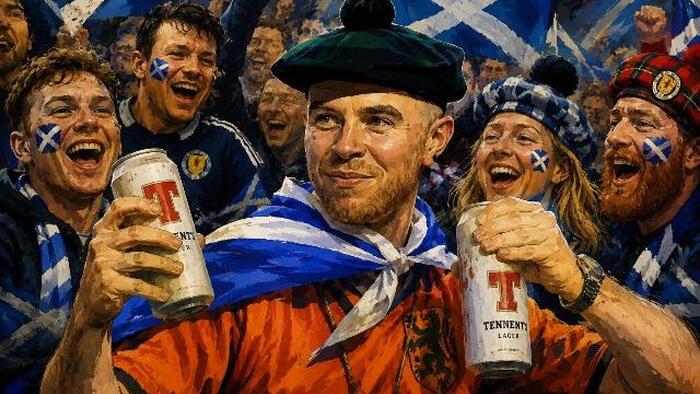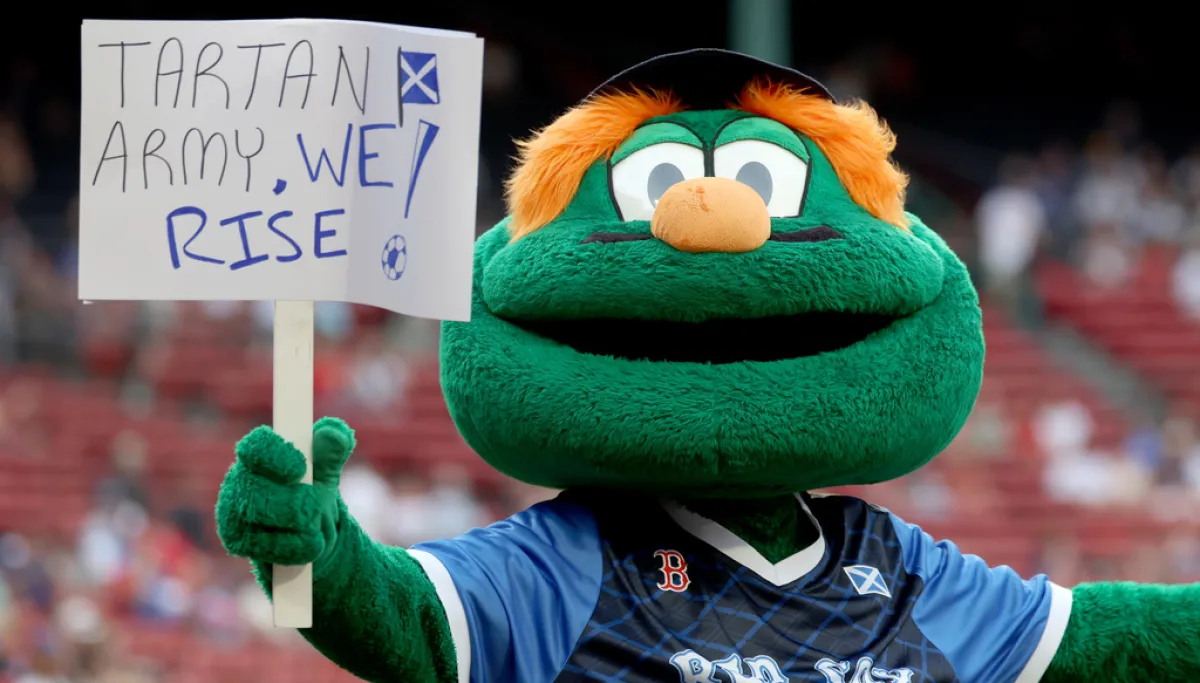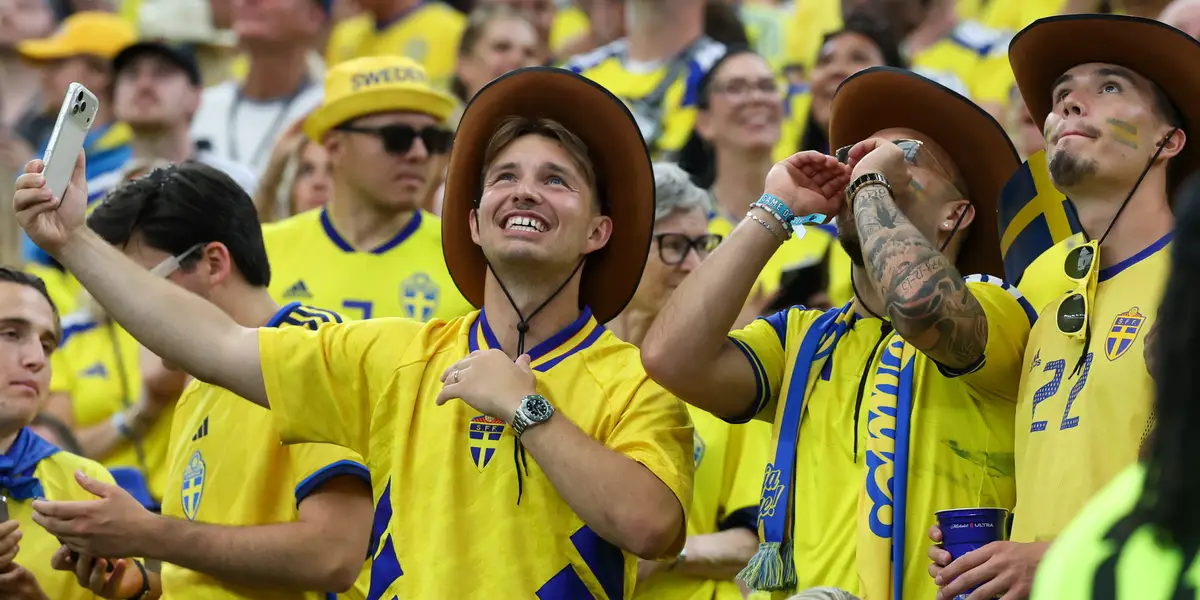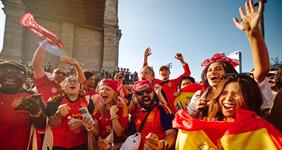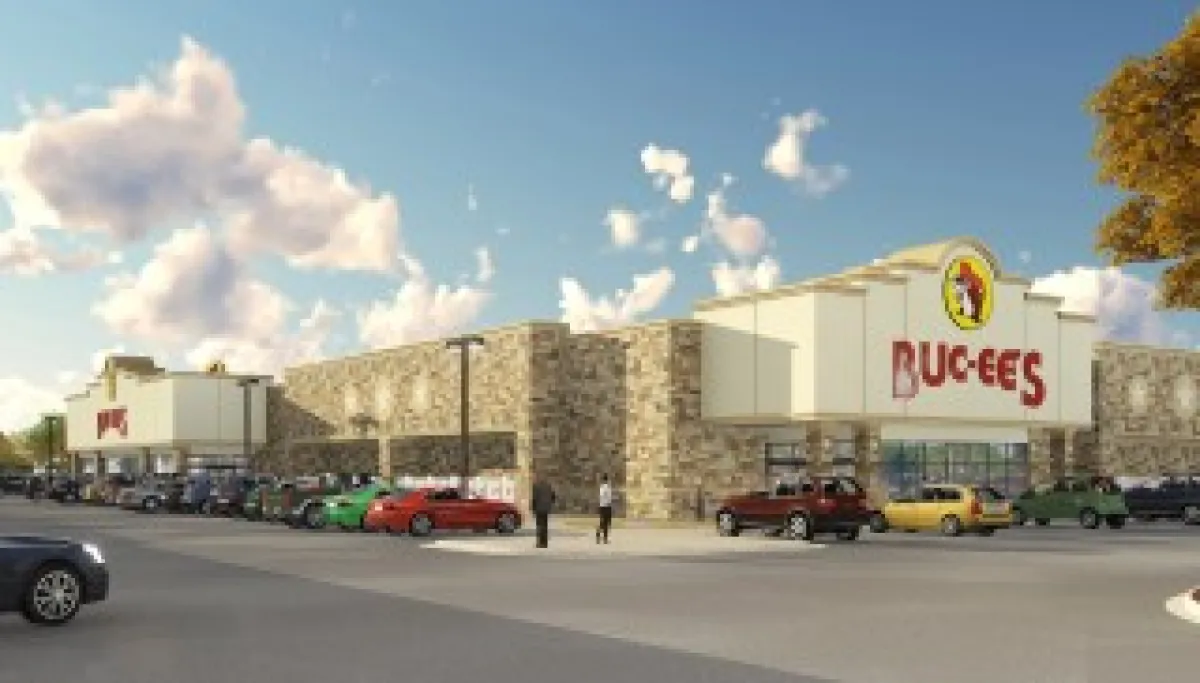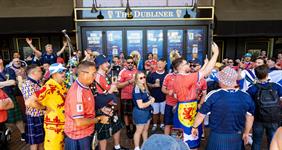
The most effective portrait of America right now is through the eyes of international World Cup fans.It isn’t a shiny new Nike or Adidas spot that is getting all the attention. It belongs to a Norwegian kid ordering his first In-N-Out burger, a Swedish woman in Indiana discovering ranch dressing and a German soccer fan road-tripping through the South who heard one story about a country and arrived to find another.The 2026 FIFA World Cup brought more than 1 million international visitors to the U.S., and many of them found that everyday American life was almost as entertaining as the sport itself. Matches are spread across Atlanta, Boston, Dallas, Houston, Kansas City, Los Angeles, Miami, New York, Philadelphia, Seattle and the Bay Area, which means fans aren’t getting dropped into one polished hub with handlers and a highlight reel waiting for them. They’re landing in the actual country, and they’re filming everything.In Lawrence, Kansas, where Algeria is based for the tournament, the University of Kansas band learned the Algerian national anthem and fans packed Rock Chalk Park for Algeria’s community training session. Lawrence shut down part of Massachusetts Street for a block party with free admission, food vendors, live music and a watch party for the U.S. game.In Boston, after Scotland beat Haiti 1-0, around 5,000 members of the Tartan Army in kilts marched down Lansdowne Street to Fenway Park, bagpipes and all, turning a Red Sox Sunday into something nobody in that city will forget anytime soon.If there is a petition for the Tartan Army to take over Boston annually, I’d sign it in a heartbeat. Nobody asked any of them to do this. What we have is the serendipity that comes with people coming together for joy. We try to create these moments all the time through our campaigns. That’s the thing brands keep getting wrong. Lawrence didn’t produce a campaign — it created conditions. Open doors, free admission and a street shut down for strangers allowed the moment to take care of itself. You cannot manufacture the feeling these fans are generating, but you can decide whether you’re the kind of place that makes it possible. Brands try to orchestrate joy when instead they need to offer the environment for this kind of magic to happen. The international fans’ content is doing well because it’s real. It shows real shock and glee, and the world gets to experience it through them. The world is seeing America through these eyes, and the results are heartwarming and joyful. We are essentially getting the opposite of rage-bait with every post. More of this, please!The Waffle House of it allAnthony Bourdain spent two decades doing the same thing for the U.S. and other countries.He used food as a way to talk about things that had nothing to do with food: West Virginia, Houston’s immigrant neighborhoods and the parts of every city that don’t make it onto the tourist map. He famously adored Waffle House, not just for the food but for what it represented. He would travel, meet people and talk about food, and those conversations always ran deeper. Tom Colicchio said after his death: “Anthony took food TV and turned it into something serious. It was about bringing people together around food and trying to get Americans to see someone living in a Middle Eastern country, that they weren’t terrorists.”What’s happening on social media right now is Bourdain’s method, run in reverse. Instead of an American going abroad to find the humanity in the unfamiliar, the world is coming here, and these fans are doing to us exactly what Bourdain did to every country he walked into. They’re refusing to let the headline be the whole story.They’re not landing in Los Angeles or New York or some overhyped metropolitan hub. They’re landing in the heart of middle America and experiencing Waffle House and Carolina barbecue, the Auburn War Eagle, Boston Harbor boat parties, ranch dressing and bacon-wrapped everything. This is the strange, generous and loud thing that America actually is, as opposed to the version that travels internationally through news cycles.Fans turned their culture shock into viral content, but if you watch the videos, you’ll notice there’s almost no condescension in them. What reads as shock is delight. The Big Gulp is absurd, and they love it. The strangers who stop to help them figure out where they’re going turn out to be exactly as warm as everyone in the comments said they would be.Feeling genuine warmth, care and hospitality is a recurring theme in the videos as the international fans navigate the U.S. and Americans gladly participate in showing them what this country has to offer. The tournament is reminding people from across the world that most humans are decent when you meet them in person. It reminds Americans of that same thing about themselves, and we desperately needed that reminder. Brands and monocultural momentsBut what about the brands?Cultural moments are where brands get to exist organically, and the ones paying attention right now are winning without spending a dime. A jar of Nutella floating through the Artemis II spacecraft during a NASA livestream became one of the most talked-about brand moments of the year. NASA confirmed it wasn’t product placement. The jar was simply part of the crew’s personal provisions. Nutella just happened to be there, recognizable and beloved, at the exact moment the world was watching. The World Cup is doing the same thing on the ground. One of the international fans taking X by storm, @FreddyLA, captioned his first Buc-ee's photo “DUDE LMAO THIS IS A GAS STATION” and the internet lost its mind. Elsa Thora posted about ranch dressing: “Why did no one tell me ranch sauce is like crack? EUROPE WE NEED RANCH ASAP.”Why did no one tell me ranch sauce is like crack? EUROPE WE NEED RANCH ASAP https://t.co/YNtnPJopVZ pic.twitter.com/gN0iSjiKSe— Elsa (@elsathora) June 9, 2026Buc-ee's, Walmart, Raising Cane's, In-N-Out. None of them got this through a World Cup sponsorship, but they are now intrinsically linked to this cultural moment and the internet is watching — and it’s working. When hotel staff drove Freddy and his friends to a stadium in the rain so they wouldn’t have to walk, he had to share it: “I love Americans.” If this were all an ad, it would feel manipulative and fake. It wouldn’t read as what America is really like. We needed to see our country from someone else’s eyes to believe it. There isn’t a slogan that can replace a stadium of people cheering together, or people helping people. I don’t think it’s a coincidence either that this year feels like the most America at large has paid attention to the World Cup. Soccer, while popular, is not “America’s game,” yet we are absolutely paying attention, as seen in the record-breaking U.S. Men's National Team viewership numbers. America is watching.DUDE LMAO THIS IS A GAS STATION������ pic.twitter.com/YYFmWJiCQa— Freddy���� (@FreddyLA7) June 10, 2026For brands that want to be in the conversation, that’s difficult, because you have to understand that the more you force your brand into the conversation, the less you belong. For cultural gravity, you can't manufacture it, but you can be the kind of brand that shows up consistently and distinctively enough that when the moment arrives, you're already in the room.America has spent enormous money trying to manage its international image through tourism boards, soft power campaigns and carefully produced cultural exports, and a stranger from Norway losing his mind over a hamburger in a parking lot is outperforming all of it. These moments work because the people in them had nowhere to be except exactly where they were, eating something they'd never eaten, talking to someone they'd never met, with no campaign brief telling them how to feel about it.Humanity at its most believable is humanity when it’s unscripted. The brief is not having one. Famous people create attention, but moments like these create connection. That distinction is one the industry keeps failing to make.If this World Cup coverage teaches you anything, it's that humanity is at its best when it is messy, joyous and ready for adventure. The best marketing has always known that, but we just keep forgetting it.Christina Garnett is a fractional chief customer officer, adviser and author of Transforming Customer-Brand Relationships. Her expertise ranges from Fortune 500 companies to startups, covering sectors from agencies to small businesses.
The World Cup’s American rebrand: Why the best marketing isn’t marketing
International soccer fans are turning raw culture shock into viral joy, proving that the best branding cannot be manufactured.
1,399 words~6 min read