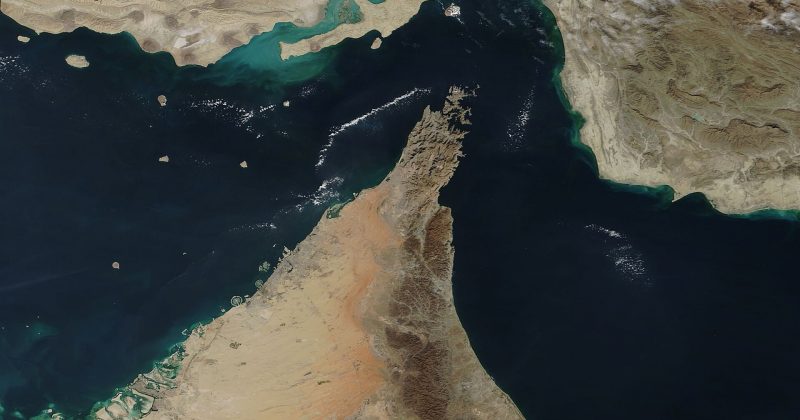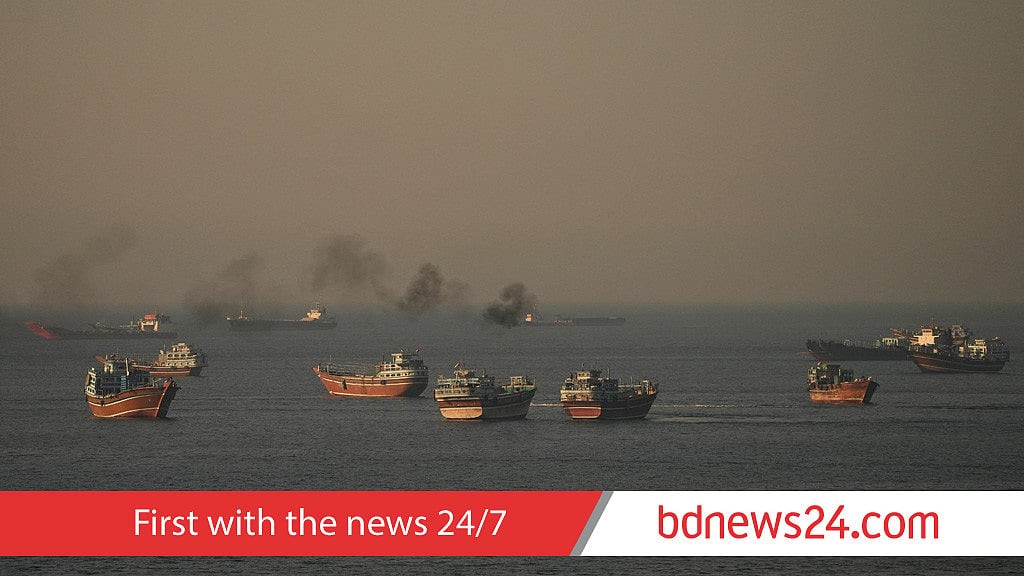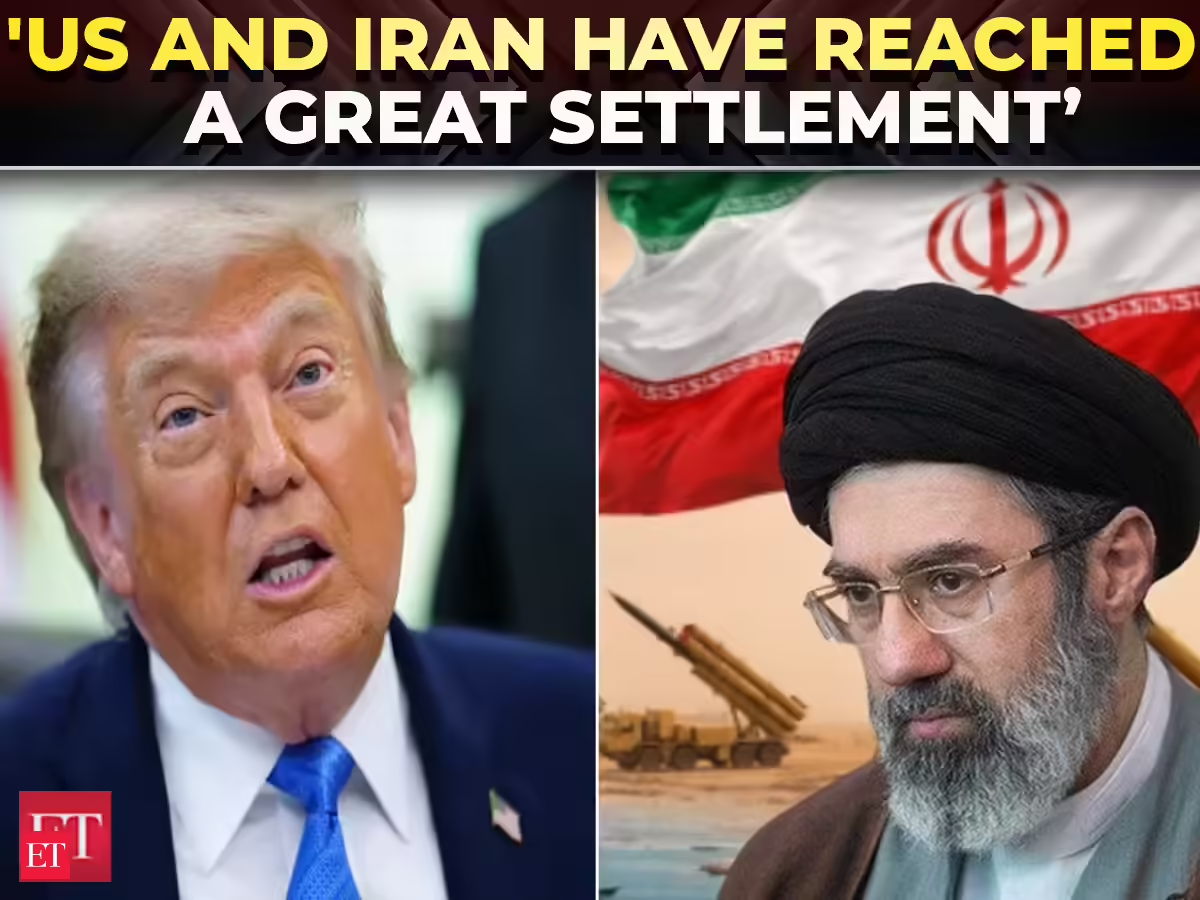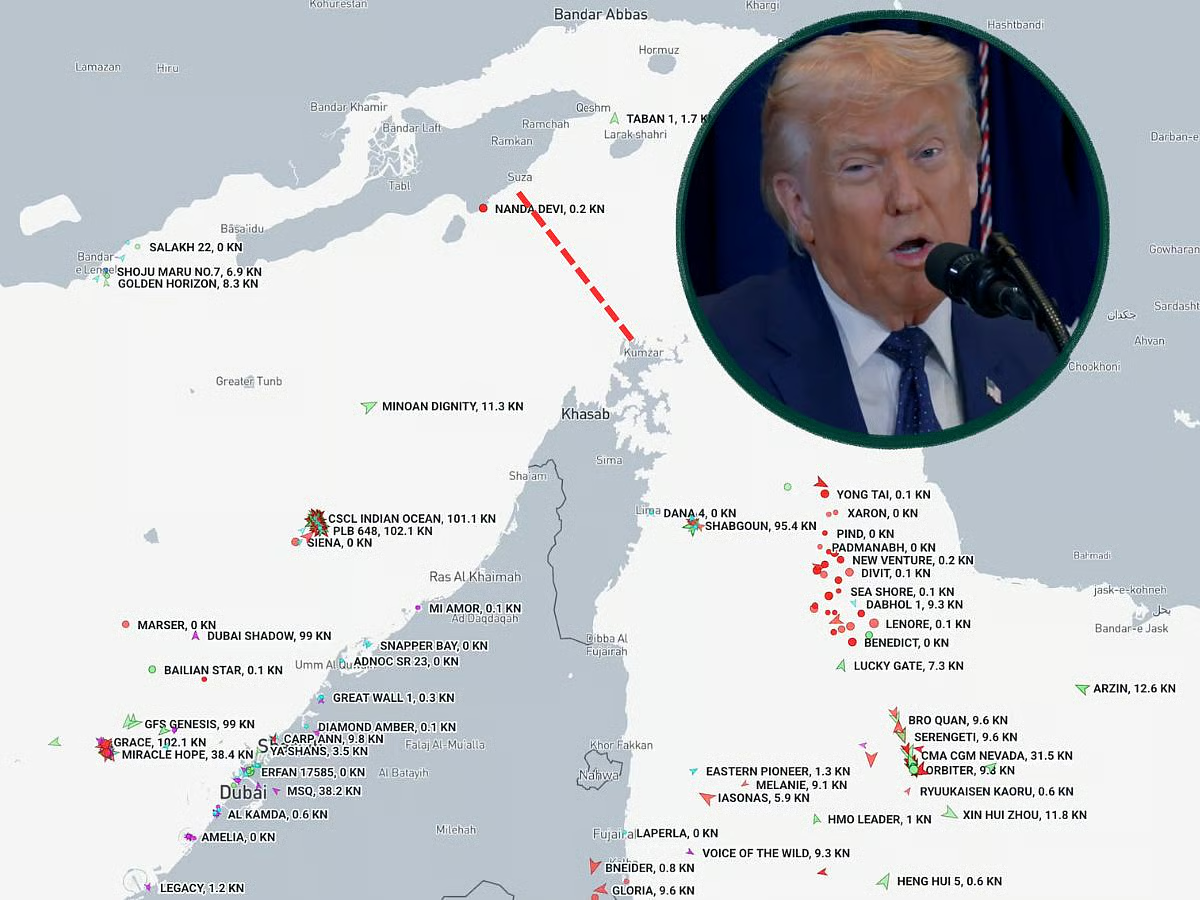
Iran signals fees for Hormuz as shipping industry raises security concernsLast updated: June 15, 2026 | 19:114 MIN READA geotagged map showing the absence of tanker traffic on the Strait of Hormuz with US President Donald Trump (inset). Dubai: A fragile US-Iran framework agreement aimed at halting hostilities has been hailed by President Donald Trump as a diplomatic breakthrough — but key elements of the deal remain disputed, with uncertainty over the reopening of the Strait of Hormuz, sanctions relief and enforcement mechanisms.Trump said the agreement marked a historic step toward stabilising the Middle East and restoring global energy flows, claiming the US would lift its blockade of Iranian ports and reopen the Strait of Hormuz without tolls.“Ships of the world, start your engines. Let the oil flow!” Trump said in a post on Truth Social, framing the deal as a major geopolitical and economic win.He also told The New York Times that the agreement had “saved Israel from nuclear extinction” and made the region safer, adding that it represented a defining moment of his foreign policy approach.But the framework — initialled after months of indirect negotiations mediated by regional actors — has not resolved several core disputes, according to officials and analysts familiar with the discussions.Vice President JD Vance said the deal was only the beginning of a longer technical process, indicating that major questions remain unresolved.“Well, our expectation is that the strait is going to be opened in a toll-free way for the long term, and that’s the sort of thing that we’re going to figure out in these technical negotiations,” Vance told CNBC.“There are a lot of very important details to figure out that we’re actually going to sit at the table and discuss together and figure out a path forward on these details,” he added.Iran signals different interpretationIranian officials, meanwhile, have described the agreement as a memorandum of understanding rather than a final settlement, with implementation tied to compliance by both sides.“Iran knows how to drag out those negotiations, and try to pocket concessions along the way,” Daniel B. Shapiro, a former US ambassador to Israel, told The New York Times.Tehran has also indicated that maritime access through the Strait of Hormuz may not remain entirely toll-free in the long term, with reports suggesting the possibility of service fees after an initial transition period.Iran’s Fars news agency reported Monday that Tehran added a clause on imposing maritime service fees to the framework deal with the United States on ending the Middle East war, shortly before its announcement.The divergence in interpretation has underscored the gap between Washington’s declaration of success and Tehran’s conditional acceptance of the framework.Iran has said it will monitor US compliance closely during a 60-day negotiation window before moving toward any permanent arrangement.Shipping safety concerns rise over HormuzEven as political leaders project cautious optimism, shipping industry experts are warning that safe and unimpeded transit through the Strait of Hormuz is far from guaranteed.Naval mines deployed in the strait have emerged as a major concern for maritime security, with experts cautioning that clearance operations are complex, slow and incomplete.Jakob Larsen, safety and security officer at BIMCO, one of the world’s largest shipowner associations, told CNN that once deployed, naval mines pose long-term operational risks.“Detecting and destroying deployed naval mines require highly specialised naval capabilities (ships, helicopters, remotely operated platforms) which are usually few and far between in the Gulf region,” Larsen said.He added that even if routes are cleared, they can quickly be compromised again.“Once a route is cleared of mines it can relatively easily be mined again,” he said.Larsen stressed that the shipping industry still lacks clarity on implementation details.“The best the industry can hope for is a joint announcement from US and Iran backed up by clarification on practical points such as which route to use, the leaving sequence of ships, timings, nature of coordination with navies, and contingency planning,” he said.He also warned that current statements from both sides remain vague.“Statements by the US and Iran are currently unclear and do not offer sufficient information regarding key aspects such as timings and safe routes,” Larsen said, adding that the security situation remains “volatile.”Iran has historically mined the Strait of Hormuz, leaving only two narrow shipping lanes through an already constrained waterway — one along the Iranian coast and another near Oman — raising the risk of bottlenecks even if the passage formally reopens.Fragile framework, competing narrativesThe agreement, which is expected to be formalised at a signing ceremony in Geneva later this week, has already exposed differing expectations between the two sides.While Washington has framed the deal as a pathway to de-escalation and economic normalisation, Tehran has tied implementation to US commitments on sanctions relief and frozen assets.Analysts say the differences could determine whether the framework survives the next 60 days of technical negotiations.The nuclear question also remains unresolved, with both sides agreeing only to defer deeper discussions on enrichment and verification mechanisms.Israel remains outside the frameworkThe agreement also excludes Israel, a key regional actor that has remained in active confrontation with Iran and its allied groups in Lebanon and elsewhere.Israeli officials have not formally responded to the framework, but Defence Minister Israel Katz has previously signalled that Israel would retain control over territory seized in Lebanon and respond forcefully to any escalation involving Iran.Markets watch cautiouslyGlobal markets have responded with cautious optimism to the prospect of eased tensions in the Strait of Hormuz, a critical artery for global oil shipments.However, analysts warn that uncertainty over implementation, combined with security risks and unresolved political disputes, could continue to affect energy flows and insurance costs for shipping companies.For now, the deal represents not a conclusion but a transition — one that hinges on technical negotiations, fragile trust and competing interpretations of what was actually agreed.A Senior Associate Editor with more than 30 years in the media, Stephen N.R. curates, edits and publishes impactful stories for Gulf News — both in print and online — focusing on Middle East politics, student issues and explainers on global topics.
Trump says 'let the oil flow', but Hormuz reopening still uncertain
Trump hails a Hormuz breakthrough and urges ‘let the oil flow’, but US-Iran disputes over toll-free access, sanctions relief and mine risks keep the deal in doubt.
1,070 words~5 min read