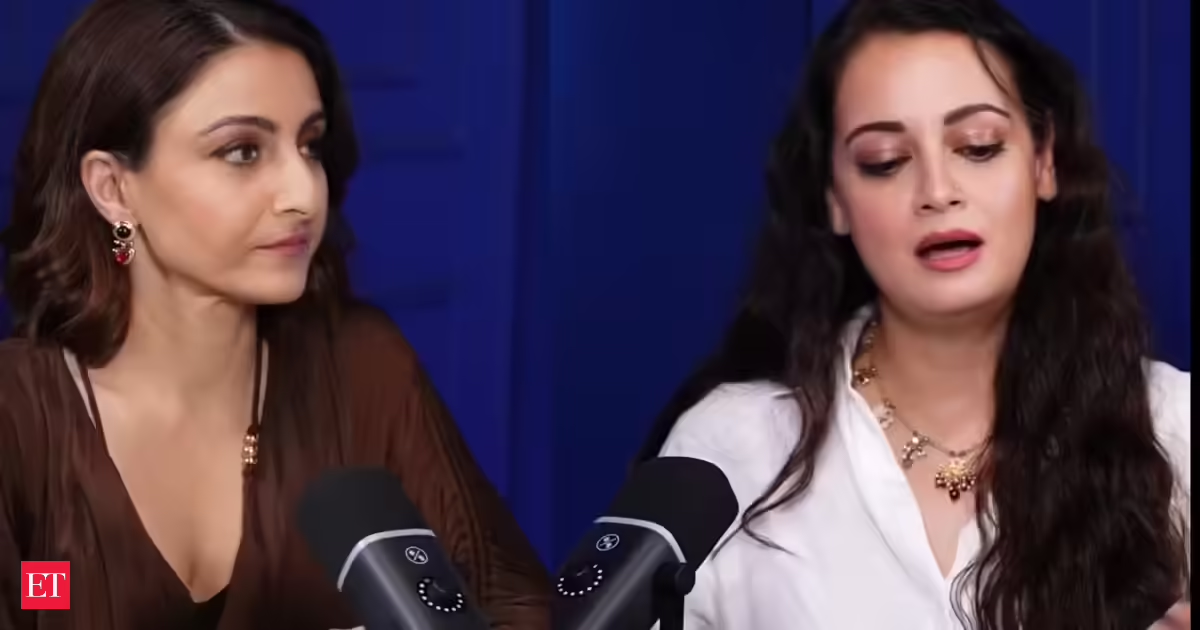
Dia Mirza's environmental remark linking patriarchy to climate change has triggered a fierce debate online, with many social media users calling out the actor-activist for what they describe as an oversimplified take on a complex global crisis. As clips from her appearance on Soha Ali Khan's podcast went viral, critics flooded social media with reactions ranging from "Aadmi hona paap ho gaya hai" to claims that it is easy to offer such opinions while sitting in air-conditioned rooms. Supporters, however, argue that Mirza was referring to historical power structures rather than individual men, setting off a wider conversation about climate change, gender and accountability.ALSO READ: "Michelle Obama is a man": UFC heavyweight fighter Josh Hokit makes controversial remarksWhat did Dia Mirza say about climate change and patriarchy?During a conversation on Soha Ali Khan's podcast, the 'Rehna Hai Tere Dil Mein' actress discussed the relationship between environmental issues and social structures. Speaking about climate change, she said:"It is the men in this world. It is the men who have driven climate change, and they are totally responsible for the chaos. Patriarchy is the cause for climate change."ALSO READ: Maria Eduarda Rodrigues de Freitas' chilling Instagram post before she plummeted 130 feet to her death in BrazilSoha interjected, "You said the male ego." Dia continued, "Yeah, it's men who have driven climate change and they are entirely and totally responsible for the chaos that has been unleashed on our world today and the misery that people are experiencing everywhere. I mean, not just the global south, but the global north as well now, right?"The statement quickly gained traction online, with clips from the podcast spreading across social media platforms and drawing strong reactions from both supporters and critics.— Tushar_KN (@Tushar_KN) Why are people criticizing Dia Mirza?Many social media users argued that climate change is a global problem involving governments, industries, corporations and consumers across the world, making it unfair to place responsibility on one gender."Cause it's very easy to give an opinion being a feminism supporter. Climate change is very easy to describe from AC rooms and cars but very difficult with ground reality," a user said. "They came in a car designed and manufactured by a man , wearing clothes made of cotton and jewellery produced by a man, putting make up manufactured by a man,sitting in a comfortable room constructed by a man. Both do air travel in aeroplane designed and manufactured by a man," said another. Several users also questioned whether celebrity discussions about climate change reflect the realities faced by ordinary people who deal with rising temperatures, water shortages, crop losses and pollution on a daily basis.Others accused Mirza of reducing a complicated scientific and economic issue into a gender debate, while some described the remark as divisive.Supporters say her comments are being taken out of contextWhile criticism has dominated the conversation, many people have come to Mirza's defense. Supporters argue that she was referring to patriarchal systems that have historically controlled political and economic decision-making, rather than blaming individual men for climate change."i mean she is right women arent fighting war over religion or science or anything its men who hunt animals, cut down trees, make science a weapon, rape, etc etc i dont like her either but the point she is making here is right," commented a user. "Well she has a point. All industrialization, corporate greed and wars are men dominated," said another.Some also pointed to ecofeminism, which examines links between environmental degradation and systems of power, as the broader context behind her remarks.
Dia Mirza's environmental remark on patriarchy sparks backlash; internet says 'Aadmi hona paap ho gaya hai'. Here's what she said
Dia Mirza's assertion on a podcast that patriarchy is the cause of climate change has sparked a heated online debate. While critics argue her statement oversimplifies a complex global crisis and unfairly blames men, supporters contend she was referencing historical power structures and initiating a broader discussion on gender and accountability.
589 words~3 min read