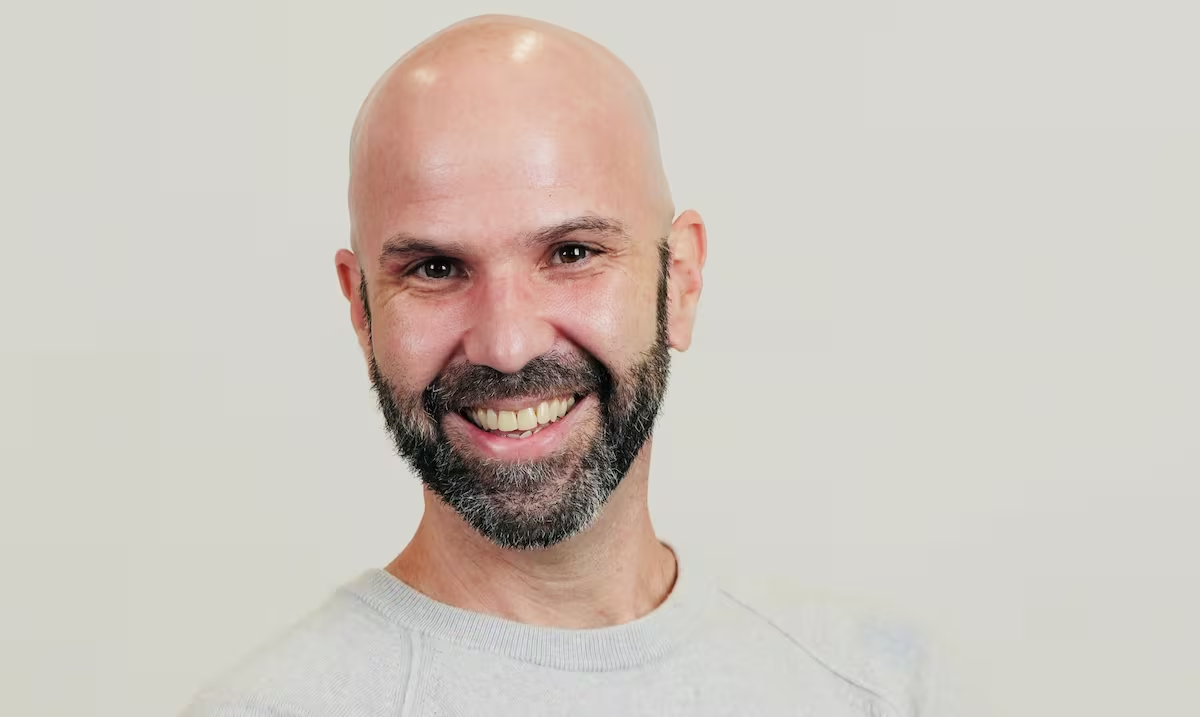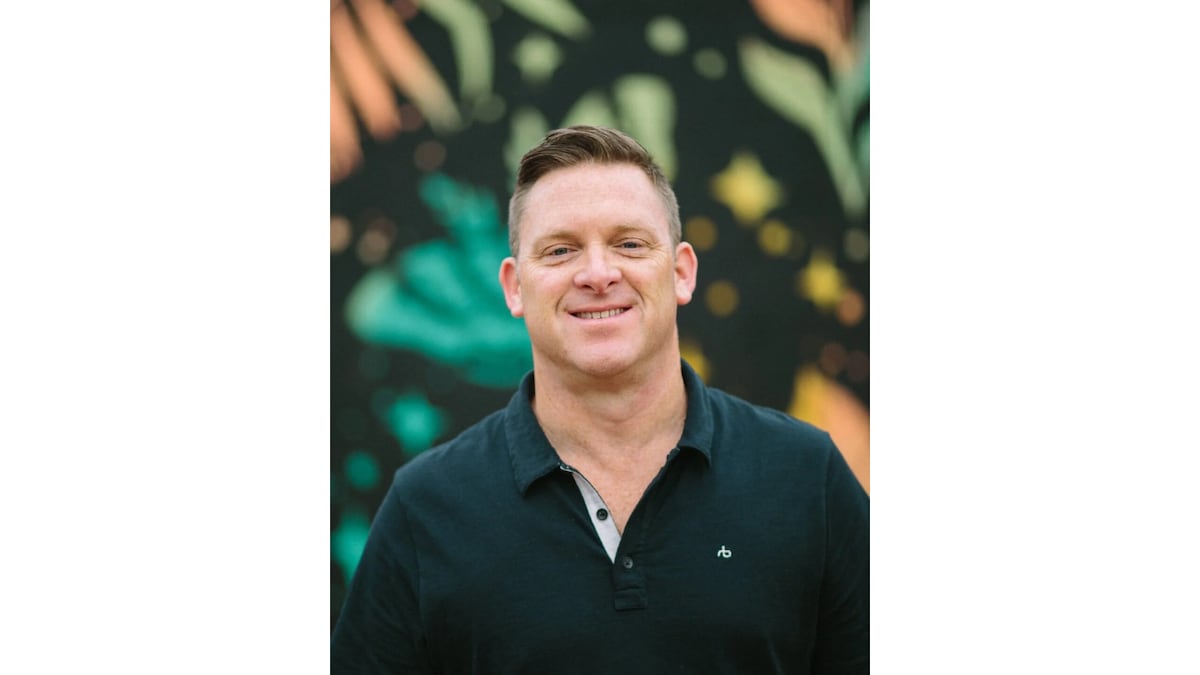
When Chris Beresford-Hill found out in 2023 that his pal Nancy Reyes had bagged the global chief executive position at Omnicom’s BBDO, he was so excited for her that he did not realise he was being offered the worldwide chief creative officer position. The two were catching up in Cannes three years ago, and Reyes had suggested they go for a walk instead of sitting down at a bar or restaurant, which he had correctly surmised meant she wanted to “talk about something pretty interesting”.“She told me that BBDO wanted her to come and be Andrew Robertson's successor,” Beresford-Hill says. “But I completely missed that I was being offered the [worldwide CCO] job because I was just so happy that she was going to do it.” Reyes says that taking the CEO role was “contingent” on working with Beresford-Hill, who was then North America president and CCO at WPP’s Ogilvy, again. She says she doesn’t think she would be able to do her job without him. While the Omnicom plan was clearly for the duo to replace the previous global BBDO regime of Robertson and David Lubars, who had been chief executive and chief creative officer, respectively, since 2004, Reyes and Beresford-Hill initially joined as Americas CEO and North America CCO. They stepped up to their global positions in late 2024.Perhaps, unfortunately for a new global creative boss keen to make an impact, Beresford-Hill describes 2025 as the year of “distraction” because of Omnicom’s wider plans for the business in buying IPG. So, 2026, he says, is about “unleashing”. Eighteen months into his job and ahead of his role as president of the Entertainment Lions jury at the 2026 Cannes Lions, Beresford-Hill is speaking to Campaign, sitting on the sixth floor of AMV BBDO’s office, looking over the London skyline. The American is in town for a week every month while the agency searches for a CCO following the departure of Nicholas Hulley and Nadja Lossgott at the end of April. He is most animated when talking about the future of creativity and his plans for BBDO, which, following Omnicom Advertising’s restructure into three global brands (TBWA and McCann being the others), incorporates the former FCB network and other agency offices.“Last year, everyone was ready to put the new foot forward, but there was a lot of change to come,” he says. “So you might think that this year would be a year of integration and sorting out the way forward, but the truth is, Nancy and I are both really impatient and really competitive, and we've got these cultures smushing together, and instead of taking time to figure it out, we want to run.“One hundred per cent of our interest is: what are we making? What are we pitching? How are we changing? What are we doing? But none of it in a theoretical long game, all of it immediately to try to create momentum.” That drive and competitive spirit flow through to Beresford-Hill’s personal life, in which he is preparing for his seventh Hyrox – a global fitness race requiring participants to run eight kilometres interspersed with the same number of functional exercise stations. So what exactly is BBDO’s leadership trying to “unleash”? Beresford-Hill says that the advertising industry as a whole has “zoned downstream and see[s] ourselves as asset creators and that is not where the action is, that’s really where the commoditisation is”. Beresford-Hill and Reyes’ goal, he says, is to “move upstream”, which is part of the positioning the pair launched for BBDO in February 2025: “Do big things”. Beresford-Hill says that “The work, the work, the work”, the network’s guiding principle since the 1990s, is a “beautiful positioning because it's focused on the products and what we make and what we deliver and what consumers interact with. But it's just the wrong message for the moment.” He adds: “So we’ve switched to: ‘Do big things’, which is much more about applying our strategic and creative brains, as upstream as possible, as early in the process as possible, so that we're not there to receive a brief and make an asset, but we're there to talk to the client about the big business problem and then use whatever we can imagine to solve it.”Beresford-Hill explains that the solution to the client problem could be a creative campaign, but it could also be “a new product, an experience, or even a piece of entertainment” as he and Reyes aim to “bring a little bit of agency back to what we do”. He cites the inception of the Michelin Guide, the restaurant guide which was originally created to encourage people to drive farther and wear out more tyres, as an example. Beresford-Hill says the guide is “genius, almost… evil genius”. Similarly, he says orange juice only became a breakfast drink after FCB marketed it as such.The pair first met at Omnicom’s Goodby, Silverstein & Partners about 20 years ago when Beresford-Hill was, as he describes, “an anonymous copywriter”. He left the agency in 2008 to become vice-president, creative director at Saatchi & Saatchi New York, and then he joined BBDO, also in New York, in 2010, as executive creative director, where he worked with Lubars for seven years. Reyes and Beresford-Hill’s paths crossed again at TBWA\Chiat\Day New York when Reyes, as president, gave Beresford-Hill his first CCO job in 2017. Beresford-Hill left for Ogilvy to take on the North America president and CCO role in 2021. Two years later, Reyes moved to TBWA’s sister network, BBDO, as the succession plan took shape.Beresford-Hill says that he has always loved working with Reyes, and BBDO was a place he had wanted to come back to because of how much he enjoyed the culture and drive to make the best creative work.His friend Richard Brim, founder and CCO of Ace of Hearts and former global CCO of fellow Omnicom agency Adam & Eve/DDB (now Adam & Eve\TBWA), says that “CBH” has dreamt of the worldwide CCO role at BBDO for some time and has always “felt an allegiance” to the network. Brim adds that Beresford-Hill is “very matter of fact” and that “if there’s a problem, he will solve it”.One of the problems is surely working out how best to combine the “premium talent and brains and strategic minds” of BBDO legacy agencies like New York, AMV and Chicago with a “very tenacious underdog spirit” of FCB.“You've got the big enduring brand ideas that BBDO is famous for, and then you've got this incredible craft and innovation that FCB has been harnessing. And when these things come together, that tension is magical. So we've got a destination that's upstream, and then we've got this incredible, incredible energy that's the byproduct of the [acquisition].”Aside from the potential benefits of the merger, a creative leader who wished to remain anonymous warned that integrating FCB into BBDO was a big challenge on a practical level due to the need to manage big personalities and complementary skills. There are questions over whether BBDO’s stature is what it was. The largest Omnicom advertising agency for many years was usurped by TBWA after the latter diversified into areas such as customer experience. BBDO won Cannes Lions’ Network of the Year for three consecutive years in 2016, 2027 and 2018, but has not received the accolade, awarded to now-defunct DDB in 2025, since.When asked how much of his role is to reclaim past glories, Beresford-Hill reiterates that the focus is on the future. “The industry is changing too quickly to spend time trying to recreate another era,” he says. “What we want is momentum: the energy that comes from doing ambitious work, winning big assignments, creating things people genuinely talk about and building a culture of confidence and belief.“In previous eras, that momentum may have been measured mostly in Cannes Lions. Today it’s broader than that. It’s creative excellence, business growth, cultural impact, new capabilities, organic conversation, and work that genuinely moves brands forward.”Beresford-Hill says that while awards are a nice to have, business outcomes are what really give a person stature. His marker is to have BBDO’s work mentioned on a brand’s earnings call, which means that the marketing has made a real change to the client’s business. “There was a time when creative awards, like a Lion, were 100% of how you could measure how well you were doing,” he explains. “Today, that kind of industry recognition from other creatives and from juries is important, but I also think having business results and metrics like that tied to your work is ultimately what's going to matter more in the future. Because if you have a brilliant idea that was ineffective, it's much harder for you to command a premium for the work you do.” He uses Pepsi, a long-term BBDO client, as an example. Beresford-Hill says that he and Reyes were having dinner with the marketers who happened to drop into conversation that the agency’s challenger positioning of the brand helped add $1bn back to Pepsi’s market cap. “My feeling is that we have some of these statistics, we don’t often seek them out and celebrate them,” he says. “But if in 2026, I'm a 25-year-old copywriter and I'm going to meet my girlfriend or boyfriend's parents, you could say, ‘I won a silver Lion for this idea’, and they'll nod, or you could say, ‘My idea added a $1bn market cap to PepsiCo’, and that just feels to me so much more powerful.”As a Cannes Lions jury president later this month, Beresford-Hill will take this thinking into the room. He says he is looking to celebrate work that has “an intended audience beyond the industry”. Beresford-Hill says that he has had a long conversation with Simon Cook, the CEO of Cannes Lions, about his thoughts and says that the festival “is taking great lengths to ensure the veracity of the work being entered”. However, Beresford-Hill believes that there are many agencies making work “on a small scale or for a small brand that is so much more provocative than what you need to do to really drive business”. He continues: “And so it's harder to win an award with a piece of work for a big brand that's got a lot [at] stake. So, for Cannes, [I want to try] to find the brands that are taking big swings with their audiences and celebrate it because that's what we need more of [in the industry], that's what's going to drive growth for our client partners, but that's ultimately what's going to drive the value of the agencies behind the work.”He says another risk to great work is the pressure on marketing teams to deliver business leads, which he says can mean marketers try to “over-engineer” ideas in search of a “safer” but “more mediocre outcome”.“It's certainly rarer when you find a client that's willing to go all in on a big, simple idea,” he explains. “And typically, you really find one incredible client in the organisation that puts themselves on the line for the big simple idea.”Beresford-Hill’s passion for the work is clear. He knows his trade well and what he wants for BBDO’s creative output. Though he is a long way from being “an anonymous copywriter”, he is very much involved in the work, and there will always be projects or brands that he’s “closely involved” with. David Kolbusz, the chief client officer at Orchard Creative, who worked with Beresford-Hill at Goodby, says that a leader's ability to do the work “engenders trust from the best creatives”. He adds: “Any truly good creative employee will respect their creative leader more if they can pick up a pen and write or art direct. Chris ticks that box. Even in his elevated position, he still has skills; [he] still has ideas.”Hulley corroborates this, explaining that he found Beresford-Hill’s brain to be “moving very fast”. “He’s always pushing: ‘Can it be better? Can it be funnier? Could we try this? Could we try that?’,” Hulley says.“He's kind, and he is a very soft person on one hand, but on the other hand, he is very driven and very exacting. So it’s that sort of ambition, but ambition without it being a horrible experience, because he's just good company, but he is definitely pushing for the best work all the time.”Brim adds that he “trusts” Beresford-Hill’s opinion and often shares his work with him. He says: “For that role, it’s a rarity, he really cares about the work and he’s done some really fucking good work [such as] ‘Michael CeraVe’.” The campaign for CeraVe was made while Beresford-Hill was at Ogilvy and won the Social & Influencer Cannes Lions Grand Prix in 2024, helping the WPP agency to Cannes Lions Network of the Year.Beresford-Hill believes that this way of working is what keeps him “sharp” and “credible”, allowing him to support CCOs across BBDO globally. He adds that his role as the leader is to bring the different offices together to share resources. “I probably see my global role less as enforcing standards of work and much more about taking this great network and making it more of a community,” he says. Reyes explains that, over the years, the BBDO shops grew increasingly separate as they became successful in their own right. More challenging marketing conditions mean the different offices now need to “come together around centres of excellence”. Along with AMV in the UK, BBDO’s 289 office network includes Colenso in New Zealand, Almap in Brazil, and Clemenger in Australia. Changes to Omnicom Advertising Group (now Omnicom Advertising) at the start of 2025 meant some BBDO offices also report through a regional structure.“We’d rather lean into the notion of community than think about it as a network,” she says. “Because a network just felt old school [and] impersonal, and a community is the kind of place where we'll help each other out.” When asked about taste in advertising – a buzzword of late – Beresford-Hill says that it is “the reason why I'm not scared about the future so much because you will always need people with great taste to look at options and make choices”.He believes that taste can be learned, but only at the early stages of a career, so he advises young creatives to work with “someone whose work is fucking awesome because you sort of only have one malleable moment to learn your taste”. Beresford-Hill says that most creatives that he considers “phenomenal” are that way because they “work[ed] with someone that gave them a strike zone or gave them a little sign of what's great or what the standards can be”. He adds: “Working for someone with really, really high standards and discriminating taste is the single greatest advantage you can have as a young creative. It doesn't matter what market you're in, what kind of clients you work on or how much money you make. It's that at an early stage, and then carrying that through over time and accruing more experience and more confidence in it. “But I myself, and certainly all the great creatives I work with, none of us could explain it. It's just like an amalgamation: your own algorithm of everything you've thought about and picked and observed in your life. I don't know a lot of stuff, but if you show me five ideas – you may disagree – but I'm confident in the one that I think is best.”This story first appeared on Campaign UK.
Chris Beresford-Hill: BBDO global CCO happy to head for the fast track
BBDO's global chief creative officer says that he and Nancy Reyes, his friend and global CEO of the agency, have no desire to stop and figure it out, instead they both want to run.
TL;DRAI
Chris Beresford-Hill named global CCO at BBDO (late 2024) with Nancy Reyes as CEO, post-FCB integration. BBDO shifts from execution to problem-solving, seeking influence on client product decisions—reflecting trend toward strategic agency positioning.
2,581 words~12 min read